
Featured Cable Duct & Support Systems (Part I)
Explore our precision-engineered structural cable management profiles, heavy-load containment trays, and rigid wiring raceways manufactured to ISO 9001 and international utility standards.
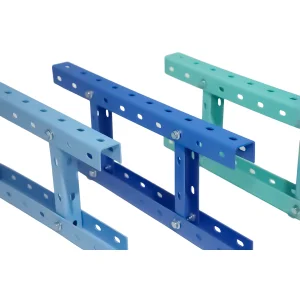
Wholesale Durable Powder Coated Telecom Cable Management Rack Supplier, Factory
View System Specs
Wholesale UPVC 100*50 Cable Trunking Lightweight Manufacturer, Price
View System Specs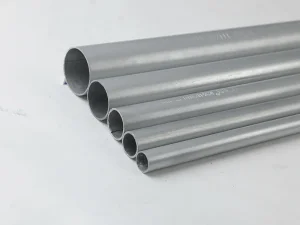
Buy DN20 DN25 conduit Supplier, Factories
View System Specs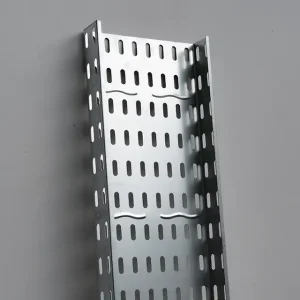
Buy Pre-Galvanized Reinforced Cable Tray 200*50 Suppliers, Factories
View System Specs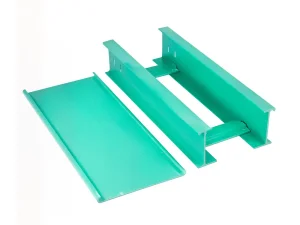
Buy FRP Ladder type Cable Tray Supplier, Factory
View System Specs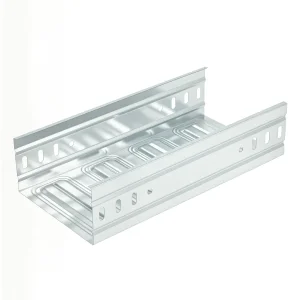
Buy Pre Galvanized molded cable tray200mm Suppliers, Factory
View System Specs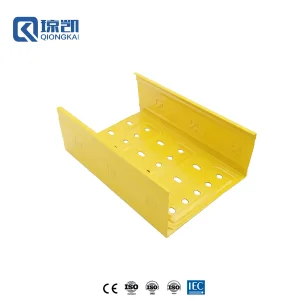
Buy Powder Coated Carbon Steel Cost Saving Heavy Duty Reinforced Molded Pre Galvanized Cable Tray - RAL1080 Yellow 200*100 Supplier, Price
View System Specs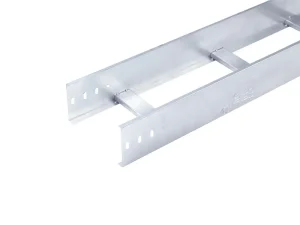
Wholesale Pre Galvanized Ladder Cable Tray Factory, Factories
View System SpecsState of Global Cable Duct & Raceway Manufacturing
An authoritative engineering analysis of modern cable containment infrastructure, thermodynamic considerations, electromagnetic isolation, and structural metallurgy driving tier-1 global EPC projects.
Thermodynamic & Ampacity Optimization
High-voltage and continuous distribution lines generate significant heat through resistive dissipation. Modern closed trunking and perforated cable trays must be calculated according to IEC 60287 ampacity derating formulas. Our perforated cable duct systems achieve up to 34% higher passive convection airflow than legacy solid-trough designs, substantially reducing thermal stress on primary conductors and decreasing air-conditioning loads in mission-critical facilities.
Electromagnetic Shielding (EMC / EMI)
Industrial automation and dense edge-computing server environments demand continuous physical attenuation of electromagnetic radiation. Pre-galvanized cold-rolled steel and hot-dip galvanized trunking serve as reliable Faraday cages when properly bonded with low-impedance copper grounding jumpers. Our continuous-lip designs meet stringent MIL-STD-285 and EN 50174 shielding effectiveness criteria, safeguarding sensitive instrumentation circuits from cross-talk.
Seismic & Structural Dynamic Damping
Facility structural survivability hinges on resilient overhead support systems. Modern cable duct configurations are engineered to withstand horizontal and vertical shock spectrums outlined in IBC 2024 and ASCE 7-22. Utilizing cold-formed steel strut channels (41×41mm and 41×82mm) with serrated teeth channels, our anti-seismic assemblies prevent slip-under-vibration in high-risk zones, mission-critical substations, and transport tunnels.
Material Metallurgy & Environmental Classifications
Comprehensive metallurgical specification table matching ISO 12944 atmospheric corrosivity categories (C1–CX) with recommended structural containment materials and load capacities.
| Material / Treatment Type | Corrosivity Category (ISO 12944) | Yield Strength & Load Capacity | Thermal & Chemical Endurance | Recommended Industrial Archetypes |
|---|---|---|---|---|
| Pre-Galvanized Steel (PG / Sendzimir) | C1 – C2 (Heated interiors, low humidity) | Yield ≥ 250 MPa; Medium-Duty loads up to 150 kg/m | -20°C to +120°C; Low acid/alkali tolerance | Commercial office complexes, plenum spaces, internal dry raceways. |
| Hot-Dip Galvanized (HDG, ISO 1461) | C3 – C4 (Industrial zones, coastal borders) | Yield ≥ 280 MPa; Heavy-Duty loads > 250 kg/m | -40°C to +150°C; High resistance to salt-fog & rain | Outdoor switchyards, solar power substations, highway gantry cabling. |
| Stainless Steel (AISI 304 / 316L) | C5 – CX (Extreme marine & offshore environments) | Yield ≥ 310 MPa; Ultra Heavy-Duty loads > 350 kg/m | -60°C to +400°C; Superb chloride pitting resistance | Offshore oil & gas platforms, chemical refineries, pharmaceutical washdowns. |
| FRP / GRP (Fiber Reinforced Polymer) | C5 – Chemical Special (Aggressive acids/caustic) | High tensile-to-weight ratio; Dielectric non-conductive | -50°C to +130°C; Completely immune to rust & electrolysis | Wastewater treatment plants, fertilizer facilities, electrolytic chlorine units. |
| Thermoplastic UPVC (Halogen Modified) | Indoor / Light Chemical Corrosive | Lightweight (Self-extinguishing Class UL94 V-0) | -5°C to +60°C; Moisture-proof non-metallic barrier | Low-voltage structured data cabling, perimeter wire raceways, institutional labs. |
Turnkey Infrastructure Solutions by Industrial Sector
From mega-watt scale AI processing clusters to offshore LNG liquefaction vessels, our tailored ducting assemblies resolve specific spatial, thermal, and seismic challenges.
Hyperscale AI Data Hubs
Tier IV data centers require segregated overhead channels for multi-strand fiber optics and heavy copper busway feeds. Our powder-coated modular basket trays and perforated steel trunking eliminate micro-burrs via high-precision zinc-nickel deburring, protecting delicate patch cables from shearing.
Utility Solar & Renewable Grids
String-inverter interconnects and tracker wiring are continuously bombarded with UV radiation and thermal cycling. Our heavy-duty hot-dip galvanized (65–85μm zinc layer) cable trays feature engineered drainage slots preventing water accumulation and galvanic corrosion across multi-kilometer solar arrays.
Marine & Petrochemical Complexes
Pultruded FRP/GRP and stainless steel 316L cable trays provide complete immunity against hydrogen sulfide gas, chlorine vapors, and high-salinity maritime humidity. Designed to meet ASTM E84 Class 1 flame spread indexes and withstand destructive coastal offshore gusts.
Rail Transit & Tunnels
Underground passenger tunnels demand fire-resilient, Low Smoke Zero Halogen (LSZH) containment. Our reinforced heavy-gauge carbon steel channels maintain load structural integrity during fire incidents up to 120 minutes (DIN 4102-12 / E90 standard), ensuring continuous operation of emergency lighting and ventilation circuits.
Robotic Roll-Forming & Rigorous Quality Control
Every linear meter of cable duct emerges from our automated 16-station cold-roll forming lines, subjected to multi-point dimensional inspections, deflection stress modeling, and non-destructive coating thickness testing.
Hydraulic Multi-Pattern CNC Punching
Our continuous roll-forming lines integrate inline hydraulic punching capable of stamping staggered slot designs, cable tie-down points, and mounting eyelets with sub-millimeter repeatable precision (±0.2mm). The result is flawless site assembly without on-site cutting or re-drilling.
Deflection Testing Under Safe Working Load
In compliance with IEC 61537 Section 10 and NEMA VE 1 standards, random batch samples are anchored across structural spans (1.5m to 6.0m) and evenly loaded with calibrated iron ingots. The deflection ratio is strictly held under L/200, guaranteeing zero system collapse under maximum design cable weight.
1000-Hour Accelerated Salt Spray Testing
Our internal metallurgical QA laboratory conducts cyclic corrosion testing (ASTM B117 / ISO 9227) on every batch of hot-dip galvanized and powder-coated steel. We verify zinc-layer intermetallic bonding to ensure our products deliver over 30+ years of maintenance-free service life in exposed outdoor corridors.
Featured Cable Duct & Support Systems (Part II)
Engineered perforated troughs, wire mesh grids, heavy-duty ribbed channels, and custom RAL-coated raceways for robust architectural and industrial installations.
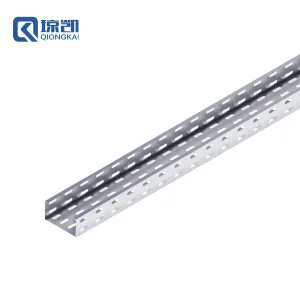
Wholesale Pre-galvanized Hot-dip-galvanized Perforated Cable Tray 100*50 Factory, Factories
View System Specs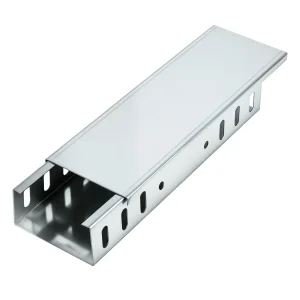
Wholesale Pre-Galvanized Cable Trunking 100*50 Manufacturer, Manufacturers
View System Specs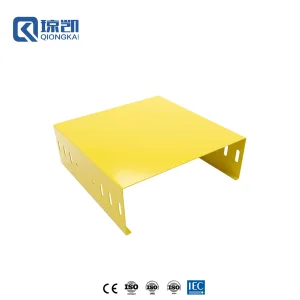
Buy Powder Coated Carbon Steel PG Pre Galvanized Cable Trunking Trough Type Channel - RAL1080 Yellow 300*100 Factory, Price
View System Specs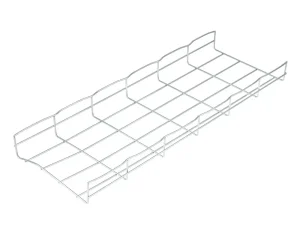
Wholesale Pre Galvanized grid and wire mesh type cable tray Manufacturers, Factories
View System Specs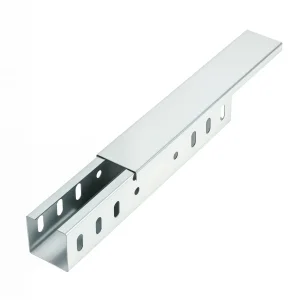
Wholesale Pre Galvanized Cable Trunking Series Manufacturer, Supplier
View System Specs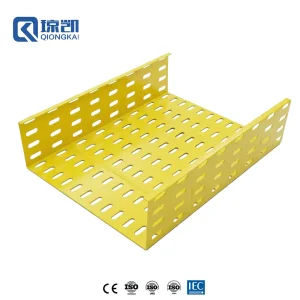
Wholesale Powder Coated Carbon Steel Pre Galvanized Hot Dip Galvanized PG HDG Cable Tray with Reinforce Ribs - RAL1080 Yellow 300*100 Manufacturers, Price
View System Specs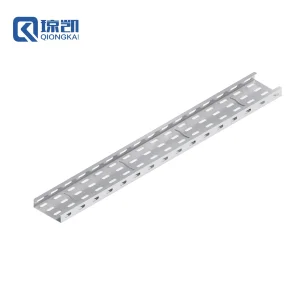
Wholesale Reinforced Medium duty Pre-galvanized Hot-dip-galvanized Perforated Cable Tray 100*25 Factory, Price
View System Specs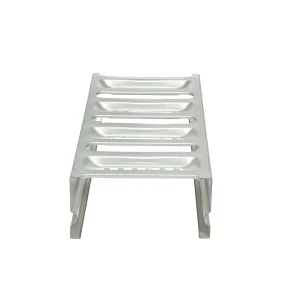
Buy Pre Galvanized 200*100 Heavy Duty/Cost Saving Cable Tray Manufacturer, Supplier
View System SpecsGlobal Compliance & Export Logistic Optimization
Strategically based near the international deep-water ports of Shanghai (Yangshan & Waigaoqiao), our logistics department manages ocean freight packing, phytosanitary standards, and worldwide customs clearance.
Telescopic Nesting & Packaging
Ocean shipping volumetric costs represent a major cost center for heavy infrastructure profiles. Our trays and trunking systems are custom-fabricated with tapered side-flanges that enable telescopic interleaving (nesting 3 to 5 lengths per stack). This proprietary packaging geometry reduces 40-foot High-Cube container volume by up to 42%, directly lowering per-meter freight costs.
Multinational Certification Portfolio
Our products are manufactured to exceed UL 568, NEMA VE 1, and European CE (EN 61537:2007) guidelines. Material test reports (EN 10204 3.1 MTR), complete chemical heat analysis, and ISO 14001 environmental verifications accompany all wholesale project dispatches, ensuring seamless compliance approval with local engineering boards.
Localized Engineering & Fast-Track Spares
We pair every global account with an MEP support engineer who directly audits isometric drawings, provides bend/riser takeoff bills of quantity (BOQ), and supplies tailored junction fittings. In the event of field route revisions, our expedited short-run production line ships custom offsets and splice plates within 7 business days.
Technical Roadmap: Smart Containment & Decarbonization
Advancing sustainable containment via low-carbon circular steel and integrated fiber-optic condition monitoring for the next generation of smart industrial facilities.
Low-Carbon Green Steel Alloys
Targeting Scope 3 embodied carbon reductions for international LEED Platinum projects, our foundry pipelines now incorporate Electric Arc Furnace (EAF) scrap-recycled steel with over 70% lower primary carbon emission profiles. This structural substrate matches traditional ASTM A1011 tensile thresholds while reducing project environmental footprints.
Next-Gen Zinc-Aluminum-Magnesium (ZAM)
Replacing conventional batch galvanizing, our latest product line utilizes an advanced ternary coating of Zinc, 3% Aluminum, and 3% Magnesium (ZAM). This metallurgical compound delivers superior self-healing edge corrosion resistance when cut or punched on site, offering more than triple the lifespan of standard HDG in aggressive marine atmospheres.
IoT-Enabled Smart Raceway Brackets
In high-density battery energy storage systems (BESS) and computing halls, our patent-pending smart strut brackets accommodate embedded distributed temperature sensing (DTS) fibers and micro-strain gauges. This innovation provides real-time thermal anomaly alerts and structural sagging diagnostics directly to facility management platforms.
Engineering & Procurement FAQ
Direct answers to core technical, structural, and procurement questions raised by electrical consultants, EPC directors, and commercial estimating teams.
What is the maximum permissible deflection ratio for heavy industrial cable trays?
According to NEMA VE 1 and IEC 61537, the structural deflection limit is generally evaluated at L/200 of the span length under uniformly distributed design load, though conservative petrochemical specifications often demand L/360. For instance, across a 3.0-meter span, an L/200 ceiling permits a maximum mid-span drop of 15 mm. Our reinforced ribbed side-flange profiles guarantee compliance within these parameters.
How do we select between Pre-Galvanized (PG) and Hot-Dip Galvanized (HDG) finishes?
The selection is dictated by the atmospheric corrosivity classification (ISO 12944). Pre-galvanized (PG) steel has an initial zinc coating of 12–18 μm, making it ideal for indoor commercial HVAC spaces (C1-C2). Hot-Dip Galvanizing (HDG) immerses completed fabrications into 450°C molten zinc, producing an alloy coating of 65–85 μm for outdoor, industrial, chemical, and humid applications (C3-C4).
What electrical continuity and bonding measures are required across tray splices?
Per NFPA 70 (NEC Article 392) and BS 7671, cable trays used as equipment grounding conductors (EGC) must maintain electrical continuity across every joint. Splice joints require tested bonding jumpers or factory-certified serrated grounding washers that penetrate surface oxides and powder coatings to guarantee impedance below 0.05 ohms.
When is non-metallic FRP/GRP containment preferred over stainless steel?
FRP (Fiberglass Reinforced Polymer) is preferred in high-chlorine, coastal marine, acidic battery rooms, and wastewater environments where severe electrochemical galvanic reactions degrade metals. Furthermore, FRP is entirely dielectric (preventing induced eddy currents), intrinsically fire retardant (UL94 V-0), and delivers superior strength-to-weight performance on elevated piperacks.
How does conductor ampacity derating factor into solid-bottom vs. perforated duct selection?
Solid-bottom cable duct trunking prevents dust accumulation and provides maximum EMI shielding, but restricts natural heat convection. Cables installed in enclosed raceways must apply current-carrying capacity derating multipliers (typically 0.70 to 0.82) per IEC 60364-5-52. Perforated cable trays allow natural upward airflow, permitting higher conductor current densities and reduced cabling sizes.
Can you manufacture custom radii bends, risers, and reducers to match BIM models?
Yes. We maintain a flexible CAD-to-CNC bending line that fabricates custom horizontal 30°, 45°, 60°, and 90° elbows, vertical inside/outside risers, tee cross-junctions, and eccentric reducers directly from client BIM/Revit spatial coordinate schedules, ensuring perfect drop-in alignment on congested plant piperacks.
What minimum order quantities (MOQ) and lead times apply for international wholesale orders?
For standard production runs (PG/HDG perforated trays and strut channels), our typical MOQ is a 20-foot standard sea container or 500 linear meters per profile. Our factory maintains 5,000 tons of raw steel coil stock, allowing complete 40-foot HQ container orders to be manufactured and loaded within 15 to 20 calendar days from drawing sign-off.
What quality testing documentation is provided with project consignments?
Every wholesale consignment is accompanied by a comprehensive Quality Dossier containing: 3.1 Mill Test Certificates verifying base chemical composition, ISO 1461 magnetic gauge zinc coating thickness reports, mechanical tensile and yield test logs, salt-spray chamber test results, and dimensional inspection sign-offs stamped by our QA directors.