
Primary Engineered Support Systems & Raceway Channels
Heavy-duty roll-formed profiles, pre-galvanized ribbed structures, seismic-rated channel brackets, and corrosive-proof containment units manufactured to NEMA VE-1 and IEC 61537 standards.
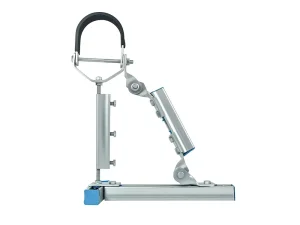
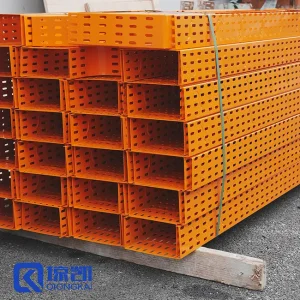
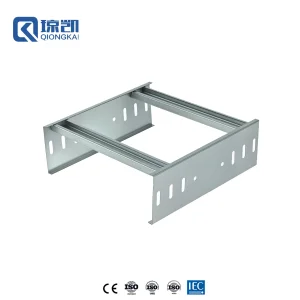
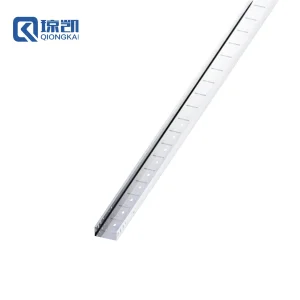
The Paradigm Shift in Electric Cable Support Infrastructure
Modern electrification, global cloud computing expansion, and high-density industrial plants have fundamentally elevated cable support systems from passive structural conduits to safety-critical engineered components.
Historically, procurement of electrical cable trays, wire mesh baskets, and strut channel supports was treated as a secondary line item governed purely by initial tonnage cost. However, systemic trends across enterprise engineering—including the deployment of 500kV extra-high-voltage utility runs, ultra-dense AI data halls generating unprecedented thermal loads, and coastal petrochemical complexes exposed to severe chloride attacks—have rewritten international project requirements.
Today's EPC contractors, mechanical-electrical consultants, and facility owners prioritize holistic metrics: life-cycle corrosion fatigue resistance, high strength-to-weight structural ratios through cold roll-formed ribbed geometry, electromagnetic shielding efficiency (attenuation decibels), and compliance with unified standards including NEMA VE-1, IEC 61537, and UL 568.
Thermal Optimization & Ampacity Retention
Perforated slot matrices and wire mesh open-basket architectures maximize natural convection air velocities. By maintaining cable operating temperatures below 75°C under continuous duty, conductors avoid derating penalties dictated by NEC Table 310.15, yielding substantial copper savings across mega-watt-scale installations.
Dynamic Seismic & Resonant Fatigue Protection
Advanced strut channels and rigid cable ladders incorporate deep-embossed longitudinal reinforcing ribs and anti-seismic flange crimps. Engineered to ASCE 7-16 and IBC Chapter 16 criteria, these supports resist spectral acceleration forces ($S_{DS} > 1.5g$) encountered during seismic events and wind shear dynamics.
Global Enterprise Procurement Dynamics: Metallurgical Selection
Premature failure of electrical raceways directly results from mismatched metallurgy and atmospheric corrosivity categories (ISO 12944 C1 to CX). Review our engineering specification matrix before finalizing project BOQs.
| Material & Surface Treatment | Applicable Manufacturing Standard | Yield Strength / Tensile ($R_p / R_m$) | Zinc / Protective Thickness | Corrosivity Category (ISO 12944) | Recommended Deployment Environment |
|---|---|---|---|---|---|
| Pre-Galvanized Sheet (PG / Mill GI) | ASTM A653 / EN 10346 (DX51D+Z) | 280 - 320 MPa | Z120 – Z275 (14–20 µm) | C1 - C2 Indoor Clean | Data halls, commercial HVAC plenums, light retail ceilings, dry utility risers. |
| Hot-Dip Galvanized After Fabrication (HDG) | ASTM A123 / ISO 1461 / BS 729 | 235 - 355 MPa (Q235B / Q355B) | 65 – 105 µm (450–750 g/m²) | C3 - C4 Heavy Industrial | Power plants, outdoor oil refineries, rooftop solar, wastewater facilities, bridges. |
| Austenitic Stainless Steel 304 (1.4301) | ASTM A240 / EN 10088-2 | 205 / 515 MPa | Self-passivated Chromium Oxide | C3 - C4 Sanitary Washdown | Pharmaceutical cleanrooms, beverage bottling, food dairy processing facilities. |
| Marine Stainless Steel 316 / 316L (1.4404) | ASTM A240 / EN 10088-2 | 220 / 520 MPa (2.5% Molybdenum) | Acid Pickled & Passivated | C5 - CX Extreme Offshore | Offshore oil & gas platforms, coastal desalination, FLNG vessels, sulfuric plants. |
| Fiberglass Reinforced Polymer (FRP / GRP) | ASTM D3917 / UL 94 V-0 Flammability | 150 - 250 MPa (Flexural) | Isophthalic / Vinyl Ester Resin | CX Severe Chemical | Chlor-alkali manufacturing, copper smelting, fertilizer synthesis, wet cooling towers. |
| Architectural Polyester Powder Coated | Qualicoat / ASTM D3451 Electrostatic | Carbon Steel Core Dependent | 60 – 120 µm Dry Film Thickness | C2 - C3 Identification | Dual-layer color-coded systems (RAL codes) in mission-critical telecom & fire zones. |
Span-Deflection Criteria ($L/200$ vs. $L/360$)
Under NEMA VE-1 Clause 5.2 and IEC 61537 Section 10, the structural safety factor must equal or exceed $1.5$ against working load limits (WLL). Specifying engineers must calibrate deflection thresholds to avoid cosmetic sagging, joint-stress ruptures, or cable insulation deformation:
- Standard Commercial ($L/200$): Maximum deflection at mid-span under full load shall not exceed span length divided by 200 (e.g., 15mm max deflection on a 3.0m support pitch).
- Mission-Critical Industrial ($L/360$): Required for high-voltage runs and heavily stacked runs to eliminate coupling misalignment and splice-plate shear.
- Concentrated Load Capability: Engineered systems must withstand a concurrent 90 kg static maintenance load centered at mid-span without permanent plastic strain.
Short-Circuit Withstand Dynamics & Electromagnetic Shielding
In high-fault-current environments, instantaneous electromagnetic repelling forces between parallel three-phase single-conductor cables can exceed 15 kN/m during a 50kA short-circuit transient. Solid-bottom trunking and heavy-gauge ladder rungs provide the necessary torsional rigidity to prevent system unraveling.
Additionally, closed-trough carbon steel trunking delivers superior magnetic permeability relative to aluminum or non-metallic pathways, attenuating electromagnetic radiation (EMF/EMI) across sensitive 10Gbps/40Gbps structured cabling circuits by 18 dB to 32 dB across frequencies from 50 Hz to 100 MHz.
China Factory 4.0: Metallurgical Precision & Supply Chain Resilience
Operating from our integrated manufacturing ecosystem in the Songjiang Port Science and Technology City of Shanghai, Shanghai Qiongkai Industry Co., Ltd. blends cutting-edge cold-roll engineering with direct deep-water port logistics.
Continuous Progressive Roll-Forming
Our 12 automated cold-rolling lines utilize progressive 18-to-24-pass tooling matrices. Unlike press-brake folded trays that induce uneven residual micro-stresses, roll-formed side rails and return-flanges demonstrate uniform crystalline microstructure and superior flexural yield.
High-Speed Laser Slotting & CNC Punching
Multi-axis fiber laser systems and high-tonnage hydraulic turret punches execute custom perforation patterns, ventilation slots, and connector bolt matrices with sub-millimeter positional tolerance (±0.25mm), guaranteeing seamless field alignment during installation.
Controlled Sandelin Galvanization Baths
Our partner hot-dip zinc baths enforce strictly audited silicon-phosphorus metallurgy ($Si < 0.03\%$ or $0.15\% < Si < 0.25\%$), mitigating the Sandelin effect to prevent dark, brittle, or spalling iron-zinc alloy phase layers on heavy-gauge welded ladders.
Digital Traceability & Batch Testing
Raw coil receipt to packed bundle: optical emission spectrometry ensures heat-number chemical compliance. Post-production inspections cover magnetic eddy-current zinc thickness testing, load-deflection proof tests, and ISO 9227 salt spray endurance tracking.
Direct Maritime Logistics Advantage
Positioned adjacent to Shanghai Port (Yangshan Deep-Water Terminal and Waigaoqiao), our container loading workflows incorporate automated nesting, protective vapor corrosion inhibitor (VCI) wrapping, and steel strap skidding that minimize FOB transit lead times.
Engineered OEM / ODM Customization
Beyond catalog dimensions, our engineering department formulates custom side-rail profiles (depths from 50mm to 200mm, widths up to 1200mm), tailored seismic strut clamps, non-standard riser elbows, and hybrid fiberglass-composite configurations.
Mission-Critical Vertical Application Scenarios
From hyperscale data halls to offshore LNG terminals, each industrial ecosystem imposes distinct mechanical, environmental, and thermal challenges on electrical cable support architecture.
Hyperscale AI & Enterprise Data Halls
Modern data facilities require ultra-high-density overhead wire mesh basket trays and ladder runways that support massive bundles of Cat6A, Cat8, and multi-fiber optical cabling. Critical Mandates: Zero zinc-whisker release (achieved via nickel-chrome electro-galvanization or powder coating) to protect microprocessors, high ventilation open-mesh profiles to lower CRAC/CRAH HVAC overhead, and flexible drop-out waterfall plates to preserve minimum bend radii.
Offshore Marine, LNG & Petrochemical Plants
Atmospheres saturated with sodium chloride, hydrogen sulfide ($H_2S$), and high relative humidity demand exceptional corrosion barriers. Critical Mandates: Pultruded vinyl ester FRP/GRP ladder trays or pickled/passivated SS316L cable ladders. Systems must resist sustained UV degradation, high wind vortex vibrations, and hydrocarbon flash fires (achieving ASTM E84 Class 1 flame spread index < 25).
Utility-Scale Photovoltaic & Battery Storage (BESS)
Spanning thousands of outdoor acres, utility solar installations demand heavy-duty Hot-Dip Galvanized (HDG) or Zinc-Aluminum-Magnesium (ZAM) coated channels capable of continuous 30-year field exposure without maintenance. Critical Mandates: Thermal expansion joint plates accommodating -30°C to +75°C temperature swings, and integrated grounding lugs compliant with UL 467 for lightning current dispersal.
Subway, Rail Transit & Tunnel Infrastructure
Subsurface transit networks present severe cyclic air pressure pulses from passing high-speed trains, combined with soot, moisture, and strict emergency egress requirements. Critical Mandates: Low-smoke zero-halogen (LSZH) cable containment, certified fire survivability according to DIN 4102-12 (E30 to E90 functional integrity under 1000°C furnace exposure), and seismic vibration-damped strut clamps.
Food Processing & Pharmaceutical Cleanrooms
Hygienic manufacturing operations require daily high-pressure chemical washdowns (CIP) using caustic acids, chlorine, and steam. Critical Mandates: Round-wire stainless steel (SS304/SS316) wire mesh grids with chamfered T-weld edges that eliminate sharp points, harbor zero bacterial pockets, and enable 100% visible drainage and sanitization verification.
Heavy Metallurgy & Automotive Assembly Plants
Robotic manufacturing halls generate extensive magnetic fields and dynamic vibration profiles. Critical Mandates: Solid-bottom carbon steel trunking systems with snap-locking reinforced lids providing physical protection against hot weld splatter, overhead debris, oil mist, and electromagnetic coupling interference.
Worldwide Engineering References & Case Studies
Real-world performance validated across major transportation hubs, Middle Eastern energy facilities, and heavy industrial mega-projects.
Shanghai Hongqiao International Airport
Scope: Engineered supply of corrosion-resistant CT series solid-bottom cable trunking and modular 41x41 strut ceiling grids.
Deployed across underground baggage handling, passenger terminal service corridors, and electrical substations. Addressed severe ambient vibration and stringent smoke-toxicity standards, delivering zero-deflection raceways over a 15-year operational window.
Ras Laffan Expansion, Qatar
Scope: Custom profiled section support structures and heavy-duty pultruded FRP composite cable ladders.
Engineered to endure continuous 50°C desert heat, high solar ultraviolet indexes, and hyper-saline Persian Gulf spray. Custom side-rail profiles supported multi-tier 33kV export feeders without requiring mid-span structural re-engineering.
Rayong Petrochemical Complex, Thailand
Scope: High-load FRP-lined galvanized steel composite cable trays with 316L stainless steel splice fasteners.
Supplied for outdoor chemical process units subjected to monsoon precipitation and acidic vapor releases. The dual-barrier composite design mitigated chemical corrosion while preserving rigid steel structural span economics.
Alto Paraná Processing Complex, Paraguay
Scope: Value-engineered reinforced molded pre-galvanized (PG) cable trays with optimized perforation matrices.
Addressed an intensive livestock and grain bio-processing environment containing ammonia gas and airborne organic dust. Achieved a 22% overall installation expenditure reduction while satisfying regional structural codes.
Northern Italian High-Speed Rail Corridor
Scope: Deep-galvanized HDG (85µm minimum coating) perforated cable trays and C-strut cantilevers.
Exported directly to Italian infrastructure subcontractors. Certified under EN ISO 1461 and passed independent CE compliance testing for galvanic zinc adhesion, rail traction fault earthing, and cyclic aerodynamic loading.
Engineering Q&A: Cable Support Specification Manual
In-depth technical answers addressing metallurgical certification, electrical safety calculations, structural mechanics, and international testing protocols.
How do engineers calculate structural cable tray working load capacity (WLC) and deflection limits?
Working Load Capacity (WLC) under NEMA VE-1 and IEC 61537 is determined using beam bending mechanics calibrated to uniformly distributed load (UDL) equations:
w = (8 * M) / L² | Δ_max = (5 * w * L⁴) / (384 * E * I)
Where w is load in N/m (or lbs/ft), L is support span distance, E is Young's Modulus of the material (205 GPa for carbon steel, 193 GPa for SS316, 70 GPa for aluminum), and I is the cross-sectional area moment of inertia. Proof testing requires a safety factor of 1.5 without joint failure or structural collapse. Allowable deflection is commonly constrained between L/200 and L/360 depending on client specifications.
What is the phenomenon of "Zinc Whiskers" and how does it dictate data center tray selection?
Zinc whiskers are microscopic conductive metal filaments (typically 1-2 microns in diameter and several millimeters long) that can spontaneously grow from electro-galvanized or cold-plated steel surfaces over time due to internal lattice compressive stress. When these filaments break off in a data center plenum, CRAC airflow carries them into IT server chassis, precipitating disastrous electrical shorts on motherboards.
To eliminate this threat in mission-critical telecom rooms, Qiongkai offers non-whisker-forming containment architectures: premium powder-coated finishes over phosphate treatment, pre-galvanized sheet (which experiences recrystallization annealing during continuous hot-dip processing, relieving internal stress), or pickling-passivated SS304/SS316 stainless wire mesh.
What are the critical distinctions between NEMA VE-1 and IEC 61537 standards?
While both standards define design and test procedures for metal cable tray systems, they differ in testing setups and load classifications:
- NEMA VE-1 / CSA C22.2 No. 126.1: Dominates North American engineering. Employs standardized Class designations (e.g., Class 12C, 20A, 20C) based on span length (feet) and total working load (lbs/ft). It strictly mandates physical destructive testing with a continuous multi-span setup and a destructive 1.5x safety multiplier.
- IEC 61537: Governs European and international EPC sectors. Requires Safe Working Load (SWL) verification using continuous multi-span or single-span configurations, alongside stringent electrical continuity tests (joint resistance < 50 mΩ) and thermal fire classification tests.
Qiongkai engineering certifies dual-standard compliance, providing verified test sheets matching project design blueprints.
How do you mitigate bimetallic (galvanic) corrosion when installing dissimilar metals?
Galvanic corrosion occurs when two metals with different electrochemical potentials are in physical contact in the presence of an electrolyte (moisture/salts). For instance, direct contact between stainless steel (more noble) and zinc-coated carbon steel (less noble) leads to accelerated sacrificial dissolution of the zinc layer.
Our engineering recommendations: (1) Use non-conductive dielectric isolation pads, neoprene washers, and nylon bushings at fastener interfaces; (2) Ensure the anode (sacrificial metal) surface area is significantly larger than the cathode; (3) Specify fasteners matching the parent tray material (e.g., SS316 bolts for SS316 trays; Class 8.8 HDG bolts for HDG ladders).
What seismic bracing specifications are required for overhead strut channel systems?
Under ASCE 7-16 Chapter 13 and IBC Section 1613, non-structural electrical systems in Seismic Design Categories (SDC) C through F require transverse and longitudinal sway bracing. Bracing must be designed for equivalent lateral forces calculated as:
F_p = [ (0.4 * a_p * S_DS * W_p) / (R_p / I_p) ] * (1 + 2 * z / h)
Qiongkai supplies certified heavy-duty seismic channel brackets with serrated slot teeth that interlock with channeled spring nuts, eliminating slippage up to shear loads of 18 kN under seismic dynamic excitation.
How does cable tray grounding and bonding ensure electrical fault safety?
Under NEC Article 392.60 and IEC 61537 Section 9.3, metal cable trays may be utilized as Equipment Grounding Conductors (EGC) if certified with sufficient cross-sectional area. The total electrical bonding resistance across any splice connection must not exceed 50 mΩ.
Where mechanical splices cannot guarantee permanent low-resistance paths (e.g., in powder-coated or expanding systems), our engineering packages include tinned-copper bonding jumpers (typically 16mm² to 70mm²) bolted directly into pre-punched grounding holes across all expansion joints and fitting intersections.
What are the fire resistance ratings under DIN 4102-12 for cable containment systems?
DIN 4102-12 is the benchmark European standard for testing functional electrical circuit integrity (E30, E60, E90) under realistic fire conditions up to 1000°C for 30, 60, or 90 minutes. Unlike cable-only tests, this evaluates the entire system: cables, cable trays, and overhead strut supports under mechanical load.
Our heavy-duty HDG and stainless cable trays with internal reinforcing ribs prevent structural deflection that would otherwise pull cables apart or pinch conductor insulation, ensuring uninterrupted power to smoke extractors, emergency booster pumps, and fire-fighting lifts.
What tooling lead-times and minimum order quantities (MOQ) apply to custom OEM profiles?
Standard profile catalog orders are maintained in continuous coil stock, enabling standard container fulfillment within 7 to 15 days. For non-standard profiles (e.g., custom side-rail geometries, bespoke slot patterns, or custom-radii fittings):
- Engineering CAD/BIM Drawings: Finalized within 24–48 hours by our project technical desk.
- Tooling & Die Prototyping: Typically 10 to 14 working days using in-house CNC wire EDM tooling shops.
- MOQ Considerations: Flexible tiered MOQs ranging from 300 meters for bespoke roll-formed profiles to mixed-container consolidating capabilities for global distributors.
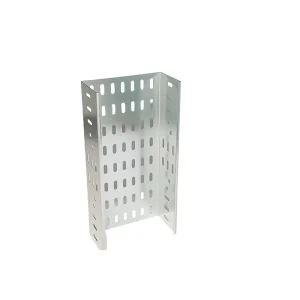
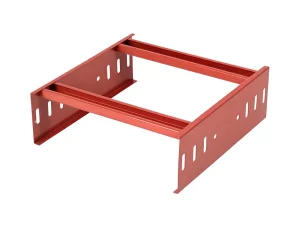
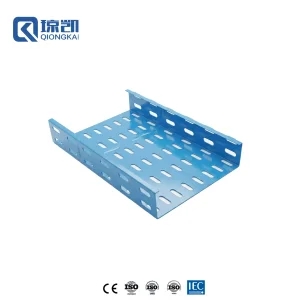
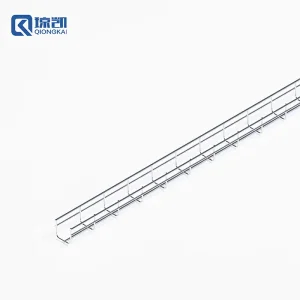
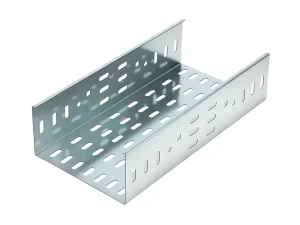
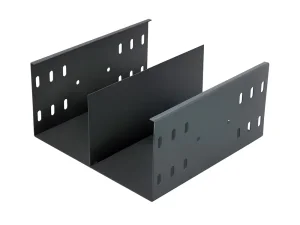
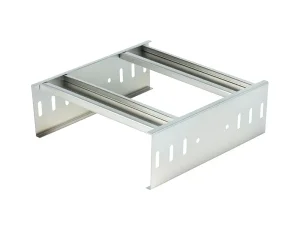
Engineered Mesh, Ladder & Marine-Grade Supports
Precision electro-galvanized wire baskets, modular marine ladders, and architectural powder-coated raceways for harsh or hygiene-regulated environments.
Optimize Your Project’s Cable Support Specification
Direct factory pricing, certified metallurgical testing, structural deflection calculations, and global container logistics coordinated directly by our Shanghai engineering desk.