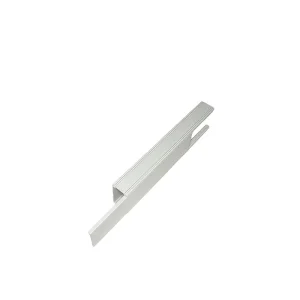
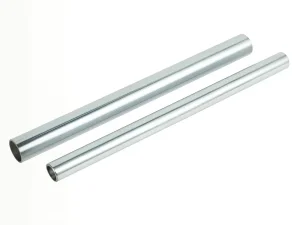
Engineered Galvanized Systems: Featured Cable Solutions
Heavy-duty, precision cold-formed, and pre-galvanized routing components built for demanding structural requirements.
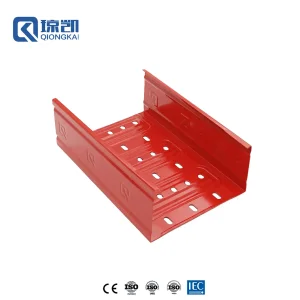
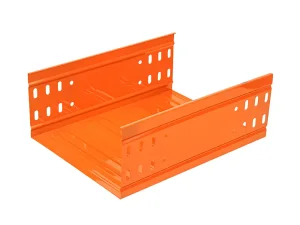
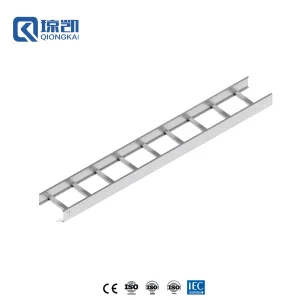
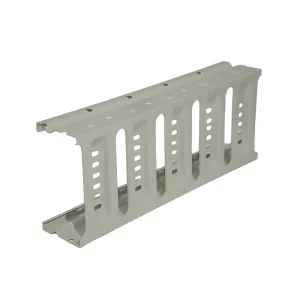
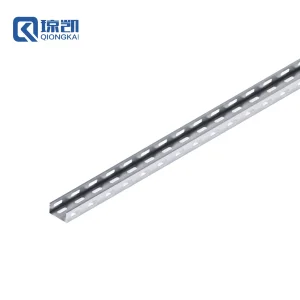
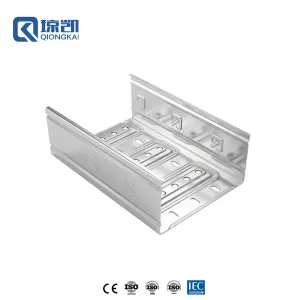
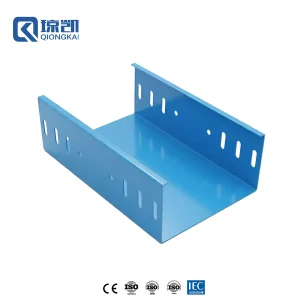
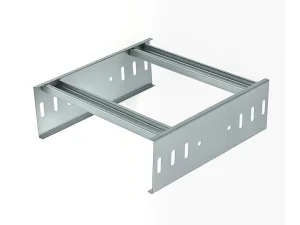
Engineering Integrity: Understanding Galvanized Channel Steel
A comprehensive analysis of metallurgy, structural profile design, and cold-formed tolerances for global procurement directors.
Metallurgical Superiority
Galvanized channel steel (C-channel, strut profile, and U-channels) utilizes continuous hot-rolled low carbon steel (grades Q235B, Q355B, ASTM A36, and SS Grade 33/40). Yield strengths are calibrated to resist flexural buckling under sustained static and dynamic mechanical loads.
- Precise carbon equilibrium (<0.22%) prevents micro-cracking
- Tensile ranges optimized between 400 MPa and 550 MPa
- Conforms to ASTM A123, BS EN ISO 1461, and AS/NZS 4680
Corrosion Shielding Matrix
Hot-dip galvanizing (HDG) creates an intermetallic zinc-iron alloy layer covalently bonded to the core steel substrate. This offers dual-action barrier containment and galvanic sacrificial protection even when field cuts or drill perforations occur on job sites.
- Pre-galvanized (PG) continuous mill coating: 60–180 g/m²
- Batch Hot-Dip Galvanizing (HDG): 450–600 g/m² (65–85μm)
- Salt spray endurance up to 1,500+ hours without red rust
Dimensional Tolerance Control
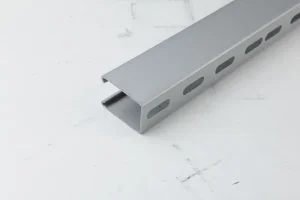
Our automated high-speed roll forming machinery maintains micrometer cross-sectional consistency across regular 41×21, 41×41, 41×62, and 41×82 mm profiles, preventing channel nut slippage and framing misalignment in high-density installations.
- Web-to-flange squareness held within ±0.75°
- Slot punch distance precision governed to ±0.2mm
- Straightness camber within 1.0mm per linear meter
Chinese Manufacturing Hub: Scale, Speed & Integration
Positioned near major ports with vertical steel manufacturing clusters to give procurement leads a sustainable pricing edge.
Vertical Integration
Direct supply contracts with Tier-1 steel billet foundries eliminate secondary trading margins. Slitting, roll-forming, punching, and galvanization take place within unified factory perimeters.
Automated Multi-Lines
Equipped with 12 continuous cold-forming lines and over 60 industrial punch presses capable of fabricating over 3,000 metric tons of custom channel steel profiles monthly.
Port Proximity & Logistics
Direct access to Shanghai Port (Yangshan & Waigaoqiao) facilitates break-bulk, LCL, and 40HQ containerized dispatches. Shorter transit windows safeguard tight EPC project milestones.
Custom OEM Tooling
Rapid CNC roller retooling enables proprietary widths, custom gauge combinations, return-lip serrations, and tailored slot matrices within a 10-day turnaround.
Years Industrial Manufacturing Legacy
Consolidated Facility Operations
Heavy Cold-Forming Machine Units
Countries Supplied Globally
Localized Support & Compliance Standards
Overcoming jurisdictional engineering hurdles with pre-certified mill reports, load test validations, and local site coordination.
Western Code Compliance
Certified compatibility with North American and European building codes. We engineer steel channels conforming directly to MFMA-4 (Metal Framing Manufacturers Association), ASTM A653, ASTM A1011, and EN 10346 guidelines.
Traceable MTR Documentation
Every shipment is backed by EN 10204 Type 3.1 Mill Test Certificates documenting chemical heat batch numbers, yield-to-tensile ratios, zinc coating weight tests, and elongation values, speeding contractor approvals.
Field Engineering Support
Dedicated English-speaking technical liaisons assist consulting engineering firms with deflection calculations, load charts, seismic bracing calculations, and BIM/CAD structural integration.
Galvanized Strut Profile & Coating Matrix
Benchmark standard production formats against design environments to match load factors and environmental exposure.
| Profile Model | Dimensions (W×H mm) | Wall Thickness | Zinc Protection Class | Primary Industrial Sector | Applicable Codes |
|---|---|---|---|---|---|
| Standard C-Channel | 41 × 21 mm (Shallow) | 1.5 mm – 2.5 mm | Pre-Galvanized (Z120–Z275) | Commercial Ceiling Grids, Light Data Cabling | MFMA-4, BS 6946 |
| Medium Structural Strut | 41 × 41 mm (Standard) | 1.8 mm – 2.75 mm | Batch HDG (≥55–85μm) | HVAC Trapeze, Solar Racking, Cable Routing | ASTM A123, ISO 1461 |
| Heavy Back-to-Back (BTB) | 41 × 82 mm (Double) | 2.0 mm – 3.0 mm | Heavy HDG / Epoxy Topcoat | Industrial Pipe Bridges, Substations, Heavy Trays | AS/NZS 4680, DIN 50976 |
| Seismic Slotted Channel | 41 × 41 / 41 × 62 mm | 2.0 mm – 2.5 mm | HDG + Pre-Galvanized | Earthquake-Resistant Cable & Conduit Bracing | IBC 2021, ASCE 7-16 |
| Corrosion-Resistant Trough | Customized 50–300 mm | 1.2 mm – 2.0 mm | Powder Coated over Pre-Galv | Subway Stations, Cleanrooms, Marine Interiors | UL 568, ISO 9227 |
Global EPC Procurement: Solving Strategic Challenges
Addressing the critical risk factors confronting supply managers across international mega-projects.
Total Cost of Ownership (TCO)
Procurement teams prioritize longevity over short-term material savings. Premature rust issues demand costly on-site replacement. Choosing our verified-thickness HDG channel profiles lowers maintenance expenditures over long facility service lives.
Submittal & Approval Friction
Contractors often face delays waiting for project consultants to approve submittals. We provide full submittal dossiers—including static load calculations, zinc adhesion assays, and 3D step files—shortening submittal turnarounds.
Kitting & Bundling Convenience
Managing disparate vendors for channel steel, bracket attachments, threaded rod, and spring channel nuts introduces warehouse mix-ups. We bundle coordinated structural hardware in tagged, project-phase-ready crates.
Real-World Deployment: Industrial Scenarios
Field installations where our structural galvanized channels ensure structural stability under mechanical stress.
Hyperscale Data Center Infrastructures
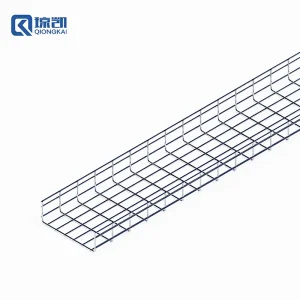
Overhead heavy-load wire baskets and busway systems rely on continuous trapeze arrangements built with 41×41mm slotted pre-galvanized channels. Uniform punching lets electricians drop threaded rods with millimeter accuracy over high-density server aisles.
Utility-Scale Photovoltaic Structures
Ground-mounted solar projects demand heavy-gauge hot-dip galvanized C-channels as primary purlins and vertical posts. Thick zinc coatings (exceeding 80 microns) handle long-term soil acidity, wind-induced flex, and moisture without flaking.
Airport Transit & Tunnels
In high-vibration train tunnels and passenger terminals, our seismic serrated strut channels keep heavy conduits, HVAC ducting, and water pipes firmly anchored, resisting gradual seismic or acoustic backout.
Industry Trends: Next-Gen Steel Technology
Key technological advancements driving modern steel framing, corrosion resilience, and project efficiency.
Zinc-Aluminum-Magnesium (ZAM) Coatings
Emerging as an alternative to post-fabrication batch galvanizing, ZAM alloys provide self-healing edge characteristics along cut profile edges via a dense protective hydroxide film.
Modular Pre-Fabrication & DfMA
Modern EPC operations increasingly use Design for Manufacture and Assembly (DfMA). We supply pre-cut, pre-assembled channel trapezes and modular supports, cutting jobsite labor requirements.
Green Steel & EPD Transparency
Institutional funding requires clear ESG tracking. Our mill infrastructure works with low-emission electric arc furnaces (EAF) and holds Environmental Product Declarations (EPDs) to support LEED certifications.
Frequently Asked Engineering Questions
Technical guidance covering metallurgical testing, structural compliance, and cross-border delivery operations.
What is the technical difference between pre-galvanized (PG) and hot-dip galvanized (HDG) channel steel?
How does Qiongkai prevent rust formation on punched holes and cut ends?
Can you supply certified Mill Test Reports (MTRs) compliant with EN 10204 3.1?
What slotted patterns, hole formats, and profile gauges can you produce?
How are channel bundles protected against white rust during maritime transport?
Industrial Routing & Channel Series: Expanded Selection
Explore heavy-duty conduit, C-slotted profiles, wire mesh trays, and structural non-metallic solutions.