
Heavy-Duty Strut Channels & Cable Support Systems
Explore high-performance roll-formed channels, perforated trays, and modular trunking crafted to international industrial specifications.
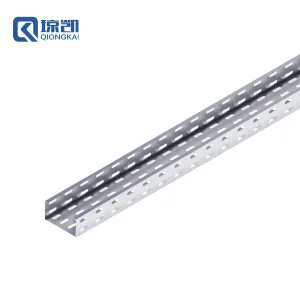
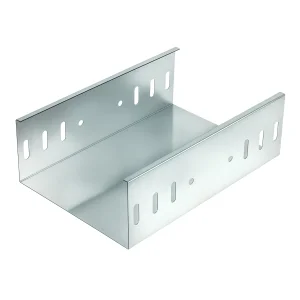
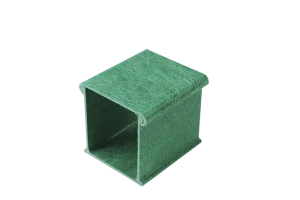
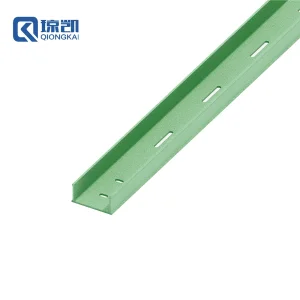
Hot Dipped Galvanized Strut Channel Mechanics & Protective Architecture
A comprehensive examination of cold-roll profile structural mechanics, high-temperature metallurgical zinc diffusion, and ASTM A123 / ISO 1461 cross-sectional resilience.
Intermetallic Fe-Zn Diffusion Chemistry
Unlike electro-plated or pre-galvanized sheet where zinc remains purely mechanical on the surface, hot-dip galvanization is a molten metallurgical immersion reaction occurring at 445°C to 460°C. The structural carbon steel substrate (Q235B, Q355B, or ASTM A1011 SS Grade 33/40) interacts with molten zinc, yielding four distinct intermetallic phases: Gamma (Γ, 75% Fe, 25% Zn), Delta (δ, 90% Zn, 10% Fe), Zeta (ζ, 94% Zn, 6% Fe), and the outer pure ductile Eta (η, 100% Zn) layer. The inner Zeta layer develops an ultra-dense diamond hardness of up to 250 DPH, surpassing the hardness of the base structural steel itself. This guarantees exceptional abrasion immunity during continuous bolt clamping, channel nut sliding, and vibration-induced shear stresses.
Profile Geometry & Section Modulus Stability
Standard cold-formed channels follow the classical 41mm width base matrix: 41×21mm (shallow tray/light conduits), 41×41mm (general MEP framing & pipe hanging), 41×62mm (medium infrastructure cantilever), and 41×82mm (heavy-load utility racking). For severe flexural bending, continuous robotic stitch-welding or high-tonnage clinching joins two profiles back-to-back (e.g., 41×82mm BTB or 41×41mm BTB). In high-stress trapeze installations, the return lips of Qiongkai strut channels feature precision CNC-milled serrated grooves. When mated with spring channel nuts, these microscopic tooth serrations bite into the channel lip, creating positive mechanical interlock that prevents longitudinal sliding even under seismic shock waves.
Cathodic Sacrificial Edge Protection
In real-world construction, strut channels frequently undergo on-site cutting, field mitering, and custom penetration drilling. Standard coatings peel or blister rapidly when punctured. Hot dipped galvanized coatings provide sacrificial galvanic protection: because zinc possesses a lower electrochemical potential (-0.76V) than iron (-0.44V), adjacent zinc oxidizes preferentially, creating a passive insoluble zinc hydroxycarbonate patina over exposed cut edges. This autogenous self-healing mechanism shields bare carbon steel edges across air gaps up to 2mm wide, eliminating the risk of catastrophic rust creeping behind the outer protective sheath.
Protective Coating Performance & Material Selection Matrix
Compare mechanical load capacity, corrosion life expectancy, and atmospheric survivability across international industrial framing materials.
| Material / Coating Specification | Reference Standards | Coating Thickness / Density | Salt Spray Longevity (ASTM B117) | Atmospheric Classification (ISO 12944) | Primary Industrial Application Scenarios |
|---|---|---|---|---|---|
| Hot Dipped Galvanized (HDG) | ASTM A123 / ISO 1461 / AS 4680 | 65 μm – 100 μm (460–710 g/m²) | > 1,200 – 1,500 Hours | C3 (Urban), C4 (Industrial), C5-M (Marine) | Outdoor solar PV ground mounts, petrochemical pipe racks, highway bridges, mining |
| Pre-Galvanized Coil (PG) | ASTM A653 / EN 10346 (Z275) | 15 μm – 20 μm (180–275 g/m²) | 120 – 240 Hours | C1 (Clean Indoor), C2 (Low Humidity) | Commercial office ceilings, HVAC indoor ducted trapezes, standard dry server rooms |
| Electro-Galvanized (EG) | ASTM B633 / ISO 2081 | 5 μm – 12 μm (35–85 g/m²) | 48 – 96 Hours | C1 (Controlled Environments) | Data hall wire mesh cable containment, architectural false floors, light electronics |
| Stainless Steel 316 / 316L | ASTM A240 / EN 10088-2 | Passivated Cr-Ni-Mo Oxide Film | > 3,000 Hours | CX (Extreme Marine / Splash Zone) | Offshore oil & gas platforms, coastal desalination facilities, pharmaceutical cleanrooms |
| Fiberglass Reinforced Polymer (FRP) | ASTM D3917 / ASTM E84 Class 1 | Isophthalic / Vinylester Resin Core | Immune to Cl- & Acid Vapors | Extreme Chemical Environments | Wastewater treatment plants, fertilizer facilities, acid pickling workshops, coastal refineries |
Chinese Manufacturing Hub & Fully Integrated Supply Chain Supremacy
Operating from Shanghai Qiongkai's three specialized production campuses, combining raw steel upstream integration, high-precision automated roll-forming, and deep-water logistical speed.
Tier-1 Steel Mill Procurement Scale
Qiongkai maintains direct annual strategic supply contracts with world-leading steel conglomerates including Baosteel and Shougang. Utilizing virgin hot-rolled structural steel coils featuring tightly calibrated chemistries (C ≤ 0.18%, Si ≤ 0.04%, P ≤ 0.035%, S ≤ 0.035%), we prevent the brittle Sandelin reaction during zinc galvanizing. Low-silicon formulations prevent excessive, porous Fe-Zn alloy overgrowth, yielding uniform metallurgical alloy adhesion that eliminates flaking, micro-cracking, and uneven surface spangle under severe bending loads.
16-Stage Automated Roll-Forming Precision
Across our 30,000 m² production facilities, 12 heavy automated continuous roll-forming lines execute multi-pass progressive contouring. Each profile is shaped through 16 to 22 sequential hardened Cr12MoV alloy forming rollers, maintaining dimensional tolerances within ±0.15mm across web width, flange height, and inward return lips. High-speed hydraulic in-line punches pierce slotted patterns (standard 9/16" × 1-1/8", 14×28mm, or 13×30mm) with zero burr deformation, allowing instantaneous installation of threaded rods, cantilever brackets, and channel spring nuts without reaming.
Global Deep-Water Logistics from Shanghai
Located strategically in Songjiang, Shanghai, our factory dispatch terminals sit within 45 minutes of the Shanghai Waigaoqiao and Yangshan Deep-Water Port complexes. We ship directly to 60+ countries across North America, Europe, the Middle East, and Southeast Asia. Channels are bound into heavy export-grade bundles using galvanized high-tensile steel banding, edge-protector caps, and heavy waterproof polythene wrapping to withstand trans-oceanic humidity and container transit vibration.
Worldwide Engineering Compliance & Localized Technical Support
Eliminating engineering risk for global EPCs, M&E contractors, and consultants through stringent international design conformity, BIM digital models, and local site coordination.
BIM LOD 400 Digital Modeling Support
Modern mega-projects mandate seamless integration within Building Information Modeling (BIM) platforms. Qiongkai supplies full-spectrum parametric Revit families, IFC components, and 3D DWG assets at Level of Development (LOD) 400. Structural engineers and mechanical contractors can conduct clash detection, compute structural stress load distributions, and automatically generate precise Bill of Quantities (BOQ) down to channel nuts, angle fittings, and splice plates, eliminating field fabrication scrap.
Seismic Bracing & OSHPD Certifications
For earthquake-prone zones, critical hospitals, and infrastructure projects, our strut channels function as certified lateral and longitudinal rigid seismic bracing assemblies. Tested to meet Chinese GB 50981, US IBC (International Building Code), and NFPA 13 requirements, our back-to-back reinforced channels and anti-slip toothed brackets absorb cyclic dynamic displacements, ensuring unbroken electrical and fire-suppression raceway operation during catastrophic seismic acceleration events.
Third-Party Inspections & Traceability
We regularly collaborate with accredited international testing agencies including SGS, BV (Bureau Veritas), TÜV SÜD, and Intertek. Project managers receive end-to-end documentation packs containing batch chemical spectrometry, zinc immersion thermal logs, salt spray corrosion test records, and tensile yield proofs. Every individual channel length can be laser-stenciled with batch tracking numbers, dimension codes, and project identification marks for full job-site accountability.
Critical Mission Industrial & Infrastructure Applications
From cryogenic LNG terminals to hyperscale AI server facilities, see how Qiongkai hot dipped galvanized strut channel systems deliver unyielding structural support.
Utility-Scale Solar Photovoltaic Mounting
Strut channels serve as durable purlins, foundation braces, and module support rails in large-scale utility solar installations. Exposed continuously to UV radiation, soil chemical splash, and extreme thermal cycling, our heavy hot-dip galvanized finish prevents red rust corrosion for over 25 years. Slotted profiles accelerate bifacial solar panel array leveling on uneven ground terrains, lowering overall mechanical installation labor by up to 30%.
Hyperscale AI Data Centers & Telecommunications
Modern hyperscale server halls demand heavy overhead suspended trapeze systems to carry dense fiber optic baskets, power busways, and liquid cooling piping. Utilizing heavy-gauge 41×41mm and back-to-back 41×82mm hot dipped galvanized strut channels ensures minimal beam deflection across extended 2.5m to 3.0m ceiling spans, supporting multi-tier cable loads without structural sagging or dynamic vibration fatigue.
Subway Tunnels, Rail Transit & Highway Infrastructure
Subterranean railway environments present extreme environmental challenges: high humidity, fluctuating air pressures from piston effects, and brake carbon dust. Installed in Shanghai Hongqiao International Airport transit hubs and underground metro lines, Qiongkai HDG channels resist pitting corrosion and dynamic cyclical pressure waves, providing fail-safe anchoring for signalling conduits, ventilation ducts, and traction power cables.
Future Trajectory of Modular Metal Framing Systems
Analyzing industry megatrends: Low-carbon eco-galvanizing, high-yield alloy optimization, and modular off-site prefabricated MEP sub-assemblies.
Off-Site Modular MEP Pre-Fabrication (DfMA)
The global construction sector is shifting aggressively toward Design for Manufacture and Assembly (DfMA). Mechanical and electrical contractors assemble complete multi-service corridor racks, pump skids, and valve stations inside off-site warehouses using custom pre-cut strut channel frameworks. Qiongkai supports this modern paradigm with precision CNC kit-cutting, custom bracket pre-assembly, and color-coded package labeling that shortens job-site installation timelines by more than 40%.
Eco-Friendly Metallurgy & Zinc Slag Reclamation
In alignment with global carbon reduction initiatives, Qiongkai has modernized its galvanizing facilities with enclosed heat recovery hot-dip kettles, natural gas catalytic burners, and zero-discharge acid recycling scrubbers. Automated skimming recovery systems capture over 92% of zinc ash and bottom dross, reducing virgin zinc consumption per ton while maintaining pristine, defect-free coating purity adhering to ISO 14001 environmental benchmarks.
High-Strength Micro-Alloy Lightweighting
Through specialized micro-alloying containing titanium, niobium, and vanadium, next-generation cold-formed strut channels achieve yield strengths exceeding 420 MPa while reducing wall thickness from traditional 2.5mm down to 2.0mm. This delivers a 20% total weight reduction per linear meter without compromising sectional bending modulus, significantly reducing oceanic shipping container freight costs and easing overhead lifting strain for on-site craft workers.
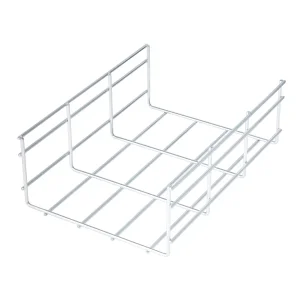
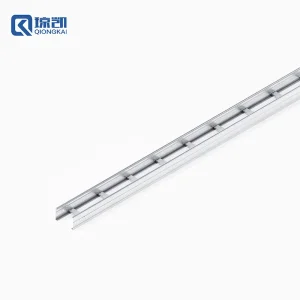
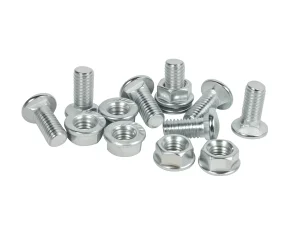
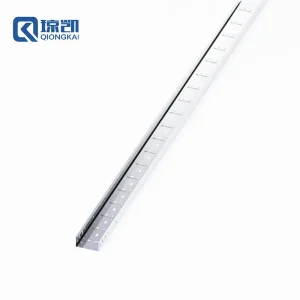
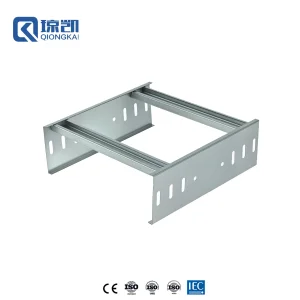
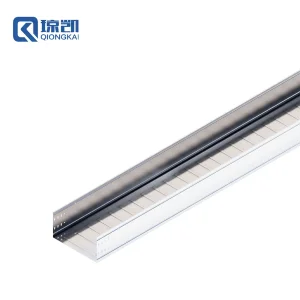
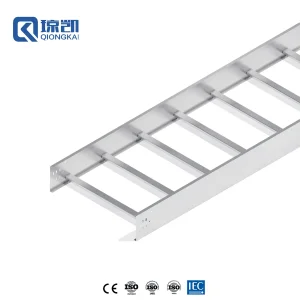
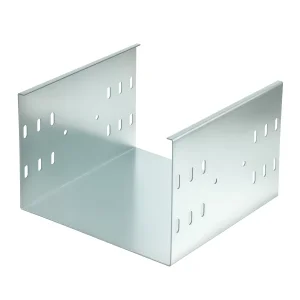
Engineered Cable Ladders, Grid Systems & Hardware Accessories
Coordinate your strut channel framing runs with our heavy-duty ladder trays, mesh grids, bridge fasteners, and high-capacity molded channels.
Frequently Asked Questions: Strut Channels & Framing Systems
Authoritative technical guidance compiled by senior structural engineers for international procurement directors, consultants, and MEP contractors.