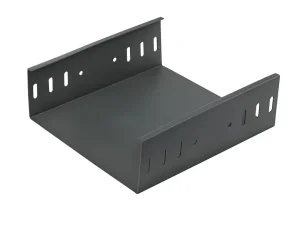
Wholesale Certified Cable Trays & Structural Covers
Precision-fabricated ladder modules, solid ventilated covers, and heavy-duty structural channels manufactured under ISO 9001 and UL/NEMA testing protocols for global mega-infrastructure deployment.
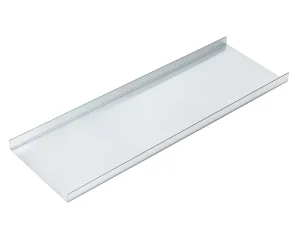
Pre-Galvanized Cable Tray Cover Cable Protection
Request Factory Price
Stainless Steel Marine Use Cable Tray SS316
Request Factory Price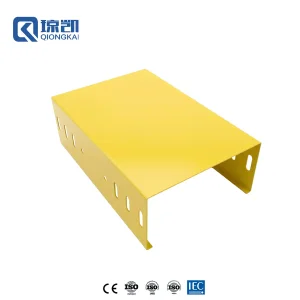
Powder Coated PG Trunking Channel RAL1080
Request Factory Price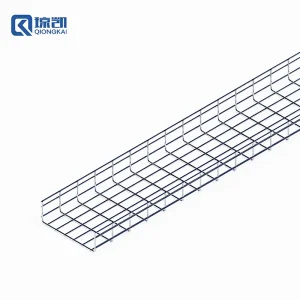
Pre-Galvanized Basket Cable Tray 300*100
Request Factory Price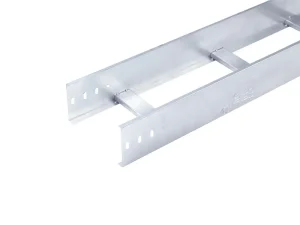
Wholesale Pre-Galvanized Ladder Cable Tray
Request Factory Price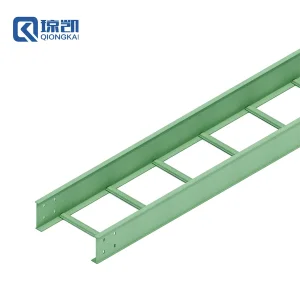
FRP Fiberglass Ladder Type Cable Tray 400*150
Request Factory Price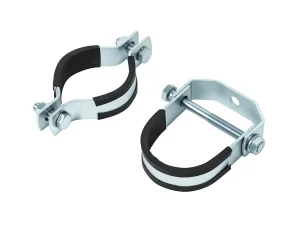
Heavy Duty Modular Pipe Clamping Systems
Request Factory Price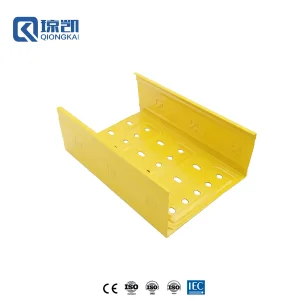
Molded Heavy Duty Pre-Galv Tray 200*100
Request Factory PriceMacro Industry Solutions: High-Amperage Dissipation & Structural Dynamics
Evaluating why leading global engineering, procurement, and construction (EPC) conglomerates specify open ladder profiles over solid-bottom troughs for heavy industrial cabling.
100% Free Air Rating & Ampacity Optimization
Under NEC Article 392 and IEC 60364-5-52, conductor heating ($I^2R$ Joule losses) accelerates dielectric insulation degradation. Ladder-type trays provide continuous cross-ventilation, eliminating derating factors and enabling engineers to downsize copper cross-sections by up to 18% to 26%, dramatically cutting capital expenditure.
Short-Circuit Fault Electromagnetic Containment
During prospective three-phase short-circuit faults (e.g., 50kA/1s), dynamic magnetic repulsion forces can twist or tear weak channel structures. Heavy-duty rungs with continuous robotic fillet welds provide superior torsional rigidity to anchor cleats, preventing catastrophic cable whip without structural distortion.
Deflection Limits & Long-Span Mechanical Integrity
Conforming to NEMA VE 1 and IEC 61537 Class 20C standards, deep side-rail I-beam profiles resist long-term viscoelastic creep and elastic deflection. Maintaining an engineering deflection limit of L/200 across 6-meter to 9-meter unbraced column spans reduces costly structural steel secondary supports.
Wholesale Price Drivers: Factory Cost Modeling & Commodity Margins
An unvarnished breakdown of OEM/ODM factory price structures, raw material surcharges, and logistics optimization for bulk global tenders.
The Anatomy of Ladder Tray Cost Breakdown
Procuring wholesale ladder cable trays directly from tier-1 factories avoids the 25%–40% markup imposed by localized intermediaries. The baseline cost of manufactured containment is determined by three core input elements:
- Hot-Rolled & Cold-Rolled Carbon Steel Coils: Accounts for 58% to 68% of finished ex-works unit cost. Price fluctuations are tied to the London Metal Exchange (LME) and Shanghai Futures Exchange (SHFE).
- Surface Coating Metallurgical Surcharge: Hot-dip galvanizing bath pricing ($Zn$) fluctuates based on global zinc ingot purity (SHG 99.995%). Thickness benchmarks (ASTM A123 $\ge 85\,\mu\text{m}$) directly determine bath immersion duration and chemical pickling cost.
- Robotic Automated Roll-Forming vs. Manual Press Brake: Continuous roll-forming lines reduce labor cost per linear meter to under $0.45/m while achieving zero-tolerance rail straightness tolerances.
Freight Yield & Container Nesting Strategies
Because ladder cable trays have high volume-to-weight ratios, inefficient packing results in freight rates exceeding the actual fabrication cost. Tier-1 manufacturing hubs solve this using smart profile geometry:
- Tapered Inverted Flange Design: Allows smaller tray widths (e.g., 200mm and 400mm) to nest inside wider profiles (600mm and 800mm), multiplying 40ft High Cube (40HQ) container utilization from 1,200 meters to over 3,400 meters.
- Knock-Down (KD) Modular Systems: Bolted rung configurations shipped flat-packed for localized on-site assembly, reducing container shipping volume by up to 65% for ultra-long distance oceanic routes.
- Port-Proximate Production: Manufacturing within 50km of deepwater ports (such as Shanghai Yangshan/Waigaoqiao) reduces inland drayage transit damage and port handling lead times.
| Profile Specification (Width x Depth) | Material & Surface Treatment | Standard Rung Spacing | Safe Working Load (SWL @ 3m Span) | Wholesale Price Range (Ex-Works / Meter) |
|---|---|---|---|---|
| 200 mm x 100 mm (1.5mm Gauge) | Pre-Galvanized Steel (Z275 / EN 10346) | 225 mm (9-inch) | 110 kg/m (74 lbs/ft) | $8.40 – $11.50 |
| 400 mm x 100 mm (2.0mm Gauge) | Hot-Dip Galvanized (ASTM A123 / ISO 1461) | 300 mm (12-inch) | 165 kg/m (111 lbs/ft) | $17.80 – $22.60 |
| 600 mm x 150 mm (2.5mm Heavy Duty) | HDG Post-Fabrication (≥85μm) | 225 mm (9-inch) | 240 kg/m (161 lbs/ft) | $31.20 – $38.90 |
| 800 mm x 200 mm (3.0mm Class 20C) | Stainless Steel 316L (Pickled/Passivated) | 150 mm (6-inch) | 310 kg/m (208 lbs/ft) | $78.00 – $96.50 |
| 400 mm x 150 mm (Structural Pultruded) | FRP / GRP (Isophthalic Polyester / Vinyl Ester) | 250 mm (10-inch) | 180 kg/m (121 lbs/ft) | $34.50 – $46.00 |
*Note: Ex-works price indexes fluctuate with international raw metal indices (LME). Final tender pricing depends on purchase order tonnage, rung attachment method (swaged vs. robotic continuous welded), and special seismic certification requirements.
Localized Compliance & Engineering Standards Assurance
International mechanical testing benchmarks, electrical continuity qualifications, and regional building code integrations.
NEMA VE 1 / CSA C22.2 No. 126.1
The definitive North American standard for metallic cable tray systems. Dictates destructive load-testing procedures under simple beam conditions. Our ladder trays meet NEMA Class 20C, validating a verified load capacity of 100 lbs/ft (149 kg/m) across an unsupported 20-foot (6.1m) span with a safety factor of 1.5.
IEC 61537:2021 European Directives
Governing cable management systems across the EU, Middle East, and APAC. Regulates non-propagation of flame, impact resistance at extreme sub-zero ambient temperatures (-40°C), and Safe Working Load (SWL) deflection limits without exceeding the maximum permissible longitudinal deflection.
UL Classified Grounding & Bonding
Under NEC Article 250, properly bonded ladder tray systems function as Equipment Grounding Conductors (EGC). Precision-stamped factory bonding jumper slots and tested surface contact resistances ensure joint impedance remains below 0.00033 Ohms across standard expansion splice plates.
Localized Application Scenarios: Proven Field Deployments
Engineered solutions delivered to critical global infrastructure, industrial complexes, and extreme environmental zones.
Offshore LNG Terminal & Cryogenic Facilities (Ras Laffan, Qatar)
Challenge: Continuous ambient exposure to chloride-laden Gulf sea spray combined with radiant desert heat exceeding 52°C and severe thermal cycling from cryogenic LNG boiling boil-off gas piping.
Engineering Solution: Custom pultruded fire-retardant vinyl ester FRP ladder trays with UV-inhibited synthetic surfacing veils, reinforced with 316L stainless steel hardware. Zero galvanic corrosion across 15 years of uninterrupted operational uptime.
Hyperscale Tier-IV Data Center Power Backbone (Frankfurt & Singapore)
Challenge: High-density overhead feeder routing for massive 415V/3200A bus-tie links running above containment pods, requiring zero particulate flaking and complete color-coded circuit isolation.
Engineering Solution: High-build epoxy-polyester powder coated pre-galvanized ladder trays in RAL1080 Yellow and RAL3020 Red. Factory-debured smooth rung edges ensured zero micro-abrasion damage to multi-conductor XLPE power insulation.
International Airport Expansion (Shanghai Hongqiao International)
Challenge: Stringent seismic bracing criteria combined with extensive multi-tier cable distribution channels spanning thousands of square meters of terminal and runway utility galleries.
Engineering Solution: Hot-dip galvanized heavy-duty ladder profiles with integrated anti-seismic sway-brace channel assemblies. Passed stringent GB 50981 seismic qualification, ensuring full structural retention under cyclic dynamic shock loadings.
Aggressive Chemical & High-Humidity Agri-Industrial Complex (Paraguay)
Challenge: Severe atmospheric ammonia concentration and frequent high-pressure disinfectant chemical washdowns causing standard galvanized trays to pit and rust within 24 months.
Engineering Solution: Cost-optimized heavy-duty reinforced molded pre-galvanized trays coated with thermoplastic fluoropolymer barriers, tripling lifecycle durability while respecting tight commercial project budgets.
Technological Roadmap: The Evolution of Intelligent Cable Management
Where structural fabrication meets digital automation: how tier-1 factories are modernizing cable management for next-generation facilities.
Robotic Cold Metal Transfer (CMT) Welding
Replacing traditional manual spatter-heavy MIG welding with 6-axis robotic Cold Metal Transfer systems. CMT guarantees spatter-free, ultra-low heat input weld seams between rungs and rails, preserving the base metallurgical zinc coating and eliminating manual deburring defects.
Full BIM Level 3 Parametric Revit Libraries
Modern EPC contractors no longer design with 2D DWGs. We furnish comprehensive BIM LOD 400 Revit families containing exact clearance boundaries, dynamic bend radii, accessory collision detection metadata, and automated bill-of-materials export parameters.
Smart Sensorized Rungs & Strain Monitoring
Next-generation prototypes incorporate integrated fiber-optic distributed Bragg grating (FBG) strain sensors inside structural rungs. These provide real-time distributed temperature monitoring (DTS) and mechanical overload alerts directly to the facility SCADA system.
Wholesale Procurement & Technical Specification FAQ
Clear answers to critical questions faced by project directors, commercial buyers, and electrical design engineers.
Engineered Heavy-Duty Series & Long-Span Ladder Trays
Explore our structural deep-channel ladder assemblies, reinforced ribbed modules, and anti-corrosion finishes engineered for high-tonnage industrial power cables.
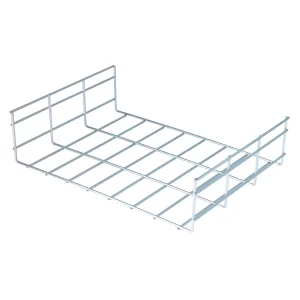
Pre-Galvanized Grid Mesh Cable Tray 500mm
Request Factory Price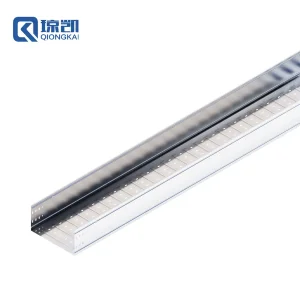
Reinforced Molded Pre-Galv Cable Tray 400*200
Request Factory Price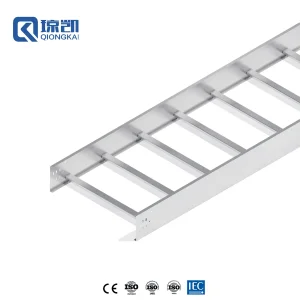
Heavy Duty Pre-Galv Ladder Tray 800*200
Request Factory Price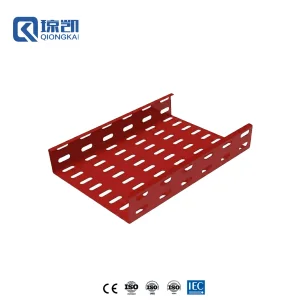
Powder Coated PG Ribbed Tray RAL3020 Red 200*50
Request Factory Price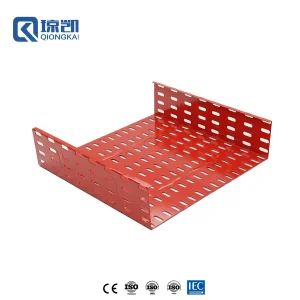
Powder Coated PG Ribbed Tray RAL3020 Red 400*100
Request Factory Price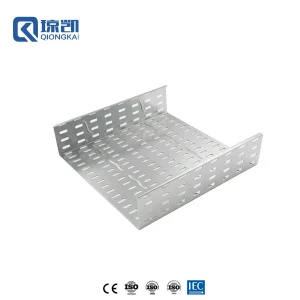
HDG & PG Cable Tray With Reinforce Ribs 400*100
Request Factory Price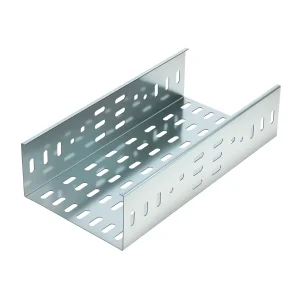
Pre-Galvanized Perforated Cable Tray 200*100mm
Request Factory Price