Primary Containment Inventory
Engineered Perforated Trays & Structural Support Systems
Explore our certified batch of wholesale perforated cable trays, strut channels, and pre-galvanized supports designed for industrial-scale cable routing.
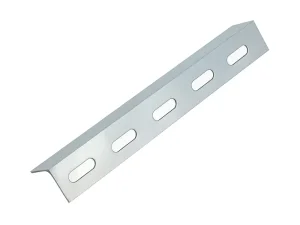
Pre Galvanized Slotted Channel - Angle Iron Framing Supports
Wholesale Slotted Channel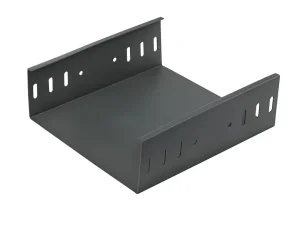
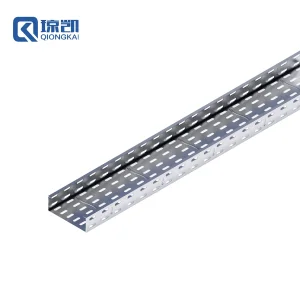
Architectural Pre-Galvanized Powder Coating Perforated Cable Tray
Wholesale Powder Coated Tray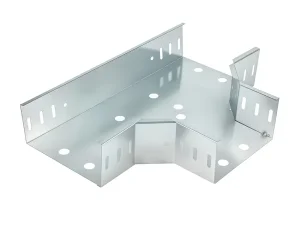
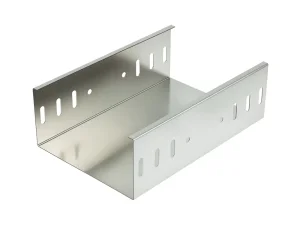
Pre-Galvanized Modular Horizontal Tee Fittings for Perforated Tray
Buy Pre Galvanized TEE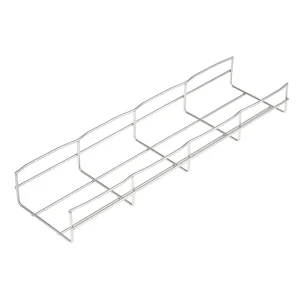
Corrosion-Resistant Stainless Steel 304/316 Perforated Cable Tray 50mm
Wholesale Stainless Tray 50mm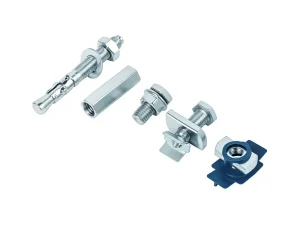
Multi-Directional Seismic Resistant Brackets & Structural Anchors
Buy Seismic Bracket Accessories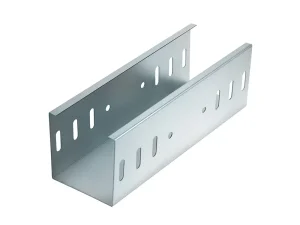
Enclosed Solid-Base Pre-Galvanized Industrial Cable Trunking
Wholesale Pre Galvanized Trunking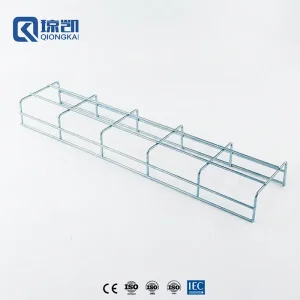
High-Flow Electro-Galvanized Carbon Steel Wire Mesh Tray 100*50
Wholesale EG Basket Tray
Industry Technical Evolution
Engineering Paradigm Shift in Perforated Cable Tray Design
From passive mechanical raceways to active thermal-management systems: how modern cable trays resolve modern high-density electrical bottlenecks.
Optimized Convective Heat Dissipation
Modern electrical infrastructure experiences unprecedented heat flux due to nonlinear harmonic loads. High-spec perforated cable tray design incorporates mathematically patterned CNC ventilation slots that create chimney-effect air currents. This cuts thermal derating factors, preserving cable insulation longevity and reducing copper conductor sizing costs by up to 14%.
Embossed Reinforcing Rib Geometry
By engineering transverse and longitudinal cold-rolled stiffening ribs between perforation arrays, modern tray walls achieve exceptional section modulus without adding deadweight. The result is superior deflection control under full design load according to NEMA VE-1 standards, expanding allowable support spans from 1.5m to over 3.0m without structural buckling.
Electromagnetic Interference (EMI) Attenuation
While wire mesh offers open air, it provides minimal shielding against high-frequency transients. Precision-punched perforated solid profiles provide the optimal compromise: robust magnetic shielding that mitigates cross-talk between high-voltage power feeders and sensitive instrumentation lines, while avoiding enclosed heat traps.
Procurement Intelligence
Global EPC & Enterprise Procurement Requirements
Enterprise buyers across Tier-1 data facilities, petrochemical plants, and rail transport demand more than standard commodity pricing.
| Procurement Pillar | Technical Criterion | Standard Threshold | Qiongkai Manufacturing Compliance |
|---|---|---|---|
| Structural Deflection | Maximum allowable sag under design load | Deflection Ratio < L/200 per IEC 61537 | Passed Verified L/240 stiffness ratio |
| Corrosion Lifecycle | Atmospheric exposure resistance (C3 to CX) | ISO 12944 / ASTM A123 Coating Mass | Passed HDG coating thickness > 65μm – 85μm |
| Earth Continuity | Low-impedance electrical bonding pathway | Bonding Resistance < 0.33 mΩ/meter | Passed Integral copper/galvanized jumpers supplied |
| Dynamic Loading | Seismic drift and peak spectral acceleration | IBC Seismic Design Category D, E, F | Passed Dynamic stress tested with 41-series struts |
| Production Lead Time | Mass production scalability for mega-projects | Batch cycle within 15–20 business days | Passed 12 high-speed continuous forming lines |
Integrated Applications
Macro-Industry Containment Solutions
Field-proven engineering answers tailored to rigorous real-world operating environments.
Hyperscale Data Centers
Delivers high-volume air convection across high-density fiber-optic pathways. Compatible with overhead 41-series strut grids, powder-coated in custom RAL shades for clean white-space zoning and circuit identification.
LNG & Chemical Plants
Engineered with SS316 marine-grade steel or FRP composite trays with flame-retardant vinyl ester resins. Designed to withstand extreme ambient temperatures, wet acid fumes, and severe marine chloride environments.
Transportation Hubs
Proven in aviation terminals like Shanghai Hongqiao International Airport. Features halogen-free, heavy-duty corrosion-resistant finishes designed to withstand dynamic wind turbulence, vibrations, and high seismic loads.
Food & Pharmaceutical Facilities
Incorporates passivated stainless steel 304 with fully de-burred edges. Its smooth, open-perforation geometry prevents residue accumulation and stands up to aggressive daily washdowns using alkaline and acidic detergents.
Quality Assurance & Compliance
Rigorous Metallurgical & Structural Compliance
Every meter of perforated cable tray undergoes standardized multi-point quality checks before packaging and maritime loading.
Coating Uniformity & Salt Spray
Hot-dip galvanizing is performed per ISO 1461 and ASTM A123 standards. Samples undergo continuous ASTM B117 salt spray testing to verify 1,000+ hours without red rust, ensuring reliable outdoor installations in humid coastal climates.
Full-Span SWL Load Testing
Trays undergo static load deflection testing on calibrated test rigs according to IEC 61537 Section 10. Load deflection curves are generated for spans of 1.5m, 2.0m, and 3.0m, giving structural engineers reliable, documented safety margins.
Raw Material Traceability (MTC 3.1)
We work exclusively with certified prime structural coils from Baosteel and Shougang. Every order includes EN 10204 Type 3.1 Mill Test Certificates verifying tensile yield strength, chemical composition, and elongation parameters.
Future Engineering
Engineering Roadmap & Containment Innovation
Our R&D focus for smart buildings, modular plant fabrication, and reduced carbon footprints.
Phase 01
Boltless Snap-Fit Splice Joints
Rolling out toolless push-and-lock splice connectors that cut field assembly labor by 60% while maintaining electrical bonding continuity without extra grounding jumpers.
Phase 02
Zinc-Aluminum-Magnesium (ZAM)
Transitioning lines to advanced ZAM coatings. Offers self-healing edge corrosion protection that outperforms post-dip galvanizing with significantly lower embodied carbon emissions.
Phase 03
Integrated BIM Component Libraries
Full digital integration of our product line with Autodesk Revit and Bentley MEP libraries, including accurate clash detection geometry and dynamic structural load models.
Phase 04
Smart Fiber Optic Health Monitoring
Developing trays with clip-on fiber Bragg grating sensor channels to track real-time temperature hotspots and structural load sag across critical utility tunnels.
Technical FAQ
Frequently Answered Engineering Questions
Detailed insights from our engineering team on selecting, specifying, and installing perforated cable trays.
How do perforated trays compare to wire mesh and solid-bottom trunking?
Perforated cable trays strike the ideal balance between mechanical load strength, heat dissipation, and electromagnetic interference (EMI) protection. Unlike solid trunking, which traps heat and forces significant cable ampacity derating, the perforations allow continuous convective airflow. Compared to wire mesh (basket) trays, perforated sheet steel provides substantially higher transverse load resistance, prevents thin cables from sagging over time, and provides superior electrical shielding against high-voltage induction.
How do I calculate the proper perforation ratio for heat dissipation?
Standard commercial perforated cable trays feature a 25% to 38% open-area pattern. Under IEC 61537, perforation open area exceeding 30% allows engineers to treat the raceway as an open configuration under specific electrical codes, reducing the cable thermal derating penalty. Our technical team can review your expected cable load, ampacities, and ambient operating temperatures to recommend the right hole pattern and tray width for your project.
Can Qiongkai manufacture custom profiles and non-standard gauges?
Yes. Backed by 3 Shanghai factories and over 60 heavy-duty machines, we engineer custom tray side heights (50mm to 200mm), widths (50mm to 1200mm), and sheet thicknesses (1.0mm to 3.0mm). Our production includes custom-designed components, such as high-temperature FRP systems supplied for projects in Qatar and Thailand, and heavy-duty reinforced profiles built for industrial livestock facilities in Paraguay.
What finish should be specified for harsh outdoor coastal environments?
For coastal or marine atmospheres classified C4 to C5/CX, we recommend Hot-Dip Galvanizing (HDG) per ASTM A123 with a minimum coating thickness of 65–85μm, or 316-grade stainless steel with surface pickling and passivation. For chemical facilities where sulfur, chlorine, or acid fumes are present, pultruded Fiberglass Reinforced Plastic (FRP) offers total immunity to electrolytic galvanic corrosion.
How are seismic brackets coordinated with perforated tray systems?
Our 41x41 and 41x82 back-to-back strut channels integrate with anti-seismic braces and multi-angle flange hinges. When seismic events occur, these assemblies dissipate lateral and longitudinal forces directly into the primary building structure. This prevents raceway sway, fastener shear, and catastrophic disruption to critical infrastructure lines.
What documentation and quality certifications accompany export shipments?
Every international shipment includes EN 10204 3.1 Mill Test Certificates for chemical and mechanical coil properties, dry film thickness (DFT) coating reports, IEC 61537 load compliance certificates, and third-party inspection sign-offs (SGS/TÜV upon request). Trays are packed on fumigated solid timber skids with reinforced steel banding and moisture-barrier film for secure maritime container transport.
Comprehensive Containment Solutions
Specialized Tray Profiles, Struts & Heavy-Duty Systems
Complete your electrical installation with our range of stainless steel, composite FRP, and heavy-duty pre-galvanized framing systems.
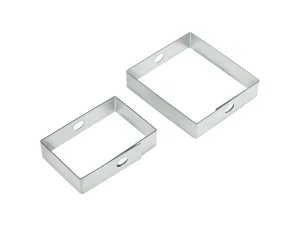
Precision Metal Components & Specialized Galvanized Molds
Wholesale Galvanized Components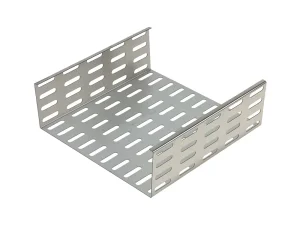
Heavy Industrial Stainless Perforated Cable Tray 300mm - SS304
Wholesale Stainless Tray 300mm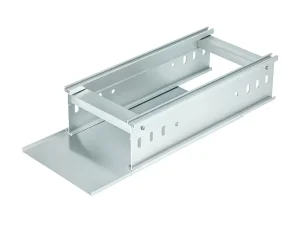
Pre Galvanized & HDG Ladder Cable Tray with Reinforcing Rungs
Buy Heavy-Duty Ladder Tray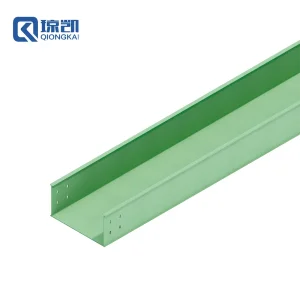
Non-Conductive FRP Composite Cable Trunking Channel 200*100
Buy FRP Channel Trunking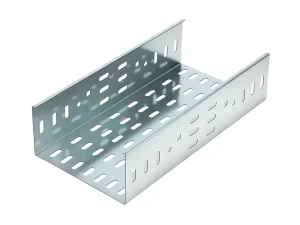
Pre-Galvanized Custom Perforated Cable Tray with Splicing Flanges
Buy Customizable Cable Tray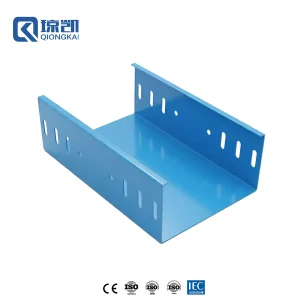
Powder-Coated Cable Trunking RAL5015 Blue System 200*100
Buy Blue Powder Coated Tray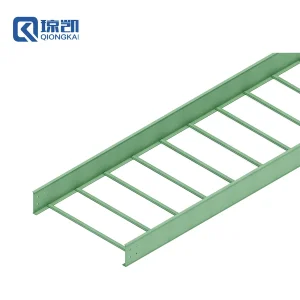
Extra Wide Chemical Resistant FRP Ladder Cable Tray 1000*200
Wholesale FRP Ladder Tray