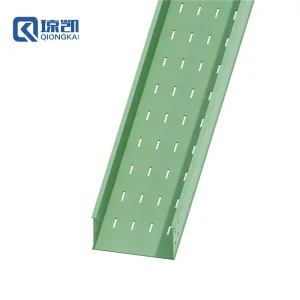
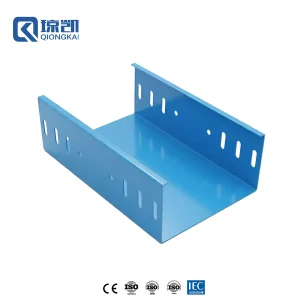
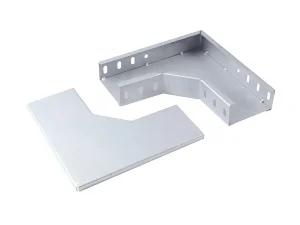
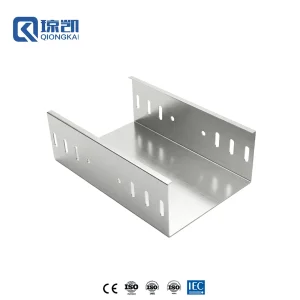
Featured High-Performance Profiles (Part I)
Engineered framing systems, perforated conduits, and modular assemblies directly from ISO-certified factory floors.
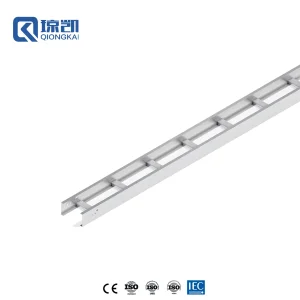
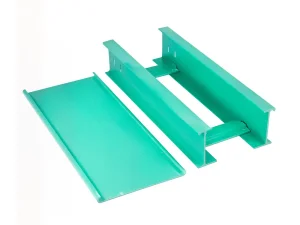
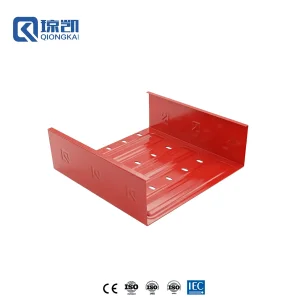
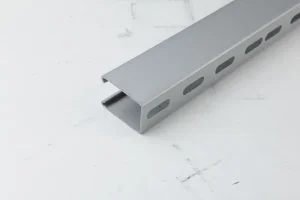
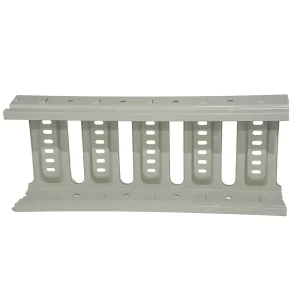
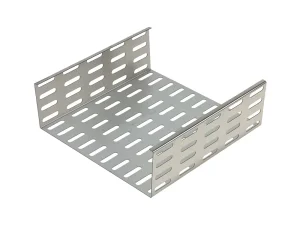
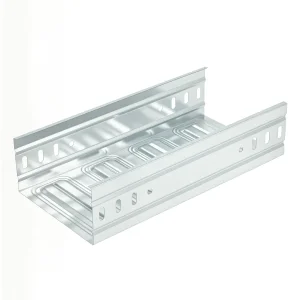
Industrial Evolution: Structural Trajectory of Slotted Channels
The contemporary building services landscape demands flexible, weldless connection technology. Slotted channels (strut channels) have shifted from simple raceway attachments into critical structural nodes across data infrastructure, industrial automation, and energy transitions.
Precision Cold-Forming Roll Profiling
Early-generation strut channels relied on post-forming punching, resulting in stress concentrations and irregular slot pitches. Modern fabrication employs in-line continuous automated punching combined with cold-roll stage calibration.
By synchronizing the cold-forming line with digital tensile controllers, raw strip steel (Q235B, SS304, or SS316) retains fiber orientation integrity. This suppresses deformation along the channel lip and ensures precision fitments for spring-loaded strut channel nuts.
Anti-Vibration Flange Topologies
High-vibration contexts, such as high-velocity fluid pipes or dynamic industrial setups, require advanced mechanical interlocking. Modern slotted channels feature serrated internal return lips designed to grip hardened nut teeth securely.
This micro-interlocking architecture converts dynamic torsional shearing into longitudinal friction, virtually eliminating slippage under cyclic seismic oscillations and dynamic machine reverberations.
Decarbonized Metallurgy & Recyclability
With global green building metrics (LEED, BREEAM) dominating megaproject tenders, structural channel manufacturing has transformed its metallurgical footprint.
Factory operations use recycled high-yield structural steel melted in electric arc furnaces (EAF), coupled with eco-efficient hexavalent-chromium-free passivations to minimize cradle-to-gate carbon footprints.
Global Enterprise Procurement Demands: Analytical Insights
Enterprise buyers, engineering procurement construction (EPC) conglomerates, and MEP distributors require rigorous product accountability. Sourcing strategies emphasize comprehensive supply chain visibility over initial material costs.
Dimensional Tolerancing & Modularity
Discrepancies in wall thickness (1.5mm to 2.5mm) or channel depths (41x21, 41x41, 41x62, 41x82) cause major misalignments on-site. Global contractors insist on guaranteed ±0.15mm tolerances on profile dimensions to verify compatibility with international modular brackets, cantilever arms, and beam clamps.
Third-Party Yield & Tensile Validation
Bulk purchasers now bypass self-declared datasheets. They demand mill test certificates (EN 10204 Type 3.1) showing upper yield points, ultimate tensile strength (UTS), and Charpy impact toughness metrics, verifying the profile will not rupture under extreme operational loads.
Packaging Integrity for Intermodal Transit
Corrosion-protected channels often degrade during marine transit due to saline vapor intrusion and container condensation. Industrial purchasers demand vacuum-sealed film wraps, fumigated hardwood dunnage, high-tensile steel banding, and integrated silica gel packs to keep shipments pristine.
Macro Industry Solutions Matrix
Engineered channel systems must be configured to match environmental corrosivity indices (ISO 12944) and dynamic operational demands across diverse enterprise deployments.
| Vertical Industry Sector | Predominant Operating Challenge | Recommended Strut Metallurgy & Finish | Engineering Specification Objective |
|---|---|---|---|
| Hyperscale Data Halls | Zinc whisker hazards, dense dynamic routing, rapid retrofits | Powder-Coated Carbon Steel (RAL series) or Hot-Dip Mill Zinc | Non-conductive surface isolation, zero short-circuit risks, clear circuit segmentation |
| Offshore LNG & Marine Terminals | Continuous chloride salt spray, thermal cycling, moisture retention | Stainless Steel SS316L / Marine Molybdenum Stabilized Alloys | Resistance to pitting and crevice corrosion (PREN > 25), 30+ year service life |
| Photovoltaic & Wind Installations | Dynamic wind uplifting, UV degradation, mechanical vibration | Hot-Dip Galvanized (HDG ≥85μm) or Zinc-Aluminum-Magnesium (ZAM) | Superior cyclic fatigue endurance, edge corrosion self-healing, high torsional resistance |
| Chemical Processing & Water Treatment | Acid mist, chlorine outgassing, alkaline splash exposures | Fiber-Reinforced Polymer (FRP/GRP) or SS316 with Passivation | Dielectric non-conductive safety, total acid-alkali immunity, zero sacrificial coating breakdown |
Global Compliance Architecture & Regional Engineering Support
Deploying modular supports internationally requires full compliance with regional regulatory codes, seismic certifications, and regional logistics demands.
Building Codes & Seismic Bracing
Slotted channels form the structural core of modern seismic restraint assemblies. Our technical departments design profiles that meet IBC (International Building Code) and Eurocode 8 requirements.
Through certified 3D tri-axial cyclic shake testing, our back-to-back slotted assemblies (such as 41x82 and 41x62) resist longitudinal and lateral seismic ground acceleration without sustaining permanent plastic deformation.
Direct Port Proximity & Logistics Assurance
Our industrial production facilities in Songjiang, Shanghai, operate near the deep-water transshipment docks of Yangshan and Waigaoqiao. This strategic location facilitates continuous high-tonnage container drayage.
We provide full customs export clearance, standardized fumigation protocols, and unified multi-modal shipping documentation for major ports throughout Europe, the Americas, and the Middle East.
BIM/Revit Parametric Libraries
Modern engineering projects rely on early-phase Digital Twin integration. We supply BIM/Revit parametric digital assets with dynamic metadata covering strut weights, beam deflection profiles, and moment capacities.
Mechanical consultants can insert our precise slotted channel geometries into their spatial collision detection workflows, preventing site clashes between structural members, ducting, and piping systems.
Technical Roadmap: Next-Generation Support Engineering
Continuous investment in cold-forming automation, predictive metallurgy, and smart modularity dictates the future trajectory of building service frameworks.
Self-Clamping Springless Quick-Locks
Traditional installations require tightening spring nuts with torque wrenches. Emerging channel designs utilize internal cam-action locks, reducing site assembly labor by up to 60% while maintaining secure, vibration-proof friction fits.
Advanced ZAM (Zinc-Al-Mg) Coatings
Zinc-Aluminum-Magnesium alloy coatings provide self-repairing cathodic protection along perforated slot edges. This technology matches hot-dip galvanizing performance while delivering cleaner surfaces and reduced operational weight.
Integrated IoT Structural Monitoring
Prototype heavy-duty back-to-back profiles now incorporate micro-strain sensors into critical structural spans. These send real-time structural health alerts to facility operations when unexpected seismic displacement or ice buildup occurs.
Frequently Asked Technical Questions (FAQ)
Direct engineering and commercial responses to essential procurement and technical inquiries.
What specific metallurgical standards govern your wholesale slotted channel production?
How does hot-dip galvanized (HDG) slotted channel compare to pre-galvanized (PG) stock?
Can profiles and slot hole patterns be customized for specific project requirements?
What third-party quality control inspections are performed before export shipping?
How do factory-direct channel suppliers improve total project cost efficiency for EPC contractors?
Featured High-Performance Profiles (Part II)
Heavy-duty structural sections, chemical-resistant cable trays, and precision bracket systems designed for challenging operating environments.