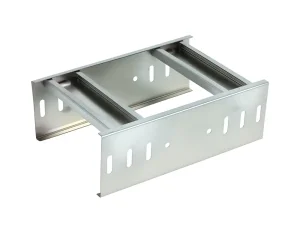
Featured Cable Trays & Unistrut Support Series (Part I)
Direct factory-manufactured structural framing, tray enclosures, and perforated brackets fabricated to ISO 9001 and international electro-technical loading criteria.
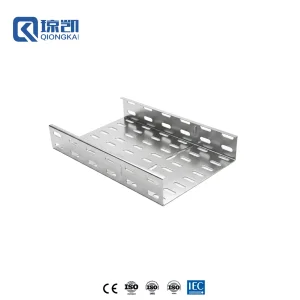
Pre Galvanized / HDG Cable Tray with Reinforce Ribs 200*50
Explore Specifications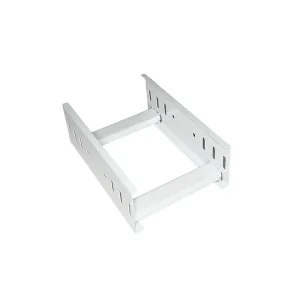
Engineered Powder Coated Heavy Duty Cable Ladder
Request B2B Quote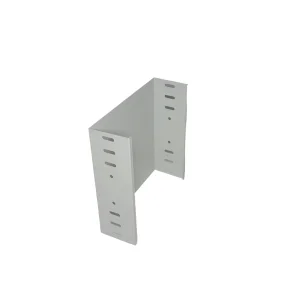
300*100 Industrial Powder Coated Cable Trunking
View Engineering Data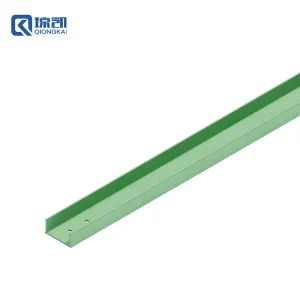
FRP Non-Corrosive Cable Trunking Trough 100*50
Inquire Direct Pricing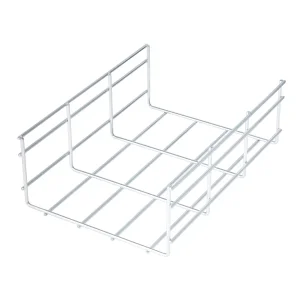
Pre-Galvanized Wire Mesh Grid Cable Tray 200mm
Download Submittal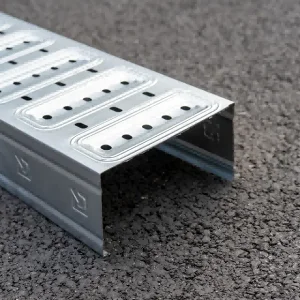
Perforated Energy-Saving Cable Tray 200*100
Get Wholesale Matrix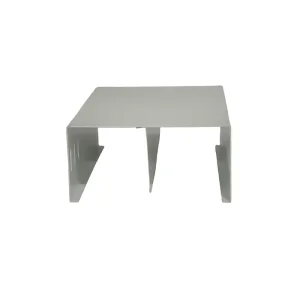
Split Multi-Compartment Cable Trunking Partition
View Dimension Chart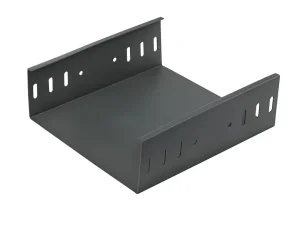
Electrostatic Powder-Coated Pre-Galvanized Tray
Contact Factory DirectThe Global Commercial & Industrial Landscape of Slotted Unistrut Channels
Slotted strut channels (standardized cold-formed steel channels featuring elongated mounting slots along the spine) represent the core backbone of electrical raceways, mechanical piping containment, HVAC suspension, and seismic bracing worldwide.
Supply Chain Realignment
Global procurement has transitioned from local wholesale middle-layers toward direct EPC integration with high-capacity Tier-1 cold-roll manufacturers. Precision CNC slotting, automated packaging, and pre-punched elongation allow large installations to cut labor overheads by up to 34%.
Raw Material Volatility & Hedging
Channel costs correlate directly with hot-rolled coil (HRC) commodities, zinc ingot pricing, and regional environmental surcharges. Top-tier engineering contractors stabilize margins via standardized 3.0m and 6.0m mass runs rather than ad-hoc jobber procurement.
Modular Off-Site Construction
Modern mega-projects (semiconductor cleanrooms, hyperscale cloud data halls, and lithium-ion battery gigafactories) specify pre-assembled strut trapezes delivered on just-in-time schedules, requiring absolute manufacturing tolerances in slot spacing and return lip parallelism.
Wholesale Slotted Strut Channel Price Matrix & Structural Profiles
Base export price guidelines (FOB East Asian Ports / Ex-Works) calculated across standard cold-rolled structural steel grades (Q235B, SS304, SS316, ASTM A1011). Subject to raw steel index variations.
| Profile Designation | Dimensions (W × H) | Wall Thickness | Available Finishes | Yield Strength (Fy) | Wholesale Est. Price (USD/meter) |
|---|---|---|---|---|---|
| Standard Slotted 41×41 | 41.3 × 41.3 mm (1-5/8" × 1-5/8") | 2.5 mm (12 Ga) | Pre-Galv / HDG / SS316 | ≥ 235 - 345 MPa | $3.20 - $5.80 / m |
| Lightweight Slotted 41×41 | 41.3 × 41.3 mm (1-5/8" × 1-5/8") | 1.5 mm - 2.0 mm (16-14 Ga) | Pre-Galv / Powder Coated | ≥ 235 MPa | $2.10 - $3.40 / m |
| Shallow Slotted 41×21 | 41.3 × 21.0 mm (1-5/8" × 13/16") | 2.0 mm - 2.5 mm (14-12 Ga) | PG, HDG, Zinc Nickel | ≥ 235 - 345 MPa | $1.90 - $3.60 / m |
| Deep Structural 41×62 | 41.3 × 62.0 mm (1-5/8" × 2-7/16") | 2.5 mm (12 Ga) | HDG / SS304 / Epoxy | ≥ 345 MPa | $4.80 - $7.90 / m |
| Heavy Duty Back-to-Back 41×82 | 41.3 × 82.6 mm (1-5/8" × 3-1/4") | 2.5 mm × 2 (Continuous Welded) | Hot Dip Galvanized / SS316 | ≥ 345 MPa | $7.50 - $13.20 / m |
| Coastal Marine SS316 41×41 | 41.3 × 41.3 mm | 2.5 mm (12 Ga) | Acid Pickled / Passivated | ≥ 205 MPa | $12.50 - $18.40 / m |
*Note: Pricing factors include continuous laser-welding for back-to-back members, bespoke slot punch pitches (standard 14×28mm vs custom oval patterns), zinc bath immersion depth (ISO 1461 min 65-85μm), and containerized bundle packaging.
Localized Engineering Applications & Macro Industrial Solutions
Strut framing is no longer merely a bracket; it functions as an engineered modular chassis across mission-critical civil and energy infrastructure projects worldwide.
Hyperscale Data Center Infrastructure
High-density server halls require slotted strut trapeze setups suspended from concrete decks. Powder-coated or pre-galvanized channels provide overhead routes for heavy wire mesh basket trays and busway feeders, facilitating quick modifications without on-site welding or drilling.
Seismic Bracing & Resilient Framing
In high seismic zones (IBC / ASCE 7 and Eurocode 8 compliant regions), slotted channels integrate with rigid 45-degree brace fittings and serrated channel nuts to limit lateral and longitudinal displacement during earthquake occurrences, preventing MEP system collapse.
Solar Photovoltaic & Renewables
Rooftop and ground-mount PV racking relies extensively on hot-dip galvanized slotted channels (minimum 85μm zinc layer) or aluminum magnesium zinc (ZM) coated steels to endure severe environmental thermal cycles, constant wind shear, and dynamic structural vibration.
Offshore Oil & Gas / Petrochemical
For aggressive saline marine atmospheres, refinery process decks, and LNG terminals, high-molybdenum SS316L slotted strut systems eliminate pitting and crevice corrosion, supporting critical instrumentation manifolds and heavy armored cables securely.
Cleanroom, Pharma & Food Processing
Sanitary environments demand completely passivated stainless steel or antimicrobial powder-coated profiles. Channels must feature deburred slot apertures to avoid particulate entrapment, allowing wash-downs with aggressive caustic agents.
Subway & Rail Transit Tunnels
Tunnel vault installations demand exceptional fatigue resistance against continuous aerodynamic pressure pulses generated by high-speed trains. Heavy-duty 41×62mm or back-to-back 41×82mm HDG channels provide the necessary flexural modulus.
Strut Channel Technology Roadmap & Industry Trends (2025–2030)
The modular support manufacturing sector is evolving from basic metal bending into highly engineered, digitally verified structural framing systems.
Advanced Zinc-Al-Mg Alloys
Continuous galvanizing via Zinc-Aluminum-Magnesium (ZM/ZAM) coatings is steadily supplanting post-dip HDG, offering self-healing scratch passivation, reduced transport weight, and lower environmental footprints.
BIM & Digital Twin Libraries
Engineers expect native Revit and Tekla parametric families with pre-calculated moment of inertia (Ix, Iy) and stress capacities, linking digital MEP designs directly to fabrication BOMs.
Automated Robotic Welding
For double channels (41×82mm), manual tack welding has transitioned to high-speed dual-wire robotic laser or spot-welding at 50mm intervals, eliminating thermal warping and maintaining straightness.
Rapid Spring-Nut Fastening
Next-gen slotted channels feature precise inward-curled lips with micro-serrations designed specifically for push-and-turn twist nuts, reducing bracket mounting time by over 40% on overhead installations.
Engineering Verification: Slotted vs. Solid Strut Load Capacities
While slotted channels deliver maximum flexibility for threaded rods, conduit clamps, and hex bolts, the punch pattern removes material from the channel spine, affecting section properties.
Section Modulus Derating
Standard elongation punches (typically 9/16" × 1-1/8" or 14 × 28 mm on 2" centers) reduce the section modulus ($S_x$) through the back plane by approximately 10% to 15% compared to solid plain channels. Structural design software must account for this net-section deduction when validating maximum concentrated midpoint loads.
Beam Deflection Criteria
For ceiling trapeze systems, deflection must be limited to $L/240$ or $L/360$ to prevent optical sagging and avoid secondary tension in rigidly connected pipe couplings or delicate optical fiber tray raceways. Back-to-back combinations (41×82) dramatically increase stiffness, raising moment of inertia exponentially.
Torsional Rigidity
Open-lipped C-sections exhibit an eccentric shear center outside the channel spine. Where cantilevered bracket arms extend outward, eccentric moments can cause torsional twisting. Channel manufacturers recommend reinforced gusset brackets or dual-channel back-to-back layouts to counter torsional forces.
Frequently Asked Questions: Wholesale Unistrut Channels & Procurement
Essential technical, logistics, and testing queries addressed directly by manufacturing engineers.
The industry standard slot is 14 mm × 28 mm (9/16" × 1-1/8") punched at 50 mm (2") continuous centers. This accommodates standard M10, M12, 3/8", and 1/2" threaded rods and hex hardware. Custom slots (including 11 × 25 mm or continuous round holes) can be punched during high-volume coil processing.
Pre-galvanized channel is cold-formed from steel coils already coated with zinc (approx. 15-20 μm). It is economical and best suited for dry indoor air. Hot-dip galvanizing (HDG) immerses the fully fabricated channel into a molten zinc bath (≥ 450°C) producing a 65-85 μm thick alloy layer, delivering total protection along all cut edges and punched slots for harsh outdoor use.
Standard stock lengths (3.0 m and 6.0 m) in 41×41 mm and 41×21 mm typically carry a minimum order quantity of 300 to 500 pieces per size. Custom punch configurations, specific powder coat colors, or stainless steel runs generally require a 5-ton or full 20ft container procurement volume.
Yes, provided the channel profiles, connection angles, and channel spring nuts carry certified dynamic load ratings under seismic qualification codes (such as OSHPD or standard IBC lateral force procedures). Serrated channel lips are critical to prevent slippage under dynamic seismic accelerations.
Featured Cable Trays & Unistrut Support Series (Part II)
Heavy-duty structural components, seismic brackets, precision basket channels, and marine stainless steel raceways.
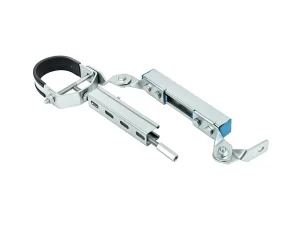
Engineered Heavy-Duty Seismic Bracing Bracket
Check Wholesale Price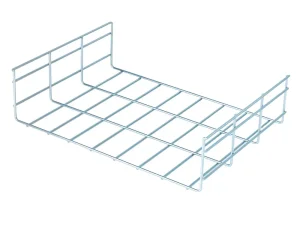
Pre-Galvanized Grid Mesh Cable Tray 400mm
Download Data Sheet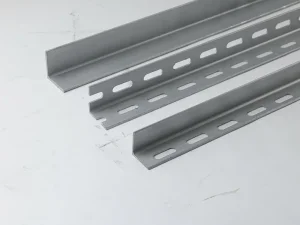
Pre-Galvanized Non-Perforated Angle Support Iron
Inquire Specifications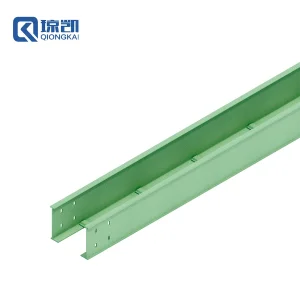
FRP Corrosion-Proof Cable Ladder 200*150
Request Factory Quote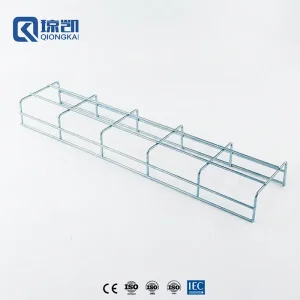
EG Basket Wire Mesh Grid Tray 100*50
View Load Ratings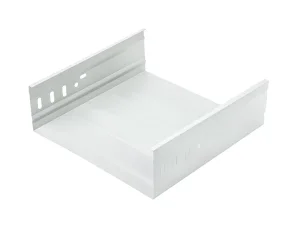
Lightweight High-Tenacity Aluminum Molded Tray
Request Technical PDF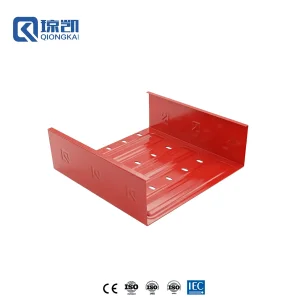
Heavy Duty Molded Tray RAL3020 Red 300*100
View RAL Powder Specs