
High-Spec Stainless & Heavy-Duty Product Showcase
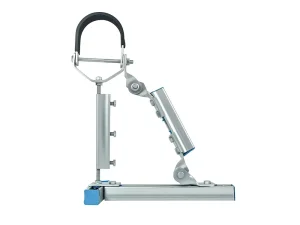
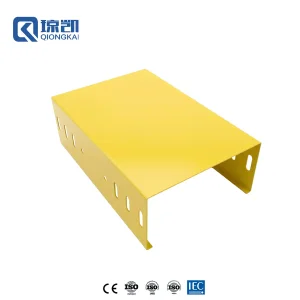
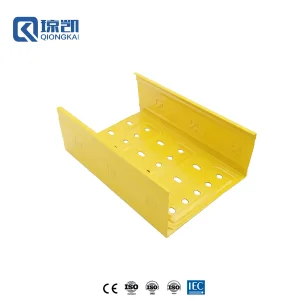
Explore our foundational structural brackets, perforated cable channels, and heavy-duty coated cable management series, engineered with strict millimeter tolerances for zero field rework.
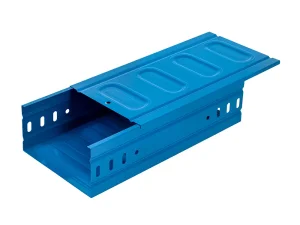
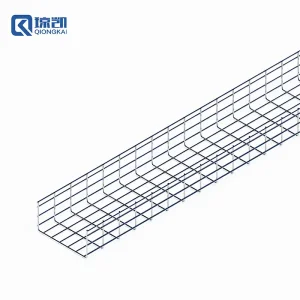
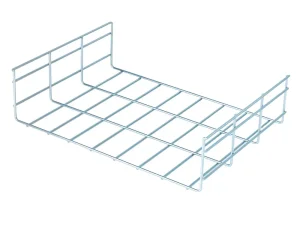
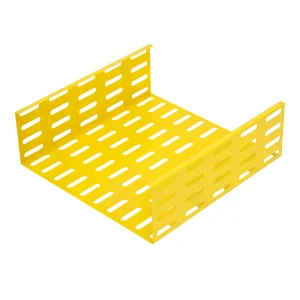
Global Enterprise Procurement Dynamics for Stainless Steel Trunking
In modern high-consequence infrastructure, cable trunking is no longer treated as a simple passive enclosure. It is a critical line of defense for plant safety, continuous operational uptime, and chemical contamination barrier management.
Whole-Life Cycle Cost (LCC / TCO) Advantage
While galvanized carbon steel carries lower initial material acquisition costs, corrosive ambient conditions trigger recoating and premature structural failure within 3 to 7 years. Authentic AISI 304 and marine-grade AISI 316L stainless steel trunking eliminate maintenance expenditures, delivering operational service lifetimes exceeding 35 years with zero passive containment downtime.
Strict Metallurgical Traceability & PREN Values
Global EPC contracts demand certified Mill Test Certificates (EN 10204 3.1) proving chemical composition. For coastal and marine facilities, our 316L alloy delivers a Pitting Resistance Equivalent Number (PREN) above 25.0, systematically resisting localized chloride ion pitting attack and intergranular stress corrosion cracking across severe thermal cycles.
EMI/RFI Shielding & Data Integrity
Industrial automation, pharmaceutical robotics, and mission-critical hyperscale data halls face severe electromagnetic interference. Solid-bottom stainless steel trunking provides high-permeability electromagnetic attenuation up to 80 dB, protecting low-voltage control signals and Cat6A/fiber communication channels from high-voltage switchgear interference.
Macro Industry Engineering Solutions
From cryogenic liquefaction terminals to cleanroom pharmaceutical manufacturing suites, our engineering team configures stainless steel trunking profiles to solve specific environmental pain points.
Food, Beverage & Dairy (EHEDG Hygienic Standards)
Standard trunking forms bacteria traps along seams. We manufacture seamless IP66/IP69K sanitary sloped-cover trunking with crevice-free internal radiuses, food-grade EPDM continuous sealing gaskets, and 240-grit electro-polished surfaces that withstand aggressive daily caustic washdown regimes.
Marine, Offshore Oil & Gas (DNV-GL / ABS Compliant)
For offshore floating production storage (FPSO), drilling rigs, and seaside desalination plants exposed to marine salt fog, our 316L stainless steel trunking and unistrut brackets provide unmatched resistance to cyclic stress cracking, certified under ASTM B117 salt spray testing beyond 3,000 hours.
Semiconductor Cleanrooms & Advanced Battery Gigafactories
Microchip lithography facilities require ISO Class 1 to Class 4 cleanroom compliance. We offer ultra-low outgassing passivation treatments with mechanical deburring that prevent metallic particulate shedding, static charge accumulation, and airborne molecular contamination (AMC).
Rail Transit, Underground Metro & Tunnel Containment
Underground railway infrastructure mandates extreme halogen-free fire resistance (EN 45545-2 HL3). Our structural stainless steel cable enclosures guarantee structural integrity during emergency evacuation scenarios, maintaining emergency power circuits under ASTM E119 fire curve testing up to 1,000°C.
Chemical Processing & Desalination Plants
Vapor clouds containing hydrochloric acids, sulfur compounds, or high-temperature steam quickly destroy traditional zinc finishes. We supply heavy-wall austenitic and duplex stainless steel trunking systems with proprietary chemical pickling and passivation, securing zero degradation in extreme pH environments.
Material Grade & Specification Benchmark
Compare metallurgy, mechanical tensile yield ratings, atmospheric corrosion performance, and design load limits across international cable containment benchmarks.
| Material / Specification | Alloy Composition | PREN Value | Corrosion Class (ISO 9223) | Tensile Strength (MPa) | Optimal Project Application |
|---|---|---|---|---|---|
| AISI 304 (1.4301) | 18% Cr - 8% Ni | 18.0 - 20.0 | C3 / C4 Industrial | 520 - 720 | Indoor food processing, commercial cleanrooms, metro stations |
| AISI 316 (1.4401) | 16.5% Cr - 10% Ni - 2% Mo | 23.0 - 25.0 | C5-I Industrial Harsh | 530 - 730 | Wastewater treatment, coastal infrastructure, pharmaceutical plants |
| AISI 316L (1.4404 Low C) | 17% Cr - 12% Ni - 2.5% Mo (C ≤ 0.03) | 25.0 - 27.5 | C5-M Severe Marine | 500 - 700 | Offshore oil & gas platforms, marine vessels, subsea tunnels |
| Duplex 2205 (1.4462) | 22% Cr - 5% Ni - 3% Mo - 0.16% N | 35.0+ | Extreme Marine CX | 680 - 880 | Desalination plants, chemical processing scrubbers, coastal splash zones |
| Pre-Galvanized (PG) Carbon | Zinc Layer 12–15 µm | N/A | C1 / C2 Dry Interior | 350 - 500 | Standard commercial ceilings, indoor IT data rooms, drywall channels |
Technical Roadmap & Containment Future Outlook
The convergence of modular construction, BIM LOD 400 digital twins, and industrial IoT sensing is revolutionizing cable containment manufacturing and field integration.
BIM LOD 400 & Digital Twin Ready Models
We provide full Revit and IFC native 3D library components for our complete stainless steel trunking series, including accurate dead-weight, bending moments, fill volume calculations, and fastener clash detection parameters for rapid MEP coordination.
IoT-Enabled Thermal & Vibration Monitoring
Under our technological roadmap, trunking covers integrate non-invasive fiber optic and wireless MEMS sensors. This allows facilities management teams to monitor cable heat dissipation, partial discharge phenomena, and seismic displacement in real time.
Decarbonized Metallurgy & ESG Compliance
In response to global Carbon Border Adjustment Mechanism (CBAM) standards, our stainless steel raw materials are sourced from electric arc furnaces (EAF) with over 85% recycled scrap content, cutting embedded carbon footprints by up to 60% compared to blast-furnace routes.
Localization Support & Regulatory Compliance
Ensuring frictionless site acceptance and customs clearance across the European Union, the Americas, the Middle East, and Asia-Pacific markets.
IEC 61537 & NEMA VE-1 Compliance
All trunking and ladder lines undergo rigorous third-party load deflection testing. Under full working load capacity (WLC), maximum deflection ratios never exceed L/200, guaranteeing full compliance with both North American NEMA and international IEC standards.
EN 10204 3.1 Certified Documentation
Every shipment is accompanied by complete inspection dossiers, including heat number traceability, mechanical yield/tensile test certificates, spectral alloy analysis, and passivation verification reports according to ASTM A967/A380 standards.
Port Logistics & Seaworthy Export Packing
Located in Songjiang, Shanghai, adjacent to Yangshan Port and Waigaoqiao Terminals, our facilities ensure fast maritime dispatch. Products feature protective PE surface film, custom edge corner guards, fumigated wooden framing, and desiccant-controlled container packs.
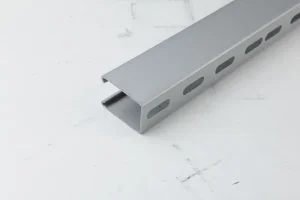
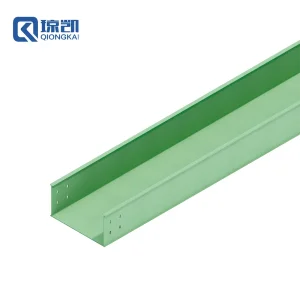
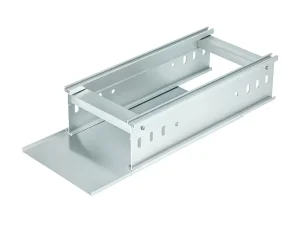
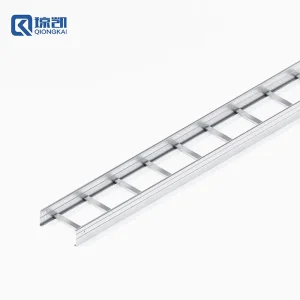
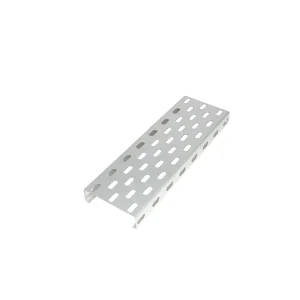
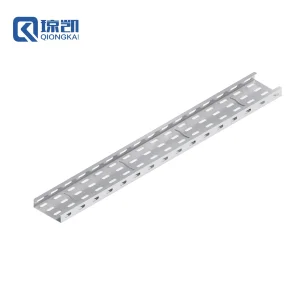
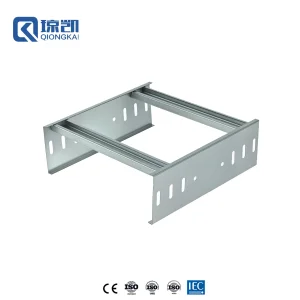
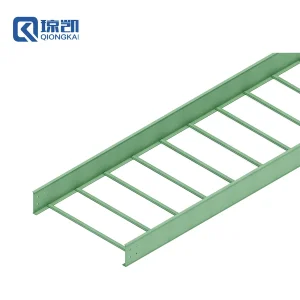
Heavy-Duty Strut Channels, Cable Ladders & Composite Systems
Complete your project bill of materials with fire-rated channels, corrosion-resistant FRP composites, and heavy industrial ladder trays built for extreme spans.
Technical & Procurement Frequently Asked Questions
In-depth answers addressing structural deflection limits, metallurgical selection, hygienic washdowns, and turnkey factory customization capabilities.
What is the definitive engineering difference between SS304 and SS316L cable trunking?
The core difference lies in molybdenum content and carbon percentage. AISI 304 contains 18% Chromium and 8% Nickel, providing excellent corrosion resistance in mild industrial environments, municipal utilities, and indoor hygienic cleanrooms. However, when exposed to chlorides, coastal marine salt atmospheres, or chemical de-icing agents, 304 is prone to localized pitting and crevice corrosion.
AISI 316L incorporates 2.0% to 3.0% Molybdenum and reduces carbon to below 0.03%. The molybdenum significantly increases the material's Pitting Resistance Equivalent Number (PREN > 25.0) and creates a more stable, self-healing passive chromium-oxide surface film that withstands continuous saline fog, acidic industrial vapors, and chemical washdowns without risk of intergranular sensitization during welding.
How do you verify deflection limits according to NEMA VE-1 and IEC 61537?
Our structural trunking profiles are load-tested over simple spans ranging from 1.5 to 6.0 meters using calibrated steel ingots to simulate actual cable loading. Per NEMA VE-1 guidelines, maximum structural deflection at the mid-span should not exceed L/200 of the span length (e.g., maximum 15 mm deflection over a 3,000 mm support span) under total working load plus a 90 kg concentrated safety load.
We generate precise Deflection-to-Load curves for each side-rail profile height (50mm, 75mm, 100mm, 150mm) and sheet gauge (1.2mm to 2.5mm), giving consulting engineers certified structural data for seismic and heavy-duty industrial specifications.
How does stainless steel trunking resolve galvanic corrosion risks on site?
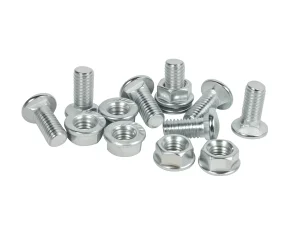
Galvanic corrosion occurs when dissimilar metals (e.g., zinc-galvanized carbon steel brackets and stainless steel trunking) make electrical contact in the presence of an electrolyte. To prevent galvanic degradation in our clients' installations, Qiongkai supplies complete matching systems: SS304/SS316 strut channels, cantilever arms, threaded rods, spring nuts, and hex bolts.
When connecting to existing structural steel beams, we supply specialized non-conductive UV-stabilized neoprene or EPDM isolation pads and nylon dielectric sleeve washers, eliminating metal-to-metal electrolytic contact.
What hygienic washdown and ingress protection features are available for food & pharma?
For processing zones governed by EHEDG, FDA, or 3-A Sanitary standards, flat covers can allow fluid accumulation and bacterial growth. We manufacture specialized 15° to 45° sloped-roof snap-on covers that ensure continuous drainage during daily sanitation routines.
Additionally, our hygienic series features continuous food-safe closed-cell silicone or EPDM gaskets achieving IP66 and IP69K high-pressure washdown ratings (up to 100 bar at 80°C), preventing water or cleaning chemical ingress from damaging underlying power and sensitive automation wiring.
Can you manufacture non-standard widths, custom knockouts, and complex fittings?
Yes. Shanghai Qiongkai operates three specialized manufacturing facilities equipped with CNC fiber laser cutters, multi-axis automated CNC press brakes, and robotic laser welding stations. We regularly produce non-standard widths (from 50mm up to 1200mm), variable wall gauges (1.0mm to 3.0mm), pre-punched conduit knockouts, integrated cable divider barriers, and custom reducers, tees, and cross-junctions engineered to fit constrained plant layouts.
What is your typical production lead time and export shipping arrangement?
Standard profile orders (100x50, 150x100, 200x100, 300x100) are typically manufactured within 10 to 18 business days from engineering shop drawing sign-off. Custom configurations or large multi-container shipments (FCL) require approximately 20 to 25 days.
Located in the Songjiang district of Shanghai, our factory is situated within a 45-minute freight radius of both Shanghai Yangshan Deepwater Port and Waigaoqiao Terminals. We handle CIF, FOB, DDP, and DAP terms with export crating, plastic shrink-wrapping, corner reinforcements, and desiccants to ensure complete moisture protection during maritime shipping.
Request an Engineered Stainless Containment Proposal
Send your project Bill of Quantities (BOQ), single-line diagrams, or engineering tender specifications to our senior technical team for free span calculations, finish verifications, and factory-direct wholesale pricing.