
Precision Engineered Components
Primary Heavy-Duty Product Showcase (Series A)
Engineered tray assemblies, molded channels, and structural cable supports ready for high-volume wholesale procurement and fast custom delivery.
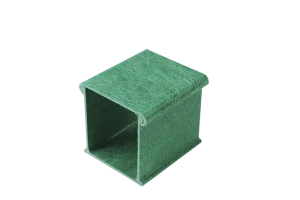
Wholesale Chemical-Resistant FRP Trough Cable Tray 50mm
View Specifications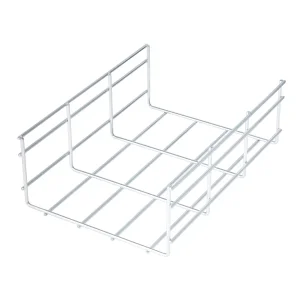
Wholesale Pre-Galvanized Grid Wire Mesh Cable Tray 200mm
View Specifications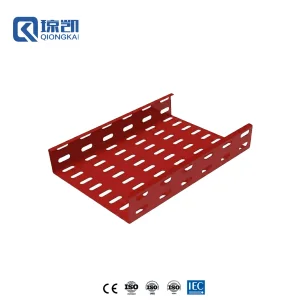
Powder Coated PG Cable Tray with Reinforcing Ribs - RAL3020 Red 200*50
View Specifications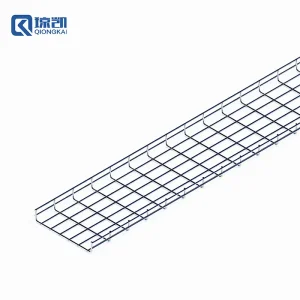
Pre-Galvanized Wire Basket Grid Cable Tray 300*50 Series
View Specifications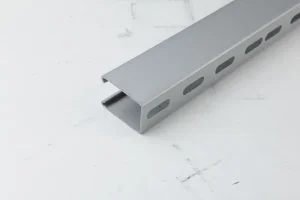
Heavy Structural Fireproof C Slotted Support Strut Channel
View Specifications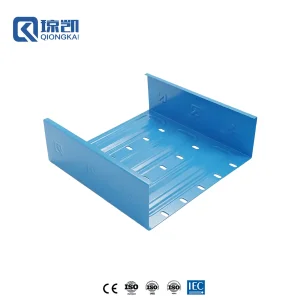
Reinforced Molded PG Tray Low Perforation - RAL5015 Blue 300*100
View Specifications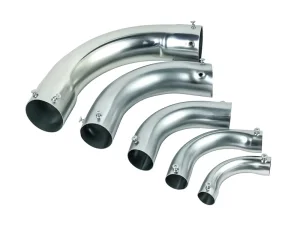
All-Radius Pre-Galvanized Rigid Steel Cable Conduit Systems
View SpecificationsEngineering Authority & Whitepaper Scope
Vertical Outside Elbow Systems: Structural Mechanics & Design Principles
Navigating the complex mechanical dynamics of high-ampacity cable downward drop transitions in mission-critical plant architecture.
In three-dimensional raceway engineering, vertical changes in elevation represent the most mechanically sensitive transitions within an entire cable distribution network. A Vertical Outside Elbow (VOE)—often categorized in mechanical specifications as an external riser bend or a vertical drop fitting—is engineered specifically to route cable conductors from a horizontal plane downward into a vertical drop, keeping the tray bottom on the outer perimeter of the radius. Because gravity exerts an unremitting downward tensile force along the longitudinal axis of conductors, an outside bend undergoes substantial compounding stress that horizontal elbows never encounter.
Under continuous conductor loading, the cables resting over a vertical outside elbow generate both tangential pulling loads and severe normal pressure along the heel and rungs of the fitting. Standard horizontal trays rely primarily on static transverse deflection calculations governed by NEMA VE 1 / CSA C22.2 No. 126.1 and IEC 61537. However, vertical outside elbows require rigorous verification of sidewall yield strength, rung weld shear resilience, and minimum bend radius (MBR) retention. Failure to configure the proper radius and rung spacing results in localized sidewall crimping, cable insulation cold-flow, sheath rupture, and eventual dielectric phase-to-ground faults.
Critical Difference: Vertical Outside Elbow (VOE) vs. Vertical Inside Elbow (VIE)
While a Vertical Inside Elbow redirects a horizontal run upward (where cables rest naturally against the tray bottom via gravity throughout the bend), a Vertical Outside Elbow transitions a run downward. As conductors make this transition, they break away from the horizontal tray bed and press tightly over the outer curve. If the curve lacks continuous tangential support or exceeds the cable manufacturer's permissible sidewall bearing pressure (SWBP), internal copper or aluminum cores migrate through the extruded dielectric layer, causing irreversible catastrophic insulation breakdown.
Global Market Evolution
Emerging Trends Reshaping Vertical Cable Management
Macro industrial transformations demanding reinforced vertical routing fittings, modular geometries, and automated prefabrication.
Hyperscale AI Data Centers
Massive high-density fiber and 48V DC busway transitions demand generous 600mm and 900mm radius outside elbows. Modern GPU cluster halls generate unprecedented heat; outside elbow rungs must feature maximum venting perforations to eliminate heat pockets while preserving bend geometry under bundling pressures exceeding 150 kg/m.
LNG, Offshore & Marine Extreme C5-M
Liquefied natural gas processing plants and marine superstructures present aggressive coastal salt spray, sulfur dioxide exposure, and violent acoustic vibrations. Specifiers are moving away from light galvanizing toward deep-tank Hot-Dip Galvanizing (85µm+ minimum), Marine-Grade SS316L, and structural pultruded FRP systems designed to endure 30+ year service lives.
Gigafactories & EV Battery Plants
Automated cleanroom facilities require clean, particle-free raceways completely void of micro-burrs and zinc whisker shedding hazards. Electro-polished austenitic stainless steel (SS304/316) and polyester powder-coated elbows with cured cross-linked resins provide the sterile, non-conductive surfaces mandatory for lithium-ion manufacturing cell floors.
Prefabricated Modular Skids & BIM Integration
Global general contractors increasingly mandate Offsite Construction (DfMA). Vertical outside elbows must strictly correlate with Revit/BIM LOD 400 libraries, enabling zero-cut factory prefabrication. Integrated snap-fit spline plates cut field bolting duration by up to 65%, eliminating hot-work permits on industrial job sites.
Procurement Specification Protocol
Metallurgy, Finishes & Corrosion Engineering Matrix
Match chemical ambient conditions, galvanic compatibility, and lifecycle targets with verified metallurgy standards.
| Material / Treatment | Reference Standard | Corrosion Class | Tensile Strength | Ideal Industrial Environments | Lifecycle Target |
|---|---|---|---|---|---|
| Pre-Galvanized Steel (PG) | ASTM A653 / EN 10346 | C1 - C2 | 350 - 420 MPa | Commercial office towers, dry data halls, HVAC ceiling voids | 15 - 20 Years |
| Hot-Dip Galvanized (HDG) | ASTM A123 / ISO 1461 | C3 - C4 | 400 - 550 MPa | Outdoor switchyards, heavy petrochemical plants, steel mills | 30 - 50 Years |
| Stainless Steel (SS304) | ASTM A240 / AISI 304 | C3 - C4 | 515 - 620 MPa | Food processing, dairy, pharmaceutical production, cleanrooms | 40+ Years |
| Stainless Steel (SS316L) | ASTM A240 / AISI 316L | C5-I / C5-M | 485 - 580 MPa | Marine platforms, coastal desalination, subsea landfall tunnels | 50+ Years |
| Fiberglass Polymer (FRP/GRP) | ASTM D3917 / UL 94 V-0 | Extreme Acid/Alkali | 280 - 320 MPa (Flex) | Battery acid charging rooms, wastewater treatment, pickling bays | 40+ Years |
| Powder Coated Carbon Steel | ASTM D3359 / Qualicoat | C2 - C3 | 380 - 480 MPa | Architectural raceways, color-coded fire and security circuits | 20 - 25 Years |
Technical Bend Radius & Sidewall Bearing Pressure Mechanics
When selecting a vertical outside elbow, the most frequent failure point in field engineering is an undersized bend radius. According to National Electrical Code (NEC) Article 392 and IEEE 1185, the minimum bending radius of single or multi-conductor power cables typically varies from 8× to 12× the overall cable diameter (OD), while high-voltage armored feeds may demand up to 15× OD.
Using a 300mm radius outside elbow on a 15kV heavy-armored feeder creates localized radial compressive stress at the apex rung. The cable calculates a resultant vector force: F_radial = (2 × T × sin(θ/2)) / R, where T is vertical longitudinal suspension tension, θ is the arc angle, and R is the fitting radius. By increasing radius from 300mm to 600mm or 900mm, the contact footprint expands, halving rung point-load pressure and securing lifelong conductor integrity.
Real-World Engineered Deployments
Macro Industry Solutions & Global EPC Proven References
Shanghai Qiongkai’s structural cable support systems deployed across demanding infrastructure and industrial installations worldwide.
Civil Aviation Hub
Shanghai Hongqiao International Airport
Supplied heavy corrosion-resistant CT series trunking and custom-radius vertical outside elbow assemblies across central electrical distribution tunnels. Maintained strict vibration dampening and zero-failure fireproofing protocols.
Offshore LNG Complex
Qatar LNG Marine Expansion Facility
Engineered custom-profiled, high-load structural sections and hot-dip galvanized outside riser drops designed to withstand extreme Arabian Gulf marine salt fog, ambient temperatures exceeding 50°C, and sandstorm abrasion.
Petrochemical & Heavy Industrial
Rayong Chemical Plant Expansion, Thailand
Delivered high-capacity pultruded FRP-lined composite vertical drops with fire-retardant vinyl ester resins to isolate high-voltage power lines from aggressive acidic chemical vapors in tropical monsoon conditions.
Agri-Industrial Megaproject
Agro-Processing Conglomerate, Paraguay
Supplied over 15,000 meters of optimized cost-saving heavy-duty pre-galvanized cable trays, vertical riser fittings, and bracket support structures under stringent delivery timelines and budget targets.
European Grid Modernization
EPC Power Substation Grid Package, Italy
Manufactured full CE-certified Hot-Dip Galvanized cable ladder networks with 90° and 45° vertical outside elbows compliant with EN 61537, packaged for precision multi-container sea freight delivery.
Manufacturing Excellence & Factory Direct Assurance
Factory Operations, QA/QC Protocols & Compliance Guarantee
Three owned production plants in Shanghai providing complete vertical integration from coil decoiling to finished export shipping.
100% Certified Metallurgy
Direct sourcing of mill-certified high-yield carbon steel coils, prime 304/316 stainless ingots, and virgin fiberglass rovings. Every heat lot is tracked with complete 3.1 Material Test Certificates (MTC) documenting chemical composition and elongation yield properties.
Rigid In-House QA Testing
Our ISO 9001:2015 accredited lab performs continuous deflection proof testing per NEMA VE 1 / IEC 61537, magnetic zinc coating thickness checks (Elcometer calibrated), weld penetration dye tests, and automated salt-spray chambers exceeding 1,500 hours (ASTM B117).
Portside Logistics Advantage
Strategically situated in Songjiang District, Shanghai, adjacent to both Yangshan Deepwater Port and Waigaoqiao Container Terminals. We engineer customized steel export racking and sea-worthy barrier wrapping to eliminate moisture ingress and handling transit deformation.
Support Span Rules & Splice Placement Mechanics Near Vertical Drops
A frequent error during installation of vertical outside elbows is incorrect placement of trajectory support hangers. In standard horizontal straight runs, structural engineers adhere to the quarter-span rule (0.25L), locating splice plates near the point of zero bending moment (inflection point). However, at a vertical transition, the load changes fundamentally from distributed downward bending into combined cantilever moment and shear tension.
According to NEMA VE 2 Installation Standards, vertical outside elbows must receive structural support within 600 mm (24 inches) of each fitting extremity on the horizontal approach run, along with positive anchor bracing immediately below the vertical descent. Omitting intermediate supports induces secondary torsional deflection on the connecting horizontal straight trays, warping side rails and loosening coupler fasteners under cyclical thermal expansion.
Innovation Horizon 2025–2035
Technology Roadmap: The Future of Vertical Cable Containment
Pioneering smart raceway technologies, sustainable eco-metallurgy, and digital twin compatibility.
LOD 400 Parametric BIM Libraries
Every standard and custom vertical outside elbow from Shanghai Qiongkai is backed by millimeter-accurate Revit family models with built-in metadata for fill weight, MBR clash-detection algorithms, and seismic anchor reaction points, accelerating MEP coordination sprints.
Self-Healing ZAM® Alloy Coatings
Pioneering next-generation Zinc-Aluminum-Magnesium (ZAM) metallic finishes. In coastal marine atmospheres, ZAM forms an impermeable, highly protective simonkolleite barrier that automatically flows over shear cuts and drilled holes, delivering up to 3× the corrosion resistance of standard HDG.
Integrated Fiber-Optic DTS Sensing
Developing pre-slotted sensor rungs within vertical outside elbow geometries designed to integrate Distributed Temperature Sensing (DTS) and acoustic monitoring fiber. This empowers facility managers with real-time detection of high-resistance hotspot anomalies before cable fire ignition.
Expert Engineering Q&A
Frequently Asked Questions on Vertical Outside Elbows
In-depth technical answers addressing installation criteria, load mechanics, and procurement standards.
What is the standard radius specification for vertical outside elbows?
Standard manufactured radii are 300 mm (12 in), 450 mm (18 in), 600 mm (24 in), and 900 mm (36 in). The appropriate selection depends strictly on the Minimum Bending Radius (MBR) of the largest single conductor or multi-conductor cable installed, calculated as 8× to 12× cable outer diameter. Using too small a radius risks dielectric damage under tension.
How do you calculate cable clamping intervals on the vertical drop after an outside bend?
Per NEC 392.20 and IEC 61537, heavy conductors cannot hang suspended without positive clamping. Vertical strain relief cleats or cable cleats must be anchored to tray rungs at intervals not exceeding 1.2 meters to 1.5 meters for armored power cables, and 0.9 meters for unarmored multicores. This removes vertical tensile load from the outside elbow's apex rungs.
Can Qiongkai supply custom bend angles like 30°, 45°, and 60° vertical elbows?
Yes. While 90° outside bends represent standard vertical shafts, complex industrial pipe racks often mandate non-perpendicular transitions. With 12 automated roll-forming and CNC press-brake lines across our 3 Shanghai factories, we manufacture calibrated 30°, 45°, and 60° vertical outside elbows with matching splice connector kits.
How do you mitigate galvanic corrosion between cable tray elbows and support brackets?
Galvanic corrosion occurs when dissimilar metals contact in the presence of an electrolyte. For example, stainless steel trays mounted directly to carbon steel strut channels cause accelerated galvanic decay of the zinc layer. We supply dielectric isolation pads, non-conductive FRP shims, and heavy-duty nylon or neoprene isolation hardware to completely break electrical conductivity.
Why are reinforced ribs essential on wide vertical outside elbow fittings?
On trays exceeding 300 mm in width, the radial tension of conductors presses down over the rungs, creating an inward bowing force on the side rails. Cold-formed longitudinal reinforcing ribs on the sidewall increase structural Section Modulus (Z) by up to 35% without adding excess tare weight, preventing buckling failure under maximum permissible cable loads.
What documentation and factory acceptance testing (FAT) accompanies export orders?
All wholesale export shipments include EN 10204 3.1 Mill Test Certificates, ASTM A123 galvanizing thickness verification reports, third-party load deflection inspection dossiers, and packing manifests detailing sea-freight container weight distributions. Independent inspection agencies like SGS, BV, and TÜV regularly witness factory testing at our facilities.
Complete Support Architecture
Secondary Heavy-Duty Product Showcase (Series B)
Strut fittings, heavy ladder assemblies, trunking runs, and seismic brackets engineered for complete modular compatibility.
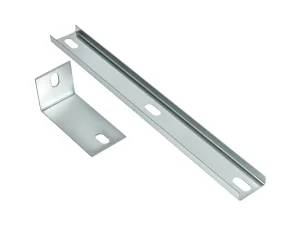
Structural Pre-Galvanized L-Shaped Support Bracket Systems
View Specifications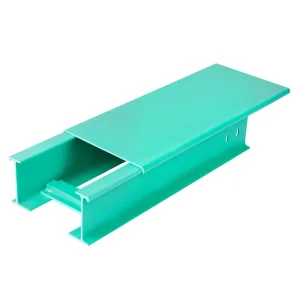
Corrosion-Resistant Lightweight FRP Ladder Type Cable Tray
View Specifications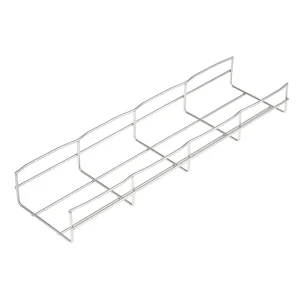
Austenitic Stainless Steel Hygienic Cable Tray 50mm Height
View Specifications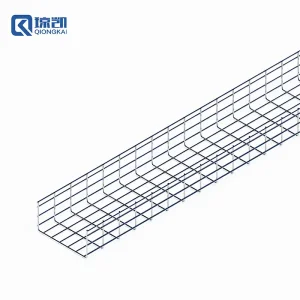
High-Load GI Galvanized Wire Mesh Tray 300*150 Capacity
View Specifications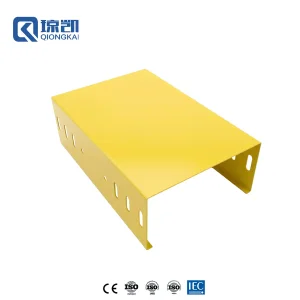
Powder Coated Cable Trunking Trough Channel - RAL1080 Yellow 200*100
View Specifications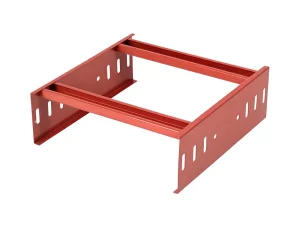
Pre-Galvanized Powder Coated Cable Ladder System - Signal Red
View Specifications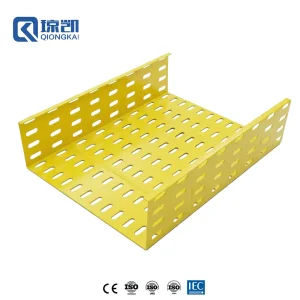
HDG / PG Cable Tray with Reinforcing Ribs - RAL1080 Yellow 300*100
View Specifications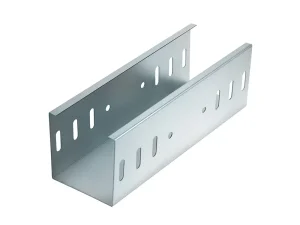
Continuous Heavy Commercial Pre-Galvanized Enclosed Cable Trunking
View SpecificationsInitiate Your Engineering Consultation & Request Wholesale Factory Pricing
Transmit your single-line schematics, structural raceway layouts, or Bill of Quantities (BOQ). Our Shanghai senior engineering team provides comprehensive 3D clash-verified proposal packages within 24 business hours.