
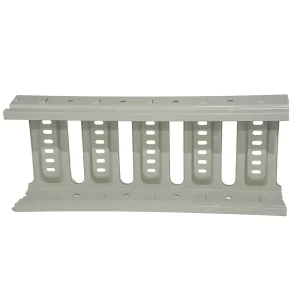
Primary Lineup
Engineered Cable Routing Systems & Structural Channels
Direct-from-factory catalog items featuring certified metallurgical finishes, precision cold-roll-formed steel profiles, and reinforced load-carrying geometries.
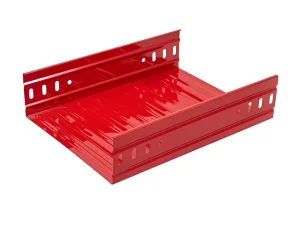
Buy Fireproof Red Pre Galvanized Powder coated molded cable tray Supplier
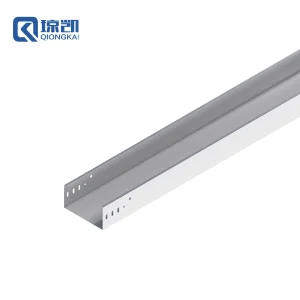
Wholesale Carbon Steel PG HDG SS Stainless Steel Cable Trunking Trough Channel 200*100
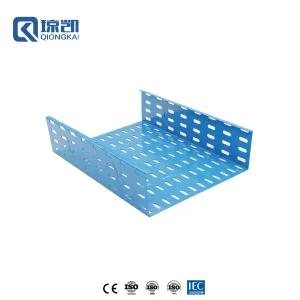
Buy Powder Coated Carbon Steel PG HDG Cable Tray with Reinforce Ribs - RAL5015 300*100
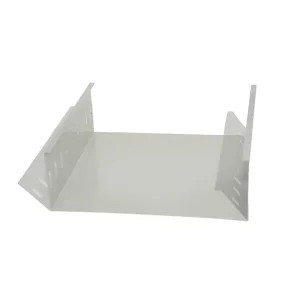
Wholesale Non-perforated Powder Coated Cable Tray Suppliers, Factories
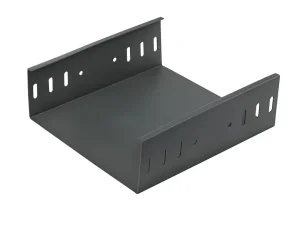
Wholesale Pre Galvanized Powder Coating Cable Tray Factory, Price
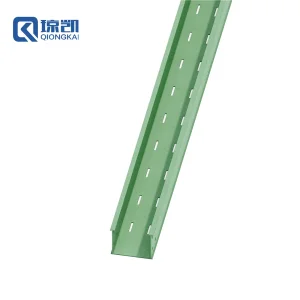
Wholesale FRP Perforated Cable Tray 200*100 Manufacturer, Factory
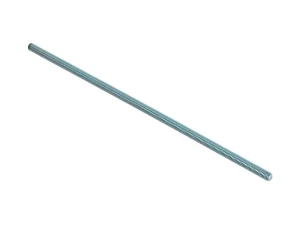
Buy Metal Hanger Rod High Tensile Support System Supplier, Price
Technical Whitepaper: Core Engineering Overview
Structural Load Mechanics and Deflection Criteria in High-Density Cable Routing
Wire mesh cable trays, colloquially referred to across mechanical and electrical engineering disciplines as basket trays, serve as the backbone of open-architecture pathway systems in modern mission-critical facilities. Unlike enclosed cable trunking or traditional stamped perforated cable trays, the open-wire grid matrix provides superior heat dissipation, 360-degree environmental ventilation, and unhindered visibility for high-speed fiber-optic and power cabling architectures.
However, Specifying the correct wire mesh cable tray requires a quantitative evaluation of continuous beam deflection mechanics governed by IEC 61537 (Cable management – Cable tray systems and cable ladder systems) and NEMA VE 1 / VE 2 (Metal Cable Tray Systems). The structural integrity of wire mesh trays is characterized by the relationship between the longitudinal wire diameter, transverse cross-wire spacing (commonly pitched at 50 mm × 100 mm grid increments), and the mechanical resistance of automated resistance projection spot welds.
L/200
Max Allowable Deflection
1160 N
Minimum Weld Shear Force
120 kA
Short-Circuit Withstand
< 5 mΩ
Electrical Earth Continuity
Structural beam deflection ($\delta$) between consecutive cantilever arms or trapeze supports spaced at distance $L$ under uniformly distributed load $w$ is calculated under the standardized formula:
δ = (5 × w × L⁴) / (384 × E × I) ≤ L / 200
Where $E$ represents the Modulus of Elasticity of structural carbon steel (210 GPa) or austenitic stainless steel (193 GPa), and $I$ defines the second moment of area across the tray perimeter geometry. Premature failure occurs when dynamic thermal expansion, harmonic resonance induced by high-velocity airflow, or unbalanced bundle loads exceed the elastic limit, precipitating micro-fissures at the welded intersection points.
Metallurgical Surface Finish Taxonomy & Atmospheric Corrosion Rates
Specifying the inappropriate metallurgical coating constitutes the single greatest cause of premature physical breakdown in industrial cable pathway installations. In compliance with ISO 12944 (Paints and varnishes – Corrosion protection of steel structures by protective paint systems) and ISO 9223 (Corrosion of metals and alloys), the operational lifespan of wire mesh cable trays is contingent upon protective galvanic sacrificial layers:
- Electro-Galvanized (EG / EZ - ASTM B633 / BS 7371-12): Zinc electrodeposition ranging between 5 to 12 µm. Specifically engineered for environmentally controlled indoor installations (Class C1/C2) such as raised-floor computer rooms and enterprise IT suites. Substandard post-rinse chemical passivation poses a recognized catastrophic threat known as Zinc Whisker growth. Under mechanical compression, conductive zinc filaments (1-2 µm diameter) can detach, circulate in server airflow, and induce terminal micro-circuit bridging across dense CPU/GPU blade server architectures.
- Continuous Hot-Dip Pre-Galvanized (PG - EN 10346 / ASTM A653): Steel wire continuously passed through molten zinc prior to mesh fabrication, yielding a uniform metallurgically bonded coating thickness between 15 to 20 µm. Suited for commercial ceiling voids and clean light-industrial plant distribution (Class C2). Note that raw edge clipping during field modifications creates exposed wire tips, which rely entirely on zinc galvanic sacrificial protection to prevent red-rust creep.
- Batch Hot-Dip Galvanized After Fabrication (HDG - ISO 1461 / ASTM A123): The completed wire mesh tray assembly is totally immersed in a molten zinc bath maintained at 450°C. The metallurgical reaction creates successive zinc-iron alloy phases (Gamma, Delta, Zeta) topped by a ductile pure zinc layer (Eta), achieving a minimum coating thickness of 60 to 85 µm. Engineered specifically for harsh outdoor environments, chemical plants, wastewater treatment, and solar fields (Class C3/C4).
- Austenitic Stainless Steel (AISI 304 / 316L - EN 10088): SS304 provides baseline passive chromium oxide film protection for food processing and pharmaceutical facilities. For coastal installations within 5 kilometers of saltwater spray, offshore platforms, and aggressive petrochemical zones, low-carbon SS316L (containing 2.0-2.5% Molybdenum) is mandatory. The Pitting Resistance Equivalent Number (PREN = %Cr + 3.3%Mo + 16%N) must exceed 23 to successfully repel localized chloride pitting and crevice corrosion under continuous high-humidity environments.
| Finish / Alloy | Standard Specification | Coating Depth | Corrosivity Class (ISO 12944) | Expected Service Life | Primary Application Environment |
|---|---|---|---|---|---|
| Electro-Galvanized (EG) | ASTM B633 / EN 12329 | 8 – 12 µm | C1 to C2 | 15+ Years (Dry Indoor) | Data centers, telecom closets, raised floor plenums |
| Pre-Galvanized (PG) | EN 10346 / ASTM A653 | 15 – 20 µm | C2 | 20+ Years (Indoor/Controlled) | Commercial office HVAC voids, light logistics hubs |
| Hot-Dip Galv (HDG) | ISO 1461 / ASTM A123 | 65 – 85 µm | C3 to C4 | 35+ Years (Outdoor Industrial) | Rooftop power runs, heavy industrial plants, solar arrays |
| Powder Coated over PG | ISO 12944-5 / ASTM D3359 | 60 – 100 µm | C2 to C3 | 25+ Years | Color-coded data hall zones, architectural open ceilings |
| Stainless Steel 304 | AISI 304 / EN 1.4301 | Passivated Base Metal | C3 to C4 | 50+ Years | Food, beverage, sanitary dairies, pharmaceutical cleanrooms |
| Stainless Steel 316L | AISI 316L / EN 1.4404 | Pickled & Passivated | C5-M (Marine Extreme) | 50+ Years | Offshore LNG facilities, marine topsides, coastal ports |
Manufacturing Infrastructure
China Factory 4.0: Supply Chain Resilience & Production Scale
How Shanghai Qiongkai Industry Co., Ltd. consolidates deep metallurgical engineering, automated multi-point welding robotics, and port logistics to protect global megaproject schedules.
The global construction industry faces persistent challenges: supply chain volatility, raw material price inflation, and stringent on-site delivery milestones. Shanghai Qiongkai Industry Co., Ltd. (operating continuously since 2005 from our headquarters in the Songjiang Port Science and Technology City of Shanghai) provides an institutional manufacturing buffer against these project risks.
Rather than functioning as an intermediary trading enterprise, Qiongkai anchors its international supply commitment across three state-of-the-art production hubs spanning over 30,000 square meters of workshop area. Our facilities house 12 fully integrated automated assembly lines and more than 60 heavy-duty computerized stamping, wire straightening, and roll-forming machines.
Robotic Multi-Spot Projection Welding
Our digital multi-head welding stations execute synchronized multi-point projection welds in a single stroke cycle. Microprocessor control prevents Heat-Affected Zone (HAZ) embrittlement, ensuring a certified minimum shear threshold exceeding 1,160 Newtons per wire node without micro-cracking.
Comprehensive In-House QA Metallography
Every steel heat lot undergoes spectral analysis for chemical composition, tensile testing under ASTM E8, digital coating thickness magnetic induction verification, and neutral salt spray (NSS) testing per ASTM B117 to guarantee compliance prior to factory acceptance sign-off.
Port Proximity & Nested Freight Densification
Located in the Songjiang district, minutes from Shanghai's Waigaoqiao and Yangshan deepwater ports. Our engineers implement precision-nested basket geometries that fit trays inside larger profiles, reducing shipping volume by up to 45% and lowering total landed TCO for EPC contractors.
Global Engineering Applications
Macro Industry Solutions: Engineered for Critical Environments
From Shanghai Hongqiao International Airport to extreme offshore LNG platforms in the Middle East, Qiongkai systems are engineered to withstand demanding site environments.
Hyperscale AI & Cloud Data Centers
Modern high-density data halls operating 40 kW+ racks require overhead basket trays that prevent thermal trapping. Qiongkai powder-coated wire mesh systems provide zero obstruction to laminar ceiling airflow, while our proprietary post-coat finishing technology eliminates zinc whisker risks for mission-critical compute infrastructure.
Offshore LNG, Marine & Petrochemical
In high-salinity and sulfide atmospheres (such as our customized profiled support supply for an offshore LNG export facility in Qatar), we supply electro-polished SS316L and structural pultruded FRP systems. These configurations resist chloride stress corrosion cracking under extreme solar radiation and ambient humidity.
Hygienic Food & Beverage Processing
Sanitary standards (3-A, EHEDG) prohibit cable routing designs that harbor microbial colonies or standing water. Qiongkai wire mesh basket trays feature smooth rounded T-weld side rims that eliminate cable jacket abrasion, open pathways that allow full washdown sanitation, and self-draining performance under high-pressure cleaning.
Solar Utility & Renewable Energy Hubs
Rooftop commercial PV systems and ground-mounted utility fields require cable pathways engineered for UV stability and multi-decade thermal cycling (-40°C to +85°C). Qiongkai heavy-duty hot-dip galvanized (HDG) trays and custom FRP channels maintain structural rigidity without sagging or brittleness over 25+ year project lifetimes.
Aviation Hubs & Public Transit Networks
Public infrastructure projects, such as our corrosion-resistant CT series cable trunking installation for Shanghai Hongqiao International Airport, demand zero-halogen fire safety, high structural loading for heavy power feeders, and dynamic vibration resistance under continuous transit operations.
Agri-Tech & High-Ammonia Environments
Livestock breeding and agrochemical facilities present severe corrosive atmospheres with high levels of atmospheric ammonia and humidity. Demonstrated by our project supply for a large pig farm facility in Paraguay, Qiongkai delivers cost-optimized heavy-duty trays engineered to prevent corrosion-driven collapse.
Engineering Foresight
Technical Roadmap & Future Outlook: Next-Gen Cable Support Technologies
The cable management landscape is shifting from passive structural supports to engineered systems optimized for sustainability, safety, and digital monitoring. Engineering firms and EPC contractors face increasing demands for lower embodied carbon, accelerated modular construction schedules, and smart asset diagnostics. Qiongkai is investing in three technical developments through 2030:
1. Zinc-Aluminum-Magnesium (ZAM) Alloy Coatings
While traditional batch hot-dip galvanizing remains an industry standard, next-generation continuous Zinc-Aluminum-Magnesium (ZAM) alloy coatings represent a significant step forward in galvanic protection. By blending 1.5% to 3% Magnesium and Aluminum into molten zinc, the resulting protective layer develops an insoluble, tightly adhering basic zinc salt film when exposed to atmospheric moisture. This microstructure delivers self-healing corrosion resistance along sheared wire edges, offering up to three to five times the service life of traditional pre-galvanized coatings at a lower environmental impact.
2. Distributed Fiber-Optic Thermal Sensing Integration
As power densities in hyperscale AI computing and high-voltage transmission pathways continue to rise, undetected cable hotspotting poses severe operational risks. Qiongkai is prototyping smart wire mesh cable trays equipped with integrated snap-in channels designed for distributed fiber-optic temperature sensors (DTS). By analyzing continuous backscatter Raman laser pulses along the fiber run, facility monitoring platforms can locate localized temperature spikes with 0.5-meter accuracy before insulation breakdown or catastrophic fire events occur.
3. Low-Embodied-Carbon Green Steel Manufacturing
With international certifications like LEED v4.1 and BREEAM demanding verified Environmental Product Declarations (EPD), Qiongkai is aligning its metallurgical sourcing with low-carbon electric arc furnace (EAF) and direct reduced iron (DRI) steel producers. By utilizing recycled ferrous feedstocks and green energy across our manufacturing operations, our goal is to achieve a 40% reduction in Scope 1 and Scope 2 embodied carbon across our wire mesh cable tray product lines by 2028.
Procurement Auditing Framework
Global Enterprise Procurement Strategy: Direct Sourcing Verification Protocol
Procuring commercial-grade cable support systems from overseas manufacturers requires robust quality assurance protocols to avoid project delays, compliance failures, and compromised load ratings. Lead MEP procurement directors should enforce the following four-tier verification protocol when evaluating suppliers:
Tier 1: Mill Test Report (MTR) Traceability
Ensure that all raw wire rods are backed by heat-specific EN 10204 Type 3.1 Mill Test Certificates. These documents should verify yield strength (minimum 350 MPa for structural carbon steel), elongation (> 15%), and tight carbon-equivalent limits to guarantee ductile weld points.
Tier 2: Third-Party Safe Working Load (SWL) Verification
Do not rely exclusively on static CAD models. Demand physical Type Test reports verified by independent bodies (such as UL, CE, or SGS) in accordance with IEC 61537 clause 10. Trays must successfully sustain 1.5 times the Safe Working Load without structural collapse.
Tier 3: Electrical Earth Bonding Certification
When basket trays serve as protective earth conductors (CPC), require electrical continuity test logs showing an impedance drop across mechanical splice junctions of less than 50 mΩ (or under 5 mΩ along un-spliced runs) per IEC 61537 clause 11.
Technical Clarifications
Engineering Q&A: Frequently Asked Technical Questions
Clear, technically rigorous answers to common questions raised by electrical consultants, structural engineers, and commercial procurement directors.
What are the key technical differences between IEC 61537 and NEMA VE 1 cable tray standards?
While both standards define design criteria for metal cable trays, they differ in testing methodologies and safety factors. IEC 61537 is the dominant international and European standard, specifying Safe Working Load (SWL) tests with an applied safety factor of 1.7 against structural failure, alongside mandatory electrical continuity, flame retardancy, and impact resistance tests. NEMA VE 1 (governing North American projects) classifies trays based on span distance and load-bearing classes (e.g., Class 12C, 20A) using a safety factor of 1.5, focusing on continuous beam configurations under ANSI standards. Qiongkai designs and manufactures systems compliant with both frameworks.
How does Shanghai Qiongkai prevent the zinc whisker phenomenon in data center installations?
Zinc whiskers are crystalline structures that can form on electroplated carbon steel due to internal compressive stress. In modern high-velocity data centers, these tiny conductive filaments can shear off, enter server airflow, and cause short circuits on microchips. Qiongkai mitigates this through two manufacturing methods: (1) Applying continuous pre-galvanized wire or post-applied architectural epoxy powder coatings over specialized conversion layers, completely encapsulating the zinc; or (2) Recommending passivated austenitic Stainless Steel 304/316L, which eliminates zinc whisker risks at the material level.
Can wire mesh cable trays be field-modified into bends, tees, and reducers without compromising structural integrity?
Yes. A primary operational advantage of wire mesh cable trays is their field flexibility. Bends, tees, and reducers can be fabricated on-site by severing specific transverse wire sections with offset side-action cutters and bending the remaining run to the desired radius. Structural strength is preserved by installing heavy-duty corner splice plates, stabilizing reinforcement bars, and grounding clamps across joints. When trimming wire ends, cuts should be made flush with the longitudinal wire to prevent damage to cable jackets, and exposed cut ends must be treated with a 95% zinc-rich cold-galvanizing compound to maintain corrosion resistance.
What are the electrical earthing and bonding requirements across wire mesh basket tray splices?
Per IEC 61537 clause 11 and NFPA 70 (NEC Article 392), when wire mesh cable trays function as an Equipment Grounding Conductor (EGC), all mechanical splices must maintain verified electrical continuity. Standard bolted joint assemblies (such as fast-fix spring couplers) must demonstrate a continuous electrical resistance of less than 50 milliohms across the joint. In mission-critical environments or where heavy fault currents are anticipated, engineers typically specify supplementary copper grounding jumpers (e.g., 16 mm² or 25 mm² braided copper bonding straps) bolted directly to the wire mesh through serrated grounding lugs to satisfy UL/CE earthing criteria.
What is the standard production lead time and MOQ for custom-width or bespoke powder-coated tray orders?
With 12 fully operational assembly lines, standard catalog profiles (width 50 mm to 600 mm) in PG, EG, and HDG finishes are commonly available from buffer stock or manufactured within a 7- to 14-day production cycle. For custom wire diameters, non-standard channel depths (such as 150 mm or 200 mm sidewalls), or specific architectural RAL powder coatings, our standard factory lead time is 15 to 21 days for full container load (FCL) consignments. Minimum order quantities (MOQs) depend on the custom profile, typically starting around 500 linear meters for customized specifications.
Industrial Catalog
Heavy-Duty & Specialized Structural Support Series
Expanded product line featuring non-metallic composite profiles, high-load molded channels, and marine-certified stainless steel cable containment solutions.
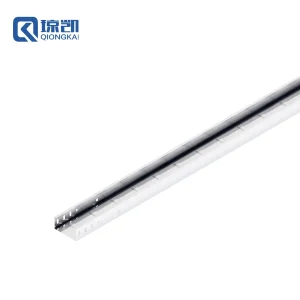
Wholesale Heavy Duty Cost Saving Reinforced Molded Pre Galvanized Cable Trunking 100*50
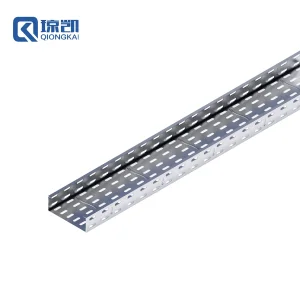
Buy Reinforced Medium duty Pre-galvanized HDG Perforated Cable Tray 150*50 Price
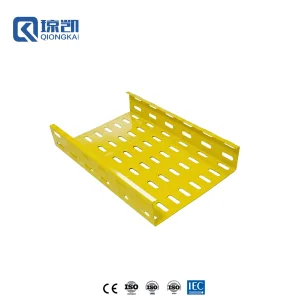
Wholesale Powder Coated PG HDG Cable Tray with Reinforce Ribs - Yellow 200*50
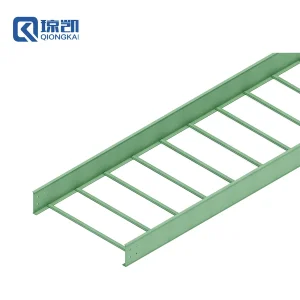
Wholesale FRP Ladder Type Cable Tray 1000*200 Heavy Load Manufacturer, Price
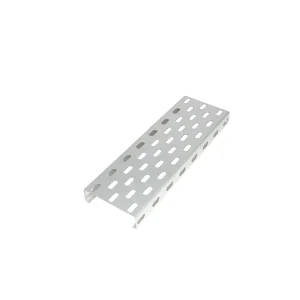
Buy Stainless Steel Marine Use Cable Tray Corrosion Resistant Supplier, Price
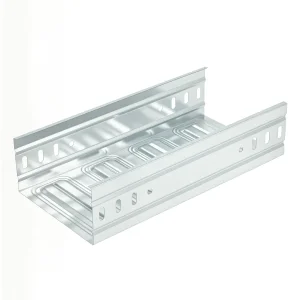
Buy Pre Galvanized molded cable tray 200mm Heavy-Duty Suppliers, Factory
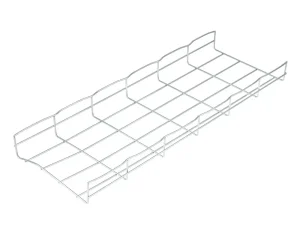
Wholesale Pre Galvanized grid and wire mesh type cable tray Manufacturers
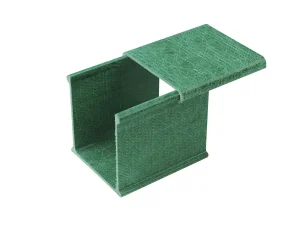
Buy Fiberglass Reinforced Plastic Cable Tray Heavy Chemical Resistant Factory
Direct Factory Engagement
Optimize Your Project's Cable Pathway Systems
Connect with our Shanghai engineering team to review load schedules, confirm finish specifications, and request competitive wholesale pricing for containerized delivery.