Direct OEM/ODM Industrial Supply Chain

Buy Cable Supporting Manufacturer & Manufacturers serving Manila

Engineered Cable Trays, Seismic Strut Channels & Heavy-Duty Containment Systems for Metro Manila Infrastructure, Hyperscale Data Halls, and Luzon Regional Industrial Expansion.

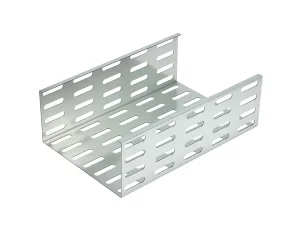
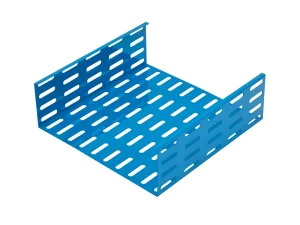
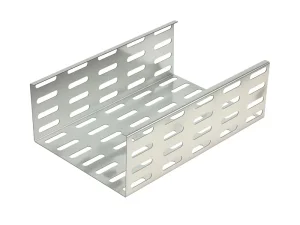
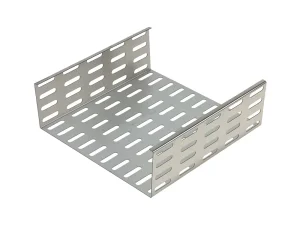
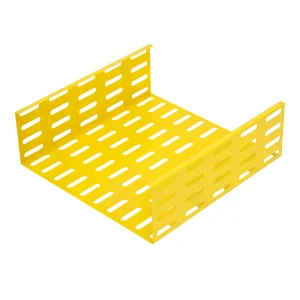
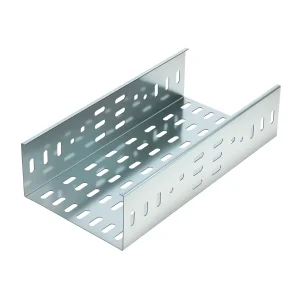
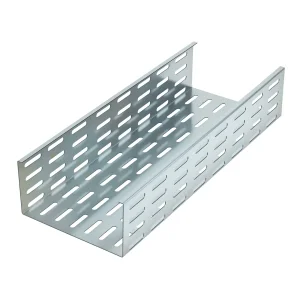
Featured Cable Containment Profiles for Metro Manila Facilities

Precision engineered to meet Philippine Electrical Code (PEC) provisions, ISO 12944 atmospheric guidelines, and high seismic dynamic loads for commercial high-rises and data halls.

Commercial Ecosystem & Structural Realities in Metro Manila

Navigating seismic Zone 4 faultlines, C5-rated maritime humidity, and the massive acceleration of public-private transport corridors across Greater Luzon.

Metro Manila’s Hyper-Urbanization & Mega Infrastructure

Metro Manila (the National Capital Region) represents the epicenter of Philippine commerce, comprising 16 high-density cities including Taguig (BGC), Makati, Pasig (Ortigas), and Quezon City. Concurrently, the Philippine government's "Build Better More" infrastructure blueprint has transformed the Greater Capital Region into one of Southeast Asia's most active construction hubs.

Major flagship initiatives such as the Metro Manila Subway Project (MMSP), the 147-kilometer North-South Commuter Railway (NSCR), and the massive New Manila International Airport (NMI) in Bulacan require unprecedented volumes of specialized cable management. Unlike standard light commercial buildings, rail tunnels and subterranean passenger interchanges impose strict low-smoke zero-halogen (LSZH) mandates, vibration-resistant strut supports, and rigid thermal deflection criteria.

Data Center Explosion in Cavite, Laguna & Batangas

International cloud service providers, hyperscalers, and telecom carriers are pouring billions of dollars into Tier III and Tier IV data centers outside the congested downtown core. Key logistics hubs in Cavite Technopark, Laguna International Industrial Park, and Batangas are rapidly developing into national colocation citadels.

Modern cloud campuses demand ultra-dense overhead cable routing that can accommodate thousands of Category 6A, MPO/MTP fiber optic, and heavy copper power feeder cables. Cable trays must not only withstand heavy distributed loads exceeding 150 kg/m over 3-meter spans, but must also maintain perfect open-grid ventilation to optimize white-space containment cooling systems.

Zone 4SEISMIC
West Valley Fault Criteria
C4/C5CORROSION
Tropical Coastal Atmosphere
5-7DAYS
Shanghai to Manila Transit
100%PEC COMPLIANT
Article 3.92 Standards

Seismic Realities & The Marine Exposure Matrix

Two distinct geophysical phenomena govern structural electrical engineering across Greater Manila:

  • Seismic Zone 4 Vulnerability: The entire Manila metropolitan expanse sits inside Seismic Zone 4, bordered directly by the active West Valley Fault. Cable tray runs mounted overhead without dynamic lateral and longitudinal anti-seismic bracing risk catastrophic resonance failure during seismic events, threatening emergency life-safety egress lines.
  • Aggressive Marine C4/C5 Exposure: Manila Bay exposes waterfront civil assets—such as the South Harbor, Manila International Container Terminal (MICT), and coastal reclamation projects in Pasay—to high salt aerosols, continuous 85%+ relative humidity, and temperatures fluctuating near 38°C. Standard electro-galvanized finishes deteriorate rapidly within 12–24 months; industrial applications require heavy hot-dip galvanizing (HDG) exceeding 85 microns or austenitic marine stainless steel (SS316L).

Philippine Electrical Code (PEC) & Global Certifications

Authoritative design guidelines aligning factory production with the National Building Code of the Philippines, DPWH standard specifications, and international electrical codes.

Philippine Electrical Code (PEC 1)

Under Article 3.92 of the Philippine Electrical Code (PEC Part 1), cable tray installations are governed by stringent fill-capacity formulas, grounding/bonding conductor continuity, and minimum structural side-rail depths. Trays carrying single-conductor or multiconductor medium-voltage systems (such as 13.8kV feeds typical in Meralco grids) demand engineered clearances and secure mechanical clamping to prevent phase-displacement arcing.

NSCP 2015 & ASCE 7-16 Seismic Code

The National Structural Code of the Philippines (NSCP 2015, Section 413) mandates that non-structural electrical distribution equipment, including suspended cable tray runs, withstand lateral seismic force coefficients ($F_p$). We supply comprehensive finite-element calculation books and modular 41×41 back-to-back strut sway brace assemblies verified according to ASCE 7-16 seismic criteria.

IEC 61537 & NEMA VE-1 Certification

Global general contractors (EEI Corporation, DMCI, Megawide, and international EPCs) mandate adherence to NEMA VE-1 for metal cable tray systems and IEC 61537 for load-bearing containment. Our trays undergo destructive static load testing to establish certified Safe Working Loads (SWL) at span lengths of 1.5m, 2.0m, 3.0m, and 6.0m with a safety factor of 1.5.

Standard / Code Authority / Origin Mandate Parameter Qiongkai Manufacturing Compliance Guarantee
PEC Article 3.92 IIEE / BPS (Philippines) Cross-sectional fill ratio, bonding path impedance Exceeds Standard Dual-point integrated grounding terminal slots
NEMA VE-1 / CSA C22.2 NEMA (North America) Destructive deflection limit (L/200), Safe Working Load Certified Heavy-Duty Class 12C, 16C, 20C profiles
ASTM A123 / ISO 1461 ASTM / ISO International Hot-Dip Galvanizing thickness on structural steel Passivated >85μm mean zinc coating for C4/C5 marine environments
IEC 61537:2021 International Electrotechnical Electrical continuity & flame propagation prevention Certified Cold-formed high-yield steel coils with mill cert 3.1
NSCP 2015 Chapter 4 ASEP (Philippines) Component Amplification Factor ($a_p$) for Zone 4 Seismic Verified Rigid 45° dynamic strut bracing assemblies

The Direct Factory Supply Advantage: Shanghai to Manila

Bypassing commercial trading markups through direct manufacturing control, advanced automated production, and expedited maritime container corridors.

Automated Fabrication & Metallurgical Superiority

Founded in Songjiang, Shanghai, Qiongkai operates three dedicated production facilities encompassing over 30,000 square meters. Our 12 continuous roll-forming lines leverage advanced automated CNC punching tooling capable of producing non-standard slot patterns, alternating ventilation perforations, and reinforced stiffening ribs without manual intervention.

Our raw material coils originate exclusively from premier tier-one domestic steel mills (Baosteel, Shougang). This guarantees strict adherence to chemical composition, minimum tensile yields exceeding 350 MPa, and precise zinc layer uniformity (Z275 continuous pre-galvanizing). For hot-dip galvanized units destined for the Port of Manila, automated fluxing, multi-stage pickling, and thermal immersion in 450°C virgin zinc kettles yield an alloy layer bonded metallurgically to the base steel.

Expedited Logistics: Shanghai/Ningbo to Port of Manila

Geographical proximity provides project managers in Metro Manila with a major competitive edge. Direct container vessels departing Shanghai Port or Ningbo-Zhoushan reach the Manila International Container Terminal (MICT) or Manila South Harbor within an unprecedented 5 to 7 days maritime transit.

By purchasing direct from our factory, procurement directors avoid the typical 35% to 55% markups levied by local stockists, while maintaining full engineering oversight over bespoke run dimensions, custom-radius elbows, reducers, and heavy seismic channel profiles.

Optimized Interlocking Export Packaging

International sea freight is heavily governed by volume economics. Our factory implements high-density nesting configurations:

  • Telescopic Nested Stacking: Progressive width nesting (e.g., placing 200mm trays inside 300mm trays, inside 400mm trays) optimizes container cubic space by up to 38%, dramatically reducing per-meter sea freight costs.
  • Corrosion Barrier Wrapping: High-gauge heat-shrink UV-resistant wrapping paired with desiccants preserves factory finish during ocean transit across the South China Sea.
  • Reinforced Steel Pallet Skids: High-tensile steel banding on export-compliant skids enables rapid unloading at Port of Manila quaysides without product deformation.

BIM Integration, BOQ Precision & Procurement Protocols

Bridging the gap between engineering design, MEP Clash Detection in Revit, and accurate Bill of Quantities (BOQ) delivery for EPCs and electrical contractors.

LOD 350 / 400 BIM Families

We supply native Autodesk Revit families (.rfa) for our complete catalogue of perforated trays, wire mesh baskets, and strut supports. Accurate parameter geometry allows MEP engineers in Makati and Ortigas to conduct virtual spatial clash detection, pinpoint ceiling service intersections, and avoid costly rework on job sites.

Automated BOQ Formulation

Send your single-line diagrams (SLD) or preliminary layout drawings. Our engineering estimation department converts project layouts into full Bill of Quantities (BOQs), including exact quantities of splice plates, grounding jumpers, expansion guide clamps, drop rods, and seismic bracing channels.

Total Cost of Ownership (TCO)

We calculate complete lifecycle economics comparing Pre-Galvanized, HDG, and Stainless Steel for your target site. Factoring in maritime salt corrosion and preventative maintenance, our engineering selection delivers lower 30-year lifecycle expenditure across industrial and infrastructure lifespans.

Technological Innovations in Cable Containment Systems

From fast-fit toolless couplers to anti-corrosion zinc-aluminum-magnesium alloys and pre-engineered seismic framing solutions.

Pre-Fabricated Toolless Fast-Snap Joining Systems

Skilled MEP installation labor costs across Metro Manila are on the rise. Traditional bolted splice connectors require two workers, manual wrench tightening, and torque auditing, averaging 6 to 9 minutes per joint. Our next-generation fast-fit clip-lock joining systems slash assembly time by over 60%, delivering structural joint integrity and electrical bonding continuity in under two minutes.

Zinc-Aluminum-Magnesium (ZAM) Alloy Coating

For demanding outdoor applications such as rooftop solar plants, commercial cooling towers, and coastal industrial facilities, standard hot-dip galvanizing is giving way to Zinc-Aluminum-Magnesium (ZAM) continuous alloy technology. ZAM provides self-healing galvanic cut-edge protection, preventing edge rust formation even after cut-to-fit trimming on job sites.

Localized Deployment Scenarios Across Greater Luzon

Tailored engineering specifications deployed across urban transit tunnels, hyperscale cloud environments, and marine logistics ports.

Subway & Commuter Rail Corridors

Deployment: Underground tunnel runs in the Metro Manila Subway Project and elevated viaduct segments of NSCR.
Specification: Heavy-duty hot-dip galvanized ladder trays (side rail height 100mm, rung spacing 200mm) paired with vibration-damping back-to-back strut hangers certified for continuous cyclic train passage vibrations.

Hyperscale Cloud Data Halls (BGC & Laguna)

Deployment: Overhead white-space server containment and UPS power distribution rooms.
Specification: High-tensile wire mesh cable trays and powder-coated perforated trays (custom RAL 9005 black or RAL 7035 light gray). High open-ventilation ratios maintain low ambient thermal temperatures for multi-strand Category 6A and trunk fiber runs.

Manila South Harbor & Petrochemical Terminals

Deployment: Coastal offloading jetties, chemical tank farms in Bataan, and maritime logistics facilities.
Specification: Stainless steel 316L perforated trays and marine-grade FRP (Fiberglass Reinforced Plastic) trays impervious to salt-spray oxidation, sulfuric mist, and heavy industrial chemical wash-downs.

Full Industrial Containment Catalog for Philippine Procurement

Direct factory ordering for perforated trays, stainless steel profiles, and specialized powder-coated cable runways for Greater Manila commercial and infrastructure projects.

Frequently Asked Questions by Manila Project Engineers

Addressing sea transit timelines, seismic engineering compliance, import documentation, and material specification standards.

What is the standard ocean freight transit duration from your factory to the Port of Manila?

Shipments departing directly from our main loading terminals at Shanghai Port or Ningbo-Zhoushan take approximately 5 to 7 days port-to-port to reach either the Manila International Container Terminal (MICT) or Manila South Harbor. Customs processing, clearance, and inland drayage across Metro Manila (via C-5, EDSA, or SLEX corridors) typically require an additional 3 to 5 business days, delivering an agile supply loop for large infrastructure contracts.

How do your cable trays comply with Seismic Zone 4 requirements in the Philippines?

Under the National Structural Code of the Philippines (NSCP 2015, Section 413) and ASCE 7-16 guidelines, overhead MEP containment must resist lateral and longitudinal seismic acceleration forces. We engineer and supply matching 41×41mm and 41×82mm heavy-gauge back-to-back strut channels with serrated channel nuts and 45-degree diagonal sway brace kits. Complete finite element calculation reports and structural deflection verification are supplied with our project delivery packages.

Which surface finish is recommended for facilities located within 5 km of Manila Bay?

For installations within 5 kilometers of Manila Bay, such as the Pasay reclamation zone, South Harbor port warehouses, or coastal infrastructure, atmospheric corrosivity corresponds to ISO 12944 Category C4 or C5 (Marine/Coastal). Standard pre-galvanized (PG) finishes are unsuitable. We mandate Hot-Dip Galvanized (HDG) steel with a minimum zinc coating thickness of 85 microns (complying with ASTM A123) or austenitic Stainless Steel 316L for long-term corrosion prevention.

Can Qiongkai manufacture custom widths and side-rail heights outside standard catalogue dimensions?

Yes. Operating 12 automated cold-roll forming lines and advanced CNC punching tooling across our three Shanghai factories, we routinely manufacture bespoke widths (from 50mm up to 1200mm), non-standard side-rail heights (50mm, 75mm, 100mm, 150mm, and 200mm), and heavy sheet gauges (1.2mm to 3.0mm) to align with specific spatial constraints on construction drawings.

Do your cable management systems satisfy Philippine Electrical Code (PEC) grounding mandates?

Absolutely. PEC 1 Article 3.92 requires continuous electrical bonding when cable trays serve as equipment grounding conductors (EGC). Our trays feature factory-punched dual-point grounding connection holes on side rails and are shipped with tinned copper bonding jumpers and serrated ground washer assemblies, verified through electrical bonding resistance testing under IEC 61537 standards.

What documentation and mill certificates accompany international shipments to the Philippines?

Every commercial delivery includes an official EN 10204 3.1 Mill Test Certificate verifying base metal chemical composition, yield strength, and elongation, alongside hot-dip galvanizing coating thickness reports (magnetic gauge test), destructive load testing verification reports under NEMA VE-1, and Certificate of Origin (Form E or standard CO) for Philippine customs documentation.

Plan Your Metro Manila Project With Proven Engineering

Whether you are engineering a Tier IV data center in Laguna, an elevated rail viaduct along the NSCR, or a commercial high-rise in BGC, our Shanghai factory delivers precision cable management straight to your job site.

Send Inquiry Now