
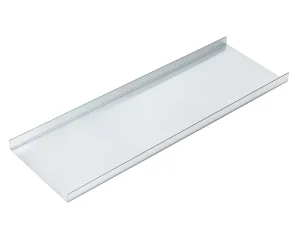
High-Velocity Dispatch Inventory
Featured Cable Tray Hardware for Riyadh Installations
Original certified componentry precision-engineered to bridge large tray spans and withstand desert thermal delta expansion.
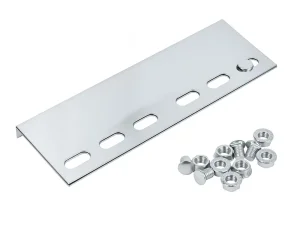
Pre-Galvanized Splice Plates & Heavy Connection Fasteners
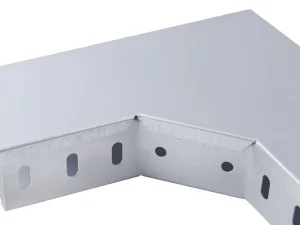
Pre-Galvanized Elbow / Tee / Cross Modular Junctions with Cover
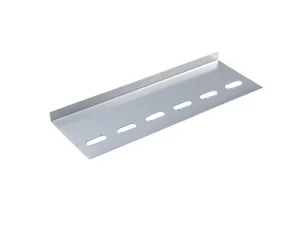
Slotted Expansion Splice Plates & Articulated Connection Spares
Regional Transformation & Regulatory Benchmarks
Riyadh Industrial Ecosystem: Infrastructure Momentum & Standards
Analyzing the surge in commercial megaprojects across the Kingdom of Saudi Arabia and the stringent technical specifications governing electrical containment networks.
Vision 2030 Construction Velocity
The urban expansion of Riyadh—anchored by New Murabba, King Salman Park, the expansion of King Khalid International Airport (KKIA), and Diriyah Gate—has transformed the central province into one of the world's dense electrical containment markets. Contractors require rapid-dispatch structural fittings certified for high mechanical payload tolerances.
SASO, SEC & Aramco Mandates
Procurement in Riyadh is tightly regulated by SASO (Saudi Standards, Metrology and Quality Organization), Saudi Electricity Company (SEC) PTS requirements, and civil defense fire ratings. Cable tray accessories, including grounding links, splice plates, and cantilever supports, must demonstrate verified electrical conductivity and mechanical shear strength.
Desert Environmental Stresses
The Najd Plateau experiences diurnal ambient temperature deltas exceeding 35°C (from sub-zero winter desert nights to over 50°C summer conditions). Radiant solar metal surface temperatures often reach 75°C. These conditions induce massive thermal expansion/contraction in longitudinal tray runs, demanding engineered expansion splice plates to prevent buckled raceways.
Engineering Thermal Expansion Note for Riyadh EPC Specifiers:
Under SEC and NEMA VE-2 guidelines, steel structural systems expand at approximately 0.012 mm per meter per degree Celsius. For a continuous 120-meter cable ladder installed on an exposed commercial rooftop in Riyadh subject to a 60°C temperature swing, longitudinal expansion totals 86.4 mm. Specifying standard rigid splice plates instead of slotted expansion couplings leads to catastrophic fastener shear, tray distortion, and internal cable sheath lacerations.
50°C+
Peak Summer Ambient Surface Tolerance
ASTM A123
Standard HDG Zinc Coating Compliance
100%
Earth Continuity Bonding Continuity
SBC 301
Saudi Building Code Seismic Standard
Macro-Industrial Overview
Global Metallurgical Standards vs. Riyadh On-Site Realities
Internationally, cable containment specifications are driven by standard commercial building codes such as IEC 61537, NEMA VE 1, and BS EN 61537. While global markets frequently deploy light electro-galvanized (EG) coatings for indoor commercial buildings, the hyper-arid, dust-laden atmospheric conditions of central Saudi Arabia present distinct metallurgical challenges.
Microfine silicates and airborne desert sand particles act as an aggressive abrasive agent against protective metal coatings. During seasonal dust storms (Haboobs), high-velocity sand impinges upon standard galvanized layers. If an improperly treated pre-galvanized fitting is used outdoors or in semi-conditioned industrial facilities in Riyadh's 2nd or 3rd Industrial Cities (MODON), the protective zinc layer quickly degrades, leaving carbon steel susceptible to oxidation during brief high-humidity winter fronts.
Our direct-from-factory production processes bridge international scale with local Saudi project requirements. We manufacture using high-grade structural hot-rolled carbon steel coils, with specialized zinc coatings exceeding 45 µm for pre-galvanized sheets (Z275-Z600) and up to 85 µm for batch Hot-Dip Galvanizing (HDG) per ASTM A123 / ISO 1461, guaranteeing lifecycle durability across all Riyadh installations.
| Component Type | Global Baseline | Riyadh Project Standard |
|---|---|---|
| Splice Connection Plates | Flat stamped bar, 1.2mm | Ribbed/Formed channel, 2.0mm minimum |
| External Tray Covers | Flat snap-on sheet | Peaked/Flanged solar & sand-deflector cover |
| Hardware Fasteners | Standard Grade 4.8 zinc-plated | High-tensile Grade 8.8, hot-dip or Geomet-coated |
| Earth Bonding Jumpers | Optional jumper wire | Mandatory tinned copper braid per SEC 14-SDMS |
| Channel Support Struts | Single 41×21mm profile | Back-to-Back 41×82mm heavy gauge slotted |
Component Engineering
Engineering Taxonomy: Precision Cable Tray Accessories
Cable containment systems rely heavily on connection hardware. An under-engineered splice plate or bracket represents the primary point of failure under mechanical load, seismic oscillation, or thermal stress.
Expansion & Standard Splice Plates
Splice connections provide continuous structural alignment and electrical earthing across individual tray sections. Our range features slotted expansion plates that permit longitudinal thermal movement without inducing lateral buckling. Constructed from structural steel up to 3.0mm thickness, each plate uses oval slot configurations allowing up to 25mm of controlled expansion per joint.
Smooth-Radius Elbows, Tees & Crosses
Sharp direction transitions can damage insulation sheaths on high-voltage power feeders and high-bandwidth fiber optic cables. Our factory-stamped and robot-welded fittings (horizontal bends, inside/outside vertical risers, and crosses) feature smooth 300mm to 900mm bend radii that meet the minimum cable bending specifications of international cable manufacturers.
Unistrut Support Channels & Cantilevers
Engineered support assemblies provide the mechanical backbone for runs mounted from ceilings, walls, or structural steelwork. Our cold roll-formed 41×41mm, 41×62mm, and back-to-back 41×82mm C-channels incorporate inward serrated clamping lips that prevent fitting slip under extreme dynamic vibration and seismic activity.
Peaked Protective Tray Covers
In high solar radiation zones like Riyadh, tray covers shield cables from UV radiation and heavy dust accumulation. Our peaked/flanged covers promote water run-off and dust shedding during seasonal winds. Secured with high-retention snap-clips or heavy bolted hold-down bands, they remain intact under high gust pressures.
Hold-Down Clamps & Expansion Guides
Hold-down hardware anchors the tray firmly to supporting strut cross-members. Our expansion guide clamps allow unrestrained longitudinal movement during thermal cycling while maintaining firm lateral containment, avoiding the structural buckling that occurs when ladder rails are rigidly bolted at every span.
High-Tensile Track Screws & Grounding Lugs
Fastener integrity is essential to overall containment performance. We supply serrated flange oval-neck coach bolts, Belleville washers, and shear-resistant hexagonal nuts. The serrated base bites through surface oxidation and paint, ensuring positive metal-to-metal contact and bonding resistance below 0.00033 ohms.
Local Deployments
Critical Application Engineering Across Riyadh Infrastructure
From financial high-rises to hyperscale cloud facilities, different Riyadh project environments demand tailored cable tray accessorization and protection strategies.
1. Tier III & IV Hyperscale Data Centers (Riyadh Tech Belt)
Riyadh's emergence as the primary cloud data corridor for the Middle East (hosting hyperscale zones for AWS, Google Cloud, and Oracle) has increased demand for precision wire mesh basket trays and clean pre-galvanized ladder installations. In raised-floor data halls and overhead server rows, our modular drops, drop-out radiuses, and quick-connect toolless splice bars allow high-density fiber and copper patching without risk of cable crimping or microbending attenuation.
2. Riyadh Metro & Subterranean Transportation Corridors
Underground metro tracks, interchange hubs, and ventilation plenums require stringent fire behavior compliance under EN 1366 and DIN 4102-12 (E30 to E90 fire resistance). For these environments, our heavy-gauge fire-rated slotted C-channels, drop rods, and stainless steel (SS316) clamps maintain functional structural integrity during fire emergencies, ensuring power and signaling continuity for emergency ventilation and passenger egress.
3. KAFD Commercial Towers & Mixed-Use Megaprojects
In high-rise developments like the King Abdullah Financial District (KAFD) and New Murabba, vertical shaft cabling runs span hundreds of meters. Standard gravity hold-down fittings are insufficient. We engineer specialized vertical riser rungs, heavy cable cleat mounting brackets, and vertical drop trays that support high mechanical loads without deforming or dislodging cables during thermal shifts.
4. MODON Industrial Cities (Heavy Manufacturing & Substations)
Industrial manufacturing plants in MODON Industrial Zones 1, 2, and 3 house switchgear rooms, chemical production, and heavy manufacturing that generate corrosive fumes alongside ambient dust. Here, hot-dip galvanized (HDG) heavy-duty trough trays and SS316 accessories provide the chemical resistance needed to eliminate premature maintenance shutdowns.
Engineering Guidance
Materials Selection Matrix for KSA Climatic Zones
Choosing the appropriate metallurgical specification based on installation location, environmental corrosivity classification (ISO 9223), and lifecycle expectations.
| Material / Treatment | Corrosivity Category | Zinc / Protective Depth | Recommended Riyadh Application | Expected Service Life |
|---|---|---|---|---|
| Pre-Galvanized Steel (PG / GI) | C1 - C2 | 14 - 20 µm (Z275 Coating) | Air-conditioned interiors, data centers, ceiling plenums | 25+ Years (Dry indoor) |
| Hot-Dip Galvanized (HDG) | C3 - C4 | 55 - 85 µm (ASTM A123) | Outdoor rooftops, industrial substations, open parking structures | 30+ Years (Desert exterior) |
| Stainless Steel (SS304) | C3 - C4 | Passivated passive oxide layer | Food processing, clean manufacturing, pharmaceutical sites | 40+ Years |
| Stainless Steel (SS316 / 316L) | C5 - CX | Passivated with 2% Molybdenum | Subterranean tunnels, wet chemical storage, water treatment | 50+ Years |
| Powder Coated / Epoxy | C2 - C3 | 60 - 100 µm over PG steel | Architectural exposed ceilings, phase-identified runs | 20+ Years |
Seismic & Structural Design Integration (SBC 301)
Under the Saudi Building Code (SBC 301), suspended non-structural components must withstand designated lateral and longitudinal seismic forces. Modern MEP specifications across Riyadh projects now require rigid lateral bracing every 12 meters and longitudinal seismic sway bracing every 24 meters. Our modular strut accessories, seismic hinge brackets, and 45-degree brace fittings provide verified load ratings that simplify project approvals.
Request Complete Engineering Calculations & SASO Dossier
Comprehensive Catalog Inventory
Factory-Direct Cable Containment Systems & Fittings
Engineered for high load-bearing capacity, streamlined installation, and long-term mechanical reliability across major building projects.
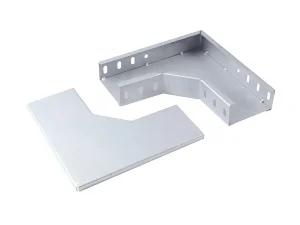
Pre-Galvanized Horizontal 90° Radius Elbow Tray Fitting
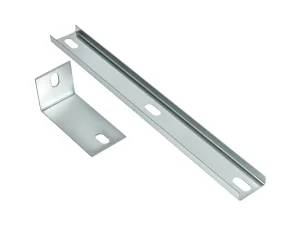
Heavy-Duty Pre-Galvanized L-Shaped Support Bracket
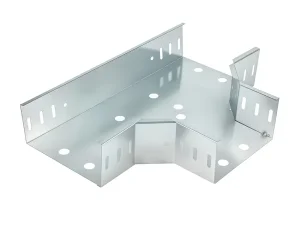
Pre-Galvanized 3-Way Horizontal Equal Tee Branch Junction
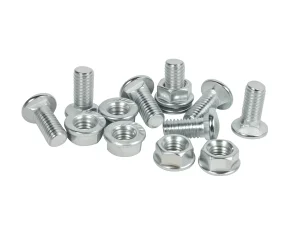
High-Tensile Serrated Flange Bridge Frame Connecting Screws
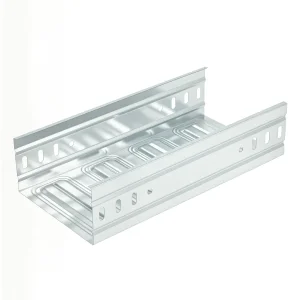
Pre-Galvanized Precision Molded Cable Tray Trunking (200mm)
Variable Angle Articulated Elevation Coupler Sets
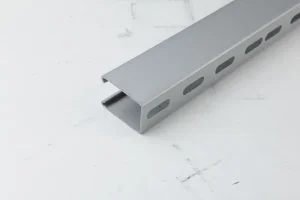
Heavy Gauge Fire-Resistant C-Slotted Unistrut Strut Channel
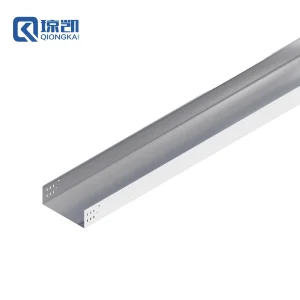
HDG & SS High-Capacity Cable Trunking Channel System
Engineering Inquiry Directory
Frequently Asked Questions for Riyadh Procurement
Common technical questions regarding MEP compliance, material verification, and thermal calculations for Saudi infrastructure projects.
Which cable tray finish is best suited for outdoor installations in Riyadh?
For outdoor and rooftop installations across the Riyadh metropolitan area, Batch Hot-Dip Galvanized (HDG) per ASTM A123 / ISO 1461 is the standard requirement. Due to intense solar radiation and airborne dust, standard Pre-Galvanized (PG) coatings are limited to controlled indoor environments. HDG coatings provide an alloyed zinc-iron protection layer measuring 65 to 85 micrometers, offering robust resistance to desert atmospheric weathering and thermal cycling.
How do your cable tray accessories comply with SASO and SEC standards?
Our containment fittings, unistrut assemblies, and splice plates are manufactured to meet Saudi Standards, Metrology and Quality Organization (SASO) requirements and Saudi Electricity Company (SEC) Project Technical Specifications (PTS). We provide full chemical and mechanical mill test certificates (MTCs), galvanizing thickness verification reports, electrical earth continuity test data, and structural load calculations (NEMA VE-1 compliant) to streamline consultant approval.
Why are expansion splice plates necessary on long tray runs in central Saudi Arabia?
The Najd Plateau exhibits large annual temperature differentials, with ambient conditions ranging from near 0°C on winter nights to over 50°C during summer days, resulting in solar metal surface temperatures of up to 75°C. Steel expands at approximately 0.012 mm per meter per degree Celsius. Unmitigated thermal expansion creates significant lateral and axial stress that can warp containment runs and damage cable jackets. We recommend installing slotted expansion splice plates every 30 meters on continuous outdoor tray installations.
What is the recommended support span for heavy-duty ladder trays in commercial projects?
Under NEMA VE 2 installation practices, standard heavy-duty cable ladder systems are typically supported at 3.0-meter intervals for normal operational cable loads. In high-density applications—such as data center riser shafts or main substation intake trenches—support spans should be reduced to 1.5 or 2.0 meters, or upgraded to back-to-back 41×82mm heavy-gauge unistrut channels to maintain deflection within L/200 limits.
Can Qiongkai supply custom bend radiuses and tailored non-standard fittings?
Yes. Supported by 12 dedicated roll-forming lines and over 60 high-tonnage stamping presses, we manufacture non-standard horizontal reducers, bespoke offset transition brackets, and specialized radius elbows (ranging from 300mm to 1200mm radius). Custom items can be fabricated from 2D/3D CAD or BIM specifications and finished in pre-galvanized, hot-dip galvanized, or stainless steel (SS304/SS316).
How do you ensure proper earthing and ground bonding across connected tray sections?
To meet IEC 61537 and SEC 14-SDMS standards, all cable tray systems must maintain electrical ground bonding continuity across joints. Our hardware uses serrated flange coach bolts that bite through protective coatings into bare metal, supplemented by factory tinned-copper bonding jumpers where project specifications mandate dedicated grounding loops across every splice connection.