
High-Efficiency Cable Trays for Denmark Projects
Engineered to withstand rigorous North Sea coastal conditions and demanding industrial indoor installations across Copenhagen, Aarhus, and Esbjerg.
-
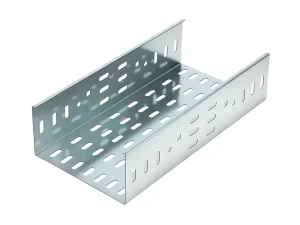 Pre-Galvanized Cable Tray (Customizable Parameters for Denmark Commercial Builds)Buy Pre Galvanized Cable Tray With Customizable Parameters Manufacturer, Price
-
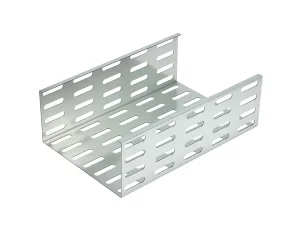 Wholesale Pre-Galvanized Perforated Cable Tray for Danish Industrial VentilationWholesale Pre Galvanized Cable Tray With Perforation Manufacturers, Factories
-
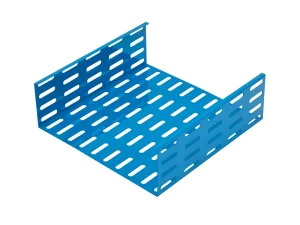 Perforated Pre-Galvanized Tray Series with RAL Color Powder Coating (Nordic Spec)Buy Pre Galvanized Perforated Cable Tray Series With Powder Coating Suppliers, Factories
-
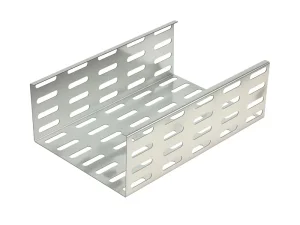 Stainless Steel Perforated Tray 200mm Width for Danish Offshore & Marine SystemsBuy Stainless Steel Perforated Cable Tray 200mm width Suppliers, Factory
The Danish Cable Supporting Sector: High Standards & Green Transition
Analyzing the specialized procurement drivers across Denmark's sustainable infrastructure, digital hubs, and coastal engineering complexes.
Demanding Nordic Standards Meet Strict Corrosion Categories
Denmark is an international forerunner in the transition to renewable energy, maritime engineering, and advanced pharmaceutical production. With substantial offshore wind farm developments in the North Sea and Baltic Sea, infrastructural cable management systems are subject to aggressive atmospheric conditions defined by ISO 12944 under C4 (Industrial/Coastal) and C5/CX (Marine offshore) classifications.
Procurement teams across Denmark require non-compromising engineering standards, such as IEC 61537 certification, verified mechanical deflection limits, and robust passivation or heavy hot-dip galvanization (HDG compliant with ISO 1461). Furthermore, hyperscale data centers clustered around Viborg, Odense, and Fredericia mandate dense wire-mesh basket and perforated ladder structures to optimize continuous airflow dynamics and system maintainability.
- Harsh Saline Exposure: Marine environments mandate SS316L, 100μm+ HDG, or high-grade FRP.
- Data Center Efficiency: High wire basket porosity supports sustainable cooling in Nordic data corridors.
- Pharma & Food Purity: Sanitary installations demand pickled SS304/SS316 trays without dirt traps.
Environmental Product Declarations (EPD) & Traceability
Danish Building Regulations (BR18) place rigorous demands on the life-cycle carbon footprint of all building products. As leading global manufacturing partners, cable tray fabricators must ensure complete metallurgical traceability, raw material certified test certificates (EN 10204 3.1), and optimized logistical packing footprints to align with Denmark’s national goal of a 70% reduction in greenhouse gas emissions by 2030.
Global Shifts in Cable Routing & Containment Systems
How international Tier-1 EPCs, modular data hall developers, and industrial developers specify modern cable supporting technologies.
Prefabrication & Modular Assembly
Global procurement teams prioritize pre-engineered splices, snap-on accessories, and fast-click brackets. Reducing on-site hot work and labor hours is critical in regions like Denmark where skilled installer rates are premium.
BIM & Digital Twin Integration
Standard architectural workflows require complete Autodesk Revit and BIM libraries. Accurate geometric representations and structural load data enable collision checks prior to physical delivery in advanced industrial projects.
Specialized Composite Materials
Growing deployment of Fiber-Reinforced Polymer (FRP) and zinc-aluminum-magnesium alloy coatings (ZM) ensures extended service life beyond 30+ years in marine, chemical processing, and coastal water management setups.
China Industry 4.0: Delivering Precision & High-Volume Supply
Combining automated roll forming, robotic laser welding, and optimized deep-sea export logistics from Shanghai to European gateway ports.
Direct Manufacturer Synergies for Danish General Contractors
European contractors frequently encounter rigid local lead times and inflexible MOQ constraints during rapid construction phases. Utilizing advanced Industry 4.0 manufacturing in Shanghai bridges this vulnerability. Our automated stamping and roll-forming configurations accommodate tailored Danish and European project requests without costly retooling interruptions.
By controlling the complete lifecycle—from precision slitting of premium strip coils to hot-dip galvanization and robotic spot welding—we provide stable supply schedules directly to Danish transit hubs such as the Port of Aarhus and Port of Copenhagen.
| Performance Metric | Standard Industry Benchmark | Our Factory 4.0 Standard |
|---|---|---|
| Dimensional Precision | ± 1.5 mm to ± 2.0 mm | ± 0.3 mm (Continuous Servo Feed) |
| HDG Coating Uniformity | 60 – 75 μm avg | 85 – 120 μm (ISO 1461 Marine Spec) |
| Export Packing | Loose Bundled Steel | Anti-moisture shrink, seaworthy steel pallets |
| QA Batch Tracking | Manual check sheets | Digital QR Code traceability per tray bundle |
Localized Engineering Applications Across Denmark
Engineered support assemblies designed to meet the rigorous physical and environmental expectations of Scandinavian infrastructure.
Offshore Wind Substation Racks (Esbjerg)
High-capacity marine cable ladders hot-dip galvanized to heavy-gauge specs or manufactured in Marine-Grade 316L Stainless Steel. Resistant to dense salt sprays, vibration, and thermal cyclical loading.
Hyperscale Cloud Data Halls (Odense)
Lightweight, high-tensile wire mesh cable trays with electro-zinc or premium powder coat. Promotes maximum passive thermal heat dissipation and rapid reconfiguration of high-density fiber-optic harnesses.
Bio-Pharma & Food Processing (Kalundborg)
Sanitary, deburred, electropolished SS304/SS316 perforated containment trays. Engineered without sharp edges or deep crevices to facilitate daily high-pressure chemical washdowns.
Heavy Duty & Perforated Solutions for Danish Projects
Explore our complete export line of perforated trays, specialized slot patterns, and industrial corrosion-resistant finishes.
-
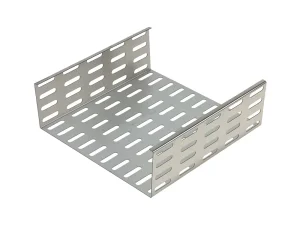 Stainless Steel Perforated Tray 300mm SS304 for Denmark Food & Chemical PlantsWholesale Stainless Perforated Cable Tray 300mm - SS304 Suppliers, Factory
-
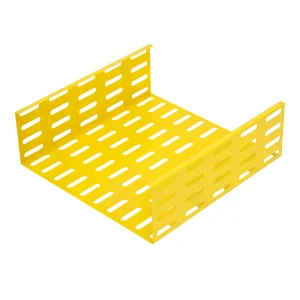 Pre-Galvanized Perforated Powder-Coated Tray for Architectural Exposed CeilingsWholesale Pre Galvanized Perforated Powder Coating Cable Tray Suppliers, Factories
-
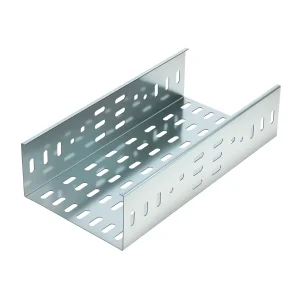 Perforated Pre-Galvanized Tray 200×100mm for Danish Commercial Electrical DistributionBuy Pre Galvanized Perforated Cable Tray 200 100mm Manufacturers, Supplier
-
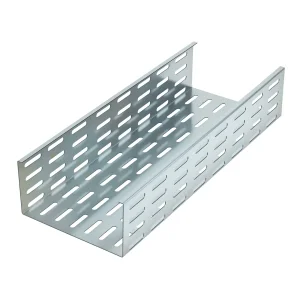 Pre-Galvanized Perforated Cable Tray 200mm Width for Standard European Cable RoutingBuy Pre Galvanized Perforated Cable Tray 200mm Manufacturers, Supplier
-
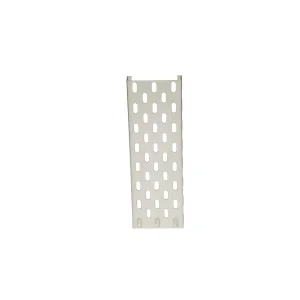 Stainless Steel 100×25mm Extreme Perforated Lightweight Tray for Tight Machine EnclosuresWholesale 100*25 Stainless Steel Extreme Perforated Cable Tray Supplier, Price
-
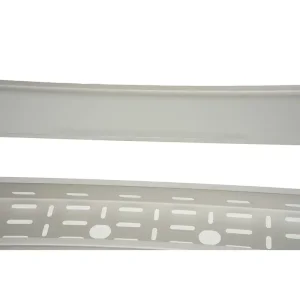 Customized Passivated Stainless Steel Tray for Danish Marine Engineering ProjectsBuy Customized Stainless Steel Cable Tray With Surface Treatment Factory, Factories
-
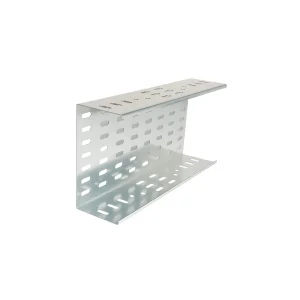 Custom Dense Perforated Pre-Galvanized Tray for Electromagnetic Shielding & High Heat DissipationBuy Customized Dense Pre Galvanized Perforated Cable Tray Factory, Price
-
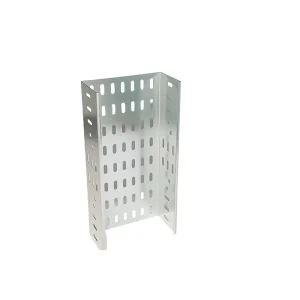 Custom Slotting Pattern Pre-Galvanized Trays for Flexible Fast-Tying Danish InstallationsWholesale Slotting Pattern Customizable Pre Galvanized Cable Trays Manufacturer, Factory
Frequently Asked Questions by Danish Procurement Teams
Comprehensive engineering insights regarding compliance, anti-corrosion grades, and supply chain logistics to Denmark.
What specific international certifications support cable tray exports to Denmark?
All our cable supporting products comply strictly with IEC 61537 (Cable management - Cable tray systems and cable ladder systems). For Danish building construction under the BR18 code, our steel items align with CE marking requirements, EN 10204 3.1 material test certificates, and RoHS compliance for powder-coated finishes. Fire performance ratings follow DIN 4102-12 (E30 to E90 circuit integrity standards).
Which corrosion finish is recommended for Danish coastal and offshore projects?
For outdoor coastal deployments within 5 km of the Danish coastline or offshore energy assets in the North Sea, Hot-Dip Galvanization (HDG) per ISO 1461 with a minimum coating thickness of 85–100 μm is standard. Where severe chloride spray and atmospheric sulfur dioxide combine, Marine-Grade Stainless Steel 316L (EN 1.4404) or Fiber-Reinforced Polymer (FRP) trays are strongly advised to ensure a 30+ year service life without structural breakdown.
Can customized slot dimensions or hole perforation patterns be manufactured for Nordic EPC specifications?
Yes. Our automated CNC punching and flexible continuous roll-forming lines allow customizable perforation layouts, non-standard sidewall depths (from 25mm to 150mm), and widths up to 1000mm. We regularly tailor hole pitches to accommodate specific European zip ties, metric cable glands, and fast-click jointing assemblies.
What are the standard shipping timelines and container logistics to the Port of Aarhus or Copenhagen?
Production cycles generally range between 15 to 25 days depending on batch customization. Sea freight transit from Shanghai to main Scandinavian ports (such as Aarhus, Copenhagen, or Hamburg with multimodal connection to Denmark) typically spans 30 to 38 days. All shipments are packed on seaworthy steel pallets with heavy-duty desiccants and vapor corrosion inhibitor (VCI) shrink wrap to prevent oxidation during maritime transit.
How does Qiongkai support BIM and structural calculation verification for engineering consultants?
Our engineering support department provides certified safe working load (SWL) graphs in accordance with IEC 61537 load testing procedures. We supply STEP, DWG, and Revit-compatible BIM models so consulting engineers in Denmark can perform collision detection and structural deflection modeling prior to order sign-off.