
PG Steel / Customizable
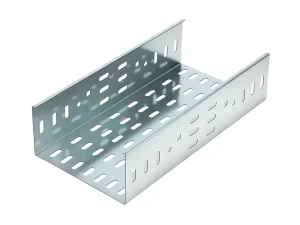
High-load cable trays, modular strut framing, and marine-grade support engineering configured for Portuguese hyperscale data hubs, utility-scale photovoltaic corridors, and Atlantic offshore installations.
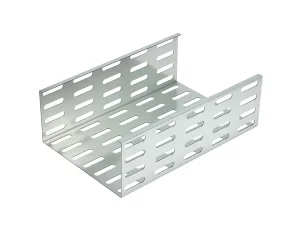
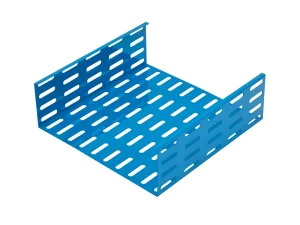
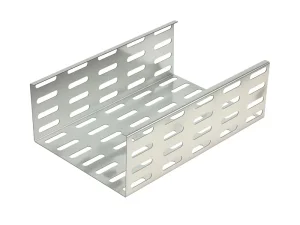
Precision-formed perforated cable trays and industrial-scale raceway profiles engineered with high-yield tensile strength and calibrated ventilation for electrical substations, commercial complexes, and data centers across Lisbon, Porto, and Sines.
Portugal stands at a critical juncture in European energy transformation and digital infrastructure deployment. Anchored by the National Energy and Climate Plan 2030 (PNEC 2030) and massive foreign direct investments in digital corridors, the country is executing multi-gigawatt utility transitions across solar photovoltaics, offshore floating wind, green hydrogen, and hyperscale cloud processing. The strategic location of the Port of Sines, serving as the international landing station for transcontinental subsea fiber-optic cables (including EllaLink, 2Africa, and Medusa), has propelled the Alentejo coastline into southern Europe’s premier connectivity hub. Concurrently, large-scale data center campuses such as the Sines 4.0 project (projected at up to 1.2 GW capacity) are placing unprecedented load and safety demands on electrical balance-of-plant (BoP) infrastructure.
In this elevated technical ecosystem, conventional cable routing practices are insufficient. Portuguese engineering consultancies, EPC contractors (such as EFACEC, CJR Renewables, and Mota-Engil), and international MEP designers require high-integrity cable supporting systems that satisfy strict European standards—specifically EN 61537:2007 for cable tray systems and Eurocode 8 (EN 1998-1) for seismic resistance in the geologically active Tagus Valley, Lisbon Metropolitan Area, and southern Algarve zones. As an authoritative manufacturer with over two decades of production heritage, Shanghai Qiongkai Industry Co., Ltd. delivers factory-direct containment systems engineered specifically to withstand the extreme coastal salt fog, intense solar irradiance, and seismic structural dynamics typical of Portuguese industrial job sites.
Historically, the Portuguese electrical distribution sector has operated through multilayered European distribution tiers, resulting in cumulative markup burdens of 25% to 45% and extended lead times for non-standard cable ladder depths or specialized alloy finishes. Direct procurement from specialized manufacturing facilities resolves this structural inefficiency. Shanghai Qiongkai combines raw coil slitting, cold roll-forming, CNC variable-pitch punching, and continuous hot-dip galvanizing within unified quality-control perimeters. This integrated production chain ensures that Portuguese infrastructure projects receive direct metallurgical traceability (EN 10204 Type 3.1 certification), precise custom lengths to minimize site hot-cutting, and synchronized delivery schedules directly coordinated with freight arrivals at the Port of Sines and Port of Leixões (Porto).
Balancing atmospheric corrosivity classes from C1 dry data halls to aggressive C5-M Atlantic marine zones under ISO 9223 and ISO 12944 standards.
For projects situated along the coastal fringe—such as the Viana do Castelo offshore substations, Sines industrial port, and Peniche wind corridors—airborne chlorides cause catastrophic pit corrosion on standard electroplated metals. We utilize batch Hot-Dip Galvanizing (ISO 1461) with minimum zinc coating weights exceeding 500 g/m² (70–85 µm nominal thickness) or Marine-Grade AISI 316L stainless steel with minimum 2.0% molybdenum content to prevent localized pitting.
In interior districts such as Évora, Beja, and Castelo Branco, ambient summer temperatures routinely surpass 42°C, causing significant thermal cyclic expansion and cumulative UV degradation of organic coatings. We deploy continuous Zinc-Aluminum-Magnesium (ZM310) alloys and heavy-duty ribbed galvanized cable ladders engineered for thermal expansion dissipation without structural buckling or joint sheared fastener failure.
For critical telecommunications server vaults and data halls, microscopic zinc whisker formation from traditional electroplated finishes presents a severe risk of electronic short circuits. Qiongkai supplies high-adhesion powder-coated pre-galvanized systems and de-burred austenitic stainless steel cable basket meshes that eliminate conductive filament detachment under laminar airflow conditions.
| Material / Protective Treatment | Normative Standard | Protective Layer / Composition | Corrosivity Category (ISO 12944) | Target Portuguese Application |
|---|---|---|---|---|
| Continuous Pre-Galvanized (PG) | EN 10346 / EN 50085 | Zinc Layer Z275 (≥20 µm average) | C1 to C2 (Interior Controlled) | Lisbon Commercial Office / Hyperscale Halls |
| Post-Fabrication Hot-Dip Galvanized (HDG) | ISO 1461 / ASTM A123 | Zinc Coating 55–85 µm (≥500 g/m²) | C3 to C4 (External / Semi-Industrial) | Alentejo Solar PV Plants / REN Substations |
| Zinc-Aluminum-Magnesium (ZAM / ZM) | EN 10346 ZM310 | Zn-Al(3.5%)-Mg(3.0%) Self-Healing Edge | C4 to C5-I (High Chemical / Coastal) | Estarreja Chemical / Agro-Industrial Ribatejo |
| Austenitic Stainless Steel (AISI 316L) | EN 10088-2 / 1.4404 | Cr 16.5-18.5%, Ni 10-13%, Mo 2-2.5% | C5-M (Severe Marine & Offshore) | Port of Sines Dock / Offshore Wind Viana |
| Duplex Coated (PG + Polyester Powder) | Qualicoat / ISO 12944-5 | 60–80 µm TGIC-Free Electrostatic Epoxy | C3 to C4 (Architectural & Utility) | Metro de Lisboa / Data Center Color Coding |
When specifying cable containment for mission-critical installations, structural capacity is dictated not merely by static collapse load, but by functional Safe Working Load (SWL) under strict deflection thresholds. In accordance with IEC 61537 Type II standards, Qiongkai cable trays and heavy-duty ladder profiles are tested across continuous multi-span arrangements to adhere to maximum deflection criteria of L/200 (maximum span length divided by 200) under full operational cable mass plus dynamic thermal/wind allowances.
Furthermore, Portugal’s southern and central geographical footprint carries substantial seismic vulnerability under Eurocode 8 (NP EN 1998-1). Standard non-braced threaded rod trapeze suspensions frequently suffer catastrophic pendulum amplification during ground acceleration events, stripping expansion anchors and tearing raceway splice joints.
From Lisbon’s telecommunications core to the industrial deepwater docks of Setúbal and Sines, our cable containment systems are tailored to distinct regional operational mandates.
Data centers terminating intercontinental subsea fiber links require continuous, ultra-clean cable containment networks. We supply precision-welded electro-galvanized wire mesh cable baskets and ventilated powder-coated trays that maximize convection cooling across heavy high-density fiber bundles while precluding electrostatic interference.
Solar parks across Mértola, Ferreira do Alentejo, and ourives substations face unshaded UV exposure and sandy winds. We deploy heavy-duty hot-dip galvanized and ZAM ladder systems with 100mm side flanges, providing high-load capacity for MV/HV power export cables and string inverter harnesses.
Operating within severe C5-M atmospheric salinity, offshore wind shore bases and maritime terminals demand non-degrading physical integrity. Our pickling-passivated AISI 316L stainless steel perforated trays and FRP composite containment systems resist chloride attack and offshore moisture saturation.
Heavy manufacturing facilities, such as automotive assembly and tier-1 parts fabrication, require flexible, reconfigurable overhead cable routing. We furnish complete multi-tier strut framing grids, rapid-fit snap-in cable trunkings, and heavy ladder brackets designed for dynamic robotic cell power feeds.
Anticipating EU circular economy standards, digital MEP integration, and passive fire survivability across the Iberian peninsula.
Modern Portuguese public works and large-scale EPC infrastructure strictly require Building Information Modeling (BIM) coordination to avoid spatial clashes. Qiongkai supplies complete Autodesk Revit, IFC, and STEP parametric digital component libraries, fully mapped with mechanical weight, thermal expansion points, and support span tolerances for seamless MEP design integration.
In compliance with DIN 4102-12 fire survivability standards, emergency evacuation networks, ventilation ducts, and fire suppression power systems in railway tunnels (e.g., Metro do Porto / Infraestruturas de Portugal) must maintain operational conductivity for 90 minutes under furnace temperatures up to 1,000°C. Our specialized fire-rated cable ladders incorporate reinforced heavy-duty retainers that prevent cable detachment during intense thermal events.
Under the EU Corporate Sustainability Due Diligence Directive (CSDDD) and the Green Deal, infrastructure developers in Portugal face strict embodied carbon limits. Qiongkai is transitioning production toward electric arc furnace (EAF) low-carbon steel coils, accompanied by cradle-to-gate Environmental Product Declarations (EPD) to support BREEAM and LEED certification across Iberian builds.
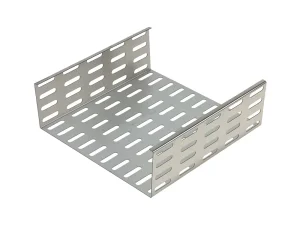
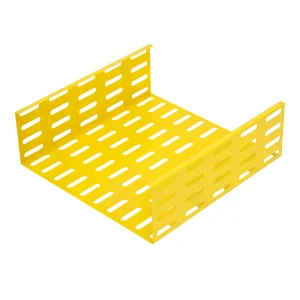
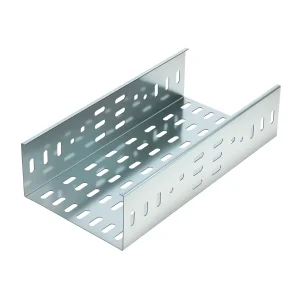
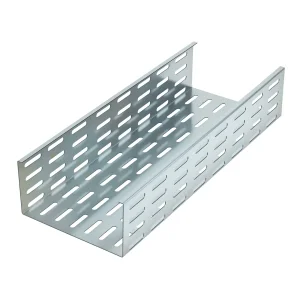
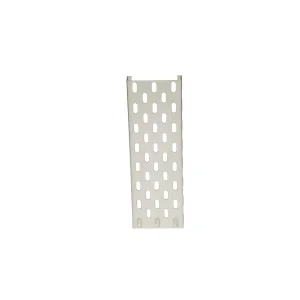
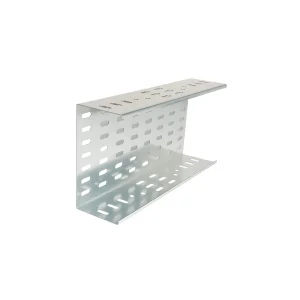
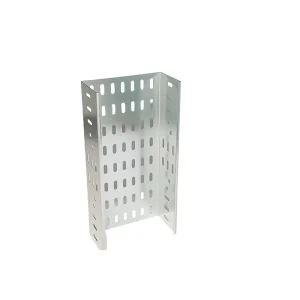
Explore our complete range of precision-manufactured perforated trays, stainless steel marine profiles, and customizable structural containment products available for immediate export and containerized project delivery.
Direct engineering responses addressing import logistics, compliance verification, and structural calculation methodologies.
All cable containment systems manufactured by Qiongkai strictly comply with EN 61537:2007 (Cable management - Cable tray systems and cable ladder systems) and the Low Voltage Directive (LVD 2014/35/EU), carrying official CE conformity marks. For electrical continuity and earthing requirements stipulated by the Regulamento Técnico de Instalações Elétricas (RTIEBT), our trays maintain impedance well below 50 mΩ across joints when coupled using our certified copper or zinc-plated grounding bonding jumpers.
For exterior marine infrastructure located within 3 km of the Atlantic shoreline (classified as ISO 12944 Corrosivity Class C5-M), standard pre-galvanized steel (PG) will develop red rust within months. We advise either:
Factory production for standard containerized orders (typically 1×40' High Cube container containing approximately 3,000–5,000 meters of nested trays and matching fittings) is completed within 15 to 20 working days at our Shanghai manufacturing facilities. Direct maritime shipping from Shanghai/Ningbo to the Port of Sines or Port of Leixões (Porto) averages 28 to 34 days port-to-port. We support CIF, CFR, and full DDP door-to-jobsite customs-cleared logistics directly into mainland Portugal.
Yes. Our in-house structural engineering department provides project-specific finite element calculation reports and support spacing schedules verifying adherence to Eurocode 8 (NP EN 1998-1). We calculate dynamic lateral and longitudinal forces based on your project's localized ground acceleration parameter (ag), ground type (A to E), and facility importance class (e.g., Class IV for critical telecommunications data centers in the Lisbon and Tagus Valley seismic zone).
Yes. Operating 12 automated roll-forming lines and over 60 heavy-duty pressing and stamping machines, we routinely manufacture non-standard widths (e.g., 150mm, 750mm, 900mm, 1000mm), extended side wall heights (100mm, 150mm, 200mm), and heavy-gauge thicknesses (up to 3.0mm structural steel). Custom hole perforation matrices and slotted side-flange profiles can be programmed with minimal re-tooling lead times.
By sourcing direct from Qiongkai's manufacturing facility, EPC contractors and procurement directors bypass multiple tiers of national distributors, stocking agents, and regional middlemen. On large-scale photovoltaic projects and hyperscale data center containment packages, this factory-direct alignment typically generates net cost savings between 20% and 35% on comparable metallurgical grades, while offering greater flexibility for custom factory pre-fabrication.
Whether you are engineering a multi-megawatt solar farm in Alentejo, outfitting a hyperscale server hall in Sines, or specifying marine-grade support channels for Atlantic coastal works, our engineering team is ready to analyze your bill of quantities (BOQ) and provide structural proposals.