
High-Yield Cable Tray Support Hardware (Poland Specification)
Engineered cold-formed channel systems, slotted framing sections, and bracket configurations rigorously tested to EN 61537 and Eurocode 3 standards for infrastructure development across Polish economic zones.
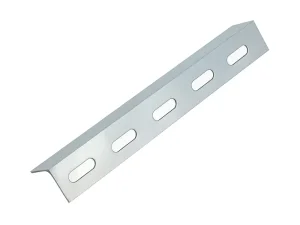
Wholesale Pre Galvanized Slotted Channel - Angle Iron Suppliers, Price (Poland Project Ready)
View Polish Specs & Price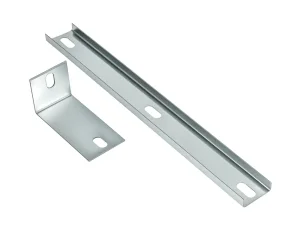
Wholesale Pre Galvanized L typed bracket and Bracket Manufacturer, Supplier for Polish Facilities
View Polish Specs & Price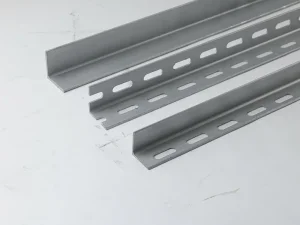
Wholesale Pre Galvanized non-perforated angle iron Manufacturer, Factories - Poland Standard
View Polish Specs & Price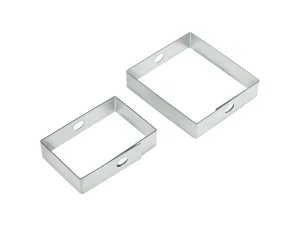
Wholesale Pre Galvanized Square Metal Components & Specialized Hardware for Poland
View Polish Specs & PriceThe Cable Containment Boom in Poland's Re-Industrialization
An in-depth perspective on why the Republic of Poland has transformed into Central Europe's most rigorous and rapidly expanding market for high-capacity electrical cable management systems.
Central Europe's Mega-Project Hub
Poland's commercial and industrial landscape has transitioned from traditional light manufacturing into advanced high-tech production corridors, hyperscale data center clusters, and massive energy infrastructure. Key flagship projects like the Centralny Port Komunikacyjny (CPK), Baltic Offshore Wind Farm zones (Pomeranian Bay and Słupsk Bank), and extensive lithium-ion battery gigafactories around Wrocław and Katowice (Silesian Special Economic Zone) require cable support infrastructure with extreme mechanical loading capacities and extended life expectancy.
In modern industrial builds, cable tray support systems are no longer treated as secondary passive steel elements. Engineers and MEP contractors enforce stringent load calculations under PN-EN 61537, demanding verifiable deflection limits (typically less than L/200 under full cable burden) and continuous electrical equipotential bonding. When managing high-voltage distribution cables or sensitive data fiber trunks across 6-meter ceiling spans, system failure can disrupt entire production lines or server halls.
Poland Industrial Insight: The convergence of strict EU decarbonization directives and rigorous Polish Building Research Institute (ITB - Instytut Techniki Budowlanej) fire standards has elevated functional fire integrity (E30 to E90 under DIN 4102-12) to an absolute tender requirement for public and industrial works.
Price Dynamics & Local Sourcing Challenges
Historically, procurement managers across Warsaw, Kraków, Poznań, and Gdańsk relied on European distributor chains or local stockists for strut channels, threaded suspension rods, and cantilever brackets. However, local Polish distributors typically maintain a 30% to 45% markup on imported finished goods to cover regional inventory holding expenses and localized branch overheads.
Furthermore, standard off-the-shelf strut channels sold regionally often measure between 1.5mm to 1.8mm in wall thickness. When applied to heavy-duty installations—such as carrying multi-tiered ladder trays filled with 1kV copper power cables—these lighter profiles fail under point loading or induce unsafe sag over prolonged operational cycles. General contractors (EPCs) across Poland are actively shifting toward direct manufacturing partnerships with Tier-1 international producers capable of delivering 2.0mm to 2.5mm heavy-gauge structural channels with certified mill test reports at direct-from-factory pricing.
Below is an analytical overview of the primary price bands and engineering specifications observed across the Polish industrial MEP sector in 2025–2026:
| System Component | Material & Coating Standard | Typical Dimension / Gauge | Safe Working Load (SWL) | Poland Market Price (Distributor) | Factory Direct Pricing (Qiongkai) |
|---|---|---|---|---|---|
| Slotted Strut Channel (41×41) | Pre-Galvanized (PN-EN 10346, Z275) | 41×41×2.0mm / 2.5mm × 3m/6m | 4.8 kN / m (point load) | €4.20 – €5.80 / m | €2.60 – €3.40 / m |
| Heavy Slotted Channel (41×41) | Hot-Dip Galvanized (PN-EN ISO 1461, ≥65µm) | 41×41×2.5mm × 3m/6m | 5.6 kN / m (point load) | €6.50 – €8.20 / m | €3.80 – €4.60 / m |
| Back-to-Back Channel (41×82) | HDG or Zinc-Nickel Coated | 41×82×2.5mm double-welded | 12.4 kN / m (point load) | €14.50 – €18.00 / m | €8.20 – €10.50 / m |
| Heavy Cantilever Arm (Wall/Post) | HDG Q235B / S250GD (Base plate welded) | Length: 300mm to 800mm (t=2.5mm) | 2.2 kN – 4.5 kN end point | €5.20 – €11.50 / pc | €2.80 – €6.20 / pc |
| Seismic Sway Bracing Kit | Electro-Galvanized / HDG Steel Alloy | Adjustable 30° to 90° pivot base | Dynamic lateral 7.5 kN | €18.00 – €26.00 / set | €9.50 – €14.00 / set |
| Trapeze Suspension Threaded Rod | Carbon Steel Grade 4.8 / 8.8 (Zinc Plated) | M10 / M12 / M16 × 2000mm/3000mm | Yield stress: 300–640 MPa | €2.80 – €6.40 / pc | €1.40 – €3.20 / pc |
*Estimated benchmark price indications for Poland commercial & industrial installations (CIF Gdańsk / Gdynia or DDP Polish job site). Subject to steel price index and order volume.
Engineering Standards Governing Cable Supports in Poland
Navigating the complex matrix of PN-EN, DIN, and Eurocode technical criteria required by Polish structural specifiers and European building inspectors.
PN-EN 61537 Deflection Control
Specifies load testing and safe working capacity for cable tray and ladder systems. In Polish commercial tenders, span deflections are tightly capped at L/200 to L/300 to prevent joint separation, cable insulation damage, or dislodging of snap-on tray covers under ambient thermal cycles.
DIN 4102-12 / E90 Fire Integrity
Critical for Polish tunnels, evacuation corridors, and manufacturing sites. The support system—including channels, drop rods, and expansion anchors—must maintain structural containment of critical circuits for up to 90 minutes under furnace temperatures exceeding 1000°C without mechanical rupture.
Atmospheric Corrosion Classes
Compliance with PN-EN ISO 12944: Inland dry areas (Warsaw commercial: C1/C2) use Pre-Galv (Z275). Industrial centers (Katowice: C3/C4) mandate batch Hot-Dip Galvanizing (HDG ISO 1461, ≥65µm). Baltic coastal and maritime sectors (C5-M) demand 316L Stainless or marine epoxy.
Vibration Resistance & Seismic Bracing in Industrial Robotics
As Poland solidifies its role as the premier European manufacturing hub for Electric Vehicles (EV), battery cells (LG Energy Solution near Wrocław, Northvolt in Gdańsk), and automated intralogistics centers, vibration mitigation in overhead MEP supports has become paramount. High-speed overhead cranes, robotic pickers, and automated guided vehicle (AGV) tracks generate continuous micro-vibrations throughout structural steel trusses.
Standard friction-fit channel spring nuts and friction brackets tend to loosen over 24–36 months of continuous industrial vibration. Qiongkai addresses this vulnerability by manufacturing cold-rolled strut channels with deep-indented serrated return lips (curved inward flange) combined with hardened, serrated channel nuts. The mechanical interlock creates a positive anti-slip connection capable of resisting shear loads up to 6.8 kN per fixing without slippage, fully complying with both Polish safety standards and German VdS seismic/vibration guidelines.
China Factory 4.0: Supply Chain Resilience for Polish Contractors
How Shanghai Qiongkai Industry Co., Ltd. bridges advanced roll-forming automation in Shanghai directly with major logistical hubs and job sites across Poland.
Automated Production & Strict Dimensional Tolerances
Founded in 2005 in Songjiang, Shanghai, Qiongkai operates 3 dedicated manufacturing plants across 30,000 square meters of production floor, equipped with 12 continuous roll-forming lines and over 60 high-precision stamping and CNC press units. Unlike regional workshops relying on manual punch presses, our automated continuous punching lines punch elongated slots (typically 14×28mm or 11×25mm) prior to roll forming. This preserves zinc coating integrity on cold-rolled edges and eliminates micro-cracks at the bend radius.
Every batch of strut channels, cantilever arms, and structural brackets is produced from prime structural carbon steel (Q235B / S250GD equivalent) with full traceability. We issue EN 10204 Type 3.1 Mill Test Certificates detailing exact yield strength, elongation, and chemical composition (carbon, manganese, phosphorus, and sulfur ratios), providing Polish site inspectors and structural auditors with absolute material verification.
Factory Precision Metric: Our CNC cold-forming roll tooling maintains a dimensional profile tolerance within ±0.15mm and channel straightness deviation under 1.0mm per 3-meter length, ensuring zero jamming during on-site channel nut sliding.
Multi-Modal Logistics: Ocean to Gdańsk & China-Europe Express Rail
Procuring from China no longer implies unpredictability or prohibitive lead times for Polish EPCs. We leverage two highly efficient logistics corridors directly into Poland:
- Deepwater Container Ocean Freight: Direct sailings from Shanghai / Ningbo to the Port of Gdańsk (Baltic Hub DCT) or Gdynia in 32–36 days. Ideal for bulk project supply of standardized 3m and 6m channels, trapeze drops, and heavy cable ladders.
- China-Europe Railway Express (New Silk Road): Fast freight trains departing Suzhou/Xi'an directly terminating at the Małaszewicze dry port / Warsaw terminal in just 14–18 days. This provides agile replenishment for fast-track data center fit-outs.
All export bundles are protected by heavy-gauge moisture-proof plastic wrap, reinforced steel edge guards, and solid timber skids engineered for side-forklift unloading, guaranteeing arrival at Polish construction sites completely free of transit oxidation (white rust).
Tailored Support Solutions for Poland's Core Industrial Sectors
Real-world engineering scenarios demonstrating how coordinated strut channel and bracket assemblies resolve site-specific MEP challenges.
Baltic Offshore Wind & Marine Sub-Stations
Location: Gdańsk, Gdynia, Ustka, Słupsk
Environment: Extreme maritime salinity, constant fog (ISO 12944 Category C5-M).
Recommended Solution: Marine-grade SS316L slotted channels or thick-dip galvanized steel (85µm minimum zinc coat) equipped with non-conductive isolation pads to eliminate galvanic corrosion against aluminum cable ladders.
Warsaw Hyperscale Cloud Data Halls
Location: Ożarów Mazowiecki, Grodzisk Mazowiecki, Warsaw
Environment: Controlled indoor, high cable weight density, zero dust tolerance.
Recommended Solution: Overhead ceiling trapeze supports using 41×41 pre-galvanized channels with powder-coated RAL 9005 (Jet Black) finish. High cleanability, zero zinc flaking, and rapid drop-in fiber runner integration.
Automotive & Battery Gigafactories
Location: Biskupice Podgórne (Wrocław), Gliwice, Tychy
Environment: Heavy mechanical vibration, chemical vapors from electrolyte handling.
Recommended Solution: Double-profile 41×82 back-to-back heavy channels with triangular gusseted cantilever brackets. Designed for 6-meter span installations carrying both HV busbars and multi-tier power trays.
Seismic Bracing, Suspension Hardware & Cable Trunking
Complete structural hardware portfolio required for fully certified cable management installations across Polish commercial and infrastructure developments.
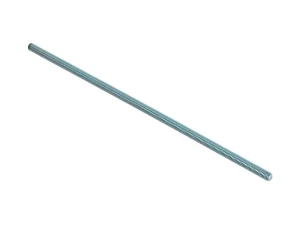
Buy High-Tensile Metal Hanger Rod Supplier, Price (M8–M16 Poland Spec)
View Polish Specs & Price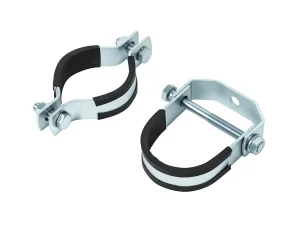
Buy Heavy-Duty Pipe Clamping Supplier, Suppliers for Poland Industrial Piping
View Polish Specs & Price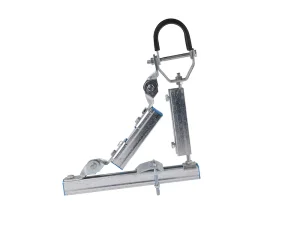
Buy Reliable Heavy Duty Seismic Resistant Bracket Factories, Price - Poland Certified
View Polish Specs & Price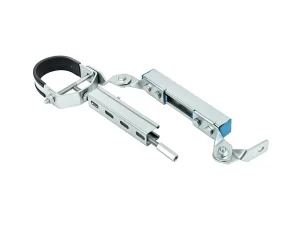
Buy Multi-Angle Seismic Bracket Factory, Price for Poland Mechanical MEP
View Polish Specs & Price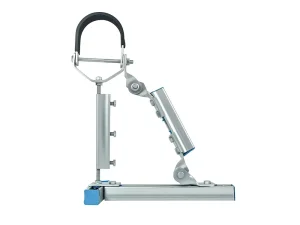
Buy Seismic Bracket for Struct Channel Manufacturer, Suppliers - Eurocode 8 Ready
View Polish Specs & Price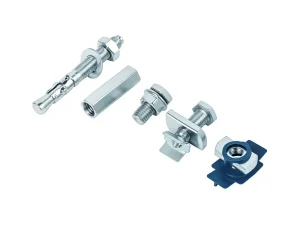
Buy Seismic Resistant Bracket Accessories Supplier, Suppliers for Poland Construction
View Polish Specs & Price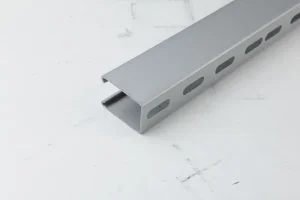
Wholesale Fireproof C Slotted Channel Factories, Price (DIN 4102-12 Compliant)
View Polish Specs & Price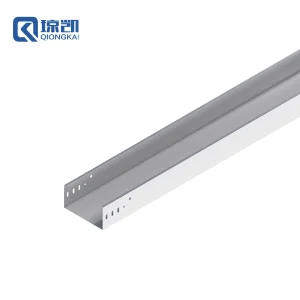
Wholesale PG, HDG & SS Cable Trunking Trough Type Channel 200×100 for Polish Plants
View Polish Specs & PriceOptimizing Cable Containment BOQ & Total Cost of Ownership (TCO)
Strategic engineering guidelines for Polish electrical estimators, mechanical quantity surveyors, and project directors.
1. Value Engineering the Strut Gauge
Many tender documents in Poland copy obsolete structural specifications specifying continuous 2.5mm thick 41×41 HDG channels throughout an entire facility. However, in secondary feeder routes carrying lightweight wire mesh basket trays or instrumentation signals (under 15 kg/m load), a high-yield 2.0mm pre-galvanized channel (yield strength > 250 MPa) provides an identical safety factor while saving 20% to 25% in steel weight and transport costs.
Qiongkai's project engineers assist contractors with free structural BOQ reviews. By conducting span-deflection calculations tailored to actual cable filling ratios, we optimize steel thicknesses without compromising compliance with Polish Building Standards.
2. Eliminating On-Site Hot Work
On-site welding and cutting of structural steel profiles incurs significant labor expense in Poland, where certified welder rates have risen considerably. Furthermore, cutting hot-dip galvanized steel on site damages the zinc passivation layer, creating rapid localized red rust points.
Our factory supplies precision pre-punched, custom-length strut profiles and pre-assembled trapeze brackets delivered directly to job sites in Warsaw, Katowice, or Wrocław. Site teams simply anchor and tighten serrated flange bolts, accelerating MEP installation timelines by up to 35% compared to conventional stick-build framing methods.
Frequently Asked Questions: Cable Tray Supports in Poland
Authoritative answers addressing engineering compliance, structural loading, pricing benchmarks, and international delivery logistics into Poland.
What are the key technical standards governing cable tray support systems in Poland?
Cable containment supports in Poland are primarily governed by European standards harmonized under the Polish Committee for Standardization (PKN). The core standard is PN-EN 61537:2007 (Cable management - Cable tray systems and cable ladder systems), which dictates mechanical load testing, deflection thresholds, and electrical continuity. For fire-rated escape routes and safety systems, DIN 4102-12 (E30 to E90 functional integrity) is strictly enforced alongside Polish ITB guidelines. Structural calculations must conform to Eurocode 3 (PN-EN 1993) for cold-formed steel members, while galvanizing standards must comply with PN-EN ISO 1461 (batch hot-dip galvanizing) or PN-EN 10346 (continuously galvanized sheet).
How do factory-direct prices from Qiongkai compare with Polish and European local distributors?
On typical commercial and industrial MEP packages, procuring directly from Shanghai Qiongkai delivers total cost reductions between 30% and 45% compared to local Polish stockists or tier-one European brand catalogs. Local European distributors must factor in high warehousing costs, regional dealer margins, and multiple intermediate freight legs. By consolidating full container loads (FCL) of slotted channels, cantilever arms, threaded rods, and hardware directly from our Shanghai manufacturing facility shipped into Port of Gdańsk or via rail to Małaszewicze/Warsaw, EPC contractors secure tier-one factory pricing while receiving custom-cut lengths and dedicated structural engineering support.
What is the typical shipping lead time and customs clearance process for shipments to Poland?
We offer two reliable logistics options for Polish deliveries:
1. Ocean Freight (Port of Gdańsk / Gdynia): Port-to-port ocean transit takes approximately 30 to 35 days. Inland trucking from Gdańsk DCT to central Poland (Warsaw, Łódź) or southern industrial zones (Silesia, Wrocław) takes 24 to 48 hours. Total lead time including production is typically 6 to 7 weeks.
2. Rail Freight (China-Europe Express to Małaszewicze / Warsaw): Terminal-to-terminal transit is approximately 14 to 18 days. Ideal for fast-track data center phases where delivery schedule is critical.
All export documentation—including Commercial Invoices, Packing Lists, Bills of Lading, Certificates of Origin, and EN 10204 3.1 Mill Test Certificates—is provided for smooth customs clearance under Poland's EU trade regulations.
Which finish is recommended for Baltic offshore and coastal projects vs. inland Poland data centers?
Atmospheric exposure dictates material selection according to PN-EN ISO 12944:
• Baltic Coastal & Offshore Projects (Gdańsk, Gdynia, Słupsk): Classified under Corrosivity Category C5-M / C5-I. We recommend Hot-Dip Galvanized steel with an average zinc coating thickness of 85 µm minimum, or Grade 316 / 316L Stainless Steel for high salinity resistance.
• Inland Data Centers & Commercial Complexes (Warsaw, Poznań, Kraków): Classified under Category C1 / C2. Pre-galvanized steel (PN-EN 10346, Z275 coating with ~20 µm zinc per side) or electro-powder coated channels (RAL 7035 / RAL 9005) provide optimal aesthetics, zero particulate shedding, and long-term durability exceeding 25+ years.
Can Qiongkai manufacture customized strut channels with non-standard slot patterns or lengths?
Yes. With 12 automated roll-forming lines and proprietary tooling, we produce custom C-channels, double back-to-back welded channels, and asymmetric mounting profiles. We can alter slot dimensions (e.g., standard 14×28mm, 11×25mm, or round pilot holes), hole pitch centers, wall thicknesses (from 1.5mm up to 3.0mm heavy gauge), and deliver custom lengths up to 12 meters to eliminate site cutting and waste. In addition, our engineering team can fabricate custom-welded baseplates and heavy cantilever brackets based on your specific DWG/BIM drawings.
How is the Safe Working Load (SWL) verified for heavy industrial installations?
Safe Working Loads (SWL) for our strut profiles and cantilever arms are calculated in accordance with Eurocode 3 (EN 1993-1-3) design of cold-formed thin-gauge members and physically validated via calibrated hydraulic load test rigs. We test both mid-span point loading and uniformly distributed loads (UDL) up to structural yield point, applying a standard engineering safety factor of 1.5 to 2.0. Comprehensive load-deflection tables showing exact deflection values in millimeters under various span intervals (from 1.0m to 3.5m) are supplied with all project submittals.
Accelerate Your Polish Infrastructure Tender Today
Whether you are engineering a hyperscale data hall in Warsaw, an offshore substation in Gdańsk, or an EV gigafactory in Silesia, partner directly with Shanghai Qiongkai for certified cable tray support systems at direct manufacturer pricing.