The Berlin-Brandenburg metropolitan region has rapidly evolved from a decentralized services hub into one of Northern and Central Europe's most dynamic focal points for deep-tech innovation, hyperscale digital infrastructure, and sustainable heavy industry.
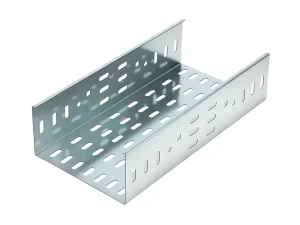
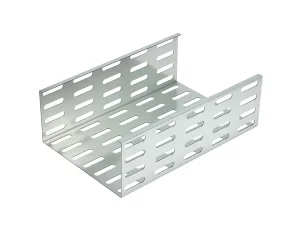
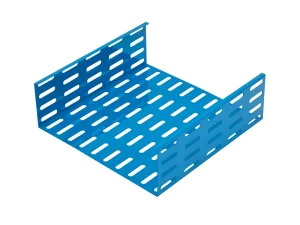
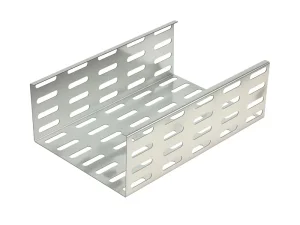
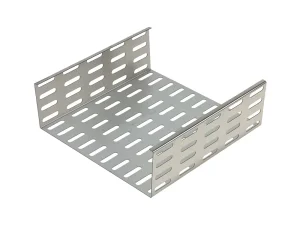
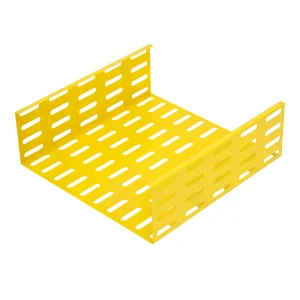
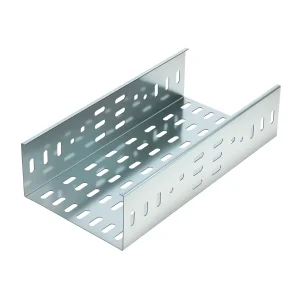
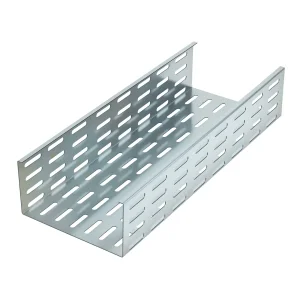
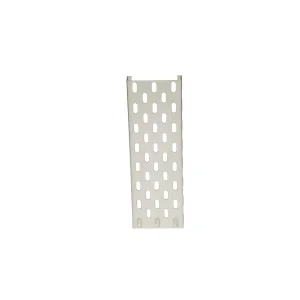
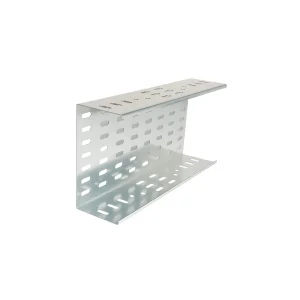
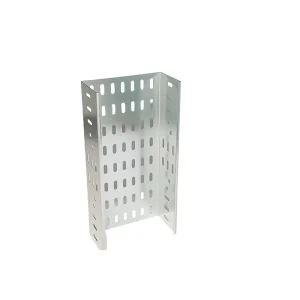
With the rapid adoption of AI computing clusters, sub-districts like Spandau, Marienfelde, and the BER airport logistics periphery are experiencing unprecedented Tier III and Tier IV facility construction. These installations require thousands of linear meters of high-density, low-smoke zero-halogen (LSZH) compliant cable basket trays and slotted raceways engineered for maximum convection and zero electrical fault propagation.
Flagship mega-projects such as Siemensstadt Square (Siemensstadt 2.0) and CleanTech Park Marzahn represent the frontier of carbon-neutral smart city design. Mechanical and Electrical (MEP) contractors working within these districts demand cable support structures with documented Environmental Product Declarations (EPDs), verifiable recycled steel content, and modular boltless assembly systems that reduce site labor hours by up to 35%.
The expansion of the BVG public transport network, modernization of S-Bahn underground lines, and the industrial spillover from the Grünheide gigafactory corridor have raised structural standards. Cable trays installed in track tunnels and automated battery assembly plants must withstand extreme cyclic mechanical vibrations, micro-shocks, and aggressive chemical cleaners, demanding continuous hot-dip galvanization (HDG) and 316-grade stainless framing.
European distribution networks frequently impose 8 to 14-week lead times on non-standard tray widths or seismic-certified strut channels, alongside substantial distributor markups. Shanghai Qiongkai Industry bridges this capability gap by supplying custom-fabricated, DIN-compliant containment profiles with integrated factory assembly tolerances directly to Berlin jobsites via prioritized intermodal shipping.
Modern infrastructure requires cable pathways to be fully integrated into predictive digital architectures. Qiongkai engineering combines parametric digital modeling with advanced metallurgical finishes to safeguard vital power, fiber, and control routing over a 50-year service lifecycle.
We supply native Autodesk Revit families (.rfa) and IFC neutral models with fully parameterized dimensional data, actual center-of-gravity indicators, and automated fastener placement algorithms. This enables collision-free coordination within complex Navisworks multi-trade models prior to concrete pouring.
Utilizing high-order Finite Element Analysis (FEA), our structural profiles are optimized for load-to-weight ratios. We engineer reinforced flange configurations on 41×82 and 41×62 strut channels that handle up to 40% higher cantilever bending moments during short-circuit electromagnetic surges without buckling.
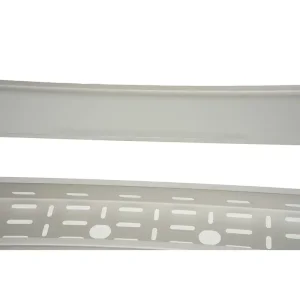
Dense perforation patterns are calibrated to enhance natural air convection by up to 28% compared to standard generic slotting, preventing localized heat buildups that derate high-voltage cables. Side rail channels can also house distributed optical temperature sensor fibers for early hotspot alert networks.
Every technical facility imposes unique mechanical, chemical, and fire-safety criteria. Qiongkai delivers purpose-engineered support systems that address environmental exposures from sub-surface subterranean dampness to high-amperage data centers.
Challenge: Ultra-dense fiber routing, overhead cable weight exceeding 150 kg/m, strictly controlled laminar airflow regimes, and prevention of zinc whiskers that threaten electronic equipment.
Engineered Solution: Stainless steel 304 or specialized electrostatic powder-coated basket wire mesh raceways installed with drop-rod ceiling trapeze systems. Non-conductive edge guards and smooth radiused bends eliminate all optical macro-bending losses.
Challenge: Continuous ambient dampness, brake dust accumulation, sulfur dioxide exposure, and piston wind shock waves generated by passing high-speed trains.
Engineered Solution: Batch hot-dip galvanized (HDG) heavy-duty ladder racks with minimum coating thicknesses exceeding 85 μm (compliant with DIN EN ISO 1461), coupled with seismic-rated back-to-back strut framing bolted with A4 stainless expansion anchors.
Challenge: Heavy electrolyte and corrosive chemical vapors, elevated operational ambient temperatures, high short-circuit load risk near transformer banks.
Engineered Solution: Acid-passivated SS316L cable trays or high-load fiberglass reinforced polymer (FRP) containment solutions that resist aggressive acid/alkali degradation indefinitely with zero dielectric conductivity risk.
Challenge: Exposed open-ceiling aesthetic architectural standards, frequent reconfiguration requirements, strict fire compartmentalization boundaries.
Engineered Solution: Precision pre-galvanized perforated and solid-bottom trunking finished with durable powder-coat finishes in matte anthracite (RAL 7016) or custom architect-selected hues with quick-release snap-on covers.
For any MEP installation in Berlin, regulatory non-compliance introduces immediate project stop risks and insurance disqualification. Qiongkai systems are engineered, batch-tested, and certified against stringent German and European industrial standards.
| Standard / Regulation | Technical Scope & Target Parameters | Qiongkai Production & Verification Protocol | Local Jobsite Significance |
|---|---|---|---|
| DIN EN 61537 Mandatory EU |
Cable tray systems and cable ladder systems for electrical installations; mechanical load testing (SWL). | Type testing with destructive load deflection measuring under uniform load distribution across 1.5m to 3.0m supports. | Guarantees deflection does not exceed 1/100th of span length under full conductor weight. |
| DIN 4102-12 Fire Safety |
Fire resistance of electric cable systems required to maintain circuit integrity (Classes E30, E60, E90). | Reinforced tray side walls, threaded-rod retaining brackets, and expansion-compensating ceiling anchors. | Ensures emergency smoke extractors, pressurized stairwells, and evacuation elevators operate for 90 min. |
| DIN EN ISO 1461 Galvanizing |
Hot dip galvanized coatings on fabricated iron and steel articles - specifications and test methods. | Centrifugal and immersion hot-dip bath processes achieving uniform zinc thicknesses from 60 μm to 120 μm. | Long-term passivation against atmospheric condensation and road salt ingress in underground car parks. |
| DIN EN 10088-2 Stainless Alloys |
Stainless steels for general purposes; sheet/plate and strip for corrosion resisting applications. | Spectrometric chemical composition testing with certified Mill Test Certificates (MTC) conforming to EN 10204 3.1. | Verified Chromium (>17.5%) and Nickel (>8%) content, eliminating pitting in high-humidity ventilation ducts. |
| RoHS / REACH Environmental |
Substance restriction protocols prohibiting toxic heavy metals, lead, hexavalent chromium, and cadmium. | Closed-loop degreasing baths, environmentally certified eco-passivation, zero hazardous effluent discharge. | Guarantees seamless import clearance across European customs without hazardous material quarantine. |
Headquartered in Songjiang Port Science and Technology City, Shanghai, Shanghai Qiongkai Industry Co., Ltd. combines advanced manufacturing automation with strategic port logistics to give Berlin EPC contractors an unshakeable procurement advantage.
Operating across 30,000 square meters of specialized workshop space with 12 complete, continuous automated roll-forming lines. Over 60 heavy-duty CNC punching presses, laser cutting gantries, and robotic welding stations deliver micron-level tolerance accuracy across high-volume production runs.
By eliminating local middleman tiers, layered European distributors, and non-essential brand markups, contractors acquire Tier-1 industrial quality directly from the plant. This structural cost efficiency directly protects contractor profit margins amidst surging construction labor costs in Berlin.
Located adjacent to Shanghai’s Yangshan and Waigaoqiao deep-water container ports, shipments reach Hamburg and Rotterdam via express ocean freight in 28-32 days, followed by direct inland feeder barge or rail to Berlin Westhafen. For rapid-schedule emergencies, China-Europe Rail delivers within 16-18 days.
Large-scale German building tenders (VOB contracts) leave no margin for installation errors, defective finishes, or missing batch documentation. Qiongkai structures every procurement contract around operational transparency.
Our engineering desk reviews your electrical engineering layouts and architectural drawings to verify structural load capacity, hanger spacing, and elbow radius requirements before manufacturing begins.
Every containerized shipment includes physical and chemical composition certs, zinc coating weight documentation, and salt-spray test reports (ASTM B117) directly linked to laser-etched batch identifiers.
Products are packaged in structural steel crates organized by building floor, quadrant, or construction phase, drastically reducing staging confusion and secondary material handling inside urban Berlin sites.
Submit your project schematics or equipment schedule. Our senior cable containment specialists will configure optimal tray geometries, verify load limits, and prepare a direct manufacturer pricing breakdown within 24 hours.
Browse our precision cold-formed steel and stainless containment lines configured for European building envelopes, smart energy microgrids, and data infrastructure.
Key clarifications on German fire performance, cross-border customs documentation, metallurgical properties, and logistics management for electrical engineers and procurement directors.
Electrical circuit integrity under fire conditions (*Funktionserhalt*) requires the entire cable supporting structure—including trays, brackets, threaded rods, and ceiling anchors—to maintain physical containment without excessive structural deformation while subjected to temperatures exceeding 1000°C for up to 90 minutes.
Qiongkai systems achieve this compliance by utilizing heavy side-rail steel gauges (minimum 1.5mm to 2.0mm), integrated threaded-rod retaining brackets placed at maximum 1.2m intervals, and specialized stiffened splice jointers. This prevents cable bunches from sagging onto sharp edges and severing fire-resistant insulation jackets, fully satisfying technical building inspection authorities across Germany.
Pre-galvanized (PG) steel (conforming to EN 10346, Z275 coating) is produced by continuously uncoiling steel strip through a molten zinc bath at the steel mill prior to stamping and bending. It provides an ultra-clean, uniform zinc layer of approximately 20 μm, making it optimal and cost-effective for indoor dry commercial complexes, elevated computer room subfloors, and conditioned data center white spaces.
Hot-dip galvanizing (HDG) (conforming to DIN EN ISO 1461) involves immersing the fully cut, punched, and welded cable tray directly into a molten zinc bath at 450°C. This forms a robust metallurgically bonded zinc-iron alloy coating ranging from 60 μm to over 100 μm thick. HDG is non-negotiable for outdoor rooftop installations, industrial wastewater treatment facilities, and subterranean S-Bahn tunnel routing where atmospheric moisture and condensation are constantly present.
Qiongkai operates a dedicated global trade documentation department experienced in European Union import protocol. All export consignments are accompanied by precise HS-Code classifications (typically heading 7308 for steel structures and cable management), certified Commercial Invoices, Packing Lists, Certificates of Origin, and Mill Test Certificates (EN 10204 3.1).
We offer flexible Incoterms including FOB Shanghai, CIF Hamburg/Rotterdam, and DDP (Delivered Duty Paid) straight to your Berlin project warehouse or site unloading zone. Under DDP terms, Qiongkai handles all maritime transport, EU customs clearance fees, import VAT processing, and final transport, allowing contractors to purchase as smoothly as buying locally.

Yes. With 12 automated roll-forming and stamping lines, we are not limited to fixed catalog dimensions. We routinely produce custom widths from 50mm up to 1200mm, side rail heights from 25mm to 150mm, and steel sheet thicknesses up to 3.0mm.
Our tool design and CNC gantry capabilities allow us to adjust punch geometries to match customer-specified slot patterns, center-to-center spacing, or cable tie-down points, ensuring complete backward compatibility with existing legacy systems installed on retrofit projects across Berlin.
Standard containerized production orders are fabricated, quality-inspected, and crated within 10 to 18 business days. For maritime shipping, direct ocean transit from Shanghai Deepwater Port to Hamburg takes approximately 28 to 32 days, with an additional 2 days for inland road/rail container transport to Berlin.
For mission-critical timelines or fast-tracked tender milestones, we utilize the China-Europe Railway Express (Yuxinou route), reaching Duisburg/Berlin logistics hubs in just 16 to 18 days. Urgent small-component orders and custom accessories can also be air-freighted directly to Berlin Brandenburg Airport (BER) within 5 to 7 business days.
Galvanic corrosion occurs when metals with differing electrochemical potentials are in direct contact in the presence of an electrolyte (such as ambient moisture). When connecting stainless steel cable trays to galvanized strut framing, Qiongkai supplies high-density vulcanized rubber or nylon isolation washers, isolating pads, and non-conductive sleeve inserts.
Furthermore, we advise MEP designers on the strategic galvanic hierarchy and manufacture unified matching brackets in 100% identical metallurgy (e.g., 316L brackets for 316L trays) to entirely eliminate bi-metallic cell formation and ensure 50-year structural integrity.
Eliminate distributor markups and lengthy lead times. Connect directly with our chief MEP application engineers today for structural load analysis, custom profile configuration, and comprehensive project bill-of-quantities quotation.