
Primary Product Showcase (Part I)
Explore our certified range of 100×50mm and complementary heavy-duty cable management systems available for global export with mill test certification.
-
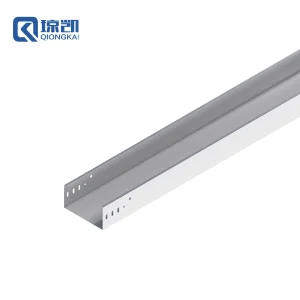 Wholesale Carbon Steel PG Pre Galvanized HDG Hot Dip Galvanized SS Stainless Steel Cable Trunking Trough Type Channel 200*100 Manufacturer, SuppliersView Product Specifications
-
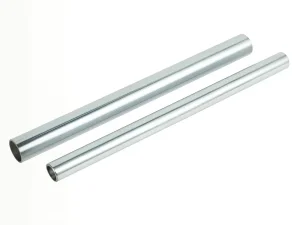 Wholesale Pre Galvanized conduit Supplier, SuppliersView Product Specifications
-
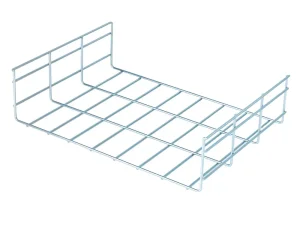 Wholesale Cod Pre Galvanized grid Cable tray 400mm Manufacturers, SuppliersView Product Specifications
-
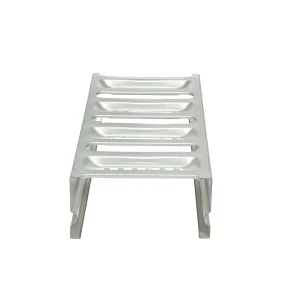 Buy Pre Galvanized 200*100 Heavy Duty/Cost Saving Cable Tray Manufacturer, SupplierView Product Specifications
-
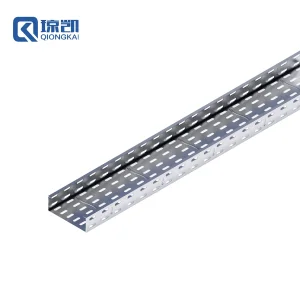 Buy Reinforced Medium duty Pre-galvanized Hot-dip-galvanized Perforated Cable Tray 150*50 Manufacturer, PriceView Product Specifications
-
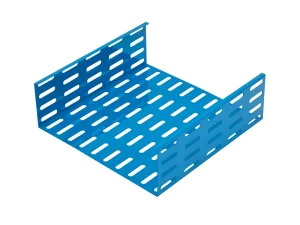 Buy Pre Galvanized Perforated Cable Tray Series With Powder Coating Suppliers, FactoriesView Product Specifications
-
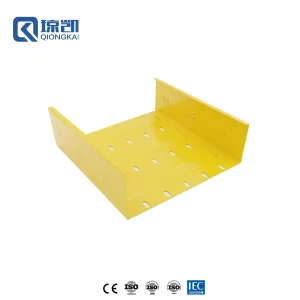 Buy Powder Coated Carbon Steel Cost Saving Heavy Duty Reinforced Molded Pre Galvanized Cable Tray with less perforation - RAL1080 Yellow 300*100 Manufacturers, SuppliersView Product Specifications
-
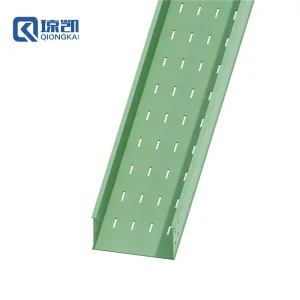 Wholesale FRP Perforated Cable Tray 400*200 Manufacturer, FactoryView Product Specifications
Cable Tray 100mm X 50mm Technical Profile & Load Architecture
A rigorous review of physical metrics, standard cross-sectional load characteristics, and compliance criteria under IEC 61537 and NEMA VE-1 standards.
| Dimensional Metric | Standard Dimension | Tolerance Standard | Engineering Significance |
|---|---|---|---|
| Internal Width (W) | 100 mm (~4 inches) | ±0.75 mm | Dictates cable laying volume and side-by-side single-conductor clearance. |
| Side Rail Height (H) | 50 mm (~2 inches) | ±0.50 mm | Controls depth of fill; meets NEC 40% fill capacity limit for signal lines. |
| Sheet Thickness (t) | 1.0 mm / 1.2 mm / 1.5 mm / 2.0 mm | GB/T 700 / ASTM A1008 | Directly correlates to moment of inertia and safe unsupported span length. |
| Standard Unit Length | 2000 mm / 2400 mm / 3000 mm | ±2.0 mm | Optimized for sea freight container loading (5.8m for 20GP, 11.8m for 40HQ). |
| Perforation Ratio | 28% – 38% Open Surface | Class B Ventilation | Ensures active heat dissipation for low-voltage power cables without sagging. |
| Safe Working Load (SWL) | 65 kg/m to 145 kg/m (at 1.5m span) | IEC 61537 Type II | Maintains deflection ratio well within L/200 structural parameters. |
Engineering Information Gain: The Mechanics of the 100mm x 50mm Profile
The 100mm (width) by 50mm (flange height) containment profile represents the absolute gold standard for secondary distribution trunking. In architectural MEP engineering, oversizing trays leads to wasted plenum space, higher structural ceiling stress, and unnecessary steel consumption. Conversely, undersized containment causes cable bunching, inducing electromagnetic induction and heat bottlenecks. Our 100x50 profile with cold-rolled continuous reinforcement flanges achieves a 22% higher transverse stiffness rating than conventional sheared channel designs.
Direct China Factory Manufacturing Advantages
Why Tier-1 international contractors and distributors bypass intermediaries to partner directly with our Songjiang, Shanghai manufacturing facility.
Integrated Metallurgy
Direct supply agreements with premier primary mills (Baosteel, Ansteel) guarantee uniform structural carbon steel with guaranteed yield strength (Q235B / SS400) and zero recycled impurity pockets.
Continuous Roll-Forming
Our 12 high-speed continuous roll-forming lines operate at 15m/min, maintaining ±0.3mm profile accuracy and eliminating structural micro-fissures common in traditional hydraulic press brake bending.
Eco-Galvanizing Precision
Equipped with state-of-the-art robotic dipping and centrifugal spinning baths, achieving hot-dip zinc coating thicknesses from 65µm to >85µm strictly compliant with ASTM A123 / ISO 1461 requirements.
Shanghai Port Logistics
Located in Shanghai’s Songjiang logistics corridor, containerized shipments transfer directly to Yangshan Deepwater Terminal or Waigaoqiao within 4 hours, minimizing inland transit handling risks.
Global Cable Containment Industry Trends (2025–2030)
Market vectors transforming the specification, engineering, and manufacturing of cable support systems worldwide.
Modular Fast-Snap Joining
Traditional bolt-and-nut fishplates are rapidly being replaced by toolless click-and-lock coupler systems. In a standard 5,000-meter commercial project, snap-in 100x50 trays reduce field installation labor by up to 42%, lowering total installed MEP contract costs significantly.
Smart Factory IoT & RFID
Major infrastructure projects now demand asset tracking directly from the factory floor. Our production processes can incorporate laser-etched QR identifiers and RFID tracking tags on tray bundles, integrating seamlessly into BIM (Building Information Modeling) maintenance cycles.
Decarbonized Metallurgy
With global green building benchmarks such as LEED v4.1 and BREEAM demanding transparent Environmental Product Declarations (EPDs), Chinese manufacturing is transitioning rapidly to recycled electric arc furnace (EAF) steel and solar-powered finishing operations.
Localized Scenarios & Macro-Industry Solutions
Engineered to deliver mechanical stability across complex mechanical, electrical, and plumbing topologies.
Hyperscale Data Halls
Deployment: Wire mesh basket and light perforated 100×50mm trays run overhead along server racks.
Challenge: Micro-imperfections or burrs can strip Cat6A or fragile 12-strand MTP/MPO fiber jackets.
Solution: De-burred, chamfered wire endpoints and electrostatic powder coatings providing zero abrasion and clean electrical grounding.
Offshore & Marine Platforms
Deployment: Stainless Steel 316L and pultruded FRP 100×50mm channels on subsea pipeline monitoring networks.
Challenge: Extreme chloride atmospheric exposure and severe salt spray degradation.
Solution: Molybdenum-alloyed austenitic steel (Cr >16%, Ni >10%, Mo >2%) passivated in nitric acid baths to guarantee 1000+ hours neutral salt spray resistance without pitting.
Automotive & Battery Gigafactories
Deployment: Heavy-gauge pre-galvanized (PG) slotted cable trays servicing robotic welding arms and automated conveyor lines.
Challenge: Continuous high-frequency vibrational stress leading to joint fatigue.
Solution: Serrated flange lockbolts, reinforced return flanges, and vibration-resistant seismic strut channel trapeze brackets.
Global EPC Procurement Verification & Compliance Matrix
Managing the engineering pipeline from initial Bill of Quantities (BOQ) review to factory site acceptance testing (FAT).
| Procurement Phase | Key Engineering Milestone | Deliverables & Verification Documents |
|---|---|---|
| 1. Technical Submittal | Analysis of static loads, wind/seismic factors, and chemical atmosphere. | Detailed CAD 2D/3D layouts, structural deflection calculations, material test sheets. |
| 2. Raw Coil Validation | Spectrometric chemical analysis and tensile yield verification per batch. | EN 10204 Type 3.1 Inspection Certificates, heat number traceability reports. |
| 3. Dimensional QA | Precision caliper monitoring of flange returns, bottom hole patterns, and edge burrs. | In-line production QC logs, go/no-go gauge tolerance verification sheets. |
| 4. Surface Finish Check | Electromagnetic thickness gauge testing of zinc (HDG/PG) and cross-hatch adhesion. | ISO 2178 coating thickness reports, ASTM B117 accelerated salt spray logs. |
| 5. Export Packing | Anti-collision edge protectors, vapor-corrosion-inhibiting (VCI) plastic wrap, and steel strapping. | Container loading photographic inspection records, maritime cargo lash certs. |
Frequently Asked Questions (FAQ)
In-depth responses to critical engineering, specification, and logistics inquiries raised by commercial buyers.
How do I calculate the maximum cable capacity for a 100mm X 50mm cable tray?
What is the difference between Pre-Galvanized (PG) and Hot-Dip Galvanized (HDG) for 100x50 profiles?
What support span spacing is recommended for 100mm X 50mm trays under full load?
Can custom perforations, knockouts, or non-standard sidewall heights be manufactured?
What export packaging is applied to prevent transit corrosion during long sea voyages?
Primary Product Showcase (Part II)
Complete your cable containment bill of materials with our heavy-duty ladder racks, mounting brackets, stainless channel, and specialized fiberglass solutions.
-
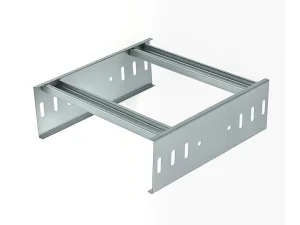 Wholesale Pre Galvanized light weight cable ladder Manufacturer, PriceView Product Specifications
-
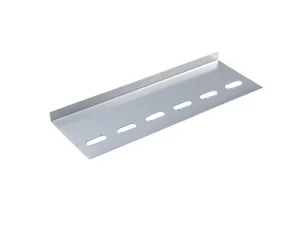 Wholesale Pre-Galvanized Connections spare parts Manufacturers, FactoryView Product Specifications
-
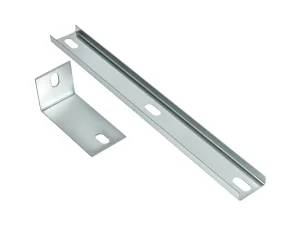 Wholesale Pre Galvanized L-shapedbracket Factories, PriceView Product Specifications
-
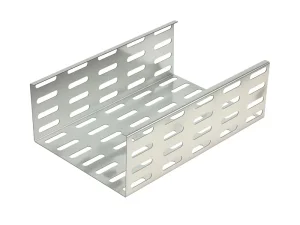 Buy Stainless Steel Perforated Cable Tray 200mm width Suppliers, FactoryView Product Specifications
-
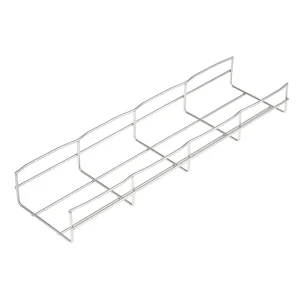 Wholesale Stainless cable tray50mm Manufacturers, FactoriesView Product Specifications
-
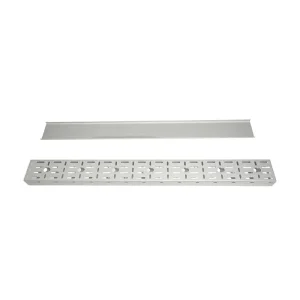 Buy SS Stainless Steel 316*316L Cable Trays Maxiumn Perforated Cable Trays Manufacturer, SupplierView Product Specifications
-
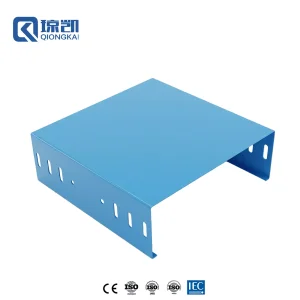 Buy Powder Coated Carbon Steel PG Pre Galvanized Cable Trunking Trough Type Channel - RAL5015 Blue Manufacturer, SuppliersView Product Specifications
-
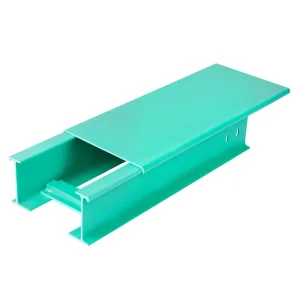 Buy Light Weight FRP Ladder type Cable Tray Manufacturers, SupplierView Product Specifications