
Engineered Interior Cable Trays & Mesh Raceways
Explore our architectural-grade containment pathways: engineered for high-visibility commercial interiors, data centers, and industrial facilities requiring premium powder-coated and galvanized finishes.
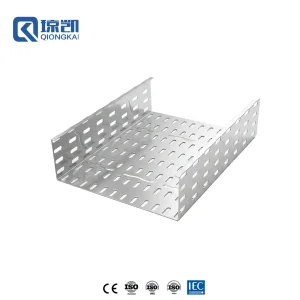
Carbon Steel Pre Galvanized PG / HDG Cable Tray with Reinforce Ribs 300*100
View Technical Specs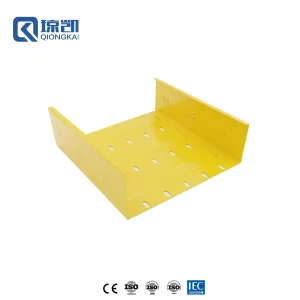
Powder Coated Carbon Steel Reinforced Molded Tray - RAL1080 Yellow 300*100
View Technical Specs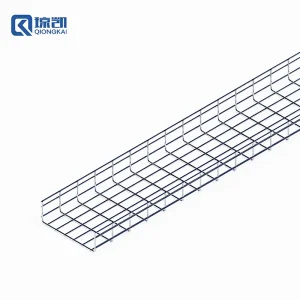
Pre-Galvanized Wire Basket Mesh Cable Tray for Open Interiors 300*100
View Technical Specs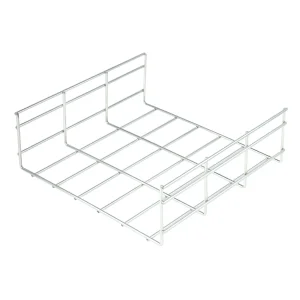
Stainless Steel SS304 / SS316 Wire Mesh Basket Cable Tray 300mm
View Technical Specs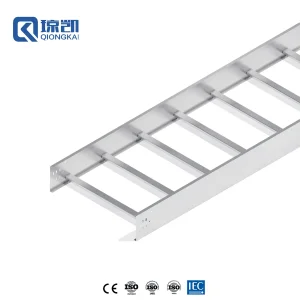
Pre-Galvanized Heavy-Duty Ladder Cable Tray for Primary Risers 800*200
View Technical Specs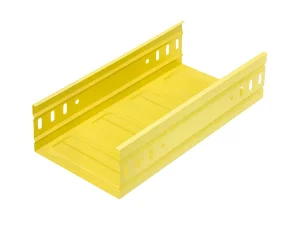
Fireproof Signal Yellow Powder-Coated Molded Architectural Cable Tray
View Technical Specs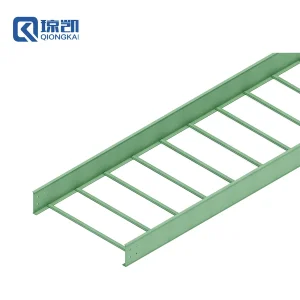
Corrosion-Proof Pultruded FRP / GRP Ladder Type Cable Tray 1000*200
View Technical Specs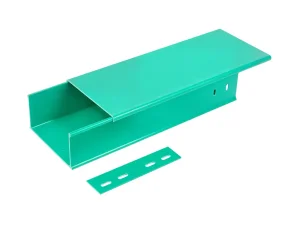
High-Strength Non-Conductive FRP Composite Interior Cable Tray
View Technical SpecsThe Architectural Convergence: Cable Tray Systems in Contemporary Interior Design
Why modern commercial projects are migrating away from concealed drop ceilings toward high-performance exposed MEP cable management infrastructure.
In modern commercial, institutional, and mixed-use architectural design, the ceiling plenum has undergone a fundamental paradigm shift. The conventional methodology of concealing building utilities behind mineral-fiber acoustic drop ceilings is increasingly being superseded by open-plenum architectural spaces. In tech company corporate headquarters, biophilic commercial environments, modern creative ateliers, and transportation hubs, exposed mechanical, electrical, and plumbing (MEP) infrastructure serves a dual purpose: a high-efficiency functional raceway and a defining visual design language.
Specifying a cable tray system within an interior architectural context mandates a delicate equilibrium between mechanical structural capacity (IEC 61537 / NEMA VE 1) and geometric visual cohesion. Trays are no longer hidden utilitarian conduits; they are continuous spatial elements directly aligned with interior lighting tracks, HVAC circular ductwork, and structural steel beams. Achieving this requires manufacturers to provide tight geometric tolerances, seamless splice plates, internal vibration dampening, and architectural electrostatic powder-coat finishes (RAL matching system) that resist chipping, ultraviolet fading, and micro-scratching during tenant retrofits.
Acoustic & Thermal Harmony
Exposing cable pathways eliminates the thermal insulation trapped within ceiling voids. Perforated and wire-mesh tray geometries optimize natural air convection, lowering ambient cable conductor operating temperatures by up to 12% and mitigating microphonics and airflow turbulence from overhead air diffusers.
Architectural Geometry
Fabricated with continuous roll-formed cold-rolled steel (SPCC) or austenitic stainless steel (SS304/316), featuring clean 90-degree internal hemmed side rails that prevent snagging during high-speed data pulls while providing a pristine, continuous datum line across extensive architectural spans.
Electromagnetic Shielding
High-density office spaces consolidate Cat6A/Cat7 copper ethernet, unshielded low-voltage building automation system (BAS) cables, and 400V/230V building power risers within shared architectural sightlines. Molded solid-bottom and perforated trunking with integrated dividers delivers attenuation up to 60 dB.
Localized Interior Architectural Application Scenarios
From high-end European corporate headquarters to complex industrial retrofits across North America and Asia-Pacific, examine how specialized containment systems integrate into unique structural envelopes.
Tech Corporate HQs & Open-Plan Creative Workspaces
In Silicon Valley, London, and Singapore modern tech campuses, architects favor exposed concrete slabs combined with matte black (RAL 9005) or basalt grey (RAL 7012) electro-galvanized wire basket cable trays. The open-mesh structure ensures lightweight ceiling loads, rapid overhead rerouting of high-density Cat6A/fiber patch cables, and cohesive visual integration with linear suspended acoustic baffling and track lighting arrays.
Luxury Commercial Retail & High-End Hospitality
Flagship retail stores and boutique hotels demand high-end finishes where cable management cannot distract from brand ambiance. Pre-galvanized sheet metal cable trunking, electrostatically coated in custom architectural warm whites (RAL 9010) or metallic bronze, enables clean overhead service routing. Solid snap-on covers hide wire bundles, while custom-machined mitered elbows eliminate awkward field-cut joints.
Industrial Heritage Conversions & Urban Lofts
Adaptive reuse of historic warehouses into commercial office suites, art galleries, and restaurants embraces industrial aesthetics. Heavy-duty hot-dip galvanized (HDG) cable ladders and reinforced ribbed trays (200x50 to 400x100) celebrate raw steel finishes. The rugged spangle texture of zinc coatings creates an authentic contrast against exposed brickwork, reclaimed timber timber beams, and exposed steel trusses.
Tier III & IV Mission-Critical Data Hall Showcases
Hyperscale enterprise data centers frequently integrate client-facing observation corridors where structural aesthetic alignment is mandatory. High-capacity reinforced yellow powder-coated cable trays (RAL 1080) segment telecommunications from power feeds. Integrated fiber raceways and electro-polished SS304 basket trays prevent zinc-whisker formation, protecting sensitive optical transceivers from airborne conductive debris.
Aviation Terminals & Intermodal Transit Hubs: The Shanghai Hongqiao Model
Modern transport interchanges handle massive, fluctuating passenger volumes beneath soaring multi-story exposed ceiling structures. In landmark references like the Shanghai Hongqiao International Airport, our corrosion-resistant CT series cable trunking was specified across concourses. Engineered with vibration-resistant spring-nut connections, anti-seismic channel brackets, and continuous grounding studs, this system withstands structural vibrations generated by high-speed rail lines and aircraft ground taxiing without mechanical deflection or surface finish fatigue.
Engineering Matrix: Material Science, Load Mechanics & Interior Aesthetics
A multi-factor engineering matrix balancing architectural visual performance against NEMA VE 1 / IEC 61537 working load requirements.
| Material & Protective Finish | Architectural Visual Texture | Corrosion Class (ISO 12944) | Working Load Limit (Span 2.0m) | Primary Interior Application Environments |
|---|---|---|---|---|
| Pre-Galvanized Steel (PG / Mill-Galv) | Uniform semi-bright zinc crystal spangle | C1 – C2 (Dry Indoor) | 120 kg/m (Medium Duty) | Commercial office open plenums, drywall ceiling interstitial spaces |
| Electrostatic Powder-Coated (RAL Colors) | Smooth matte, textured, or high-gloss finish | C2 – C3 (Indoor / Architectural) | 135 kg/m (Reinforced) | Flagship retail, tech hubs, open-ceiling color-coded data centers |
| Hot-Dip Galvanized After Fab (HDG) | Rugged, industrial non-uniform zinc matte | C3 – C4 (High Humidity / Exterior) | 180 kg/m (Heavy Duty) | Adaptive reuse lofts, transit hubs, parking substructures, rooftop plant |
| Stainless Steel (SS304 / SS316L) | Electropolished or satin directional grain | C4 – C5-M (Marine / Chemical) | 210 kg/m (Ultra Heavy Duty) | Pharmaceutical cleanrooms, food processing, coastal luxury facilities |
| Fiberglass Reinforced Polymer (FRP) | Engineered pultruded composite profile | Extreme Chemical / High Acid | 160 kg/m (High Rigidity) | High-temperature battery rooms, indoor swimming complexes, laboratories |
Load Deflection Ratios (L/200 vs L/300): In standard industrial installations, NEMA VE 1 allows a deflection ratio of L/200 (length of span divided by 200). However, in high-end exposed interior architecture, a deflection of 10mm across a 2-meter span is visually noticeable and can disrupt linear ceiling aesthetics. We engineer our reinforced ribbed side rails and strut channel trapeze hangers to achieve a stricter L/300 deflection standard under 100% full electrical and low-voltage load capacities. This ensures zero sag, preserving crisp, straight ceiling layouts over years of operational life.
Chinese Factory Supply Chain Resilience & Shanghai Production Infrastructure
Operational stability, advanced roll-forming automation, and rapid seaport export integration through Shanghai Qiongkai Industry Co., Ltd.
Founded in 2005, Shanghai Qiongkai Industry Co., Ltd. has grown from a specialized manufacturer of prefabricated framing into an international leader in cable support infrastructure. Headquartered in Songjiang Port Science and Technology City, Shanghai, our production complex spans over 30,000 square meters across three dedicated manufacturing factories, operating 12 automated roll-forming and mesh-welding assembly lines backed by more than 60 heavy-duty production machines.
Unlike trading companies that mark up catalog items, Qiongkai manages the entire value chain in-house: from raw coil decoiling, slitting, high-speed CNC punching, and cold roll forming, to robotic resistance welding, pickling, electrostatic powder coating, and seaworthy container palletization. This integration provides four critical advantages for global contractors and MEP distributors:
Port Proximity & Logistics
Direct inland highway access to Shanghai Yangshan Deep-Water Port and Waigaoqiao Terminals cuts transit times to port to under 3 hours, streamlining break-bulk and 40HQ container shipments to European, Middle Eastern, and American hubs.
Raw Material Hedging
Long-term strategic partnerships with leading domestic steel mills (Baosteel, Shougang) provide direct access to prime-grade cold-rolled and hot-dip galvanized steel coils, insulating project bids against market volatility and supply shortfalls.
Tooling & Custom Profiles
With an in-house tooling workshop, our engineers can draft, simulate, and roll-form custom side-rail profiles, unique hole patterns, or non-standard radius bends within 14 days, solving architectural interference issues on site.
Strict Quality Verification
Every production batch undergoes rigorous quality control: zinc coating thickness verification (magnetic induction / gravimetric), salt-spray fog testing (ASTM B117), cross-cut adhesion (ISO 2409), and full-scale NEMA load testing.
Global Commercial Landscape, Seismic Design & Regulatory Compliance
Harmonizing international standards across European CE, North American UL, and seismic resilience mandates for critical commercial interiors.
Supplying cross-border engineering projects requires deep familiarity with divergent regional regulatory frameworks. While North American MEP engineers specify systems in accordance with NEMA VE 1 / NFPA 70 (NEC), European and Commonwealth engineering teams work to BS EN 61537 / IEC 61537. These standards differ substantially in their methods for verifying safe working loads (SWL), electrical continuity requirements, and load safety factors:
Electrical Bonding & Earthing
Under both IEC 61537 and NEC Article 392, cable tray pathways must maintain continuous low-impedance electrical bonding when functioning as an equipment grounding conductor (EGC). We provide factory-welded bonding studs, UL-classified copper jumper kits, and zinc-penetrating tooth washers for powder-coated runs to guarantee electrical continuity.
Seismic Bracing Integration (ASCE 7)
Exposed architectural cable trays installed in seismic hazard areas (IBC Seismic Design Categories C through F) must incorporate rigid anti-sway bracing. Our back-to-back strut channels (41x82 and 41x62) pair with 45-degree lateral and longitudinal seismic bracing arms, preventing catastrophic sway that could damage adjacent suspended fixtures.
Fire Integrity (DIN 4102-12 / E30-E90)
For emergency egress tunnels, hospital corridors, and transit hubs, cable raceways must sustain circuit integrity during fires. Our molded fireproof yellow pre-galvanized trays and heavy-duty steel systems are engineered to retain their cross-sectional support envelope for 30 to 90 minutes under high heat, allowing life-safety cables to operate during evacuations.
Technical Roadmap & Future Outlook: 2026–2030 Smart Interior Systems
Pioneering advancements in low-carbon metallurgy, digital fabrication, and IoT-integrated cable support systems.
As the built environment accelerates toward net-zero targets and operational digitalization, the humble cable tray is evolving into an intelligent, sustainable ceiling utility spine. Shanghai Qiongkai is investing in three key technology horizons over the 2026–2030 development cycle:
Circular Economy & Low-Carbon Steel
In response to European corporate sustainability reporting (CSRD) and LEED v4.1 requirements, our roadmap integrates certified scrap-based Electric Arc Furnace (EAF) steel coils, cutting embodied carbon emissions by over 55% compared to blast furnace alternatives. We back this with verified third-party Environmental Product Declarations (EPDs).
Tool-Less Snap-Fit Fastening
Rising on-site electrical labor costs across North America and Europe make installation speed paramount. Our upcoming generation of cable trays features tool-less spring-locking splice connectors and push-fit hold-down clips, cutting interior ceiling installation times by up to 40% without compromising seismic shear ratings.
Integrated IoT Busway Hybrid Trays
Future corporate buildings require flexible spatial configurations. We are engineering hybrid raceway profiles that integrate continuous low-voltage direct-current (LVDC) power busbars along tray side walls, providing plug-and-play power points for sensors, Wi-Fi 7 access points, and smart lighting along the raceway run.
Industrial, Composite & Architectural Trunking Raceways
Complete your facility specification with high-performance FRP profiles, reinforced perforated trays, pre-galvanized trunking, and certified conduit accessories.
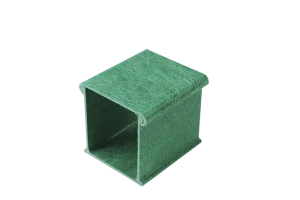
Corrosion-Resistant Pultruded FRP / GRP Through Cable Tray 50mm
View Technical Specs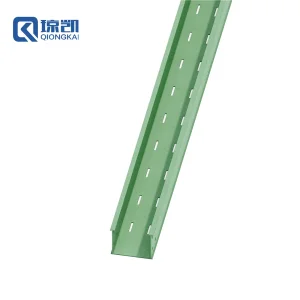
FRP Ventilated Perforated Cable Tray for Chemical & High-Heat Areas 200*100
View Technical Specs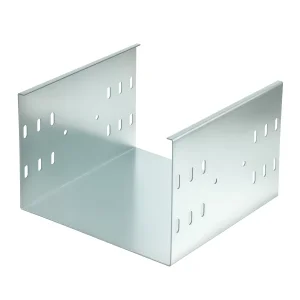
QiongKai Pre-Galvanized Solid Bottom Cable Trunking with Snap-On Cover
View Technical Specs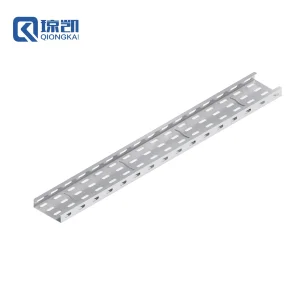
Medium Duty PG / HDG Perforated Cable Tray with Low Profile 100*25
View Technical Specs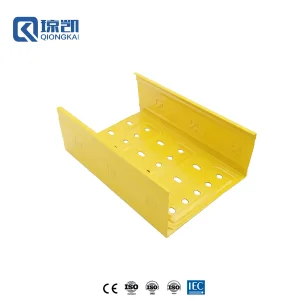
Powder-Coated Reinforced Molded Cable Tray - RAL1080 Yellow 200*100
View Technical Specs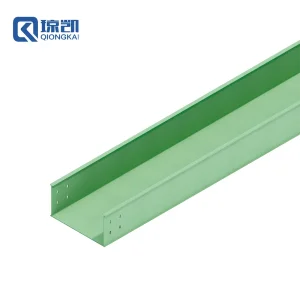
Pultruded FRP Cable Trunking Solid Trough Type Enclosure Channel 200*100
View Technical Specs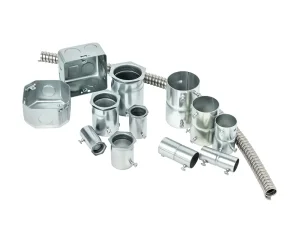
Malleable Iron Conduit Fittings, Junction Boxes & Box Connectors
View Technical Specs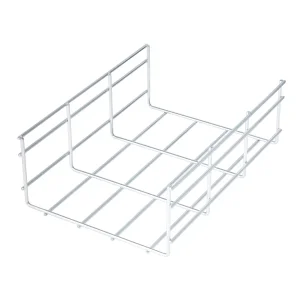
Architectural Pre-Galvanized Wire Grid Cable Tray Pathway 200mm
View Technical SpecsFrequently Asked Technical Questions (FAQ)
Authoritative guidance directly addressing procurement, architectural finishes, seismic bracing, and compliance challenges.