
Hot-Dip Galvanized & Engineered Tray Systems
Explore heavy-duty containment profiles, precision-punched perforated trays, and turnkey accessories manufactured in compliance with international cable routing parameters.
The Science of Hot-Dip Galvanizing: Diffusion vs. Surface Adhesion
Why procurement teams cannot treat Pre-Galvanized (Mill Galvanized) and Post-Fabrication Hot-Dip Galvanized (HDG) cable containment as interchangeable commodities.
When industrial contractors and engineering consultancies issue tenders for cable routing infrastructure, specifying Hot Dip Galvanized (HDG) Cable Trays directly from qualified manufacturers is primarily a metallurgical risk-mitigation strategy. Unlike electro-galvanizing or continuous strip pre-galvanizing (such as ASTM A653 / EN 10346), post-fabrication batch hot-dip galvanizing per BS EN ISO 1461 and ASTM A123/A123M subjects fully formed, punched, slotted, and welded carbon steel profiles to a multi-stage chemical pretreatment followed by molten zinc immersion at temperatures between 445°C and 455°C (833°F - 851°F).
This thermal immersion does not merely deposit a mechanical skin; it triggers an exothermic solid-state metallurgical diffusion reaction between the iron substrate and molten zinc. This reaction creates four distinct microstructural intermetallic phases:
- Gamma ($\Gamma$) Phase: A razor-thin boundary layer (75% Zn, 25% Fe) measuring ~1 µm with an ultra-hard cubic crystal structure, creating an unbreakable metallurgical bond with the base steel.
- Delta ($\delta$) Phase: Hexagonal intermetallic layer (90% Zn, 10% Fe) exhibiting exceptional hardness (~244 DPH), significantly harder than structural mild carbon steel (Q235B/Q355B), providing intrinsic abrasion resistance against pulling cables.
- Zeta ($\zeta$) Phase: Columnar monoclinic crystals (94% Zn, 6% Fe, ~179 DPH) that bridge the structural base with the ductile outer layer.
- Eta ($\eta$) Outer Layer: 100% pure molten zinc layer (~70 DPH), malleable and impact-absorbent, capable of sacrificial cathodic protection across raw cut edges.
Total Cost of Ownership (TCO) Equilibrium
Standard pre-galvanized tray (PG) offers an initial material saving of approximately 20% to 35% compared to HDG. However, during installation, secondary shearing, cutting, or drilling breaches the 15-20 µm pre-galvanized skin. In aggressive atmospheric classifications (ISO 12944 Category C3 to C5), exposed raw edges initiate creep corrosion within 18–36 months.
Remediation within an energized offshore platform, cleanroom sub-fab, or chemical process facility demands high-altitude hot-work permits, downtime penalties, and localized epoxy coating. In contrast, batch HDG cable containment guarantees a continuous 65 µm to 100 µm minimum coating thickness across all pre-punched holes, interior side-rail corners, and welded rungs, eliminating maintenance interventions for 35 to 50+ years.
Over a 40-year facility lifespan, batch HDG yields an estimated 64% net lifecycle cost reduction over continuously repainted or prematurely failing light-gauge pre-galvanized tray runs.
China Factory Scale, Supply Chain Resilience & Harbor Proximity
How Shanghai Qiongkai Industry Co., Ltd. leverages integrated deep-water port logistics, cold-roll precision, and automated batch galvanizing to de-risk megaproject delivery.
Direct Baosteel Metallurgy Integration
Precision cable tray roll-forming begins with raw material integrity. Qiongkai procures prime hot-rolled and cold-rolled carbon steel coils directly from domestic steel producers, including Baoshan Iron & Steel Co. (Baosteel). Every heat batch comes with EN 10204 Type 3.1 Mill Test Certificates verifying yield strength ($R_e \ge 235 \text{ MPa}$ to $355 \text{ MPa}$), elongation ($A \ge 26\%$), and controlled silicon/phosphorus content to prevent hyper-reactive Sandelin-range alloy growth during galvanizing.
Port Proximity & Logistics Advantage
Operating out of the Songjiang District manufacturing hub in Shanghai, our export operations leverage short transit links directly to Shanghai Yangshan Deep-Water Port and Waigaoqiao Terminals. This allows us to dispatch 40-foot High Cube containers within 48 hours of final QC clearance, without the inland transport risks, transit moisture contamination, or transshipment delays common with interior factories.
High-Density Nesting & Export Packaging
Over-dimensional freight can quickly inflate shipping budgets. Our engineering department designs precision-nested side-rail tapers and graduated width arrangements ($50\text{mm} \to 1000\text{mm}$) that maximize container volumetric space by up to 38%. Heavy-duty seaworthy packaging utilizes fumigated timber skids, rust-inhibiting VCI plastic wrapping, corner metal edge protectors, and high-tensile steel banding configured for direct forklift de-vanning at destination jobsites.
ISO 12944 Environmental Classification vs. Containment Finish
Engineering selection guide correlating macro-climatic atmospheric corrosivity with verified zinc deposit metrics and realistic maintenance-free operational horizons.
| Corrosivity Category (ISO 12944-2) | Atmospheric Environment & Typical Site | Mass Loss / Year (Zinc) | Recommended Material / Surface Treatment | Standard Coating Thickness | Expected Design Life to First Major Maintenance |
|---|---|---|---|---|---|
| C1 (Very Low) | Heated indoor buildings, clean dry air, offices, commercial schools. | ≤ 0.1 µm/yr | Pre-Galvanized (PG) Carbon Steel / Electro-Galvanized | 15 – 20 µm | 40+ Years |
| C2 (Low) | Unheated storage, rural areas, low-density light industry. | 0.1 to 0.7 µm/yr | Pre-Galvanized (PG) or Powder-Coated Carbon Steel | 20 – 25 µm | 25 – 35 Years |
| C3 (Medium) | Urban industrial atmospheres, moderate $SO_2$, food factories, laundries. | 0.7 to 2.1 µm/yr | Batch Hot Dip Galvanized (HDG) / Powder Over Pre-Galv | 55 – 65 µm | 30 – 50 Years |
| C4 (High) | Chemical manufacturing corridors, coastal ports with moderate salt spray. | 2.1 to 4.2 µm/yr | Batch Hot Dip Galvanized (HDG) / Marine Grade Aluminum | 70 – 85 µm | 20 – 35 Years |
| C5 (Very High) | Continuous offshore splash, extreme humidity, aggressive chemical emissions. | 4.2 to 8.4 µm/yr | Heavy Batch HDG (≥85 µm) / SS316L / Pultruded FRP | 85 – 115 µm | 15 – 25 Years (HDG) / 40+ (FRP) |
| CX (Extreme) | Offshore oil & gas rigs, subsea tidal splash, extreme industrial smelters. | > 8.4 µm/yr | Pultruded FRP Composite / Super Austenitic Stainless Steel | N/A (Inherent Polymer) | 30+ Years Without Corrosion |
Quality Verification & Laboratory Testing Regimes
At Shanghai Qiongkai, compliance with international standards is supported by clear documentation. Before any batch departs our Songjiang works, specialized testing protocols are carried out:
- Magnetic Induction Thickness Verification (ISO 2178 / ASTM B499): Digital gauge assessment on side rails, rungs, and bend radii across 10 distinct spot readings per 3-meter section to confirm minimum local and average thickness.
- Preece Test for Coating Uniformity (ASTM A239): Repeated 1-minute immersion cycles in neutral copper sulfate solution to verify the absence of pinhole voids or iron-zinc breakthrough points.
- Neutral Salt Spray Testing (ASTM B117 / ISO 9227): Accelerated climatic chamber testing exceeding 1,000 to 1,500 continuous hours without red rust formation on critical structural welds.
Structural Deflection & Safe Working Load (SWL)
Per IEC 61537 and NEMA VE 1 structural parameters, cable trays must carry electrical and control conductors without excessive mechanical deflection that could compromise cable jacketing.
Our heavy-duty HDG ladder trays are engineered with continuous reinforced return-flange side rails. Under a test load span ($L$) of 3.0 to 6.0 meters, our structures maintain a mid-span vertical deflection ratio significantly below the standard limit ($D \le L/200$, often achieving $L/300$). This structural rigidity prevents sag, maintains aesthetic alignment across long rack runs, and protects against high-vibration induced fatigue in heavy industrial installations.
Proven Performance: Real-World Global Case Studies
From modern transportation hubs to remote liquefied natural gas platforms, review how Qiongkai cable management systems perform in varied operating environments.
Shanghai Hongqiao International Airport
System: High-Capacity Corrosion-Resistant CT Series Cable Trunking & Solid Troughs
Specified for primary terminal electrical distribution, mechanical rooms, and subterranean utility tunnels. Demanded tight closure tolerances, enhanced EMC/EMI shielding against runway radar frequencies, and long-term vibration dampening across spans under intense transport cycling.
Offshore LNG Terminal · Ras Laffan, Qatar
System: Custom Profiled Section HDG Ladders & High-Tier FRP Composite Containment
Engineered to survive combined desert ambient temperatures exceeding 50°C, direct UV exposure, and saline Persian Gulf marine mist. Qiongkai supplied custom heavy-gauge HDG support framing with average zinc coatings >85 µm alongside high-durability FRP trays.
High-Humidity Outdoor Complex · Thailand
System: Hybrid High-Load FRP-Lined Steel Composite Cable Trays
Designed for outdoor process pipe-racks exposed to monsoon rain cycles and chemical atmospheric fall-out. The structural rigidity of heavy-duty cold-formed steel combined with FRP corrosion resistance delivered a resilient, maintenance-free installation.
High-Voltage Electrical Infrastructure · Italy
System: Heavy Batch Hot Dip Galvanized Cable Trays & Unistrut Channels
Full container exports manufactured to European norms (BS EN ISO 1461 and IEC 61537). Precision punched patterns matched continental splice connector fittings, supporting rapid installation across regional electrical substations.
Large-Scale Agro-Industrial Facility · Paraguay
System: Cost-Optimized Heavy-Duty Pre-GI & HDG Trough Infrastructure
Engineered to resist biogenic hydrogen sulfide ($H_2S$) and ammonia fumes within strict capital expenditure allocations. Provided reinforced return-flange trays that maintained structural load margins over large open farm spans.
Tier III+ Cloud Computing Data Centers
System: Electro-Galvanized & RAL Powder Coated Wire Mesh Basket Trays
Engineered with safe-edge chamfered round wire to eliminate cable abrasion during high-density fiber-optic pulling. Smooth powder finishes eliminate zinc whisker contamination risks within pressurized underfloor server plinths.
Technical Roadmap: Next-Generation Cable Support Metallurgy
How sustainable metallurgy, advanced zinc alloys, and digital manufacturing workflows are modernizing the industrial cable containment sector.
Zinc-Aluminum-Magnesium (ZAM) Alloys
While traditional batch HDG remains the benchmark for thick-section weldments, continuous Zinc-Aluminum-Magnesium (ZAM) alloy coatings (approx. 93.5% Zn, 3.5% Al, 3% Mg) represent a significant evolution for perforated and sheet cable trays. The presence of magnesium promotes the formation of a dense, highly stable simonkolleite protective film, providing self-healing cut-edge passivation and up to 3 to 5 times the corrosion resistance of standard pre-galvanized sheet at lower total weight.
Low-Carbon "Green Galvanizing" Initiatives
Aligning with global ESG expectations, Qiongkai's supplier ecosystem is investing in energy-efficient natural-gas and electric ceramic galvanizing kettles equipped with pulse-fired digital heat controllers. Automated, enclosed fluxing and skimming stations limit zinc ash oxidation and reduce emissions, lowering the cradle-to-gate carbon footprint per metric ton of steel containment supplied to global green building projects.
BIM Integration & Modular Prefabrication
Modern EPC contractors increasingly design complex megaprojects using building information modeling (BIM). Qiongkai provides native Autodesk Revit and IFC parametric families for our cable tray systems, strut channels, and seismic brackets. Precise 3D models allow MEP engineers to identify spatial clashes, calculate tray fill ratios, and generate exact cut-sheet fabrication schedules before roll-forming starts.
Engineering Support, Submittal Packages & Export Compliance
Our direct engineering and commercial engagement model is built around how international EPC tenders are specified, vetted, and approved.
1-on-1 Assigned Project Engineer
When you contact Shanghai Qiongkai, you work directly with a dedicated bilingual project engineer who understands engineering drawings, electrical Bill of Quantities (BOQ), and structural loading formulas—not a disconnected trading representative.
Comprehensive Submittal Dossiers
We supply complete technical submittal packages for engineering approvals, including dimensional fabrication drawings, coating certificates, standard structural deflection calculations, and factory acceptance test (FAT) documentation.
Independent Third-Party Verification
We coordinate regularly with independent inspection agencies, including SGS, Bureau Veritas, and TÜV Rheinland. We facilitate on-site witness testing, dimensional audits, chemical composition checks, and loading tests prior to export release.
Structural Cable Ladders, Modular Channels & Fittings
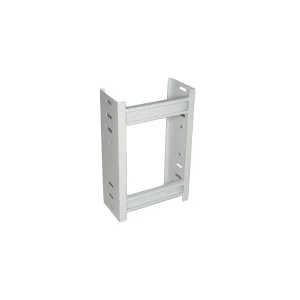
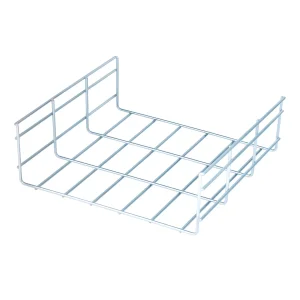
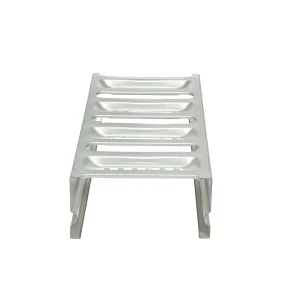
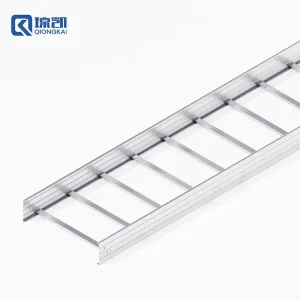
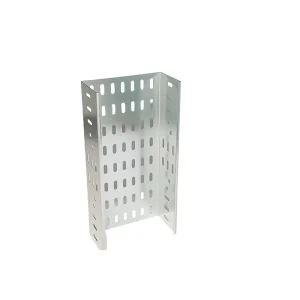
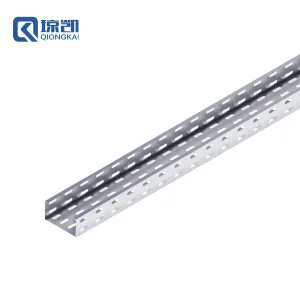
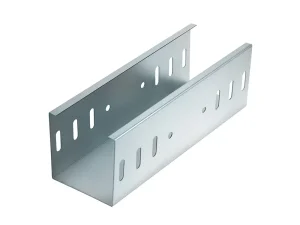
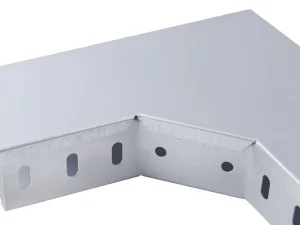
Complete your cable containment schedule with heavy-load ladder runs, custom wire-mesh grids, perforated channels, and precision multi-way transition fittings.
Frequently Asked Engineering & Procurement Questions
Direct technical answers addressing structural, metallurgical, and international logistics inquiries raised by EPC project engineers and procurement managers.
What is the exact metallurgical difference between HDG and Pre-Galvanized (GI) cable trays?
Pre-galvanized (also termed mill-galvanized or continuous GI) cable tray is roll-formed from steel coils that were hot-dip coated at the steel mill prior to stamping and cutting. As a result, the protective zinc layer is relatively thin (typically 15–20 µm, Z180–Z275 g/m²), and all subsequent slitting, punching, and welding cuts expose ungalvanized raw carbon steel edges.
In contrast, true post-fabrication Hot-Dip Galvanizing (HDG per BS EN ISO 1461 or ASTM A123) takes place after all mechanical forming, punching, and welding are finished. The complete component is submerged into molten zinc at ~450°C, producing an alloyed zinc-iron diffusion layer across all surfaces—including hole interiors and weld beads—with a total protective thickness typically between 65 µm and 100+ µm.
How does Qiongkai prevent thermal warping or dimensional distortion during batch hot-dip galvanizing?
Immersion into a 450°C zinc bath can induce internal stress relief, which risks warping long, asymmetric, or light-gauge sheet metal. Qiongkai controls this through established manufacturing steps:
1) Structural Profiling: We integrate continuous stiffening return flanges and longitudinal ribs that maintain cross-sectional rigidity under heat.
2) Material Selection: We utilize low-silicon, non-reactive structural carbon steel to avoid excessive alloy layer growth.
3) Symmetric Venting & Drainage: Hole patterns are punched to allow rapid zinc inflow and drainage, avoiding uneven thermal gradients during withdrawal.
4) Pre-Galvanizing Jigging: Structural ladder side-rails and large troughs are supported in rigid dip-fixtures to preserve longitudinal straightness.
Which international cable tray design and testing standards do you manufacture to?
Our factory manufactures in compliance with the following international structural and surface treatment standards:
• IEC 61537: Cable management – Cable tray systems and cable ladder systems (covers electrical continuity, safe working load testing, and deflection limits).
• NEMA VE 1 / CSA C22.2 No. 126.1: Metal Cable Tray Systems (covers load classes, dimensions, and structural deflection criteria).
• BS EN ISO 1461 / ASTM A123: Standard specification for zinc (hot-dip galvanized) coatings on iron and steel products.
• NEMA VE 2: Cable Tray Installation Guidelines (installation support spacing, thermal expansion splice joint allowances).
Can Qiongkai manufacture custom widths, side-rail heights, and non-standard profiles?
Yes. With 12 roll-forming assembly lines and approximately 60 heavy-duty pressing, punching, and welding machines across our 3 Shanghai factories, we routinely supply custom dimensions. We manufacture widths ranging from 50 mm to 1,200 mm, side-rail depths from 25 mm up to 250 mm, and steel thicknesses from 1.0 mm to 3.0 mm.
Our technical department can develop tooling and bespoke punch patterns for specific installations—such as our custom profiled section support solution supplied to an offshore LNG project in Qatar.
How do you verify electrical continuity and earth bonding across cable tray sections?
Under IEC 61537, metallic cable tray systems can serve as an integral protective earth conductor when properly connected. Because heavy zinc oxide layers can introduce surface contact resistance, our installation sets include serrated grounding lock-washers and tin-plated copper earth continuity bonding jumpers where specified.
We conduct resistance testing across mechanical splice joints to verify that overall impedance remains within the milliohm thresholds stipulated by regional electrical codes.
What is your export lead time, packaging method, and typical harbor dispatch route?
Standard production runs for full container loads (FCL, 1×40'HQ) typically range from 15 to 25 calendar days depending on whether custom tooling or post-fabrication galvanizing is required.
Every export order is packaged using steel-strapped wooden skids, corrugated edge buffers, and VCI waterproof film to protect against sea freight condensation. Because our factories are located in Songjiang, Shanghai, goods move directly to Shanghai Yangshan Deep-Water Port or Waigaoqiao Port, minimizing inland handling.
How does hot-dip galvanized steel compare to fiberglass (FRP) and stainless steel in corrosive environments?
While HDG steel offers cost-effective mechanical strength in urban, industrial, and moderately coastal environments (ISO 12944 C1–C4), certain chemical exposures require alternative materials. In environments containing airborne chlorine gas, high sulfuric acid concentrations, or continuous marine splash zones (C5 to CX), zinc coatings will corrode relatively quickly.
For these conditions, Qiongkai manufactures Pultruded FRP Cable Trays (which are chemically inert and non-conductive) and AISI 316 / 316L Stainless Steel Trays (which provide passive chromium-oxide corrosion resistance). Our engineering team can review your site's chemical and environmental profile to advise on suitable material selection.
What engineering documentation is supplied with an export shipment?
Every international shipment is accompanied by a complete quality submittal dossier:
• EN 10204 Type 3.1 Mill Test Certificates for raw steel coil heats.
• Galvanizing Inspection Reports detailing measured zinc coating thickness readings.
• Dimensional Inspection and Visual Quality Control Sign-Off sheets.
• Certificate of Origin (CO, Form E, Form F as applicable for customs clearance).
• Independent third-party inspection reports (SGS/BV) when requested in the project specification.