
High-Integrity HDG & Architectural Cable Routing Series
Direct factory supply manufactured to international ASTM, BS EN, and IEC criteria. Browse selected high-demand standard and heavy-duty profiles below.
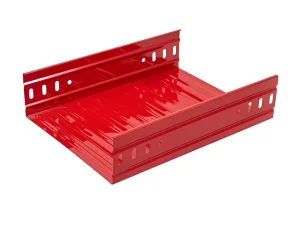
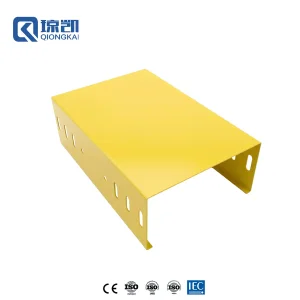
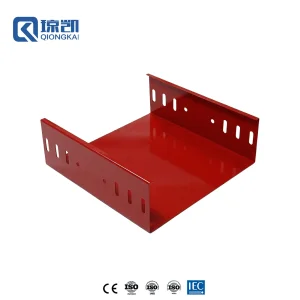
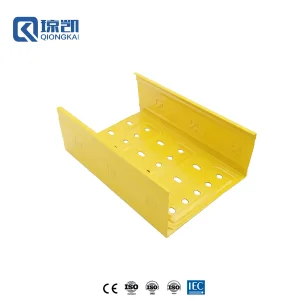
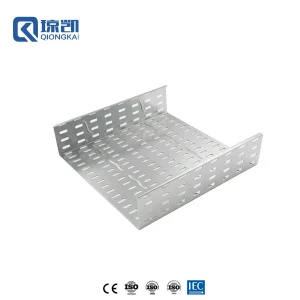
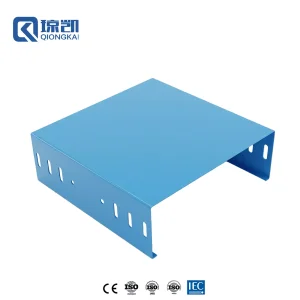
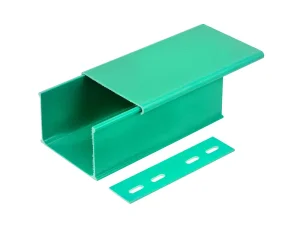
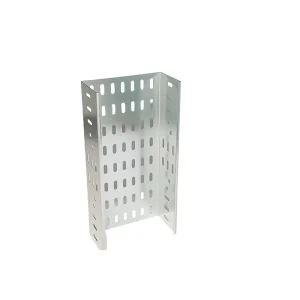
Hot-Dip Galvanized Cable Trays: Metallurgical Defense & Global Standards
A rigorous examination of post-fabrication immersion metallurgy, intermetallic layer development, and structural load deflection mechanics under harsh commercial and industrial conditions.
The Intermetallic Fe-Zn Diffusion Matrix
Unlike continuous sheet pre-galvanizing (EN 10346), post-fabrication batch Hot-Dip Galvanizing (HDG per ASTM A123 / ISO 1461) involves full immersion of welded steel assemblies into a bath of molten zinc at 450°C (842°F). This initiates a thermal diffusion reaction creating distinct intermetallic alloy layers: Gamma (75% Fe, 25% Zn), Delta (90% Zn, 10% Fe), and Zeta (94% Zn, 6% Fe), topped by the ductile pure zinc Eta layer. This crystalline fusion guarantees exceptional abrasion resistance (up to 250 DPH hardness) exceeding that of base carbon steel.
Sacrificial Cathodic Self-Healing
Hot-dip galvanizing provides active galvanic cathodic protection in the electrochemical galvanic series. If cut, punctured, or scarred during harsh jobsite pulling, zinc ions electrochemically sacrifice themselves to polarize exposed adjacent steel surfaces. Secondary atmospheric exposure causes zinc oxide and zinc hydroxide to transform into insoluble basic zinc carbonate (ZnCO₃·3Zn(OH)₂), a dense protective patina that arrests atmospheric oxidation and eliminates under-film rust creeping.
Deflection Integrity: NEMA VE-1 vs IEC 61537
Structural reliability depends on dynamic load capacities under cable deadweights, localized wind shears, and ice coatings. Standard compliance mandates strict verification under NEMA VE-1 / CSA C22.2 No. 126.1 and IEC 61537. Qiongkai designs its side-rail structural profiles with cold-formed internal flanges and reinforced floor ribs, guaranteeing maximum working load limits at standard 3.0 m to 6.0 m beam spans while maintaining elastic deflection within the accepted L/200 limit.
Atmospheric Corrosivity Classification & Lifecycle Matrix
Specifying the optimal finish requires correlating local environmental ISO 12944 corrosion categories with field zinc consumption rates to achieve a 30 to 50-year service life.
| ISO 12944 Class | Environmental Exposure | Zinc Loss Rate (µm/yr) | Recommended System | Expected Design Life |
|---|---|---|---|---|
| C1 (Very Low) | Heated interiors with clean atmospheres (commercial offices, schools) | < 0.1 | Pre-Galvanized (PG) / Electro-Galvanized (EG) | 50+ Years (Maintenance-Free) |
| C2 (Low) | Unheated interiors, low condensation (warehouses, sports halls) | 0.1 to 0.7 | PG (20µm) or Heavy HDG | 40+ Years |
| C3 (Medium) | Urban and industrial atmospheres, moderate SO₂ levels, coastal fringes | 0.7 to 2.1 | Batch HDG (min. 65µm - 85µm) | 35 to 50 Years |
| C4 (High) | Industrial zones, chemical processing, moderate coastal salinity | 2.1 to 4.2 | Heavy-Duty Batch HDG (85µm - 100µm) | 25 to 40 Years |
| C5 / CX (Extreme) | Offshore platforms, marine splash zones, high salinity, tropical humidity | 4.2 to 25+ | HDG + Epoxy Powder Duplex / SS316 / FRP | 20 to 30+ Years (Duplex System) |
China Factory Direct Resilience & Manufacturing Efficiency
How Shanghai Qiongkai leverages upstream industrial concentration, direct mill relationships, and smart robotics to outpace volatile global supply chains.
Tier-1 Raw Material Sourcing
We source hot-rolled and cold-rolled structural steel coils directly from premier mills including Baosteel and Shougang. Every master coil carries full EN 10204 3.1 chemical analysis and tensile yield certification, ensuring consistent silicon and phosphorus levels (Sandelin curve management) to prevent brittle, over-thickened galvanized coatings during immersion.
Flexible Multi-Line Automation
Equipped with 12 continuous roll-forming lines, 60 heavy-duty CNC stamping presses, and automatic CNC punching machines across our 30,000 m² facilities. We seamlessly transition between British Standard (BS 6946), NEMA channel configurations, and bespoke European perforations without tooling re-engineering downtime.
Deep-Water Port Shipping Advantage
Located in Shanghai Songjiang Port Science & Technology City, our primary distribution center is positioned adjacent to Shanghai Waigaoqiao and Yangshan Deep-Water Terminal hubs. This allows direct container stuffing, anti-scratch marine fumigated bundling, and break-bulk scheduling for large EPC capital projects with 48-hour gate-in capability.
Total Traceability & QA Rigor
From initial uncoiling through pre-treatment, pickling, fluxing, kettle dipping, and spin passivating, each production batch receives automated barcode tagging. QA engineers verify coating thickness via calibrated magnetic gauges (PosiTector 6000), cross-hatch adhesion tests, and weld root ultrasonic inspection prior to export sign-off.
Localized Mission-Critical Application Scenarios
Engineered performance across demanding industrial environments worldwide, ensuring continuous electrical and instrumentation safety.
Hyperscale Cloud Data Halls
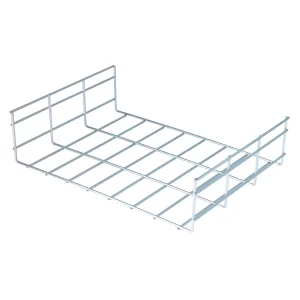
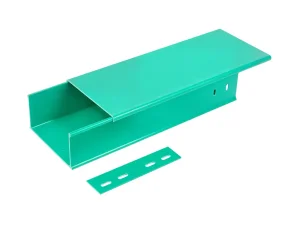
In hyperscale data center facilities, electrical designers require maximum structural cable capacity combined with zero risk of conductive zinc whiskers. Qiongkai supplies high-gauge wire mesh basket trays and clean powder-coated cable trunking systems featuring custom RAL color coordination for redundant A/B power pathways, fiber distribution, and overhead air containment layouts.
Offshore Oil & Gas / LNG Terminals
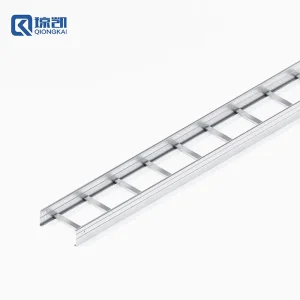
In marine splash zones and hydrocarbon processing environments like our installations in Qatar, airborne chlorides and ambient sulfur dioxide rapidly degrade substandard coatings. We provide extra-heavy batch HDG ladder trays (100µm+ coating) and high-load composite FRP systems that resist aggressive chemical wash-downs, high thermal fluctuations, and heavy sea spray.
Utility-Scale Solar PV & Deserts
Desert solar projects demand resistance to high daytime surface temperatures, thermal cycling, UV degradation, and constant scouring from windblown sand. Our hot-dip galvanized trough and ribbed trays provide durable physical rigidity, preventing sagging under extreme heat and offering durable mechanical wear resistance against abrasive sand drift.
Industrial Chemical & Wastewater Plants
Municipal wastewater and chemical synthesis units release hydrogen sulfide (H₂S), ammonia, and hydrochloric aerosols. For these facilities, Qiongkai deploys duplex systems—batch hot-dip galvanizing sealed with an electrostatically applied fluoropolymer or thermoset polyester powder coating—creating an impermeable barrier against both acidic and alkaline environments.
Aviation & Mass Rail Transit
Underground railway networks and airport terminals require high structural fire ratings and seismic restraint bracing. As demonstrated at Shanghai Hongqiao International Airport, our CT series heavy trunking and strut systems provide certified load limits, non-combustible mechanical containment, and tested grounding continuity under cyclical dynamic train vibration.
High-Ammonia Agro-Industrial Complexes
Confined livestock facilities and modern agricultural plants generate high levels of moisture, carbon dioxide, and animal waste ammonia. In our large-scale agricultural projects in South America (such as high-capacity facilities in Paraguay), our heavy-duty hot-dip galvanized trays maintain structural integrity where standard pre-galvanized components fail within months.
Technical Roadmap: Next-Generation Cable Support Engineering
Continuous investment in advanced metallurgy, automated roll-forming geometries, and digital engineering platforms keeps Qiongkai at the leading edge of cable containment technology.
Zinc-Aluminum-Magnesium (ZAM) Advancements
In response to demands for thinner yet more corrosion-resistant coatings, Qiongkai is advancing its continuous Zinc-Aluminum-Magnesium alloy program. With 3% magnesium and 11% aluminum added to the zinc matrix, ZAM coatings generate a dense Simonkolleite (Zn₅(OH)₈Cl₂·H₂O) film that offers up to 5 times the corrosion protection of traditional hot-dip coatings in chloride-heavy environments, with self-healing performance on cut edges.
Automated Profiling & Ribbing Geometry
Utilizing high-speed FEA (Finite Element Analysis) simulation software, our design team has optimized the cross-sectional geometry of side-rails and rung spacing. Our ribbed tray bases use engineered longitudinal fluting that increases transverse section modulus by 28% without adding dead weight, lowering steel tonnage and freight costs for overseas shipments.
BIM Level 3 & Digital Site Workflows
Modern EPC procurement requires digital asset integration. We provide native Autodesk Revit and IFC CAD libraries with built-in metadata (load ratings, weights, zinc thicknesses, and electrical bonding points). We also offer factory-applied QR/RFID asset tags that enable smooth digital scanning and tracking during container discharge and onsite staging.
Engineering Support, Testing & Compliance Guarantees
Complete project documentation to satisfy third-party engineering consultants, Lloyd's Register, DNV, SGS, and municipal building inspections.
Full Mill Test Reports (EN 10204 3.1)
Every shipment is accompanied by complete chemical and mechanical certification traceable to original steel heats. Material composition reports document exact percentages of carbon, manganese, silicon, and aluminum, validating base steel suitability before post-fabrication galvanizing.
Third-Party Salt Spray Testing
Our galvanized systems are continuously validated under accelerated corrosion testing per ASTM B117 and ISO 9227 neutral salt spray protocols. Hot-dip galvanized samples regularly exceed 1,000 to 1,500 hours without red rust breakthrough, verifying coating thickness and adherence.
Structural Seismic & Load Verification
We perform full destruction-bench testing according to NEMA VE-1 standards. Our in-house hydraulic test rigs simulate non-uniform point loads, end-span overhangs, and seismic acceleration to ensure safe working load ratings and appropriate safety factors (typically 1.5) for critical infrastructure projects.
Frequently Asked Technical & Sourcing Questions
Detailed technical answers for EPC managers, electrical consultants, and procurement leads sourcing high-volume containment systems.
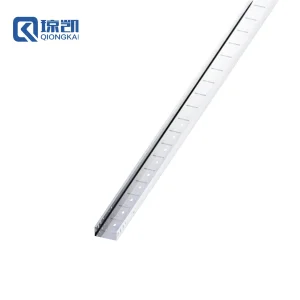
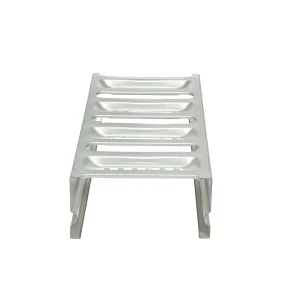
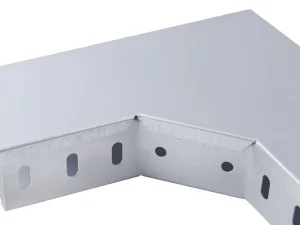
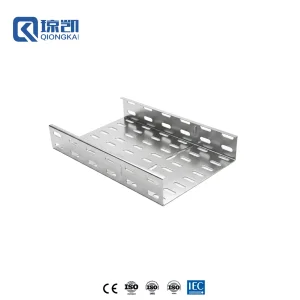
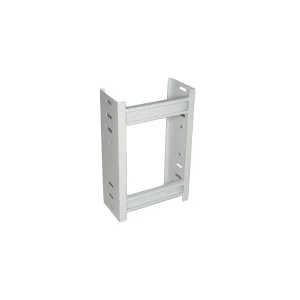
Heavy-Duty Strut Channels, Ladder Profiles & Grid Assemblies
Complete your cable installation with our integrated support components: slotted channels, reinforced ladders, and precision fittings engineered for fast site assembly.
Ready to Optimize Your Project's Cable Route Engineering?
Submit your electrical single-line drawings, BOQ, or project specifications. Our engineering team will return a comprehensive system proposal with load calculations, layout fittings, and factory-direct pricing within 24 hours.