
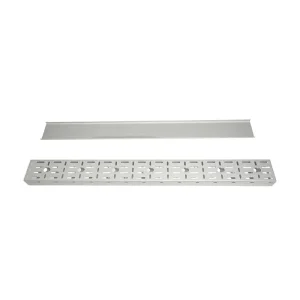
Primary Containment Portfolio
Direct-Manufacturer Cable Tray Systems
Explore heavy-duty, stainless steel, aluminum, and perforated modular trays ready for containerized global shipping directly from our Shanghai manufacturing lines.
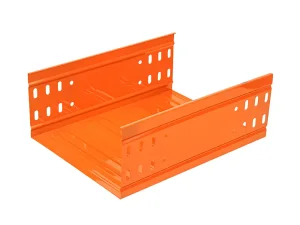
Wholesale Fireproof Pre Galvanized Powder coated molded cable tray Supplier, Suppliers
Configure & Inquire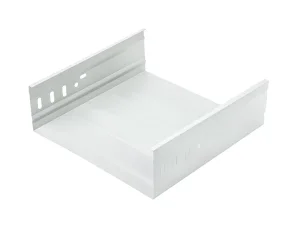
Wholesale Lightweight tenacity aluminium molded cable tray Suppliers, Price
Configure & Inquire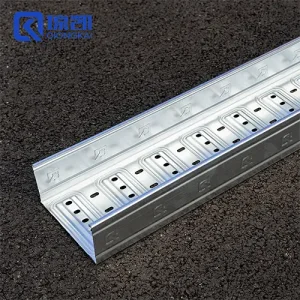
Wholesale Cost Saving Heavy Duty Reinforced Molded Pre Galvanized Cable Tray Factories, Price
Configure & Inquire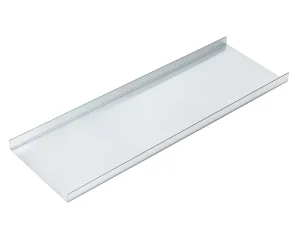
Buy Pre-Galvanized Cable Tray Cover Cable Protection Manufacturers, Supplier
Configure & Inquire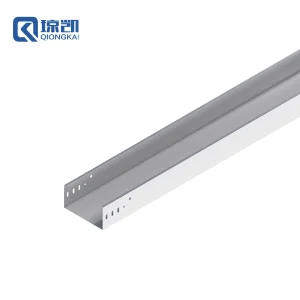
Wholesale Carbon Steel PG Pre Galvanized HDG Hot Dip Galvanized SS Stainless Steel Cable Trunking Trough Type Channel 200*100 Manufacturer, Suppliers
Configure & Inquire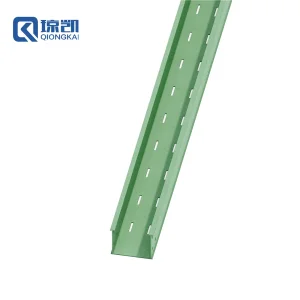
Wholesale FRP Perforated Cable Tray 200*100 Manufacturer, Factory
Configure & Inquire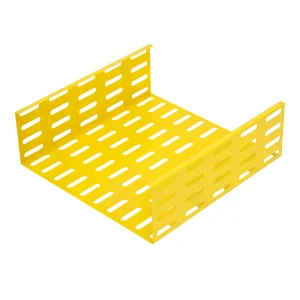
Wholesale Pre Galvanized Perforated Powder Coating Cable Tray Suppliers, Factories
Configure & Inquire
Industrial Whitepaper Analysis
Global Engineering Status: Why Buy Stainless Steel Cable Trays
In high-chloride offshore fields, acidic chemical processing corridors, and sterile pharmaceutical environments, cable infrastructure failure leads to multi-million-dollar plant shutdowns. Stainless steel containment is not merely an alternative; it is an engineered barrier against structural failure.
1. The Metallurgical Advantage: PREN Economics and Passive Film Kinetics
Selecting a stainless steel cable tray manufacturer requires deep comprehension of pitting corrosion mechanisms. When electrical cables carry medium-to-high voltage loads in maritime, coastal, or chemical refining environments, ambient chloride anions ($Cl^-$) aggressively attack micro-defects in standard metallic coatings. While hot-dip galvanized (HDG) zinc protection provides sacrificial cathodic defense, the zinc coating depletes rapidly at rates exceeding 8.4 µm/year in ISO 12944 Category C5-M (Marine) zones.
In contrast, austenitic stainless steels—predominantly AISI 304 (1.4301), AISI 316 (1.4401), and ultra-low carbon AISI 316L (1.4404)—develop an instantaneous, self-healing, chromium-rich oxide ($Cr_2O_3$) passive layer. The Pitting Resistance Equivalent Number (PREN) mathematically determines this resistance threshold:
Formula: PREN = %Cr + 3.3(%Mo + 0.5%W) + 16(%N)
Standard carbon steel exhibits a PREN of 0. Commercial AISI 304 scores approximately 18.0–20.0, suitable for moderate inland washdown installations. High-grade AISI 316L cable trays, manufactured at Shanghai Qiongkai facilities, maintain a verified PREN between 23.5 and 26.0 due to 2.0–2.5% Molybdenum inclusion. This prevents localized pitting, intergranular attack along weldments, and stress corrosion cracking (SCC) under heavy electrical dead loads.
Furthermore, our 316L trays maintain a maximum carbon threshold of $\le 0.03\%$. During continuous automated roll-forming and TIG/laser seam welding of ladder rungs and side rails, low carbon content prevents the formation of chromium carbides ($Cr_{23}C_6$) at austenitic grain boundaries. This guarantees complete weld-zone integrity without requiring post-fabrication solution annealing.
| Material / Alloy Spec | PREN Rating | Tensile Strength (MPa) | ISO 12944 Durability | Typical Asset Life (Years) | Primary Industrial Sector |
|---|---|---|---|---|---|
| AISI 316L (UNS S31603) | 23.5 – 26.0 | $\ge 485$ | CX (Extreme Offshore) | 40+ Years | Offshore LNG, Marine Platforms, Desalination |
| AISI 304 (UNS S30400) | 18.0 – 20.0 | $\ge 515$ | C4 (Industrial / Urban) | 25–30 Years | Cleanrooms, Food & Beverage, Pharma Plants |
| Hot-Dip Galvanized (HDG) | N/A (Sacrificial) | $\ge 360$ | C3 – C4 | 8–15 Years (In Marine) | Substations, Highway Tunnels, General Utilities |
| High-Strength FRP / GRP | Chemical Matrix | $\ge 280$ | Chemical Resistant | 20–25 Years (UV Sensitive) | Battery Chemical Corridors, Wastewater Plants |
| Extruded Aluminum 6063 | Passive $Al_2O_3$ | $\ge 205$ | C3 (Low Chloride) | 15–20 Years | Commercial Office Hubs, Lightweight Rooftops |
Engineering Trust & Standards
Global Compliance & Localized Assurance
Procuring from Shanghai Qiongkai eliminates the intermediary risk. Our precision-engineered containment systems comply with major European, American, and British standards, backed by comprehensive Mill Test Certificates (MTC EN 10204 3.1).
IEC 61537 / NEMA VE 1 Verification
Every cable ladder, perforated tray, and wire basket undergoes destructive structural load deflection testing. We certify allowable safe working loads under NEMA Class 20C (100 lbs/ft on a 20-foot span) and Class 20B with mid-span deflection ratios strictly within $L/200$.
PMI Spectrometry & Traceability
All incoming coil steel from tier-one steelmakers (Baosteel, TISCO) undergoes Positive Material Identification (PMI) using X-ray fluorescence (XRF). We guarantee raw material heat tracking from cold rolling, precision stamping, to final automated packaging.
Electrochemical Pickling & Passivation
Fabricated stainless steel components receive chemical acid descaling and nitric-hydrofluoric acid immersion per ASTM A380 / ASTM A967. This restores chromium concentration on sheared edges and punch holes, ensuring 1,000+ hours neutral salt spray resistance without red rust.
Proven Track Record
Engineered Case Studies: Extreme Field Deployments
From international aviation transport hubs to hyper-corrosive Middle Eastern LNG terminals, Shanghai Qiongkai systems deliver lifetime structural integrity.
Shanghai Hongqiao International Airport Transit Hub
Project Scope: Over 45,000 meters of heavy-gauge, corrosion-resistant CT series cable trunking and custom-engineered channel supports installed across terminal electrical distribution galleries.
Engineering Solution: Required high structural damping to absorb harmonic air-traffic vibration, strict electromagnetic shielding (EMI attenuation), and seamless fire-barrier integration across passenger concourses. Qiongkai supplied fully interlocking covers and pre-punched grounding link plates ensuring total equipotential bonding.
Ras Laffan Offshore LNG Gas Processing – Qatar
Project Scope: Marine coastal gasification and cryogenic liquefaction trains subjected to 50°C+ ambient thermal cycles and high-salinity Arabian Gulf marine spray.
Engineering Solution: Supplied custom profiled 316L stainless steel cable ladder trays featuring corrugated side-rail channels and custom slotted return flanges. Accommodated large diameter 33kV armored subsea cables with reinforced seismic strut channel supports engineered for heavy wind loadings.
Rayong Industrial Petrochemical Corridor – Thailand
Project Scope: Heavy-duty hybrid containment for sulfur dioxide ($SO_2$) and volatile organic chemical processing zones operating under high equatorial relative humidity.
Engineering Solution: Provided pultruded FRP/GRP cable ladders combined with custom SS316 support brackets and strut profiles. This system solved complex dielectric insulation requirements while eliminating galvanic interaction between copper conductors and support framing.
Industrial Facility Expansion – Northern Italy
Project Scope: Fast-track manufacturing plant modernization demanding European standard CE compliance and short production-to-port turnaround.
Engineering Solution: Engineered full-container-load (FCL) shipments of hot-dip galvanized (HDG) and electropolished wire mesh basket trays. Custom nested packing maximized 40HQ container utilization by 34%, drastically reducing sea freight landed costs at the Port of Genoa.
Technology Horizon
Engineering Roadmap: Next-Generation Containment
Shanghai Qiongkai Industry Co., Ltd. continues to integrate digital automation, metallurgical decarbonization, and smart monitoring into modern cable management systems.
Green Stainless & Scope 3 Decarbonization
By shifting electric arc furnace (EAF) sourcing to 100% recycled scrap-based austenitic alloys with hydrogen-reduced direct iron ore inputs, our manufacturing pipeline targets a 48% reduction in embodied product carbon footprint by 2028.
Snap-Fit Fast-Lock Assemblies
Field assembly accounts for up to 65% of installed containment expenditure. Our R&D engineering center has patented tool-less splice plates and locking spring connectors for 316L wire mesh and perforated trays, speeding up site installation by 3.5×.
Integrated Fiber-Optic DTS Monitoring
Designing modern cable trays with embedded side-rail raceways for Distributed Temperature Sensing (DTS) fiber optic lines. Enables hyperscale data centers and utility tunnels to locate overheating cable bundles to within 0.5 meters before thermal failure.
Extended Support Solutions
Specialized Cable Support & Ladder Systems
Explore ladder systems, powder-coated channels, custom FRP, and wire mesh grid baskets manufactured with strict dimensional tolerances and certified load properties.
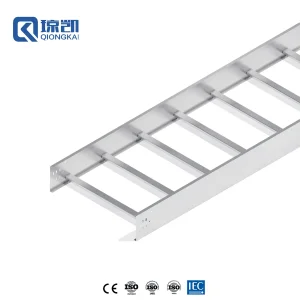
Buy PG Pre-galvanized Ladder Tray 800*200 Manufacturer, Factory
Configure & Inquire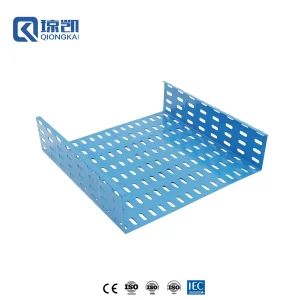
Buy Powder Coated Carbon Steel Pre Galvanized Hot Dip Galvanized PG HDG Cable Tray with Reinforce Ribs - RAL5015 Blue 400*100 Manufacturer, Price
Configure & Inquire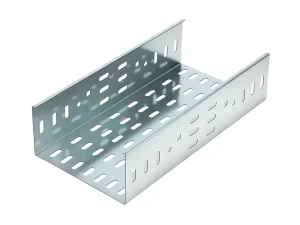
Buy Pre Galvanized Cable Tray With Customizable Parameters Manufacturer, Price
Configure & Inquire
Wholesale 304 and 316 Stainless Cable ladder Factory, Factories
Configure & Inquire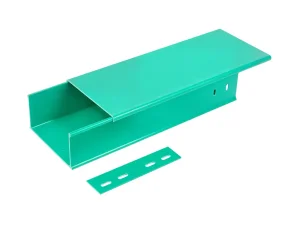
Wholesale High Strength FRP Cable Tray Suppliers, Price
Configure & Inquire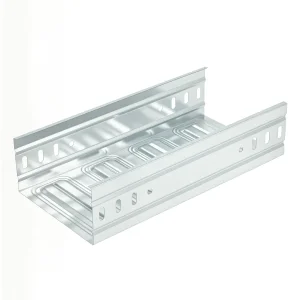
Buy Pre Galvanized molded cable tray200mm Suppliers, Factory
Configure & Inquire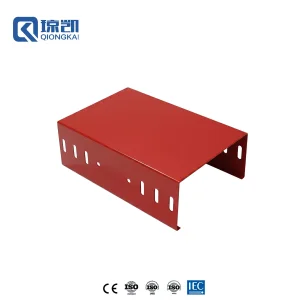
Wholesale Powder Coated Carbon Steel PG Pre Galvanized Cable Trunking Trough Type Channel - RAL3020 Red 200*100 Suppliers, Factory
Configure & Inquire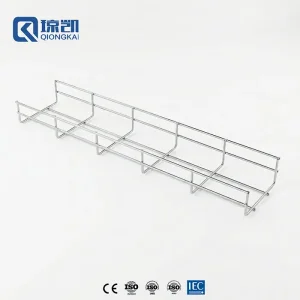
Buy Stainless Steel SS 304 316 Basket Wire Mesh Grid Cable Tray 100*50 Manufacturer, Manufacturers
Configure & Inquire
Direct Sourcing FAQ
Engineering & Procurement Q&A
Crucial technical questions answered by Shanghai Qiongkai chief engineers regarding material grades, deflection limits, electrical grounding, and export manufacturing.
What is the definitive engineering difference between SS304, SS316, and SS316L for cable trays?
The primary differences lie in alloy composition and corrosion resistance kinetics:
- AISI 304: 18% Chromium, 8% Nickel. Suitable for dry commercial buildings, interior data halls, and mild food preparation facilities. It is susceptible to localized pitting in airborne salt environments above 100 mg/m² daily chloride deposit rates.
- AISI 316: 16% Chromium, 10% Nickel, with 2.0–2.5% Molybdenum added. Molybdenum significantly elevates pitting resistance (PREN ~23–25), protecting against chloride ion penetration in maritime coastal zones.
- AISI 316L: Ultra-low carbon variant ($\le 0.03\%$ C vs $0.08\%$ in standard 316). Essential when welded rungs and factory fittings are specified. Low carbon prevents chromium carbide precipitation during welding, preserving full corrosion resistance in heat-affected zones (HAZ) without post-weld heat treatment.
How does Shanghai Qiongkai calculate and certify safe working load (SWL) and deflection?
Load validation follows NEMA VE 1 / CSA C22.2 No. 126.1 and IEC 61537 Section 10. Our test rigs apply uniform static loading via load blocks across standard spans (1.5m, 2.0m, 3.0m, 6.0m). Safe working load ratings incorporate a minimum 1.5 safety factor against structural yield. For standard installations, mid-span deflection is restricted to $\le L/200$ to prevent cable jacket sheath pinching, visual sag, or junction connector separation.
Are stainless steel cable trays compatible with copper conductors without galvanic reaction?
Austenitic stainless steel and copper have a relatively close electrochemical potential in the galvanic series (anodic index differential $< 0.15$V in normal ambient atmospheres). However, in wet, salt-spray marine environments, direct contact between uninsulated copper conductors and stainless steel can accelerate micro-galvanic corrosion if water bridges the connection. We recommend using UV-resistant polymeric insulating liners, cable cleats with neoprene pads, or factory powder-coated isolation finishes for marine applications.
What surface treatment is applied after laser cutting, stamping, and welding?
Every fabricated stainless steel component passes through automated ultrasonic degreasing, followed by immersion pickling in a temperature-controlled nitric-hydrofluoric acid bath ($HNO_3 + HF$) per ASTM A380. This removes weld discoloration (heat tint), free iron particles embedded by tooling, and surface scales. Components are then passivated per ASTM A967 to accelerate the formation of a dense, uniform $Cr_2O_3$ passive layer. Electropolishing (providing an ultra-smooth surface profile $Ra < 0.4$ µm) is available for cleanroom pharmaceutical environments.
What are the lead times and container loading capacities from your Shanghai factory?
Standard production turnaround for containerized orders (20GP / 40HQ) ranges between 15 to 22 business days from drawing approval. Located in Songjiang, Shanghai, our factories are within 60 km of Yangshan Deep-Water Port and Waigaoqiao Port terminals. We design interlocking nested packaging using automated strapping systems to eliminate transit shifting, typically fitting 3,200 to 5,500 linear meters of tray into a single 40HQ container depending on width and side-rail profile heights.
How do stainless steel trays perform under structural fire exposure (DIN 4102-12)?
Austenitic stainless steel offers high fire-resistance characteristics, maintaining a melting threshold exceeding 1,400°C (compared to 660°C for aluminum and 180–250°C for glass-reinforced resins). When tested under DIN 4102-12 Functional Integrity Standards, properly supported 316L cable ladder systems achieve E30 to E90 operational ratings, continuing to support emergency lighting, smoke extraction, and fire suppression circuit cabling through prolonged hydrocarbon flame exposure.
Partner Directly with Shanghai Qiongkai Manufacturing
Eliminate trading markups and resolve supply-chain bottlenecks. Request direct-from-manufacturer project quotations, custom CAD/BIM shop drawings, and alloy test coupons certified for your precise industrial installation.