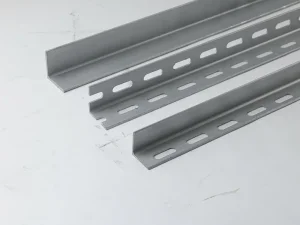
Engineered Catalog Tier I
Featured Cable Trays & Structural Support Systems
Ex-factory supplies with metallurgical certification, standard and custom dimensional tolerances, tested under calibrated NEMA VE-1 and IEC 61537 working loads.
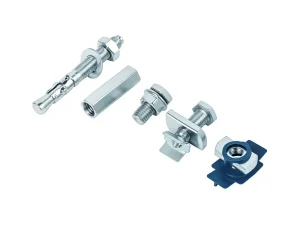
Buy Seismic Resistant Bracket acesssories Supplier, Suppliers
Inquire Factory Price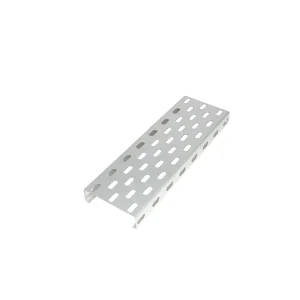
Buy Stainless Steel Marine Use Cable Tray Supplier, Price
Inquire Factory Price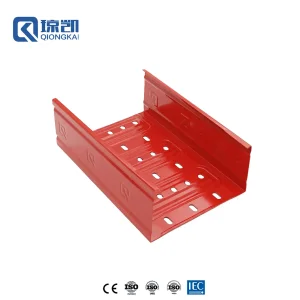
Buy Powder Coated Carbon Steel Cost Saving Heavy Duty Reinforced Molded Pre Galvanized Cable Tray - RAL3020 Red 200*100 Supplier, Factory
Inquire Factory Price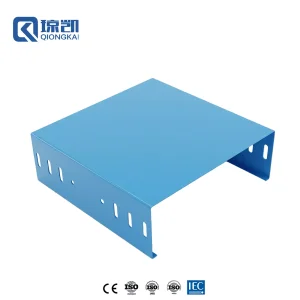
Buy Powder Coated Carbon Steel PG Pre Galvanized Cable Trunking Trough Type Channel - RAL5015 Blue Manufacturer, Suppliers
Inquire Factory Price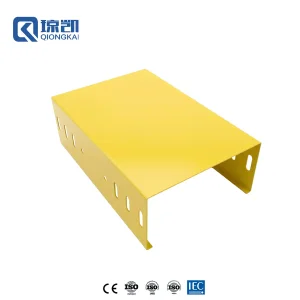
Buy Powder Coated Carbon Steel PG Pre Galvanized Cable Trunking Trough Type Channel - RAL1080 Yellow 200*100 Manufacturer, Factories
Inquire Factory Price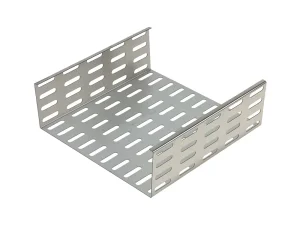
Wholesale Stainless Perforated Cable Tray 300mm - SS304 Suppliers, Factory
Inquire Factory Price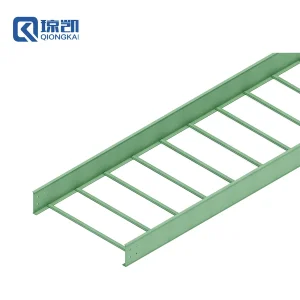
Wholesale FRP Ladder Type Cable Tray 1000*200 Manufacturer, Price
Inquire Factory Price20+ Years
Precision Cold Roll-Forming & Mesh Welding (Since 2005)
12 Lines
Continuous High-Speed Automated Manufacturing Facilities
30,000 m²
Consolidated Fabrication & Hot-Dip Galvanizing Capacity
100% Traceable
Mill Test Certificates (EN 10204 3.1) for Every Project Batch
Whitepaper Technical Memorandum
Engineering Principles of Wire Mesh Cable Tray Support Systems
Demystifying structural deflection, cantilever span dynamics, galvanic isolation, and total cost of ownership (TCO) across global electrical raceway engineering.
Wire mesh cable tray systems, colloquially designated as wire basket trays, have evolved from lightweight telecommunication conduit alternatives into critical raceway infrastructures spanning hyperscale computational centers, clean-in-place (CIP) pharmaceutical suites, offshore marine vessels, and heavy manufacturing corridors. While specifiers frequently examine wire diameter (typically 3.5 mm to 6.0 mm) and longitudinal grid spacing (50 mm × 100 mm standards), the real structural vulnerability of any raceway lies in its support bracketry and suspension network.
A wire basket tray is inherently a continuous beam supported at intervals ranging between 1.5 meters and 3.0 meters. When uniform mechanical cabling loads ($W_L$) and concentrated emergency point loads ($P_L$) are applied, the support interface experiences complex triaxial mechanical stresses: flexural bending moments, localized web crippling at clip attachment points, and torsional shearing along horizontal curves. Specifying the wrong wire mesh cable tray support supplier compromises the entire raceway integrity, triggering premature deflection exceeding the allowable $L/200$ or $L/300$ standard, terminal cable insulation abrasion, and cataclysmic support hanger collapse under thermal overload.
Critical Structural Engineering Insight: The Deflection Fallacy
Many procurement directors evaluate support brackets solely by static thickness (e.g., 2.0 mm vs 2.5 mm). However, under IEC 61537 Type II structural testing, bracket geometry—specifically cold-rolled return flanges, rib embossments, and gusset fillet angles—contributes over 65% of the ultimate bending moment resistance, rendering poorly engineered heavy-gauge flat plates structurally inferior to lightweight engineered profiles.
Macro Solutions Matrix
Global Macro Solutions by Core Industrial Sector
Tailored wire mesh support frameworks addressing divergent climatic stresses, hygienic imperatives, and dynamic vibrational loads across 5 critical enterprise environments.
Hyperscale & Edge Data Centers
Challenge: Ultra-dense optical and copper data bundling requiring rapid drops, electromagnetic containment, and zero zinc whisker generation.
Engineered Solution: Ceiling-suspended trapeze center-hangers and under-floor cantilever brackets fabricated from powder-coated or stainless steel. Utilizing tool-less click-in support interfaces accelerates installation by 42% over threaded rod clamps, while preventing micro-filament zinc shedding in pressurized airflow plenum zones.
Food, Dairy & Pharmaceuticals
Challenge: Strict FDA/EHEDG sanitary compliance, high-pressure hot caustic CIP chemical sanitization, and elimination of bacterial harboring cavities.
Engineered Solution: Stand-off wall brackets and round-profile trapeze hangers manufactured exclusively in AISI 304 or AISI 316L pickled and passivated stainless steel. Open-architecture supports with zero horizontal flat ledges prevent stagnant water accumulation and biological biofilm formation.
Offshore Energy, LNG & Marine
Challenge: C5-M marine atmospheric corrosion, continuous salt fog, aggressive wind sheer, and high-frequency wave vibration resonance.
Engineered Solution: Heavy-duty hot-dip galvanized (HDG, >85μm zinc layer per ISO 1461) or molybdenum-fortified marine SS316L support struts. Heavy-gauge unistrut channel profiles integrated with vibration-dampening EPDM isolation pads eliminate galvanic couple degradation.
Rail Transit & Tunnel Infrastructure
Challenge: Cyclic aerodynamic piston shockwaves generated by high-speed trains, tunnel water seepage, and stringent smoke zero-halogen requirements.
Engineered Solution: Reinforced cantilever wall brackets fastened via anchor-bolt systems tested to withstand 1.5 kPa dynamic oscillating wind pressures. Surface treatments integrate thermoplastic dip-coating or specialized hot-dip zinc-aluminum-magnesium (ZM) alloy coatings.
Global Commercial Analysis
Wire Mesh Cable Tray Support Price & Procurement Architecture
Transparent pricing benchmarks, steel market indexing, cost driver breakdowns, and supplier auditing metrics for Tier 1 international buyers.
A frequent mistake in project budgeting is treating wire mesh cable tray supports as trivial hardware line items. In large-scale installations, supports, brackets, suspension rods, and connection splice hardware account for 38% to 54% of total raceway material expenditure, and over 60% of total electrical installation labor. The unit price for wire mesh cable tray supports is contingent upon five structural variables:
| Support Type & Spec | Material / Surface Finish | Typical Span & Safe Working Load | Estimated Direct Factory Price (USD) | Primary Industrial Sector |
|---|---|---|---|---|
| Cantilever Wall Bracket (100–300mm) | Pre-Galvanized (PG) Carbon Steel | 1.5m Span / SWL 120 kg | $1.40 – $2.80 / pc | Commercial Office, Light HVAC, Basements |
| Heavy-Duty Cantilever Arm (400–600mm) | Hot-Dip Galvanized (HDG) ISO 1461 | 2.0m Span / SWL 280 kg | $3.80 – $7.50 / pc | Industrial Plants, Utility Vaults, Sub-stations |
| Center-Hanger Suspension (50–300mm) | Electro-Zinc Plated (EZ) + Passivated | 1.5m Span / SWL 90 kg | $0.95 – $2.10 / pc | Telecom, Data Halls, False Ceiling Raceways |
| Trapeze Channel Assembly (100–600mm) | Strut Profile 41×41mm HDG | 2.5m Span / SWL 450 kg | $4.50 – $9.20 / set | Heavy Power Distribution, Process Plants |
| Sanitary Stand-Off Wall Mount | Austenitic Stainless Steel AISI 304 / 316 | 1.5m Span / SWL 160 kg | $5.80 – $14.50 / pc | Pharma Cleanrooms, Brewery, Meat Processing |
| 3-Axis Seismic Bracing Strut Kit | Seismic Reinforced Q235B / HDG | IBC / ASCE 7 Seismic Zone 4 | $12.00 – $26.00 / kit | Nuclear, Airport Terminals, Critical Hospital Power |
Key Direct Supplier Cost Optimization Drivers:
1. Direct Mill Ingot Pricing: Qiongkai leverages integrated high-volume slitting and cold-forming from tier-one steel mills (Baosteel, Shagang), eliminating secondary trading markups and stabilizing raw material bill-of-materials against volatile LME/SHFE index fluctuations.
2. Tooling Efficiency & Modular Hole Punching: Integrated CNC stamping dies allow dynamic punch configurations on strut and support arms without secondary manual drilling, directly lowering unit labor fabrication costs by 18%.
3. Container Cube Maximization: Support brackets are designed with nesting geometry. Our logistics engineering department packs cantilever brackets in interlocked pallet patterns that increase standard 40ft HQ container cubic utilization up to 94%, significantly trimming international sea freight amortized per unit.
Global Assurance & Code Compliance
Localized Compliance & Rigorous Regulatory Standards
Navigating regional electrical building regulations across North America, the European Union, the Middle East, and Asia-Pacific jurisdictions.
IEC 61537 Type Test Rigor
Mandated in the EU and Commonwealth projects. Evaluates safe working load (SWL) with an obligatory 1.7× safety factor without localized plastic deformation. Our brackets pass full Type II deflection and electrical continuity tests (<5 mΩ joint resistivity).
NEMA VE 1 / CSA C22.2 No. 126.1
North American industry benchmark defining load class designations (Class 8A, 12B, 20C). Verifies destructive load resistance, impact threshold at sub-zero operating temperatures (-40°C), and structural fastener integrity under severe vibration.
DIN 4102-12 Fire Survivability
Mandatory for critical infrastructure life-safety cabling (E30 to E90 fire resistance classes). Hanger brackets maintain load-bearing structural integrity under 1000°C thermal exposure for 90 minutes, ensuring operational integrity of evacuation circuits.
IBC / ASCE 7-16 Seismic Rating
Non-structural component seismic certification required in seismically active areas (California, Japan, Chile, New Zealand). Custom rigid and cable sway brace attachments withstand lateral ($F_p$) and longitudinal dynamic spectral acceleration forces.
Technology Roadmap 2026-2032
Future Directions in Cable Support Engineering
From generative algorithmic bracket optimization to low-carbon blast-furnace steel substitutions, the structural support sector is undergoing technological transformation.
BIM / Digital Twin
Algorithmic Routing & Clashing Detection
Automated generation of native Revit LOD 400 families for all support assemblies. AI spatial plugins analyze MEP models to calculate dynamic hanger center-to-center distances, reducing jobsite field modifications by up to 75%.
Sustainability
Decarbonized "Green Steel" Manufacturing
Transitioning to hydrogen-reduced direct reduced iron (DRI) electric arc furnace (EAF) feedstocks. Reduces embedded Scope 3 carbon intensity from 2.1 t $CO_2$/t steel to under 0.6 t $CO_2$/t, satisfying corporate ESG sustainability mandates.
Surface Sciences
Zinc-Magnesium-Aluminum (ZMA) Alloys
Replacing conventional batch hot-dip galvanizing with continuous zinc-aluminum-magnesium alloy diffusion coatings. Yields 300% superior salt spray endurance (>3,000 hrs ASTM B117) with self-healing cathodic edge protection.
IoT Monitoring
Smart Strain-Gauge Integrated Brackets
Incorporation of passive RFID and micro-strain sensor nodes into critical support junctions in nuclear and subsea tunnel installations, facilitating real-time wireless structural health telemetry.
Frequently Asked Questions
Engineering & Procurement FAQ
Definitive technical answers to the most rigorous queries submitted by EPC buyers, lead electrical estimators, and MEP consultants.
What is the recommended support span distance for industrial wire mesh cable trays?
Under standard industrial specifications conforming to NEMA VE 2 (Cable Tray Installation) and IEC 61537, the standard hanger span distance for wire mesh cable tray supports is 1.5 meters (approx. 5 feet) to 2.0 meters (approx. 6.6 feet). For installations carrying light telecommunication cables (fill ratio < 40%), spans may safely be extended to 2.5 meters or 3.0 meters provided that the structural bracket Safe Working Load (SWL) and deflection parameters ($d \leq L/200$) are verified via certified loading curves. In high-density power cable applications, supports must be positioned within 300 mm of any horizontal bend, tee junction, or expansion joint.
How do pre-galvanized, hot-dip galvanized, and electro-zinc supports differ in durability and cost?
Electro-Zinc Plated (EZ/EG): Zinc layer thickness of 5–12 μm. Ideal for dry indoor commercial IT rooms and data centers (C1/C2 environments). Lowest unit cost benchmark.
Pre-Galvanized (PG / Mill Galv): Continuous zinc coating applied at the mill (typically 15–20 μm). Good indoor resilience against moderate humidity; roughly 15–25% more expensive than EZ.
Hot-Dip Galvanized After Fabrication (HDG): Immersed in molten zinc at 450°C, yielding a minimum 65–85 μm bonded metallurgical zinc alloy coating conforming to ISO 1461 or ASTM A123. Built for outdoor, heavy industrial, coastal, and unconditioned environments (C3/C4). Cost is 40–60% higher than PG, but extends operational service life to 25–40 years.
What precautions prevent galvanic corrosion between wire basket trays and their support brackets?
Galvanic corrosion occurs when two dissimilar metals with differing electrochemical potentials are in direct physical contact in the presence of an electrolyte (moisture/humidity). To prevent rapid galvanic degradation:
1. Always match like-for-like metallurgical finishes (e.g., use HDG brackets for HDG wire trays, and SS316 supports for SS316 trays).
2. If dissimilar metals must interface (e.g., carbon steel strut supports carrying stainless steel wire mesh trays), install non-conductive dielectric isolation barriers—such as ultraviolet-stabilized EPDM pads, nylon washers, or PVC clamping inserts—to break the electrical conductivity path.
How can international EPC contractors audit direct Chinese cable tray support manufacturers?
When qualifying a direct manufacturer like Shanghai Qiongkai Industry Co., Ltd., prioritize three auditing pillars:
1. In-House Ingot-to-Finished Fabrication: Ensure the factory maintains dedicated continuous cold roll-forming lines, multi-spot automated resistance welding machines, and CNC shearing presses rather than outsourcing assembly.
2. Metallurgical Lab Verification: Request current third-party mechanical testing certificates (SGS, TÜV, or UL) proving compliance with IEC 61537 and NEMA VE-1 deflection limits, alongside optical emission spectroscopy (OES) chemical alloy composition analysis.
3. Containerized Export Experience: Verify track records with seaworthy anti-moisture packaging (VCI plastic barrier wrapping, steel strapping, solid fumigated timber crating) to eliminate oxidation during oceanic transit.
What factors determine the ultimate delivered export price for custom cable tray support brackets?
The landed procurement price is calculated as:
[Base Raw Steel Weight × Current Strip Steel Index] + [Tooling Stamping / Laser Cutting Machine Amortization] + [Chemical Surface Treatment Cost (Hot-Dip Galvanizing or Electropolishing)] + [Export Protective Packaging] + [Containerized Ocean Freight & Port Handling Charges].
Customizing bracket geometry with pre-existing modular die sets reduces initial NRE (non-recurring engineering) tooling charges to zero, keeping volume run unit costs highly competitive.
Engineered Catalog Tier II
Industrial Cable Ladder, Trunking & Structural Strut Profiles
High-strength FRP, heavy-duty molded pre-galvanized channels, and marine stainless components engineered to complete your unified raceway bill-of-materials.
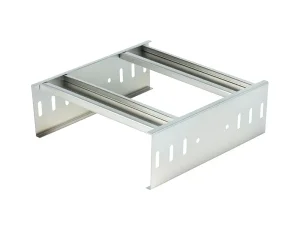
Buy Stainless Cable ladder Factories, Price
Inquire Factory Price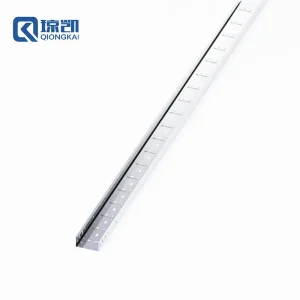
Buy Cost Saving Heavy Duty Reinforced Molded Pre Galvanized Cable Tray 100*50 Suppliers, Price
Inquire Factory Price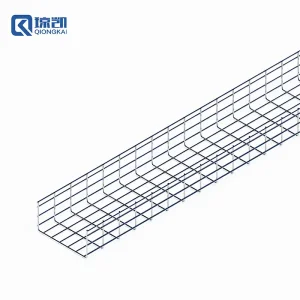
Buy GI Galvanized Wire Mesh Tray 300*150 Factory, Factories
Inquire Factory Price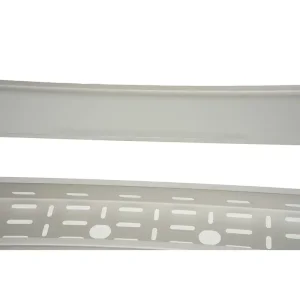
Buy Customized Stainless Steel Cable Tray With Surface Treatment Factory, Factories
Inquire Factory Price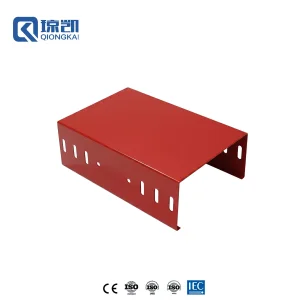
Wholesale Powder Coated Carbon Steel PG Pre Galvanized Cable Trunking Trough Type Channel - RAL3020 Red 200*100 Suppliers, Factory
Inquire Factory Price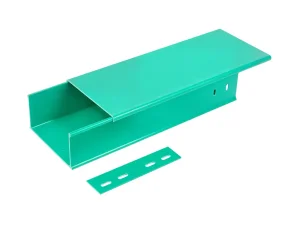
Wholesale High Strength FRP Cable Tray Suppliers, Price
Inquire Factory Price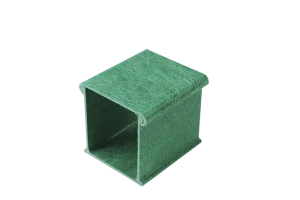
Wholesale FRP Through cable tray 50mm Supplier, Suppliers
Inquire Factory Price