
High-Performance Trays & Interface Assemblies
Explore the certified base trays, molded fittings, and heavy-duty structural channels engineered directly by Shanghai Qiongkai Industry Co., Ltd. for seamless system interlock.
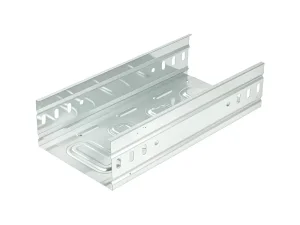
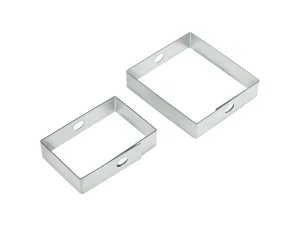
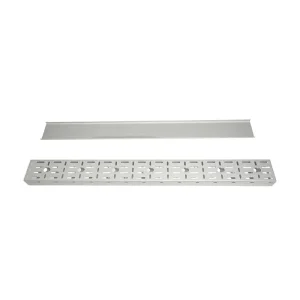
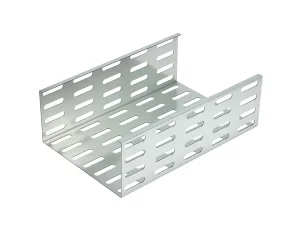
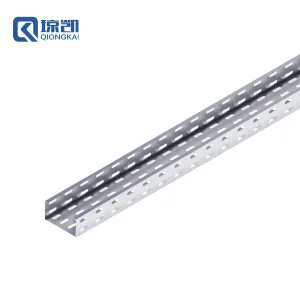
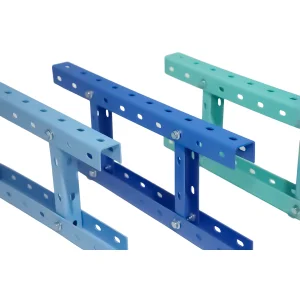
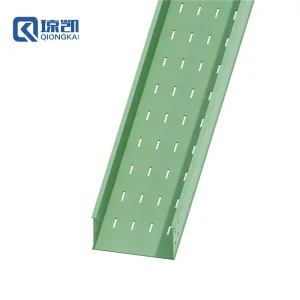
Wholesale Cable Tray Accessories Master List
In complex industrial electrical layouts, the integrity of a cable containment infrastructure depends on its joint fittings, seismic brackets, and transitional adapters. Below is the exhaustive engineering taxonomy categorized by structural functionality.
Years Continuous OEM Production (Est. 2005)
State-of-the-Art Shanghai Manufacturing Facilities
Total Heavy-Duty Stamping & Roll-Forming Footprint
Automated High-Speed Robotic Roll-Forming Lines
1. Splice Plates & Coupling Joints
Structural ContinuityJoint couplers maintain mechanical rigidity and electrical bonding across tray sections under heavy live loads:
- Standard Straight Splice Plates: Rib-reinforced plates engineered to match channel side heights (50mm to 200mm) complying with IEC 61537 earth continuity.
- Expansion Splice Plates: Allows longitudinal thermal movement (up to 25mm travel) across building expansion joints without buckling structural side rails.
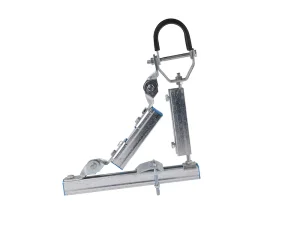
- Horizontal & Vertical Adjustable Splices: Variable-angle pivoting couplers for field-adjusting elevations and transitions around unexpected site obstructions.
- Step-Down Reducer Splices: Seamlessly transitions cable containment width (e.g., 600mm down to 400mm or 300mm down to 150mm) while preserving alignment.
2. Geometric Directional Transitions
Bend Radius ControlFactory-formed fittings prevent critical cable sheath degradation by preserving minimum bending radii (300mm to 900mm):
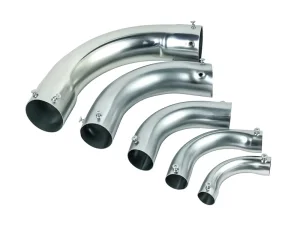
- 90° & 45° Horizontal Elbows: Die-formed or segmentally welded curves designed for uniform distribution of cable pulling tension.
- Horizontal Crosses & Equal Tees: Quadrant junction fittings for branch-circuit routing in primary electrical distribution rooms and data server suites.
- Vertical Inside & Outside Risers: Smooth elevation alterations traversing ceiling drops, risers, and multi-tier mezzanine decks.
- Concentric & Eccentric Reducers: Tapered transitional modules preventing stress concentration on multi-core HV/LV feeder cables.
3. Support Brackets & Suspension
NEMA Load VerifiedEngineered hardware transferring dead weight, live operational cabling, and environmental dynamic forces to structural framing:
- 41-Series Strut Channels: Cold-formed C-channels (41×21, 41×41, 41×62, 41×82) available in back-to-back slotted or solid variants with anti-seismic serrations.
- Cantilever Wall Brackets: Gusset-reinforced heavy-duty steel brackets engineered for high moment arm loads in industrial utility corridors.
- Trapeze Suspension Kits: All-thread rod hangers paired with strut channels, spring nuts, and vibration damping washers.
- Seismic Sway Braces: Tri-axial dynamic seismic brackets compliant with ASCE 7-22 specifications for earthquake-prone infrastructure.
4. Protective Covers & Venting
Environmental EnclosureShields delicate signal circuits and high-voltage power conduits against environmental debris, water accumulation, and mechanical impacts:
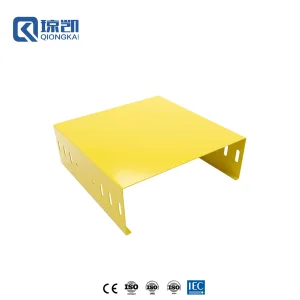
- Solid Flanged Covers: Heavy-gauge metal covers providing ingress protection against falling objects and dripping moisture.
- Peaked / Ventilated Shedding Covers: Gabled roof profiles (15° pitch) engineered to immediately shed outdoor rainfall, snow, and airborne dust.
- Heavy-Duty Cover Clamps: Wind-resistant locking clamps, wrap-around stainless steel bands, and quick-snap clips for high-velocity exterior conditions.
- Barrier Dividers: Continuous longitudinal dividing strips separating power conductors from low-voltage fiber optic telemetry channels.
5. Clamping & Earth Continuity
Electrical SafetyCritical precision micro-hardware guaranteeing mechanical anchoring and low-impedance ground bonding:
- Hold-Down Clamps & Expansion Guides: Clamps that firmly fasten tray channels while permitting controlled slip during thermal elongation.
- Earth Bonding Jumpers: High-conductivity tinned copper braided bonding straps guaranteeing ground resistance < 0.05 ohms across joints.
- J-Bolts, Beam Clamps & Flange Grips: Heavy forged steel C-clamps for rapid structural beam connection without on-site welding or drilling.
- Conduit-to-Tray Adapters: Swivel and rigid conduit termination plates facilitating safe cable breakout to distribution machinery.
6. Cable Dropouts & Terminal Caps
Insulation ProtectionSafeguards cable insulation at critical exit terminations and provides professional modular closures:
- Smooth-Radius Cable Dropouts: Contoured waterfall plates attaching to rungs or bottoms to prevent insulation abrasion when cables exit vertically.
- Blank End Plates: Encloses tray runs terminating at bulkheads, control panels, or clean-room penetrations to prevent vermin ingress.
- Blind End Reducers: Capped reducing fittings allowing future system extension without full dismemberment of tray runs.
- Protective Edge Trims & Grommet Strips: PVC or EPDM continuous edge liners protecting field-cut sheet metal apertures.
Macro Trends Reshaping Cable Management Systems
Driven by AI computing density, multi-gigawatt renewable energy plants, and off-site modular construction, international cable containment requirements have evolved from passive structural steel into highly engineered, standards-compliant subsystems.
Hyperscale AI Data Center Loads
Modern data center infrastructure hosting liquid-cooled, high-density AI clusters demands immense power feeding. Standard tray accessories can no longer accommodate the aggregate mass of 500kcmil power runs. The market is shifting to high-depth (150-200mm side rail) perforated cable trays and heavy-gauge wire mesh basket designs with specialized radiant-heat dissipative rung profiles.
Renewable Megaprojects & Hydrogen
Photovoltaic utility plants, offshore wind foundations, and hydrogen electrolysis facilities present severe atmospheric aggression classified under ISO 12944 as C5-M or CX. Conventional electro-galvanized brackets degrade rapidly. Global demand is surging for Hot-Dip Galvanized (HDG) accessories with >85μm zinc thickness, marine-grade SS316L, and pultruded vinyl-ester FRP composite channels.
DFMA & Pre-Engineered Rapid Assembly
Rising on-site skilled labor costs in North America, Western Europe, and Australasia have catalyzed the rapid adoption of Design for Manufacture and Assembly (DFMA). Integrated snap-fit splice connectors, tool-less spring-steel wire basket couplers, and pre-punched slotted bracket geometries reduce site installation hours by up to 42% compared to traditional nut-and-bolt framing.
Engineering Metallurgy & Finish Selection Guide
Selecting the incorrect metallurgy or protective coating for accessories is the primary catalyst for premature electrical infrastructure collapse. Review Shanghai Qiongkai’s empirical metallurgy compatibility matrix below:
| Material / Treatment | Standards Compliance | Corrosion Tier (ISO 12944) | Yield Strength (MPa) | Recommended Operating Environment |
|---|---|---|---|---|
| Pre-Galvanized Steel (PG / GI) | ASTM A653 / EN 10346 | C1 – C2 (Dry Indoor) | 280 – 350 MPa | Commercial office towers, dry ceiling voids, indoor HVAC runs. |
| Hot-Dip Galvanized (HDG) | ASTM A123 / ISO 1461 | C3 – C4 (Industrial Exterior) | 250 – 320 MPa | Petrochemical refineries, power utility plants, exterior rooftop piping. |
| Stainless Steel 304 (SS304) | ASTM A240 / AISI 304 | C3 – C4 (Hygienic Washdown) | ≥ 205 MPa | Food and beverage processing, dairy factories, pharmaceutical manufacturing. |
| Stainless Steel 316 / 316L | ASTM A240 / AISI 316L | C5-M / CX (Offshore Marine) | ≥ 220 MPa | Offshore oil platforms, LNG export terminals, marine desalination complexes. |
| Fiberglass Reinforced Polymer (FRP) | ASTM D3917 / UL 94 V-0 | Extreme Chemical / Acidic | ≥ 180 MPa (Flexural) | Battery gigafactories, sulfuric acid processing units, coastal salt spray. |
| Electrostatic Powder Coated (RAL) | ASTM D3359 / Qualicoat | C2 – C3 (Aesthetic / Segregation) | Varies by substrate | AI data centers, distinct voltage color-coding (red, yellow, blue, black). |
Total Cost of Ownership (TCO) Calculation
While standard Pre-Galvanized accessories carry a lower upfront capital expense (CapEx), deploying them in moderately humid or coastal environments results in premature galvanic corrosion within 36 to 48 months. The subsequent maintenance expenses (OpEx)—including emergency power shutdowns, structural retrofitting, and rewiring—typically exceed the initial hardware cost by 700%.
Traceability & EN 10204 3.1 Certification
Global Engineering, Procurement, and Construction (EPC) consortiums require stringent quality validation. Shanghai Qiongkai Industry issues authentic EN 10204 Type 3.1 Mill Test Certificates (MTC) for every production heat lot, specifying chemical composition (carbon, manganese, chrome, nickel, molybdenum) and mechanical tensile yield strength testing.
Macro Industry Solutions Tailored for Global EPCs
From modern transportation hubs to remote liquefied natural gas extraction plants, our engineered cable tray accessories solve the unique spatial, environmental, and thermal challenges of heavy industries.
Commercial Mega-Hubs & Aviation
Demonstrated in landmark projects such as Shanghai Hongqiao International Airport, our corrosion-resistant CT series trunking and matching snap-fit covers withstand high-volume structural vibrations, stringent building smoke-toxicity mandates, and continuous mechanical deflection over long spans.
Offshore LNG & Severe Marine Platforms
For offshore projects in Qatar and coastal Thailand, Qiongkai engineered custom SS316L and pultruded vinyl-ester FRP accessories. These feature anti-corrosion barrier coatings resistant to chloride-induced stress corrosion cracking and extreme tropical operating environments.
Cost-Optimized Agro-Industrial Complexes
Deployed across large-scale facilities such as industrial livestock complexes in Paraguay, our heavy-duty pre-galvanized ribbed trays and high-capacity strut channels delivered high load-to-weight ratios under tight budgetary constraints, resisting biological ammonia vapor concentrations.
Localized Support & Regulatory Compliance
Operating across 45+ international markets requires an understanding of localized electrical codes, seismic design categories, and customs logistics.
IEC 61537 Certified
Comprehensive electrical continuity and mechanical safe working load (SWL) verification for European and Commonwealth markets.
NEMA VE 1 / VE 2
Strict North American compliance determining cable tray load classes (Class 8C, 12C, 20C) and professional field installation practices.
UL 568 / CSA C22.2
Flammability resistance, self-extinguishing polymer verification, and structural integrity under high-temperature electrical faults.
AS/NZS 3013 Standards
Fire-rated electrical containment hardware verified for multi-hour circuit integrity under severe industrial fire conditions.
Engineering Roadmap & Future Outlook
Shanghai Qiongkai’s R&D division continues to push the boundaries of materials science, automated manufacturing, and digital infrastructure modeling.
Full BIM LOD 400 Parametric Libraries
Native Revit and IFC 3D parametric families for all accessories, elbows, and seismic brackets with built-in clash detection and automated bill-of-materials generation.
Ultra-High Corrosion Zinc-Aluminum-Magnesium
Transitioning primary exterior accessory lines to advanced Zn-Al-Mg coatings providing self-healing edge corrosion protection superior to standard hot-dip galvanizing.
Embedded Optical Fiber Strain & Temp Sensing
Modular sensor integration channels enabling real-time monitoring of cable thermal hotspots and dynamic structural loading across critical infrastructure spans.
Zero-Carbon Steel & Bio-Polymer FRP
Pioneering low-carbon emission electric-arc furnace (EAF) rolled steel lines and recyclable thermoplastic composite resin matrices targeting Net-Zero Scope 3 mandates.
Frequently Asked Engineering Questions
Detailed technical responses to core inquiries raised by EPC procurement managers, electrical consultants, and project engineers.
What parameters determine expansion splice plate spacing on exterior cable tray runs?
Expansion splice plate spacing is governed by NEMA VE 2 (Section 4) and depends on the coefficient of thermal expansion of the tray material and the maximum seasonal temperature differential (ΔT). The formula is:
Maximum Spacing = Tray Expansion Gap Allowance / (α × ΔT)
For steel cable trays with a standard 10mm expansion gap rating across a 50°C temperature swing (α = 0.000012 m/m°C), expansion joints must be installed every 16.6 meters. For aluminum trays, with nearly double the thermal expansion rate, joints are typically positioned every 9 to 10 meters.
How does Shanghai Qiongkai guarantee earth continuity without dedicated ground cables?
Our splice plate connectors are certified under IEC 61537 Clause 9.3. Each connector utilizes specialized serrated lock nuts and star washers that penetrate painted or anodized surface layers upon tightening to specified torque ratings (typically 40 Nm for M10 bolts). This mechanical bite creates metal-to-metal continuity, maintaining electrical impedance across the connection below the standard threshold of 50 milliohms, enabling the cable tray framework to act as an equipment grounding conductor (EGC).
When should engineers specify Hot-Dip Galvanized (HDG) over Pre-Galvanized (PG) for accessories?
Pre-galvanized components (ASTM A653) have a thin zinc coating (approximately 14–20 microns) applied before stamping and shearing. Consequently, the sheared edges rely exclusively on cathodic protection, making them vulnerable in environments with relative humidity consistently exceeding 60% or in the presence of airborne chemical sulfates. Hot-dip galvanizing after fabrication (ASTM A123) immerses the entire finished accessory into molten zinc at 450°C, producing a metallurgical iron-zinc alloy layer with an average thickness of 65 to 85+ microns. HDG is mandatory for outdoor utility yards, coastal environments, cooling towers, and heavy industrial processing floors.
Can Qiongkai manufacture bespoke accessory radii and non-standard profile dimensions?
Yes. Operating out of 3 comprehensive manufacturing facilities with over 60 heavy-duty stamping presses, 4,000-watt laser cutting arrays, and CNC press brakes, we routinely manufacture non-standard side rail heights (e.g., 65mm, 125mm, 250mm), unique horizontal elbow turn radii (up to 1,200mm for large-diameter HV power cables), and specialized offshore structural support profiles, as delivered for offshore LNG installations in Qatar.
What documentation is provided to satisfy global customs and project QA/QC audits?
Every commercial wholesale shipment is accompanied by a full technical compliance package: EN 10204 3.1 Mill Test Certificates verifying raw coil chemistry and tensile yield, ISO 9001:2015 QA/QC inspection reports, salt spray test certificates (ASTM B117), galvanizing thickness gauge reports, certificate of origin (Form A, Form E, or CO), and packing lists itemized by tag number to streamline job-site staging.
Industrial Heavy-Duty Trays & Structural Channels
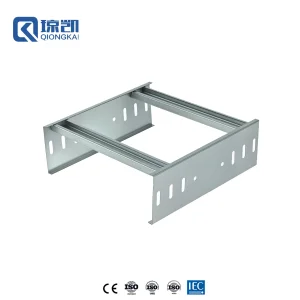
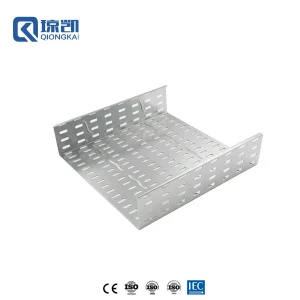
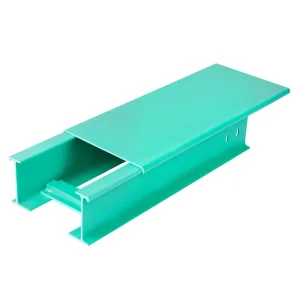
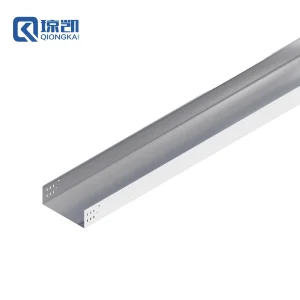
Complete your facility cable distribution envelope with our high-capacity ladder trays, seismic channels, and solid-trough trunking solutions.
Connect Directly with Our Shanghai Engineering Directorate
Ensure your next mega-project receives coordinated, NEMA/IEC-verified cable tray and accessories systems straight from the primary manufacturer. Submit your bill of materials (BOM), CAD layouts, or custom profile specifications for an immediate, engineering-backed wholesale quotation.