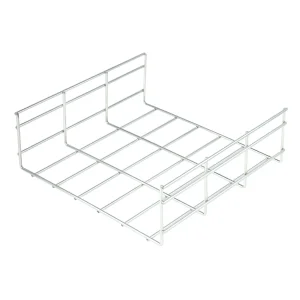
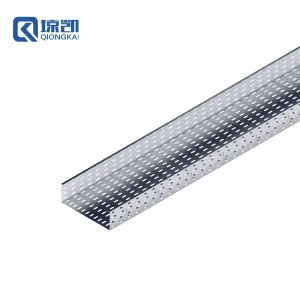
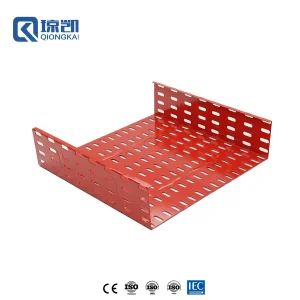
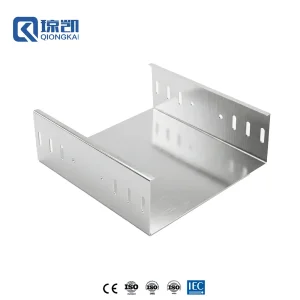
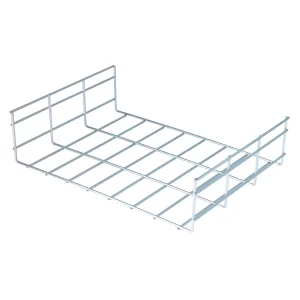
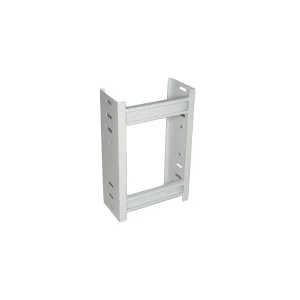
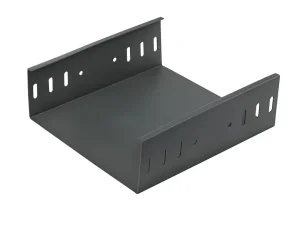
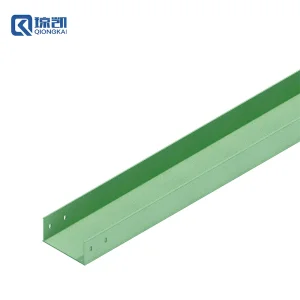
Precision-Engineered Trays & Support Profiles: Series 01
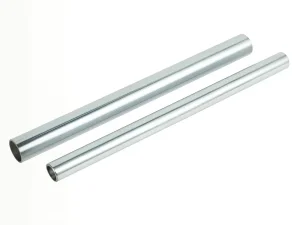
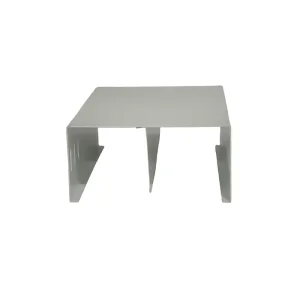
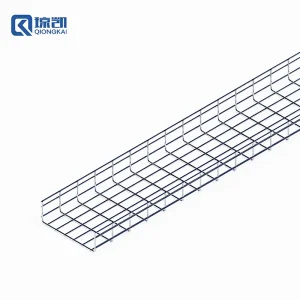
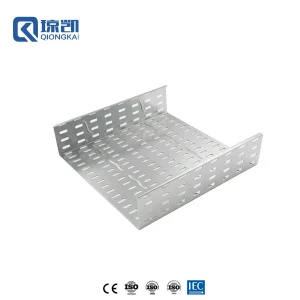
Heavy-gauge perforated channels, wire mesh grids, and anti-corrosive FRP systems specifically fabricated to support insulated copper lines, dual suction/liquid pairs, and associated electrical controls.
Engineering Architecture: Supporting Refrigerant Piping Lines
Why standard electrical wire trays fail under mechanical refrigeration demands, and how our reinforced strut and perforated cable tray systems prevent catastrophic insulation rupture, sweating, and line sagging.
1. The Unique Mechanics of Refrigerant Piping vs. Standard Electrical Cabling
In modern multi-split VRF/VRV installations, chilled water loops, and heavy commercial refrigeration systems (using refrigerants such as R410A, R32, R134a, R717 Ammonia, and transcritical R744 CO2), supporting lines in generic cable trays presents high risks if load profiles are miscalculated. Unlike static copper electrical wiring, a refrigerant run carries high hydraulic pressures (up to 4.15 MPa / 600 psi in R410A systems and upwards of 13 MPa / 1885 psi in transcritical CO2 systems). These operating states generate severe physical phenomena: continuous dynamic pulsation from reciprocating and scroll compressors, thermal expansion/contraction across wide temperature swings (-40°C during defrost cycles to +90°C hot gas bypass lines), and significant static weight loading when tubes are charged with dense liquid refrigerant and polyolester (POE) oil.
When HVAC-R contractors install lines in solid-bottom troughs without ventilation or adequate structural ribbing, moisture accumulates beneath the elastomeric nitrile foam or polyisocyanurate (PIR) insulation. Trapped condensation causes accelerated interstitial galvanic corrosion and insulation compression at contact points. Compressed insulation forfeits its thermal barrier value (k-value degrading from 0.033 W/m·K to over 0.080 W/m·K), triggering uncontrolled external sweating, ceiling damage, energy loss, and eventual copper fatigue cracks at brazed elbows.
Metallurgical Finishes & Mechanical Deflection Data
Meeting ASTM, NEMA VE 1, and ISO 1461 certifications. Compare substrate resilience and verify support span tolerances across harsh commercial and coastal environments.
| Material / Treatment | Standard Specification | Zinc / Protective Layer | Recommended Installation Environment | Design Life Expectancy |
|---|---|---|---|---|
| Pre-Galvanized Steel (PG) | ASTM A653 / EN 10346 | Z180 - Z275 (12 - 20 μm) | Indoor dry ceiling voids, commercial riser shafts, AHU plant rooms | 15 - 20 Years |
| Hot-Dip Galvanized (HDG) | ASTM A123 / ISO 1461 | 65 - 85 μm (500 - 610 g/m²) | Rooftop VRV/VRF condensing units, industrial plant roofs, high-humidity zones | 30 - 50 Years |
| Stainless Steel (SS304 / SS316) | ASTM A240 / AISI 304 / 316L | Passive Chromium Oxide Film | Food processing, dairy refrigeration, pharmaceutical clean rooms, coastal marine | 50+ Years |
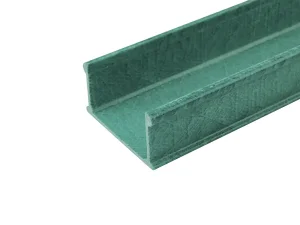
| Fiberglass Reinforced Polymer (FRP) | ASTM D3917 / UL 94 V-0 | Thermoset Isophthalic Polyester Resin | Chemical processing plants, fertilizer storage, offshore oil & gas platforms | 40+ Years (Zero Rust) |
| Architectural Powder Coated | GB/T 18593 / Qualicoat Class 1 | 60 - 100 μm Epoxy / Polyester | Open-ceiling commercial facilities, data centers with color-coded line circuits | 20 - 25 Years |
Span-to-Deflection Load Formulation (NEMA VE 1 / CSA C22.2)
When calculating support spans for refrigeration trays, mechanical engineers must account for the simultaneous combination of dead weight ($W_d$), liquid line charge ($W_c$), insulation cladding ($W_i$), and wind/snow drag on rooftop outdoor runs ($W_e$). The total working load $W = (W_d + W_c + W_i + W_e) \times 1.5$ (Safety Factor). Standard deflection $\delta$ must not exceed $\frac{L}{200}$ of the span length $L$ to avoid oil trapping in suction lines.
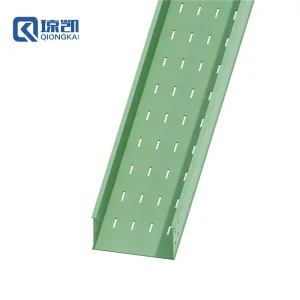
Our heavy-duty cable trays with reinforcing side ribs (e.g., 400×100 mm and 300×100 mm series) boast a Moment of Inertia ($I_x$) up to 35% higher than standard flat-sided profiles. This allows MEP contractors to extend hanger spacing from standard 1.5 meters to 3.0 meters without structural sagging, reducing rooftop structural penetration points and threaded rod hardware costs by more than 40%.
Chinese Factory Supply Chain Competitive Advantages
Eliminating intermediaries through 3 vertically integrated production hubs in Shanghai. High-volume roll forming, robotic seam welding, and precision metal stamping for international projects.
International Compliance & Field-Proven Use Cases
From extreme Middle East heat to high-humidity European refrigeration lines, explore how our systems are certified and installed across diverse global sectors.
Compliance With Global Mechanical & Safety Codes
Our refrigerant piping support trays are engineered to satisfy stringent global regulatory frameworks: ASME B31.5 (Refrigeration Piping and Heat Transfer Components), ASHRAE 15 (Safety Standard for Refrigeration Systems), and EN 378 (Refrigerating systems and heat pumps). These standards dictate exact physical support intervals, preventing pipe wall thinning and weld point shearing during hydraulic surge episodes.
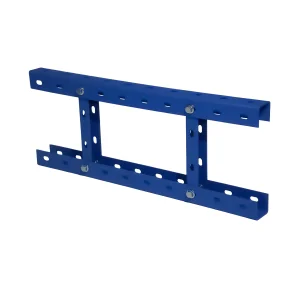
For installations in active seismic zones (conforming to ASCE 7 / IBC Chapter 13), we supply pre-engineered seismic strut bracing, back-to-back 41×82 mm channel assemblies, and serrated channel nuts that grip the inturned channel flanges. This resists lateral and longitudinal inertial seismic forces without slipping, ensuring uninterrupted critical cooling in hospitals, data centers, and cold logistics hubs during seismic events.
Procurement Dynamics & Refrigerant Transition Trends
How the global shift toward mildly flammable A2L refrigerants (R32, R454B) and natural refrigerants (R290 Propane, CO2) is redefining mechanical cable tray procurement criteria.
Navigating the A2L / Natural Refrigerant Safety Revolution
The global phase-down of high-GWP HFC refrigerants under the Kigali Amendment has sparked rapid adoption of low-GWP alternatives, predominantly Class A2L mildly flammable gases (such as R32 and R454B) and Class A3 hydrocarbons (R290 Propane). Unlike legacy R22 or R410A systems, enclosed runs carrying flammable refrigerants are subject to stringent ventilation directives under updated building codes. Traditional unventilated sheet-metal cable trunking creates dangerous vapor containment pockets should a flare joint or micro-braze failure occur.
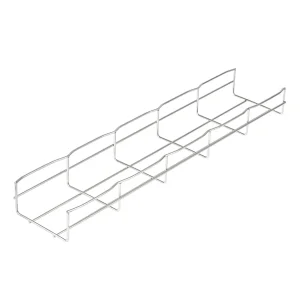
Consequently, international EPC contractors are rapidly transitioning procurement orders toward slotted wire mesh baskets and high-open-area perforated cable trays with clip-retained louvered lids. This architecture facilitates instantaneous gas dispersion into ambient airflow, mitigating the risk of reaching Lower Flammability Limits (LFL). Concurrently, the mechanical weight of natural CO2 (R744) systems—requiring thick-walled copper-iron alloy (K65) or stainless steel piping to withstand 130 bar operating pressures—demands higher structural section modulus ($Z_x$) cable trays capable of carrying 75 kg/m or greater live static loads over 3-meter spans.
Frequently Asked Engineering Questions
Answers to key structural, thermal, and regulatory queries submitted by global MEP consultants, refrigeration contractors, and procurement executives.
Heavy-Duty Trays & Specialized Channels: Series 02
Stainless wire mesh, reinforced perforated trays, and color-coded architectural finishes engineered to complete complex mechanical refrigeration piping layouts.