
Primary Cable Containment & Conduit Systems
Continuous roll-formed channels, anti-corrosion pre-galvanized conduits, perforated structural pathways, and heavy-duty composite trunking engineered to NEMA VE 1 and IEC 61537 standards.
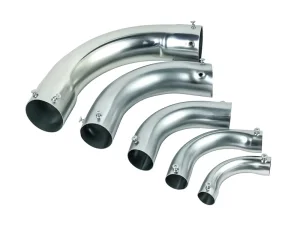
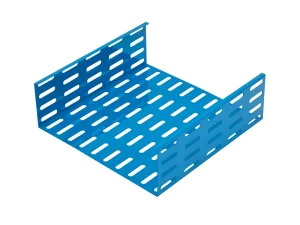
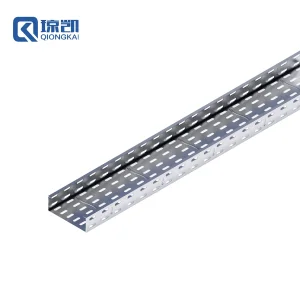
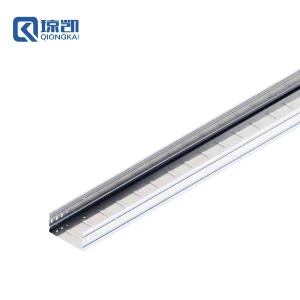
Cable Tray Materials Science: Metallurgical & Chemical Architecture
Wholesale cable tray material selection governs mechanical deflection limits, galvanic compatibility, fire resistance ratings, and lifecycle total cost of ownership across 30+ year design spans.
Carbon Steel & Zinc Coatings
Structural carbon steel provides the optimal strength-to-weight ratio for power and control distribution. Pre-galvanized (PG / Mill Galvanized conforming to ASTM A653 / EN 10346) yields a smooth, uniform zinc coating of 100–275 g/m², ideal for commercial interiors and climate-controlled data halls.
For aggressive outdoor or unconditioned atmospheric exposure, Hot-Dip Galvanizing (HDG post-fabrication per ASTM A123 / ISO 1461) bonds an iron-zinc alloy diffusion layer exceeding 65–85 μm (450–600 g/m²), offering sacrificial cathodic defense against rust.
Austenitic Stainless Alloys
AISI 304 (EN 1.4301) and marine-grade AISI 316 / 316L (EN 1.4404) utilize Chromium-Nickel-Molybdenum solid solutions to generate a self-healing passive chromic oxide barrier film.
With molybdenum concentrations between 2.0% and 3.0%, SS316L provides exceptional immunity to pitting and crevice corrosion under chloride attack, meeting stringent washdown sanitation protocols for pharmaceutical cleanrooms, bioprocessing facilities, desalination hubs, and marine topside decks.
Fiber Reinforced Polymers (FRP/GRP)
Pultruded Fiber Reinforced Plastic composites integrate continuous E-glass roving and chopped strand mats embedded in fire-retardant vinylester or isophthalic polyester resins.
FRP cable trays are completely non-conductive, dielectric, non-magnetic, and immune to severe chemical reagents including wet sulfur dioxide, caustic alkalis, hydrochloric acid mist, and high saline spray. They provide up to 40% mass reduction compared to steel equivalents without sacrificing structural beam stiffness.
| Material & Surface Treatment | Applicable Standards | ISO 12944 Corrosivity | Yield Strength (MPa) | Expected Design Life | Primary Industrial Sector |
|---|---|---|---|---|---|
| Pre-Galvanized Steel (PG) | ASTM A653 / EN 10346 | C1 – C2 | 250 – 350 MPa | 15 – 25 Years (Indoor) | Commercial, Data Centers, Suspended Ceilings |
| Electro-Galvanized (EG) | ASTM B633 / ISO 2081 | C1 – C2 | 235 – 320 MPa | 10 – 15 Years (Indoor) | Wire Mesh Trays, Telecommunications, Server Rooms |
| Hot-Dip Galvanized (HDG) | ASTM A123 / ISO 1461 | C3 – C4 | 250 – 400 MPa | 30 – 50 Years (Outdoor) | Infrastructure, Solar PV, Petrochem, Power Plants |
| Stainless Steel 304 | ASTM A240 / EN 10088 | C3 – C4 | 205 – 240 MPa | 40+ Years | Food & Beverage, Sanitary Cleanrooms, Dairy Processing |
| Stainless Steel 316 / 316L | ASTM A240 / EN 10088-2 | C5-I – C5-M | 220 – 260 MPa | 50+ Years | Offshore Platforms, LNG Terminals, Coastal Infrastructure |
| Fiberglass Reinforced Plastic (FRP) | ASTM D3917 / BS EN 13706 | C5-M Extreme | 180 – 300 MPa (Flexural) | 40+ Years (Zero Rust) | Chemical Synthesis, Wastewater, Electrolysis, Acidic Pickling |
| Epoxy / Polyester Powder Coat | ASTM D3451 / Qualicoat | C2 – C3 | Substrate Dependent | 15 – 20 Years | Architectural Spaces, System Voltage Color Coding (RAL) |
Galvanic Corrosion Safeguard Guideline (Electrochemical Potential Differentiation)
When specifying mixed-material assemblies (e.g., stainless steel fasteners on galvanized cable ladder rungs or copper grounding lugs bolted to aluminum sidewalls), electrochemists must ensure the galvanic couple voltage remains below 0.15 V in marine environments and 0.25 V in controlled indoor facilities. Always incorporate neoprene, EPDM, or nylon insulating isolation washers and grommets to eliminate bimetallic electrochemical cell formation.
China Factory 4.0: Supply Chain Resilience & Production Efficiency
How Shanghai Qiongkai Industry leverages automated continuous CNC lines, robotic fiber welding, direct port connectivity, and digital MES management to guarantee international shipment integrity.
Digitalized CNC Cold-Forming
Our 30,000 m² facilities house over 60 sets of heavy-duty fabrication machinery, including CNC progressive punching lines, hydraulic CNC press brakes, and automated continuous roll-formers. Precision servo feeds ensure hole pitch tolerances within ±0.2 mm across 3-meter and 6-meter span sections.
Continuous profile forming incorporates proprietary deep-reinforcement ribs into side rails and tray bottoms, improving section modulus (Z-value) and dynamic load capacity by up to 28% without increasing steel tonnage.
End-to-End Vertical Integration
Operating three manufacturing facilities in Shanghai, Qiongkai eliminates intermediary subcontracting risks. From raw coil slitting, cold stamped perforation, robotic seam and TIG welding, to hot-dip galvanizing kettles and electrostatic architectural powder coating booths, the entire value chain is audited under ISO 9001:2015.
This end-to-end processing controls mill test certificates (MTC), maintains heat number traceability, and delivers competitive containerized FOB/CIF prices directly to international EPC contractors.
Port Proximity & Logistics Mastery
Headquartered in Shanghai Songjiang Port Science and Technology City, our dispatch centers are positioned within 80 km of Shanghai Yangshan Deepwater Terminal and Waigaoqiao International Port.
This proximity allows rapid container staging, custom nested export nesting packs, fumigated seaworthy wooden crates, and moisture-barrier shrink bundling that minimizes ocean freight cube volume while protecting precision galvanized edge flanges from transit abrasion.
Macro Industry Engineering Solutions
Field-proven containment systems engineered for the structural, thermal, seismic, and chemical challenges of mission-critical global industries.
Hyperscale Data Centers & Telecommunications
High-density server white spaces demand wire mesh basket systems and overhead ladder runway topologies that promote cross-ventilated convection cooling and prevent heat damming around Cat6A and fiber optic assemblies.
Our electro-galvanized and powder-coated wire mesh trays undergo post-treatment ultrasonic cleansing to eliminate zinc whiskers (microscopic conductive filaments that cause short-circuits in server electronics). Integrated quick-clamping splice washers speed up overhead grid assembly by 45%.
Offshore LNG & Petrochemical Facilities
Harsh offshore drill platforms, coastal LNG export facilities, and petrochemical cracking refineries face wind-driven seawater spray, sour hydrocarbon gas, and tropical thermal cycling.
Qiongkai delivers customized marine-grade SS316L cable ladder systems and pultruded FRP composite channels. Designed to withstand wind speeds of 160 km/h and salt spray testing exceeding 3,000 hours per ASTM B117, our systems maintain structural integrity without micro-cracking or localized pitting.
Transit Hubs & Aviation Terminals
Modern transportation hubs require heavy-load power feeders, fire alarm circuitry, and intelligent building controls routing through congested utility tunnels.
Reference projects, such as our high-durability cable trunking supplied to Shanghai Hongqiao International Airport, verify our capacity to satisfy strict flammability standards, continuous electrical grounding continuity, and seismic bracing compliance under dynamic vibration.
Industrial Agriculture & Ammonia Plants
Enclosed intensive livestock operations and fertilizer processing plants release high concentrations of ammonia (NH3) gas, moisture, and organic acids that can corrode standard pre-galvanized steel within 18 months.
For a large-scale agricultural complex in Paraguay, Qiongkai engineered an optimized, cost-effective reinforced heavy-duty molded cable tray with chemical-resistant protective coatings, extending service life while keeping project CAPEX within budget.
Utility-Scale Solar PV & Wind Energy
Renewable energy developments require long outdoor cable runs exposed to high ultraviolet radiation, blowing sand, and seasonal temperature extremes from -40°C to +60°C.
Our HDG (hot-dip galvanized) and zinc-aluminum-magnesium coated perforated pathways provide thermal expansion compensation splices, slotted ventilation rungs for DC feeder heat dissipation, and quick-mount brackets designed for standard strut and structural steel profiles.
Specialty Chemical Pickling & Galvanic Cells
Battery gigafactories, sulfuric acid recovery installations, and chlor-alkali production lines require cable containment materials that do not catalyze acidic reactions or spark during maintenance.
Qiongkai delivers vinyl-ester resin FRP cable systems featuring zero halogen emissions (ZH) and self-extinguishing Class 1 flame spread ratings (ASTM E84 index < 25), protecting sensitive power and safety controls from fire and toxic chemical fumes.
Localized Support, Engineering Compliance & Verification
Mitigating contractor risk through empirical testing, precise BIM modelling, structural load calculations, and global third-party certifications.
Standard Certifications
All manufactured channels, ladder trays, and accessories comply with NEMA VE 1 / CSA C22.2 No. 126.1 (Metal Cable Tray Systems) and IEC 61537 (Cable management – Cable tray systems and cable ladder systems). Electrical continuity testing verifies earth path bonding impedance below 0.33 mΩ across each joint.
BIM & Layout Optimization
Our engineering office generates detailed Revit and AutoCAD BIM families, isometric splice detailing, and bill-of-quantities (BOQ) optimizations. We calculate cable tray width, sidewall height, fill ratios, and safety factors up front to prevent costly on-site clashes with piping and HVAC ducts.
Factory Acceptance (FAT)
Before vessel loading, every consignment undergoes destructive and non-destructive testing: magnetic gauge coating thickness audits (ISO 2178), cross-hatch adhesion tests (ASTM D3359), salt spray chambers, and full-span mechanical deflection tests to confirm structural load class ratings.
Technical Roadmap & Future Material Outlook (2025–2030)
The next generation of cable management integrates sustainable metallurgy, low-carbon bio-resins, and sensor-monitored structural support networks.
Zinc-Aluminum-Magnesium Alloys (ZM)
Next-generation metallic coatings combine zinc with 1.5–3.0% aluminum and 1.5–3.0% magnesium. This alloy structure creates a durable simonkolleite barrier that automatically flows over sheared edges and punched perforations, providing up to three times the corrosion resistance of traditional batch HDG with 40% less total zinc consumption.
Low-Carbon Recycled Metallurgy
To help multinational developers meet Scope 3 carbon reduction goals, Qiongkai is introducing electric arc furnace (EAF) low-embodied-carbon steel coils manufactured from up to 85% certified recycled scrap metal, supported by verified Environmental Product Declarations (EPD) that align with LEED and BREEAM green building protocols.
Smart IoT Structural Load Monitoring
In heavy mining and vibration-intensive installations, future cable networks will integrate embedded fiber Bragg grating (FBG) strain sensors and micro-piezoelectric nodes within main support brackets. These sensors report real-time live mechanical deflection, joint looseness, and seismic displacement directly to facility BMS software.
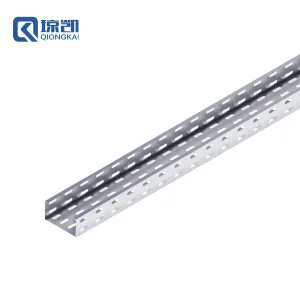
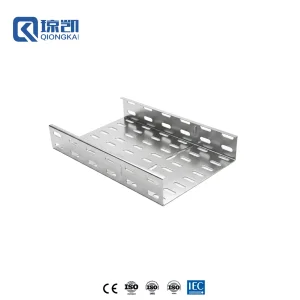
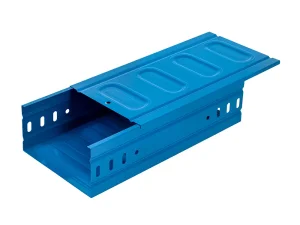
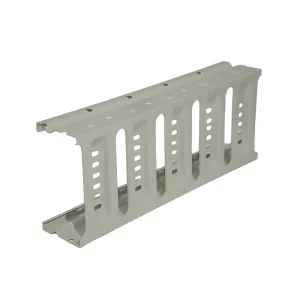
Reinforced Structural Trays, Slotted Channels & Grids
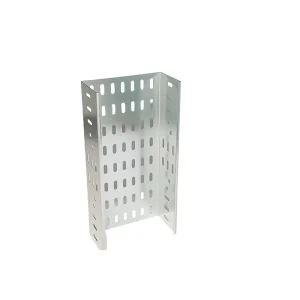
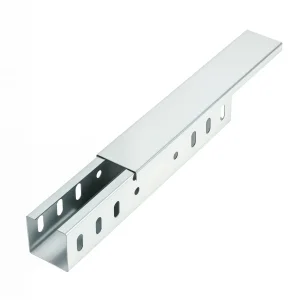
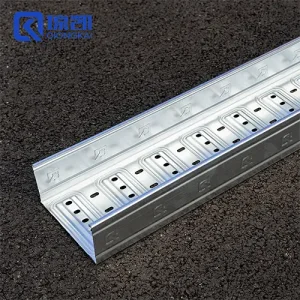
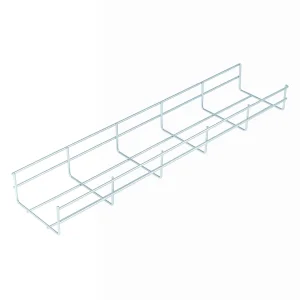
Industrial-grade ladder spans, ribbed heavy-duty trough trunking, architectural powder-coated cable ways, and precision mesh containment systems for global infrastructure delivery.
Frequently Asked Questions: Cable Tray Materials & Procurement
Technical answers to key engineering, material specification, load deflection, and international freight inquiries.
What materials are included in wholesale cable tray supply programs?
Wholesale cable tray material programs cover both metallic and non-metallic architectures tailored to environmental corrosivity classifications:
- Pre-Galvanized Steel (PG): Conforming to ASTM A653 / EN 10346 for dry indoor commercial spaces and IT infrastructure.
- Hot-Dip Galvanized Steel (HDG): Conforming to ASTM A123 / ISO 1461 with 65–85 μm zinc thickness for outdoor, utility, and heavy industrial use.
- Stainless Steel Alloys: AISI 304 and marine-grade AISI 316 / 316L for hygienic cleanrooms, food processing, offshore LNG, and coastal facilities.
- Fiberglass Reinforced Polymer (FRP/GRP): Pultruded vinyl-ester and polyester for aggressive chemical and acid pickling plants.
- Architectural Powder Coatings: Applied over pre-galvanized substrates in standard RAL colors for circuit voltage segregation and aesthetic integration.
How do you verify structural load capacity and avoid dangerous deflection?
Cable tray load testing complies with NEMA VE 1 Section 5.2 and IEC 61537 Section 10.3. Trays are positioned on simple span supports (typically 1.5 m, 2.0 m, 3.0 m, or 6.0 m) and loaded with uniform test weights until maximum working capacity is reached.
Under design load conditions, the mid-span deflection must not exceed L/200 (1/200th of the span distance) to prevent cable jacket stress and joint detachment. Our engineering team assists buyers with precise fill ratio and load calculations based on cable type, mass, and run length.
When should an engineer specify FRP instead of Hot-Dip Galvanized Steel?
FRP cable trays are specified when operating environments exceed the corrosion limits of zinc-based coatings (pH levels outside 5.5 to 12.0) or where non-conductivity is essential:
- Chemical synthesis plants with hydrochloric acid, chlorine gas, or wet sulfur dioxide emissions.
- Desalination plants and offshore splash zones exposed to continuous saltwater mist.
- Electrolytic cell houses and battery manufacturing halls where stray electrical currents could cause sparking on metallic trays.
- Weight-critical retrofits where FRP's 40% weight reduction lowers the dead load on existing overhead building trusses.
Can Shanghai Qiongkai deliver customized profiles, radii, and fitting accessories?
Yes. With 12 automated production lines and around 60 heavy-duty manufacturing machines, our Shanghai plants regularly build non-standard side rail heights (50, 75, 100, 150, 200 mm), variable widths (50 mm to 1,200 mm), sheet thicknesses from 1.0 mm to 3.0 mm, and custom bend radii (300 mm, 450 mm, 600 mm, 900 mm).
Notable projects include custom-profiled support sections engineered for an offshore LNG facility in Qatar and chemical-resistant FRP systems delivered to coastal energy projects in Thailand.
What export packaging protocols ensure zero damage during ocean transit?
All export orders use heavy-duty shipping packaging designed to prevent salt air exposure and physical deformation:
- Trays are nested inverted (male-to-female) with corrugated interleaving sheets to prevent galvanized surface scuffing.
- Bundles are secured with high-tensile steel strapping and corner edge protectors.
- Assemblies are shrink-wrapped in heavy-gauge UV-barrier polyethylene film.
- Small fittings, splice plates, spring nuts, and fasteners are packed in labeled inner boxes and secured within solid ISPM-15 compliant fumigated plywood crates.