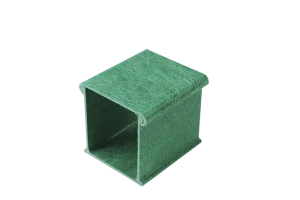
Wholesale Industrial Electrical Cable Trays & Channels
Explore our precision-engineered cable containment units designed for power generation, data centers, oil & gas, and transportation infrastructures.
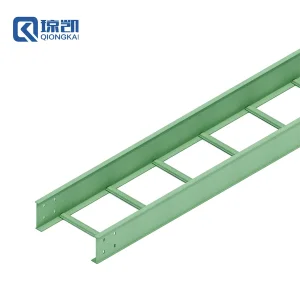
Buy FRP Ladder Type Cable Tray 400*150 Supplier, Factory
View Product Specs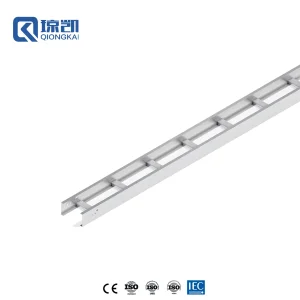
Buy GI Galvanized Cable Ladder 200*100 Supplier, Suppliers
View Product Specs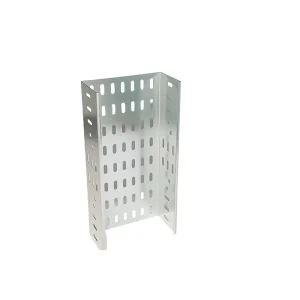
Wholesale Slotting Pattern Customizable Pre Galvanized Cable Trays Manufacturer, Factory
View Product Specs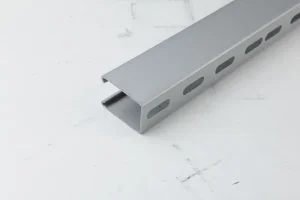
Wholesale Fireproof C slotted channel Factories, Price
View Product Specs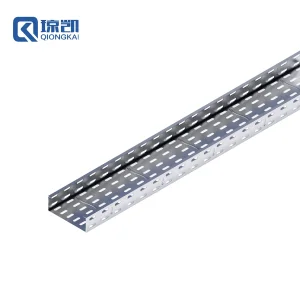
Buy Reinforced Medium duty Pre-galvanized Hot-dip-galvanized Perforated Cable Tray 150*50 Manufacturer, Price
View Product Specs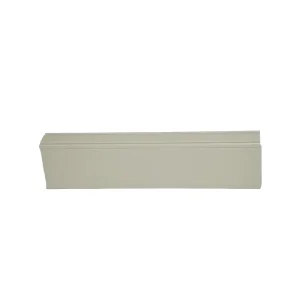
Wholesale UPVC 100*50 Cable Trunking Lightweight Manufacturer, Price
View Product Specs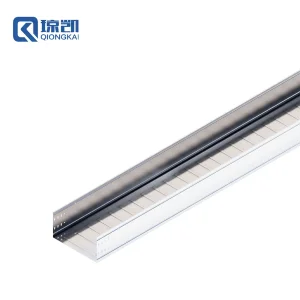
Wholesale Heavy Duty Cost Saving Reinforced Molded Pre Galvanized Cable Trunking Trough Type Channel 400*200 Manufacturers, Supplier
View Product Specs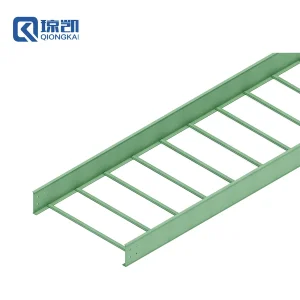
Wholesale FRP Ladder Type Cable Tray 1000*200 Manufacturer, Price
View Product SpecsGlobal Industry Trends in Wholesale Electrical Cable Trays
The global cable tray market is undergoing a structural paradigm shift driven by massive capital expenditures in hyperscale artificial intelligence data halls, renewable energy gigafactories, and industrial decarbonization facilities.
Hyperscale Data Hall Demands
Modern data infrastructure deploying high-density GPU clusters demands cable support systems with superior thermal venting, zero electromagnetic interference, and massive structural carrying capacity for high-count fiber optic bundles and heavy copper power busbars.
Aggressive Harsh Corrosive Sites
Utility-scale offshore wind platforms, coastal LNG liquefaction trains, and chemical synthesis plants are rapidly migrating away from painted mild steel toward Hot-Dip Galvanized (ASTM A123), Marine-Grade Stainless 316L, and Pultruded Fiber-Reinforced Polymer (FRP) to prevent early catastrophic failures.
LCOE & Lifecycle CAPEX/OPEX
Engineering procurement managers recognize that initial hardware cost accounts for less than 25% of total electrical containment lifecycle expense. Premature corrosion, labor-intensive welding, and structural sag induce downtime losses far surpassing the initial capital expenditure.
Enterprise Procurement Criteria & Metallurgical Performance Matrix
Selecting the optimal cable tray system requires balancing structural load class ratings, thermal dissipation coefficient, galvanic compatibility, and corrosive atmosphere classification (ISO 12944).
| Material / Treatment System | Applicable Standards | Corrosion Resistance (ISO 12944) | Structural Load Capability | Recommended Industrial Applications |
|---|---|---|---|---|
| Pre-Galvanized Steel (PG / Mill Galv) | ASTM A653 / EN 10346 | C1 - C2 Low Risk | Medium to Heavy Duty | Commercial buildings, HVAC ceiling voids, clean indoor equipment switchgear rooms. |
| Hot-Dip Galvanized (HDG After Fab) | ASTM A123 / ISO 1461 | C3 - C4 Industrial Outdoor | Extreme Load Class (NEMA 20C) | Power transmission plants, refinery outdoor piperacks, solar arrays, rail substations. |
| Austenitic Stainless Steel (SS304 / SS316L) | ASTM A240 / EN 10088 | C5-I / C5-M Marine Extreme | High Yield Tensile Strength | Offshore oil platforms, marine splash zones, chemical synthesis, cleanroom pharmaceutical. |
| Pultruded FRP / GRP Composite | ASTM D3917 / NEMA FG-1 | CX Non-Metallic Immunity | High Strength-to-Weight Ratio | Acid pickling lines, coastal desalination plants, high-voltage substations requiring dielectric isolation. |
| Structural Extruded Aluminum (6063-T6) | ASTM B221 | C3 - C4 Marine Atmosphere | Lightweight High Rigidity | Shipbuilding, modular offshore living quarters, telecommunication towers, bridge decks. |
| Engineered UPVC Polymer | IEC 61084 / UL 94 V-0 | Chemical Immersion Proof | Light to Medium Duty | Wet process battery rooms, agricultural facilities, municipal wastewater aeration galleries. |
Load Capacity Calculations & Deflection Limits
Under international standards IEC 61537 and NEMA VE-1, safe working load (SWL) verification requires strict adherence to deflection ratios. For critical industrial routing, tray deflection under combined cable mass, wind drag, and ice buildup must not exceed L/200 of the support span (where L = center-to-center span length between strut bents). In precision instrumentation and fiber-optic pathways, EPC specifications frequently mandate L/300 to avoid fiber micro-bending losses.
- NEMA Class 12A through 20C: Verified continuous load capacities from 75 kg/m to over 298 kg/m across span intervals from 3 to 6 meters.
- Safety Factor Verification: Minimum destruction safety factor of 1.5× above the rated working load, validated via hydraulic beam test benches.
Electrical Continuity & Grounding Verification
Metal cable tray containment acts as an Equipment Grounding Conductor (EGC) in accordance with NEC Article 392 and NFPA 70. When utilizing pre-galvanized or hot-dip galvanized cable trays as grounding pathways, electrical bonding jumpers must bridge every expansion joint, splice connection, and horizontal transition elbow to maintain continuity under phase-to-ground fault conditions.
- Bonding Resistance Benchmarks: DC resistance across joint assemblies must remain below 0.00033 ohms per IEC 61537 Section 11.
- Tinned Copper Jumpers: Integrated bonding straps prevent galvanic oxidation between dissimilar metallic contact points.
Macro-Industry Engineering Solutions
Real-world containment architectures engineered to resolve hostile environmental exposure, tight spatial envelopes, and rigorous safety standards.
Hyperscale Cloud & Telecom Data Halls
Challenge: Ultra-dense overhead fiber optic routing with strict airflow requirements and static load limits on suspended building roofs.
Engineered Solution: Electro-galvanized (EG) and powder-coated wire mesh cable baskets matched with modular dropped strut channels. Low weight, maximum airflow heat dissipation, and custom radius droppers prevent fiber attenuation loss.
Offshore LNG & Petrochemical Processing
Challenge: Continuous salt-spray fog, explosive hydrocarbon gases, hydrogen sulfide, and thermal swings from -160°C to +50°C.
Engineered Solution: Pultruded vinyl-ester resin FRP ladder trays and passivated SS316L solid bottom troughs. Non-sparking, zero electrolytic cell generation, immune to chloride pitting, and proven at major LNG liquefaction facilities in Qatar.
Underground Metro & Transit Tunnels
Challenge: Confined passenger subway corridors requiring zero halogen smoke generation, seismic vibration absorption, and fire endurance.
Engineered Solution: Halogen-free fireproof coated and UPVC trunking systems coupled with C-slotted seismic clamping channels. Achieves E90 / DIN 4102-12 fire survival ratings for 90 minutes of continuous power operation during evacuation.
Factory Infrastructure, Localized Support & Compliance Assurance
Operating three advanced production facilities in the Shanghai industrial cluster, Shanghai Qiongkai Industry Co., Ltd. delivers direct OEM/ODM manufacturing advantages without broker markups.
Precision Manufacturing & Quality Control (QA/QC)
Equipped with approximately 60 heavy-duty manufacturing machines across 12 continuous production lines, our workshops utilize automated CNC punch stations, heavy-tonnage hydraulic presses, and automated cold-roll forming systems capable of producing continuous side rails up to 12 meters in length.
- Full Material Traceability: Mill Test Certificates conforming to EN 10204 Type 3.1 accompany every master steel and resin coil shipment.
- Coating Thickness Validation: Eddy-current magnetic thickness gauges verify hot-dip zinc layers achieve minimum averages of 65 to 85 microns (ASTM A123 / ISO 1461).
- Salt Spray Testing (ASTM B117): In-house environmental test chambers validate anti-corrosion endurance exceeding 1,000 to 3,000 continuous hours without red rust initiation.
Global Shipping Logistics & Port Proximity
Strategically located in Shanghai's Songjiang Port Science and Technology corridor, our logistics network provides expedited transit access to Yangshan Deep-Water Port and Waigaoqiao Terminals, drastically reducing inland trucking lead times and mitigating maritime export delays.
- Modular Nested Packaging: Optimized tray nesting designs increase container cube efficiency by up to 35%, slashing ocean freight costs per linear meter.
- BIM & Revit Integration Support: Detailed 3D parametric families are supplied to EPC contractors for digital collision detection and virtual installation walkthroughs.
- Dedicated 1-on-1 Engineering Support: Direct liaison between your project engineers and our manufacturing team ensures custom perforations and special lengths are executed cleanly on first pass.
Technical Roadmap: Next-Generation Cable Containment
How cutting-edge metallurgy, self-healing zinc coatings, and IoT-enabled predictive structural monitoring are reshaping global electrical infrastructure.
Self-Healing ZAM® Coatings
Next-gen Zinc-Aluminum-Magnesium (ZAM) alloy coatings provide sacrificial galvanic self-healing over punched cut edges and drilled holes. By forming a dense simonkolleite barrier film, ZAM coatings offer up to three times greater corrosion longevity than standard batch galvanizing while consuming less raw zinc.
Smart IoT Strain & Thermal Sensing
Industrial pilots now incorporate distributed fiber optic temperature sensors (DTS) and miniature strain gauges directly into cable ladder side-rails. Facilities gain real-time automated warnings regarding cable insulation hot spots, fire inception, and unexpected mechanical overload from unapproved field additions.
Decarbonized Circular Metallurgy
Committed to global ESG mandates, our factories are expanding procurement of certified low-emission electric arc furnace (EAF) steel coils alongside circular pultruded composites utilizing bio-based resins, supporting clients targeting LEED Platinum and BREEAM Outstanding environmental certifications.
Frequently Asked Questions: Technical & Procurement Guidance
Authoritative technical clarifications addressing the real-world design, certification, and procurement questions posed by lead electrical engineers.
What is the primary operational difference between Ladder, Perforated, and Wire Mesh Trays?
Cable Ladders feature side rails with welded rungs, offering optimal ventilation and maximum structural load capacity for heavy multi-conductor power distribution cables. Perforated Cable Trays (ventilated trough) provide continuous intermediate bottom support for smaller control cables while permitting air circulation and drainage. Wire Mesh Baskets provide lightweight, flexible field customization ideal for complex data center telecommunications and high-density CAT6A/fiber routing.
How do you calculate thermal expansion allowance on long continuous cable runs?
Thermal expansion gaps must be integrated into tray runs using expansion splice plates. The total expansion is determined by: ΔL = L × α × ΔT, where α represents the material's linear thermal expansion coefficient (12 × 10-6 /°C for carbon steel; 16 × 10-6 /°C for SS316; 23 × 10-6 /°C for aluminum). For a 100-meter carbon steel run experiencing a 40°C temperature swing, a minimum cumulative gap allowance of 48 mm must be distributed across the joints.
When must FRP (Fiberglass) be specified instead of Hot-Dip Galvanized or Stainless Steel?
FRP is essential in environments exhibiting high concentrations of hydrochloric or hydrofluoric acid vapors, wet chlorine gas, or ammonium salts where zinc dissolves rapidly and stainless steel undergoes severe chloride stress corrosion cracking (CSCC). Furthermore, FRP's dielectric properties eliminate induced eddy currents and step-touch potential hazards in high-voltage substations and railway traction electrification zones.
How do you prevent galvanic corrosion when mounting dissimilar metals?
Galvanic cell creation occurs when metals with distinct electrochemical potentials contact one another in an electrolyte. To prevent rapid sacrificial corrosion (such as stainless steel fasteners eroding hot-dip galvanized side rails), engineers must specify non-conductive neoprene or nylon isolation washers, EPDM isolation pads between trays and strut channels, or ensure matching metallurgical grades across all structural hardware.
What documentation and third-party certifications are supplied with wholesale shipments?
Standard export compliance documentation includes EN 10204 Type 3.1 Mill Test Certificates (chemical composition and mechanical tensile properties), ISO 9001:2015 quality adherence certificates, galvanizing batch coating thickness inspection reports (ASTM A123), third-party load test verification reports (IEC 61537 / NEMA VE-1), and Certificates of Origin for international customs clearing.
Can Qiongkai manufacture bespoke profiles and special hole perforation matrices?
Yes. Utilizing fully reprogrammable CNC turret presses and modular tooling roll-form stations, we produce customized side heights (up to 200 mm), non-standard widths (up to 1200 mm), variable material thicknesses (1.0 mm to 3.5 mm), and tailored slotted hole patterns designed to accept specific marine cable banding or custom seismic bracket attachments.
Request Custom Engineering Schedules & Wholesale BOQ Quotations
Connect directly with Shanghai Qiongkai's engineering sales division. Submit your layout drawings, Bill of Quantities (BOQ), or technical tender specifications for a comprehensive load-checked containment proposal within 24 hours.
Engineered Cable Containment & Framing Hardware
Explore heavy-duty strut channel systems, molded cable trunking, and high-performance perforated trays manufactured to rigorous mechanical specifications.
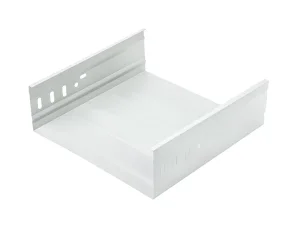
Wholesale Lightweight tenacity aluminium molded cable tray Suppliers, Price
View Product Specs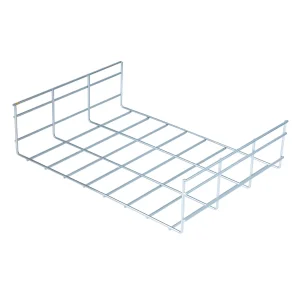
Buy Pre Galvanized grid Cable tray 400mm Supplier, Price
View Product Specs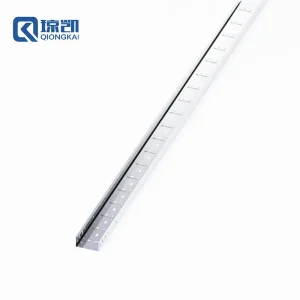
Buy Cost Saving Heavy Duty Reinforced Molded Pre Galvanized Cable Tray 100*50 Suppliers, Price
View Product Specs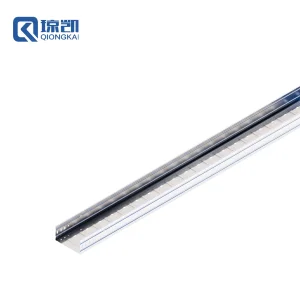
Wholesale Cost Saving Heavy Duty Reinforced Molded Pre Galvanized Cable Tray with less perforation 200*100 Factory, Price
View Product Specs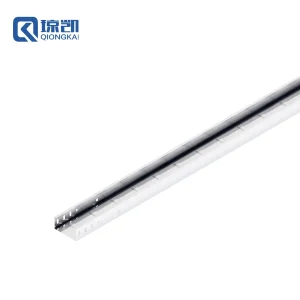
Wholesale Heavy Duty Cost Saving Reinforced Molded Pre Galvanized Cable Trunking Trough Type Channel 100*50 Manufacturer, Price
View Product Specs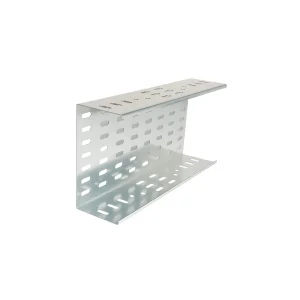
Buy Customized Dense Pre Galvanized Perforated Cable Tray Factory, Price
View Product Specs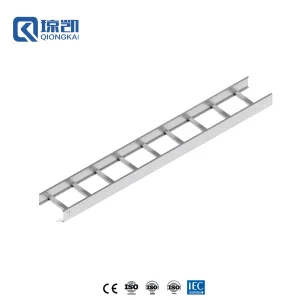
Buy Pre Galvanized Ladder Type Cable Tray 300*100 Factory, Factories
View Product Specs