
Standard & Composite Cable Support Products
Direct-from-factory cable trunking, fiberglass pultruded systems, and reinforced channels engineered to rigid international dimensional tolerances and structural deflection parameters.
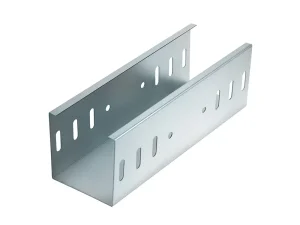
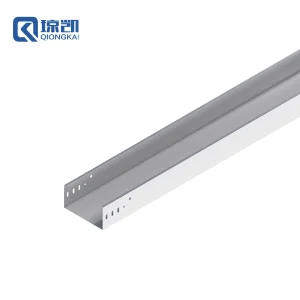
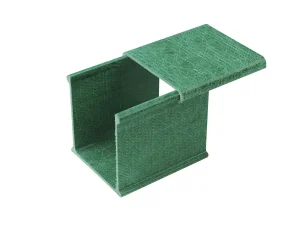
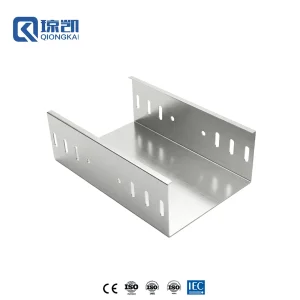
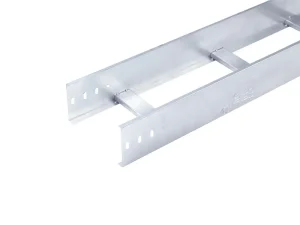
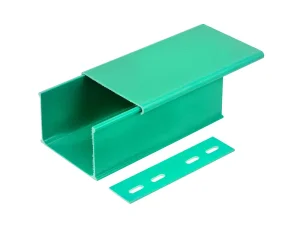
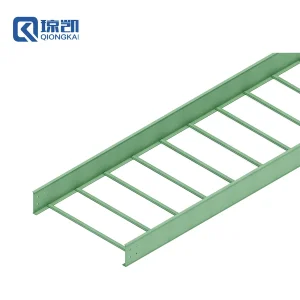
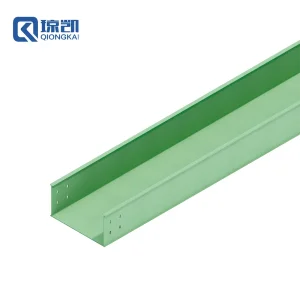
Macro Industry Solutions: Application Matrix
Routing massive low-voltage and medium-voltage feeders across hazardous, highly corrosive, or hyper-dense infrastructure requires tailored cross-sections and protective metallurgy.
Hyperscale Data Centers
Mission-critical uptime demands electro-zinc or powder-coated wire basket and trough systems configured with generous bend radiuses to safeguard Cat6A, optical fiber, and high-ampacity busway feeds while promoting passive air circulation.
Offshore LNG & Petrochemical
Engineered in SS316L and pultruded vinyl-ester FRP composites to resist constant chloride attack, H2S acid gas, and heavy mechanical vibrations, verified in extreme marine environments such as major LNG expansion developments in Qatar.
Civil Aviation & Transit Hubs
Continuous-span hot-dip galvanized trunking and fire-rated slotted channels engineered for zero smoke toxicity and high static load capacity, deployed across terminal expansions such as Shanghai Hongqiao International Airport.
| Operating Environment | Corrosivity Category (ISO 12944) | Recommended Material / Coating | Nominal Service Life | Cost Impact Index (Baseline 1.0) |
|---|---|---|---|---|
| Indoor Clean Commercial (IT Halls, Offices) | C1 - Very Low | Pre-Galvanized (PG) Carbon Steel (Z120-Z275) | 25+ Years | 1.00 (Benchmark Base) |
| Industrial Warehouses & Light Manufacturing | C2 - Low / C3 - Medium | Electro-Galvanized + RAL Powder Coating | 20+ Years | 1.25 - 1.40 |
| Outdoor Infrastructure, Rooftops & Water Treatment | C4 - High | Hot-Dip Galvanized (HDG) post-fabrication (≥65μm) | 30+ Years | 1.45 - 1.70 |
| Coastal Terminals, Offshore Platforms, Desalination | C5 - Very High (Marine) | Austenitic SS316 / SS316L Passivated | 50+ Years | 3.20 - 4.10 |
| Chemical Processing, Fertilizer & Agritech | CX - Extreme Industrial | Pultruded Fiberglass Reinforced Plastic (FRP/GRP) | 40+ Years (Non-corroding) | 2.10 - 2.85 |
China Factory 4.0: Supply Chain Resilience & Efficiency
Inside Shanghai Qiongkai Industry Co., Ltd.: Established in 2005 with over 20 years of dedicated cold-roll forming, automated welding, and composite pultrusion power.
Direct Mill Integration and Price Insulation
Wholesale prices of cable supports are fundamentally driven by upstream flat-rolled steel dynamics and zinc spot benchmarks on the London Metal Exchange (LME) and Shanghai Futures Exchange (SHFE). Shanghai Qiongkai maintains direct raw material off-take contracts with primary domestic mills including Baosteel and Shougang. By securing high-ductility carbon steel coils (Q235B, Q355B) and certified austenitic coils (AISI 304/316) in 10,000-ton rolling batches, our facilities insulate global EPC procurement teams from erratic spot market price spikes.
Automation 4.0: Dimensional Repeatability & Load Integrity
Across our 30,000 m² workshop floor in the Songjiang Port Science and Technology City, 12 complete assembly lines utilize real-time visual inspection systems and continuous progressive dies. Automated roll forming guarantees that side rails, returned flanges, and slotted bases maintain profile tolerances within ±0.2 mm. This tight tolerance profile eliminates site-fit misalignment, reduces field drilling labor, and ensures full load rating capacity as governed by NEMA VE-1 and IEC 61537.
Geographic Logistics Synergy
Located in close proximity to both Shanghai Yangshan Deep-Water Port and Waigaoqiao Port, our logistics operations utilize computer-modeled container nesting. By nesting smaller cable channels inside larger trunking troughs and ladder profiles, container space utilization reaches up to 92%, substantially slashing ocean freight cost per meter for shipments delivering to European distribution hubs in Italy, industrial energy hubs in Qatar, or agricultural complexes across Latin America.
Global Enterprise Procurement: Total Cost of Ownership (TCO)
Evaluating wholesale cable support prices beyond the initial ex-factory line item to achieve optimal CAPEX/OPEX capital discipline across the complete facility lifecycle.
Initial Ex-Works Purchase Cost
Governed by substrate weight (gauge thickness), zinc bath purity (450°C hot-dip process), structural stamping profiles, and fastener hardware. Direct factory procurement bypasses commercial broker markups typically ranging from 20% to 35%.
Jobsite Erection Velocity
Labor represents up to 55% of overhead cable routing expenditure. Utilizing integrated splice plates, snap-lock dust covers, and slotted strut profiles reduces installation hours per linear meter by up to 40% compared to traditional field welding.
Corrosion Risk & Replacement OPEX
Premature surface degradation in coastal or chemical atmospheres leads to shutdown risks and replacement costs exceeding 300% of the initial system price. Specifying correct passivation, HDG coating thickness (>80μm), or vinyl-ester FRP guarantees extended plant longevity.
Localized Support & Global Compliance Assurance
International mechanical and electrical standards demand documented physical proof of safe working loads, continuous electrical bonding, and seismic resilience.
NEMA VE-1 / CSA C22.2 No. 126.1
Every cable tray profile series manufactured by Qiongkai undergoes destructive deflection testing using uniformly distributed loads (UDL) to define Load Class designations (e.g., Class 12C, 20B, 20C) with a certified safety factor of 1.5.
IEC 61537 Electrical Continuity
System pathways provide low-impedance electrical continuity (<5 mΩ across splice joints) to guarantee reliable fault current dissipation back to main grounding studs without requiring additional external copper jumper links.
Seismic Resilience: ASCE 7 & GB 50981
Our back-to-back strut channels (41×41, 41×62, 41×82) and dedicated seismic bracing brackets have been third-party certified to withstand multi-axial seismic acceleration forces without structural detachment or plastic joint collapse.
Technology Roadmap & Future Industry Outlook
Emerging engineering trends transforming cable pathway architecture across smart infrastructure, gigafactories, and automated facilities.
The cable support sector is undergoing a generational shift from passive metal fabrications to highly engineered structural components that integrate seamlessly with digital design platforms and sustainable decarbonization benchmarks:
Ultra-High Tensile Light-Gauge Steels
Next-generation roll-forming incorporates cold-worked micro-alloyed structural steels that decrease tray deadweight by up to 22% while preserving identical moment-of-inertia stiffness, reducing building structural load and shipping emissions.
BIM Level 3 & Digital Twin Integration
Every standard Qiongkai profile is cataloged in full parametric Autodesk Revit and IFC digital libraries. This allows precise collision detection, automatic bill-of-materials generation, and synchronized pre-cut length orders directly from factory floor lines.
Eco-Formulated Halogen-Free Composites
R&D investments in non-toxic flame retardants (Class 1 UL 94 V-0) and bio-resins have generated fiberglass pultrusions that eliminate smoke toxicity during transit tunnel fires while maintaining full UV resilience in tropical high-heat regions.
Engineered Heavy-Duty & Specialized Channels
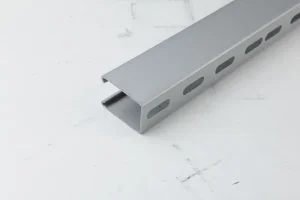
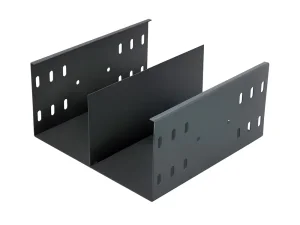
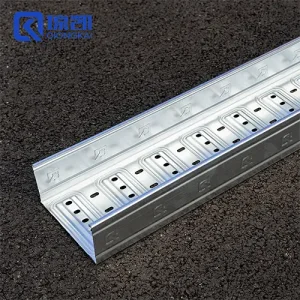
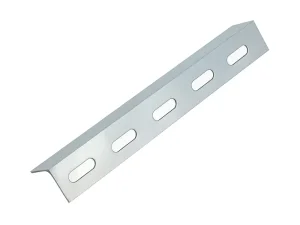
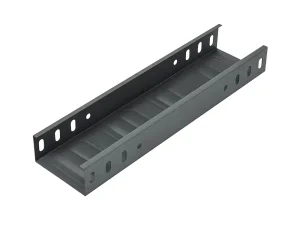
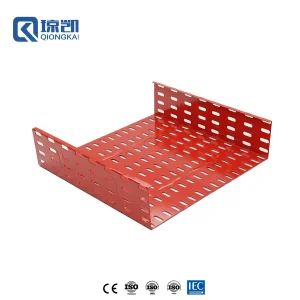
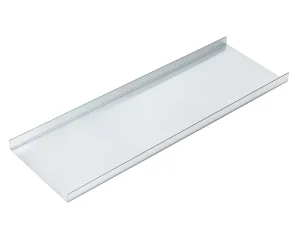
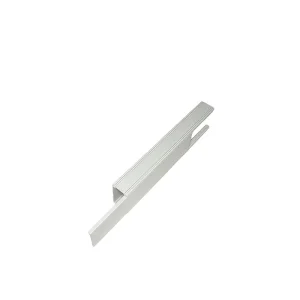
Fireproof, ribbed heavy-duty, powder-coated color-coded, and thermal-insulated UPVC cable management hardware manufactured for complex infrastructure projects.
Wholesale Pricing & Engineering Questions Answered
Direct answers to the most common inquiries submitted by project managers, electrical engineers, and corporate procurement directors.
How do raw material indexations impact wholesale prices of cable supports?
Wholesale prices are structured using a transparent cost-plus model pinned directly to public commodity benchmarks. Carbon steel sheet components track the Shanghai Futures Exchange (SHFE) hot-rolled coil index, while galvanizing adders reflect the LME Special High Grade (SHG) 99.995% zinc price. For large-scale EPC orders, contracts can be secured via 30-to-90-day hedging agreements to lock in predictable unit pricing throughout phased construction schedules.
What is the practical difference in cost and performance between HDG and Pre-Galvanized finishes?
Pre-galvanized (PG) steel uses mill-treated sheet (typically Z120 to Z275 g/m² total both sides, translating to approximately 10–20 microns per face). It is clean, cost-effective, and engineered for climate-controlled indoor spaces. Hot-Dip Galvanized (HDG) products are completely fabricated, perforated, welded, and then submerged in a 450°C molten zinc bath per ISO 1461 / ASTM A123, producing a metallurgically bonded zinc-iron alloy coating exceeding 65–85 microns. HDG carries a 30% to 50% price premium over PG but delivers 4 to 6 times longer lifespan in outdoor and industrial C3–C4 atmospheres.
Can Shanghai Qiongkai engineer non-standard tray dimensions and seismic bracket profiles?
Yes. Backed by 3 manufacturing plants, 12 complete assembly lines, and 60+ heavy-duty hydraulic/CNC presses, we custom-engineer specialized widths (from 50mm up to 1200mm), enhanced side-rail heights (up to 250mm), and heavy-gauge thicknesses (up to 3.0mm). Our engineering track record includes customized high-capacity FRP profiled cable supports for an offshore LNG facility in Qatar, along with heavy-load systems for complex industrial sites in Thailand and Paraguay.
What container packaging optimizations are implemented to minimize sea freight costs?
Because cable trays and strut channels are structurally voluminous, un-optimized shipping results in high freight expenditures. We employ computer-assisted nested packing: standard 3-meter straight lengths are interleaved with alternating orientations, and smaller width profiles (e.g., 100mm and 200mm) are loaded inside larger profiles (400mm and 600mm). This reduces dead air volume, achieves container weight-to-volume saturation, and yields up to 35% in shipping cost savings per linear meter landed at destination ports.
What QA/QC test reports accompany wholesale cable support export consignments?
Every export shipment includes a comprehensive Factory Acceptance Test (FAT) dossier: Raw Material Mill Test Certificates (MTC EN 10204 Type 3.1) showing chemical composition and tensile yield, electromagnetic zinc coating thickness gauge verification reports, cross-hatch powder-coat adhesion tests, salt-spray ASTM B117 laboratory reports, and physical load deflection inspection certificates compliant with NEMA VE-1 and IEC 61537 protocols.