
High-Integrity Cable Management Systems
Direct factory wholesale assemblies designed for ultra-resilient routing across mission-critical industrial, cleanroom, and offshore electrical infrastructures.
The Engineering Anatomy of Stainless Basket Trays (Wire Mesh)
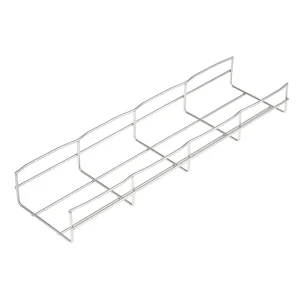
In high-density physical layer infrastructure, thermal management and long-term chemical durability dictate operational continuity. Stainless basket trays (wire mesh containment profiles) offer an optimized alternative to traditional solid-bottom or punched channel raceways. Manufactured from high-tensile austenitic steel grades (principally AISI 304 and AISI 316L), these grid profiles feature longitudinal and transversal cold-drawn round wires fuse-welded at intersections via automated mid-frequency electrical resistance welding (ERW).
This open-grid architecture presents an unprecedented strength-to-weight ratio while enabling 360-degree ambient ventilation, minimizing power cable derating penalties caused by thermal buildup. Furthermore, open basket profiles eliminate the accumulation of moisture, airborne dust, corrosive particulates, and industrial grease, establishing stainless basket wire mesh systems as the gold standard across aseptic pharmaceutical manufacturing, food processing lines, high-uptime data centers, and marine/offshore installations.
China Factory Advantages & Global Sector Trends
Strategic vertical integration, advanced metallurgical metallurgy, and automated production deliver verifiable cost-performance dividends to global enterprise procurement.
Integrated Metallurgical Supply Chain
By leveraging tier-one domestic austenitic wire rod refining, continuous annealing, and in-house pickling/passivation lines, China manufacturing hubs absorb nickel and molybdenum commodity volatility, yielding a consistent 20% to 35% cost efficiency over Western OEM brands.
Automated Multi-Point Micro-Welding
Transitioning from traditional arc tacking to programmable 12-axis CNC wire-forming and multi-spot synchronous resistance welding lines ensures absolute joint uniformity, eliminating burrs, micro-fissures, and irregular zinc/oxide deposits that jeopardize field cables.
Electropolishing & Cleanroom Finish
Advanced chemical and electrolytic passivation processes selectively deplete elemental iron from the boundary layer, producing a mirror-grade, chromium-enriched passive film (Ra < 0.4 µm) that arrests biofilm formation, localized pitting, and crevice corrosion.
Accelerating Decarbonization Mandates
Global hyperscalers and renewable conglomerates require traceable Scope 1, 2, and 3 emissions records. Our manufacturing pipelines operate under closed-loop acid recycling, zero-effluent rinse treatments, and documented green steel alloy procurement streams.
Agile Prefabricated Fast-Track Fitting
The modern EPC construction landscape increasingly rejects hot-work permits on site. Factory-engineered pre-notched radii, drop-in couplers, and tool-free quick-splice clips reduce on-site labor overhead by up to 60% compared to conventional bolted ladders.
Seismic & High-Vibration Optimization
Engineered anti-seismic basket framing profiles accommodate significant seismic drift and shock loads. Validated according to high-acceleration shake table spectrum profiles, protecting mission-critical controls in nuclear and transport hubs.
Material Chemistry, Mechanical Limits & Sizing Specs
Rigorous metallurgical properties and mechanical thresholds to assist specification engineers in eliminating under-engineered cabling pathways.
| Alloy Grade | Composition Specs | Surface Treatment | Tensile Yield (MPa) | Pitting Index (PREN) | Ideal Exposure Matrix |
|---|---|---|---|---|---|
| AISI 304 (1.4301) | 18% Cr / 8% Ni | Chemical Passivation | ≥ 205 MPa | ~ 18.0 - 20.0 | Commercial indoor, food lines, cleanrooms, server corridors |
| AISI 304L (1.4307) | 18% Cr / 9% Ni / Low C | Electro-Polishing (Ra < 0.4) | ≥ 190 MPa | ~ 18.0 - 20.0 | Aseptic pharmaceutical wash-down zones, biotech fermentation |
| AISI 316 (1.4401) | 16% Cr / 10% Ni / 2% Mo | Pickled & Passivated | ≥ 220 MPa | ~ 23.0 - 25.0 | Coastal infrastructure, marine top-sides, wastewater facilities |
| AISI 316L (1.4404) | 17% Cr / 12% Ni / 2.5% Mo | High-Mirror Electro-Polish | ≥ 220 MPa | ~ 23.5 - 26.0 | Offshore oil & gas, chemical scrubbers, marine desalination plants |
| Carbon Steel (Ref.) | Q235B / Mild Steel | HDG (ASTM A123) / EG | ≥ 235 MPa | N/A | Standard industrial facilities, low-humidity indoor distribution |
Wire diameter selection ranges comprehensively from 3.5 mm up to 6.0 mm depending on structural span constraints and expected line weights. Standard tray depths are calibrated at 35 mm, 50 mm, 60 mm, 100 mm, and 150 mm, with width configurations spanning 50 mm to 1000 mm. For spans exceeding standard 2.0-meter supports, our structural engineering desk delivers custom heavy-gauge longitudinal side-rail reinforcements that suppress middle-span deflection below L/200 criteria under full NEMA Class 12C cable volumes.
Localized Applications & Macro-Engineering Solutions
Tailored structural cable containment architectures addressing extreme ambient, biological, and corrosive environments around the globe.
Pharma & Biotech Cleanrooms
Microbial accumulation is structurally mitigated via open round-wire geometries. Smooth electro-polished surfaces tolerate constant sanitization via vaporized hydrogen peroxide (VHP) and pressurized caustic wash-downs without pitting.
Hyperscale & AI Data Centers
Zinc whiskers represent a fatal hazard to modern high-density processing racks. Using passivation-treated solid stainless steel eliminates metallic micro-flaking risks entirely while supporting extreme bundles of Cat6A, Cat8, and multi-strand fiber trunks.
Offshore Marine & Desalination
Marine atmospheric salt spray generates immediate chloride stress corrosion cracking in inferior alloys. Our certified SS316L wire mesh arrays withstand thousands of hours of salt spray testing (ASTM B117), maintaining mechanical loads in coastal docks and topsides.
Food & Beverage Processing
Compliance with FDA sanitary mandates necessitates the elimination of blind crevices. Our wire baskets allow wash-in-place (WIP) sprays to penetrate completely, discarding dairy residues, animal fats, and particulate matter instantly.
Wholesale Pricing Determinants & Procurement Directives
Understanding cost structures, alloy indexing, and logistics packing profiles to optimize total cost of ownership (TCO) across enterprise contracts.
London Metal Exchange (LME) Raw Surcharge
Stainless steel wire mesh pricing directly correlates with global nickel (Ni) and molybdenum (Mo) settlement indices. Direct-from-mill raw coil purchases at Qiongkai afford contractual formula hedging, establishing price locks over multi-month construction phases.
Nesting Geometries & Freight Densification
Unoptimized wire trays occupy excessive dead volume in ocean containers. Qiongkai designs proprietary tapered-nesting basket profiles, achieving up to 300% payload density increases per 40-foot HQ container, slashing landed shipping costs per linear meter.
Compliance Documentation Packs
International industrial buyers demand verified compliance. Every export shipment leaves our Songjiang factory accompanied by EN 10204 3.1 Mill Test Certificates (MTCs), positive material identification (PMI) spectrometer readouts, and salt spray test verifications.
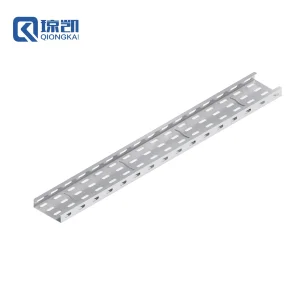
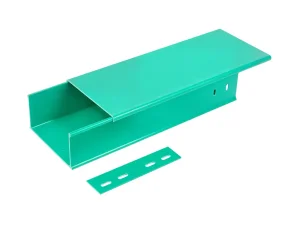
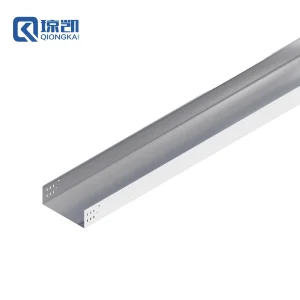
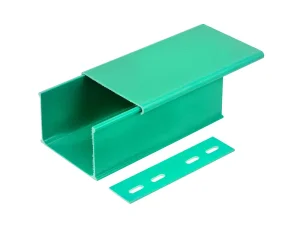
Secondary Structural Support & Channel Series
Complementary containment solutions including strut profiles, coated channels, and high-tensile fiberglass (FRP) lines engineered for specialized installations.
Frequently Asked Questions (FAQ)
In-depth responses resolving metallurgical selection, structural calculations, and commercial order fulfillment constraints.