Featured Product Systems
Precision Cable Trays & Structural Support Enclosures
Engineered standard length straight sections, reinforced channel runs, and heavy-duty basket assemblies manufactured under ISO 9001 quality systems for mission-critical infrastructure.
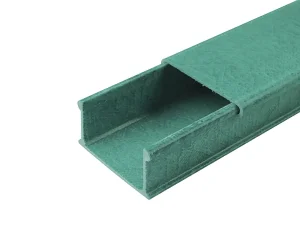
Wholesale High Quality FRP Cable Tray With Cover Suppliers, Factory
View Product Specs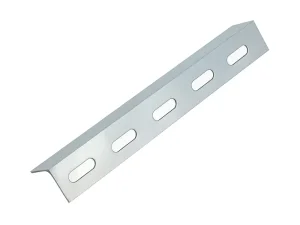
Wholesale Pre Galvanized Slotted Channel - Angle Iron Suppliers, Price
View Product Specs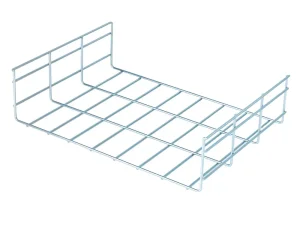
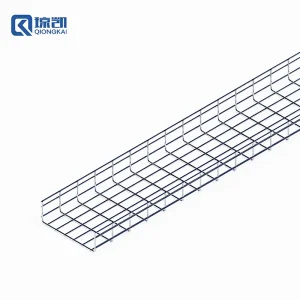
Wholesale Cod Pre Galvanized grid Cable tray 400mm Manufacturers, Suppliers
View Product Specs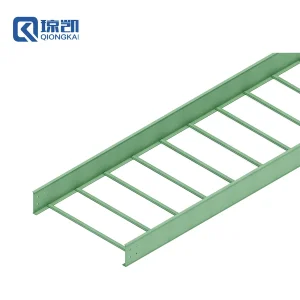
Wholesale FRP Ladder Type Cable Tray 1000*200 Manufacturer, Price
View Product Specs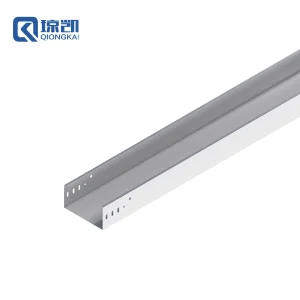
Wholesale Carbon Steel PG Pre Galvanized HDG Hot Dip Galvanized SS Stainless Steel Cable Trunking Trough Type Channel 200*100 Manufacturer, Suppliers
View Product Specs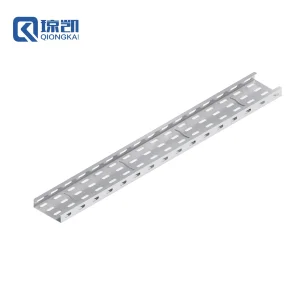
Wholesale Reinforced Medium duty Pre-galvanized Hot-dip-galvanized Perforated Cable Tray 100*25 Factory, Price
View Product Specs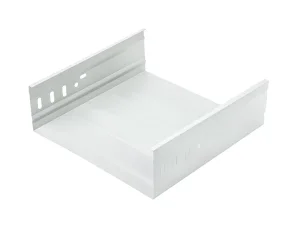
Wholesale Lightweight tenacity aluminium molded cable tray Suppliers, Price
View Product Specs
Technical Whitepaper Module 01
The Mechanics of Standard Length in Cable Tray Manufacturing
An analytical overview of why standard unit lengths define structural deflection curves, container loading coefficients, and total cost of installation across EPC contracts.
3.00 m
Standard Metric Length (IEC 61537)
12.0 ft
Standard Imperial Length (NEMA VE-1 / 3.66m)
6.00 m
Heavy Industrial Long-Span Standard
L/200
Maximum Permissible Deflection Ratio
In industrial electrical engineering and mega-facility cabling infrastructure, the standard length of cable tray is far more than an arbitrary catalog dimension. It represents the structural intersection between metallurgical roll-forming constraints, beam mechanics, seismic bracing intervals, and international shipping container cubic utilization. As a tier-1 cable tray manufacturer founded in 2005 in Songjiang, Shanghai, Shanghai Qiongkai Industry Co., Ltd. has engineered and extruded millions of linear meters of cable containment. Our production facilities deploy 12 automated high-precision roll-forming lines operating around the clock to meet exact dimensional standards mandated by global engineering firms, EPCs, and electrical distribution networks.
Across the global marketplace, two dominant dimensional ecosystems govern cable containment: the metric system governed by IEC 61537 / BS EN 61537 (standardizing lengths primarily at 2.0 meters, 2.44 meters, 3.0 meters, and 6.0 meters) and the North American imperial framework governed by NEMA VE-1 / CSA C22.2 No. 126.1 (standardizing straight section lengths at 10 feet [3.05 m], 12 feet [3.66 m], 20 feet [6.10 m], and 24 feet [7.32 m]). Selecting the optimal standard length requires a nuanced evaluation of mechanical moment resistance, support beam pitch, site maneuverability, and structural deflection limits.
Engineering Principle: The Splice Joint Deflection Penalty
Splice connectors are inherently the mechanical weak point of any continuous cable tray run. Under standard point or uniform distributed load (UDL), placing a splice connector directly at the mid-span maximizes the bending moment: M = (w × L²) / 8. Specifying factory standard 3-meter or 6-meter sections allows structural draftsmen to locate splice joints at the point of zero bending moment (approximately 0.21 × L from the structural support column), effectively eliminating joint deflection and reducing required steel gauge thicknesses by up to 18%.
Technical Whitepaper Module 02
Standard Cable Tray Lengths: Specifications, Spans & Logistics
Comparative analysis of standard lengths across wire mesh, ladder tray, perforated trough, and solid trunking systems.
| Standard Length | Applicable Standards | Recommended Support Span | Optimal Tray Topologies | Shipping & Handling Logistics Profile |
|---|---|---|---|---|
| 2.44 Meters (8.0 ft) | BS EN 61537 | 1.2 m to 1.5 m spacing | Perforated Trough, Light Duty PG Trunking | High maneuverability in elevator shafts, tunnels, and tight MEP risers. Fits easily into 20GP containers without overhang. |
| 3.00 Meters (9.84 ft) | Global Benchmark (IEC/ISO) | 1.5 m to 2.0 m spacing | Wire Mesh Basket, Perforated Tray, Strut Trunking | The universal global standard for commercial facilities and data halls. Fits 20GP (5.89m max) by 2 bundles or 40HQ without dimensional dead space. |
| 3.66 Meters (12.0 ft) | NEMA VE-1 / CSA | 2.0 m to 3.0 m spacing | Heavy Duty Ladder, Marine Cable Tray | Standard for North American industrial plants and EPC petrochemical rigs. Optimizes splice hardware costs per linear kilometer. |
| 6.00 Meters (19.68 ft) | Heavy Industrial IEC / NEMA | 4.0 m to 6.0 m long span | High-Side Welded Ladder Tray, FRP Structural Tray | Engineered for outdoor pipe racks and bridge infrastructure. Eliminates 50% of field bracket installations; requires 40GP/40HQ ocean containers. |
As documented in Qiongkai's manufacturing laboratory in Shanghai, standardizing on a 3.00-meter straight section provides the ultimate balance between field ergonomic handling and structural deflection control. A 3.0-meter section of 200×100mm carbon steel cable tray weighs between 8.5 kg and 14.2 kg (depending on metal gauge 1.0mm to 2.0mm), permitting rapid single-worker alignment on overhead trapeze hangers. In contrast, 6.00-meter industrial ladder trays are mandatory for heavy chemical processing plants, outdoor conveyor belts, and LNG facilities where structural pipe racks are spaced at 6-meter increments.
Technical Whitepaper Module 03
Localized Application Scenarios Across Global Geographies
How environmental classifications (C1 through CX) and local construction codes dictate length specifications and surface metallurgical treatments.
Hyperscale Data Centers (EMEA & APAC)
Within Tier III and Tier IV server halls, high-density fiber and Cat6A copper cabling require precise thermal ventilation and zero particulate shedding. Standard 3.0-meter wire mesh basket trays and powder-coated trunking systems (RAL 9005 black or RAL 7035 gray) are installed overhead on 1.5m centerlines. Qiongkai supplies deburred, electro-galvanized (EG) and powder-coated straight lengths that ensure continuous airflow and zero cable jacket abrasion.
Offshore LNG & Desalination Plants (Middle East)
Projects such as Qiongkai’s custom cable tray deployments for Qatar offshore LNG terminals encounter severe C5-M marine salinity combined with scorching ambient heat (>50°C). Here, 3.0-meter and 6.0-meter pultruded FRP (Fiberglass Reinforced Polymer) and marine-grade SS316L ladder trays are mandatory. The high pultrusion tensile strength prevents sagging under high UV radiation, resisting airborne chlorine and sour gas degradation.
Commercial Megaprojects & Aviation Hubs
Referenced by our multi-ton supply of corrosion-resistant CT series trunking to Shanghai Hongqiao International Airport, aviation hubs demand fire-rated integrity and continuous electromagnetic shielding. Standard 2.44m and 3.0m pre-galvanized / hot-dip galvanized trunking with snap-on covers provide rapid cable pulling capability and complete EMI/RFI attenuation.
Heavy Agriculture & Ammonia Plants (Americas)
Agricultural mega-complexes, such as Qiongkai’s large-scale installation for an industrial farm in Paraguay, face severe corrosive biogases (ammonia, hydrogen sulfide). Standard 3.0m heavy-gauge hot-dip galvanized (HDG) cable trays with minimum 65μm to 85μm zinc coatings provide exceptional barrier protection against organic acids while minimizing splice fasteners.
Cleanrooms & Biopharma Facilities (Europe)
For European pharmaceutical cleanrooms, such as ongoing equipment deliveries to Italy, SS304 / SS316L electro-polished wire mesh trays in 3.0-meter lengths provide zero bacteria-trapping horizontal surfaces. The continuous round wire geometry prevents dust agglomeration and withstands caustic washdowns under CIP (Clean-in-Place) sanitation cycles.
Technical Whitepaper Module 04
China Factory Supply Chain Resilience: The Shanghai Qiongkai Engine
How vertical industrial integration, Songjiang regional port proximity, and 60+ heavy-duty machines deliver an unbeatable cost-per-span economic advantage.
The manufacturing economics of standard length cable trays depend heavily on raw steel strip availability, continuous high-speed roll forming, automated stamping, and hot-dip galvanizing tank capacities. As an authentic manufacturer operating 3 dedicated production factories spanning over 30,000 m² of modern workshop floor space in the Shanghai manufacturing basin, Shanghai Qiongkai Industry Co., Ltd. controls the complete supply chain lifecycle from primary steel coil slit processing to multi-axis CNC bending, automatic wire mesh welding, and ISO 1461 hot-dip galvanization.
Logistical Proximity: Yangshan & Waigaoqiao Deep-Water Ports
Located in the Songjiang Port Science and Technology City of Shanghai, Qiongkai's manufacturing center operates within a 90-minute radius of both Shanghai Yangshan Deep-Water Port and Waigaoqiao Container Terminals. Standard length straight sections (particularly 3.00-meter straight sections and 5.80-meter custom container lengths) are palletized with high-density automated strapping, edge protectors, and VCI anti-corrosion film, loading directly into 20GP, 40GP, and 40HQ ocean containers. This logistics hub eliminates internal transit transshipment damage and guarantees steady sailing schedules to Europe, North America, Southeast Asia, and the Middle East.
12 Continuous Roll-Forming Lines
Our automated high-speed roll-forming machinery cold-forms high-tensile steel strip up to 3.0mm thickness into intricate ladder rungs, perforated trough profiles, and 41-series strut channels with zero edge burrs and continuous dimensional repeatability (±0.5mm length tolerance).
60+ Heavy-Duty Stamping Presses
From high-tonnage progressive die punches to hydraulic CNC press brakes, our stamping fleet produces precision splice plates, hold-down clamps, cantilever brackets, and expansion joints with zero hole pitch deviation.
Annual Export Capacity Exceeding $50M
With an annual sales track record peaking over 50 Million USD, Qiongkai commands substantial coil purchasing power from top-tier Chinese steel mills (Baosteel, Shougang), insulating global buyers from spot-market commodity volatility.
Technical Whitepaper Module 05
Global Regulatory Compliance, Testing & Structural Safety
Rigorous proof-load destruction testing, salt spray corrosion verification, and seismic brace certification.
Global procurement requires unwavering compliance with regional statutory codes. When contracting with Qiongkai, engineers receive full mill test certificates (MTC EN 10204 3.1), coating thickness verification reports, and destruction-load deflection documentation:
IEC 61537 / CE Compliance
Every standard length cable tray undergoes safe working load (SWL) testing under Type I and Type II installation setups, verifying electrical continuity (<0.05 Ω/m) and flame-retardant performance under non-propagating electrical standards.
NEMA VE-1 / UL 568 Certification
For North American industrial projects, our ladder and channel trays satisfy NEMA Load Class designations (e.g., Class 12C, 20A, 20C), ensuring continuous service without permanent plastic deformation under 1.5× safety load factor.
ASTM B117 & ISO 9227 Salt Spray
Hot-dip galvanized samples withstand >1,000 hours of neutral salt spray without base metal corrosion; 316L stainless steel and FRP composites exceed 3,000 hours of extreme acidic fog immersion testing.
Technical Whitepaper Module 06
Technology Roadmap: The Future of Cable Management (2025–2030)
Pioneering BIM integration, smart structural load monitoring, and ultra-lightweight advanced composite materials.
BIM & Digital Twin Native Integration
Qiongkai has digitized its standard length catalog into native Autodesk Revit and BIM LOD 400 libraries. Electrical MEP consultants can model clashes with exact splice positions, bracket anchors, and fill ratios directly within 3D architectural models before a single pallet is manufactured.
IoT-Enabled Smart Trapeze Brackets
Next-generation strut channel brackets now incorporate fiber-optic strain gauges and wireless vibrational sensors for mega bridges and nuclear energy facilities, broadcasting real-time structural load and seismic shift warnings to facility SCADA platforms.
Graphene-Enhanced FRP Profiles
To reduce linear dead weight by 45% while matching heavy-gauge carbon steel modulus of elasticity, Qiongkai R&D is formulating nano-graphene modified vinyl ester resins for pultruded ladder trays, offering non-conductive, ultra-flame-retardant performance for zero-carbon green industries.
Procurement Engineering Support
Frequently Asked Technical Questions (FAQ)
Direct, transparent answers from Qiongkai’s senior structural cable management engineering team.
Why is 3.0 meters (or 10/12 ft) universally adopted as the standard length for cable trays?
The 3.0-meter length represents the optimal structural harmony between material handling, beam deflection, and transportation. Physically, a 3.0m straight section aligns with standard building structural column bays (typically 3m, 6m, or 9m grid networks). Mechanically, it permits single-span or two-span installations with support trapeze brackets at 1.5m to 2.0m intervals, keeping deflection well within the L/200 code limit without requiring excessive metal gauge thickness. Logistically, 3.0-meter bundles fit perfectly into standard 20-foot and 40-foot ocean freight shipping containers without wasting cubic cargo space.
Can Shanghai Qiongkai manufacture non-standard custom lengths (e.g., 5.8m, 4.5m)?
Yes. Because we operate 12 fully integrated automated roll-forming and stamping lines rather than relying on subcontracted third parties, we routinely program flying cut-off hydraulic shearers to produce non-standard lengths from 1.0 meter up to 8.0 meters. For example, we frequently manufacture custom 5.80-meter long-span ladder trays specifically calculated to maximize the internal cubic length of standard 20GP maritime containers (5.898 m inside dimension), saving international contractors substantial logistics freight costs.
How does tray length affect thermal expansion and contraction in outdoor installations?
Every metal expands and contracts under thermal cycles. Carbon steel expands at approximately 12 × 10−6 m/(m·°C), whereas aluminum expands at 24 × 10−6 m/(m·°C). On long continuous outdoor runs, expansion splice plates must be installed at specific calculation intervals (typically every 30 meters for steel in a 50°C temperature differential). Using factory standard 3.0m or 6.0m sections simplifies thermal gap calculations: expansion splice plates with slotted bolt holes and bonding jumpers are placed at exact modular intervals without custom site cutting.
What surface finish should be selected for extreme industrial environments?
For clean, dry indoor facilities or server halls, Pre-Galvanized (PG) or Electro-Galvanized (EG) is economical and aesthetically crisp. For general outdoor, municipal, and industrial plants, Hot-Dip Galvanized (HDG) to ISO 1461 with minimum 65μm–85μm zinc coating provides galvanic sacrificial protection for 25–50 years. For offshore marine, chemical processing, or coastal installations with high airborne chlorides, Stainless Steel 316/316L or Pultruded FRP (Fiberglass) is mandatory to eliminate pitting corrosion.
What is the export packaging standard to prevent transit deformation?
Qiongkai utilizes heavy-duty export packaging designed for ocean container transit. Trays are nested in uniform counts, separated by protective corrugated cardboard or non-woven geotextile buffers, banded with high-tensile steel strapping, reinforced with structural wooden pallets or steel skids, and wrapped in complete waterproof, vapor-phase corrosion inhibitor (VCI) shrink wrap. Complete hardware (screws, splice plates, clamps) is boxed in reinforced wooden crates labeled by drawing item numbers.
Industrial Wholesale Inventory
Fittings, Heavy-Duty Ladder Trays & Hardware Assemblies
Explore our complete range of certified bends, factory-engineered brackets, and long-span cable tray systems available for direct volume dispatch.
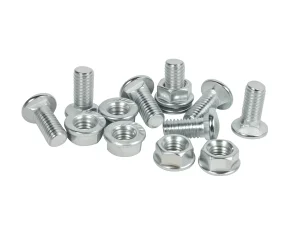
Buy Bridge frame screws Supplier, Factories
View Product Specs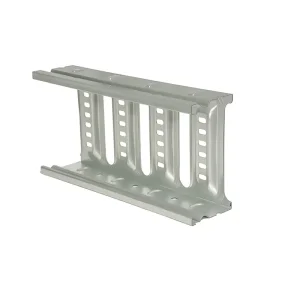
Wholesale Pre Galvanized Customizable Ladder Heavy Duty Cable Tray Manufacturers, Price
View Product Specs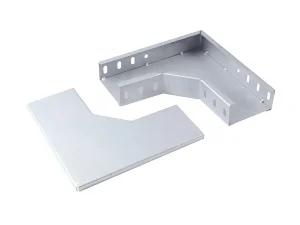
Buy Pre Galvanized Elbow cable tray Factories, Price
View Product Specs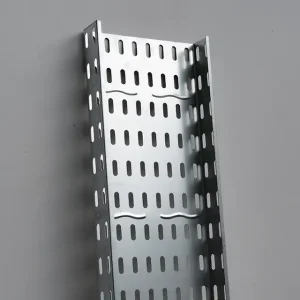
Buy Pre-Galvanized Reinforced Cable Tray 200*50 Suppliers, Factories
View Product Specs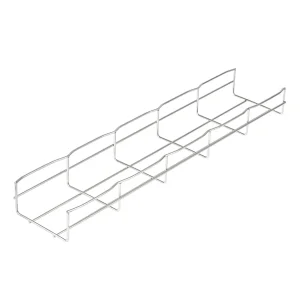
Buy Stainless grid cable tray100mm Manufacturer, Factories
View Product Specs
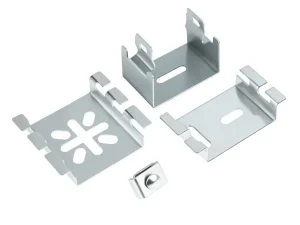
Wholesale Pre-Galvanized Connections spare parts Manufacturers, Factory
View Product Specs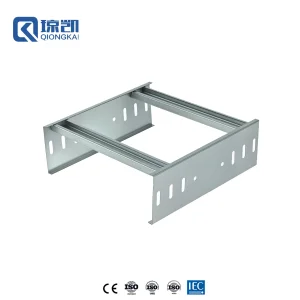
Buy Powder Coated Ladder Type Cable Tray 200*100 - Gray Manufacturer, Manufacturers
View Product Specs