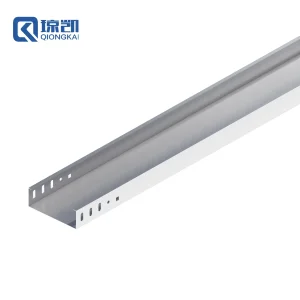
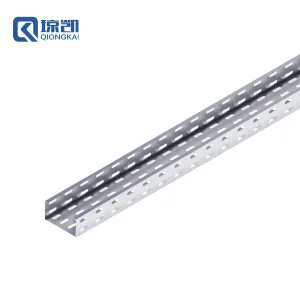
Heavy-Duty Cable Trays & Structural Modular Fittings
Direct OEM/ODM catalog spanning hot-dip galvanized, pre-galvanized, stainless steel, and composite FRP horizontal tee solutions, ladder channels, and architectural profile framing.
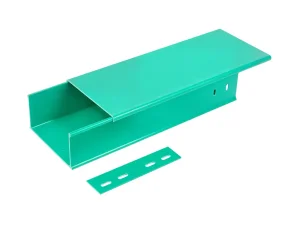
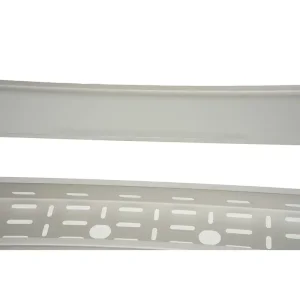
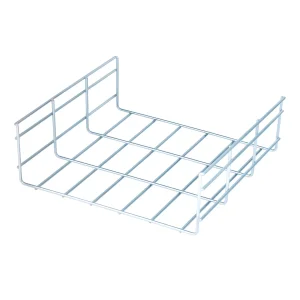
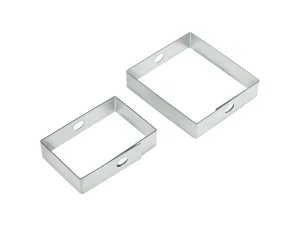
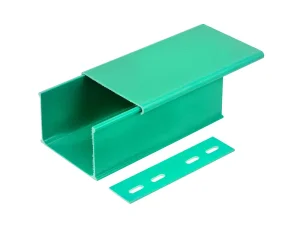
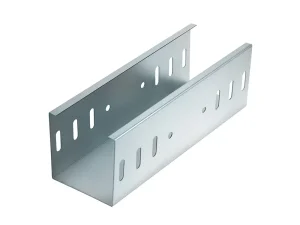
Engineering Anatomy of Horizontal Tee Cable Trays
An in-depth specification guide for consulting engineers, MEP contractors, and industrial project estimators specifying horizontal 3-way branching runs.
Bend Radius Mechanics & Pulling Tension
In horizontal tee transitions, electrical cables experience dynamic sidewall pressure (SWP) during cable pulling operations. When high-voltage or shielded fiber cables are routed through sharp 90-degree branch takeoffs, substandard radius design causes insulation deformation and microbending attenuation.
- Precision tangential tangent extensions (50mm–100mm) prevent mechanical binding against splice plates.
- Conforms to NEC Article 392 minimum inner bend curve parameters for MV/HV power feeders.
- Smooth, deburred inner radius swaging avoids snagging jacket polymers during automated pulls.
Structural Load Deflection Under IEC 61537
Horizontal tees constitute critical structural nodes where bending moments from 3 converging runs interact. Unsupported tee fittings can sag, creating localized stress risers that undermine grounding integrity and induce fastener shearing.
- Finite Element Analysis (FEA) verified rung welded patterns sustain full tray load ratings without sagging.
- Mandatory sub-support placement within 600mm of each fitting flange per NEMA VE 2.
- Deep-channel side rail extrusion delivers high moment of inertia (Ix) across span branches.
Electrical Bonding & Earth Fault Continuity
Under short-circuit fault conditions, horizontal tees must conduct thousands of amperes without arcing or terminal failure. Our horizontal tees feature pre-punched grounding jumper slots and certified low bonding resistance.
- Meets UL 568 / CSA C22.2 No. 126.1 electrical bonding resistance < 0.00033 ohms across joints.
- Available with factory copper bonding straps or integrated serrated tooth lock washer connection hardware.
- Tested to carry earth fault currents without burning through side rail substrate.
Localized Mission-Critical Application Scenarios
Horizontal tee fittings are the nerve center of commercial, industrial, and utility infrastructure, directing branching power lines with absolute spatial stability.
Hyperscale Data Center White Space
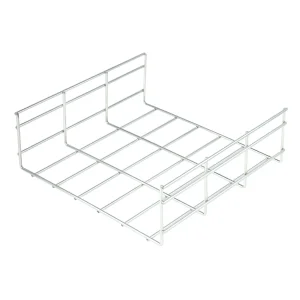
High-density server white space requires continuous fiber optic and Cat6A overhead distribution. Our pre-galvanized and powder-coated wire basket and trough horizontal tees enable seamless drops directly into server rack lineups while preserving 450mm minimum fiber bend radius to stop signal packet loss.
Offshore LNG & Petrochemical Complexes
Marine salt mist combined with volatile sulfur fumes generates extreme C5-M atmospheric corrosivity. Heavy-duty 316L stainless steel and pultruded FRP horizontal ladder tees withstand constant washdowns, acid fumes, and severe marine thermal swings without structural delamination or pitting.
Solar Farms & BESS Substation Yards
Utility-scale Battery Energy Storage Systems (BESS) and inverter skids require heavy-gauge DC feeder convergence. Hot-dip galvanized horizontal tees with vented perforation patterns prevent heat buildup in massive direct-current power runs while repelling severe outdoor UV degradation.
Metro Transit & Underground Rail Tunnels
Subjected to dynamic piston wind effects, vibration harmonics, and rigorous zero-halogen fire safety regulations. Our vibration-resistant heavy-duty slotted and ribbed horizontal tees maintain mechanical lock under continuous acoustic and cyclic shock loading inside subway shafts.
Material Selection & Global Factory Pricing Architecture
A transparent breakdown of metallurgical grades, surface protective finishes, and key cost parameters affecting FOB Shanghai and CIF worldwide landed pricing.
| Material / Metallurgy | Surface Treatment | Corrosion Class (ISO 12944) | Typical Price Factor | Ideal Application Environment |
|---|---|---|---|---|
| Carbon Steel Q235B / Q195 | Pre-Galvanized (PG / Mill Galv) | C1 - C2 Low | Baseline (1.0x) | Indoor dry commercial HVAC plenums, clean data halls, office drop-ceilings |
| Carbon Steel Q235B Heavy Gauge | Hot-Dip Galvanized (HDG ≥85μm) | C3 - C4 Industrial | 1.35x - 1.55x | Outdoor industrial yards, rooftop PV plants, wastewater plants, heavy manufacturing |
| Austenitic Stainless Steel 304 | Pickled & Passivated / Mill | C3 - C4 Cleanroom | 2.8x - 3.2x | Food & beverage processing, sanitary pharma plants, cleanroom electronics |
| Marine Stainless Steel 316 / 316L | Electropolished / Passivated | C5-M / CX Extreme | 3.8x - 4.5x | Offshore oil & gas rigs, coastal desalination plants, high-chloride marine docks |
| Fiberglass Reinforced Polymer (FRP) | Isophthalic / Vinyl Ester Resin | Chemical Acid Immune | 2.2x - 2.9x | Chemical pickling bays, battery manufacturing, corrosive acid steam venting |
| Coated Galvanized Steel | Thermoset Epoxy Powder Coated (RAL) | C2 - C3 Architectural | 1.25x - 1.45x | Mission-critical circuit separation, fire safety signaling, telecom room aesthetics |
Primary Pricing Determinants
Cable tray horizontal tee costs correlate directly with coil thickness (1.0mm, 1.2mm, 1.5mm, 2.0mm, 2.5mm, 3.0mm), side channel height (50mm, 75mm, 100mm, 150mm), and turning radius dimension. Non-standard transitions (e.g. 600mm main run splitting into twin 300mm branch feeds) incorporate custom laser nested stamping and robotic hand-welding labor.
Freight Volume Optimization & CBM
Because horizontal tees feature flared geometric footprints, non-nested packing consumes excessive shipping cubic meters (CBM). Our Shanghai plant uses precision modular flat-pack or stepped inverted stacking systems that increase container utilization by up to 38%, slashing oceanic freight cost per metric ton.
China Factory Supply Chain Resilience & Shanghai Port Efficiency
Combining raw metallurgical procurement advantages, automated roll-forming equipment, and deep seaport logistics to deliver guaranteed EPC timelines.
3 Integrated Plants & 12 Automated Lines
Operating over 30,000 square meters of specialized manufacturing facilities in Songjiang, Shanghai, equipped with 60+ heavy-duty punch presses, CNC fiber lasers, and robotic seam welders delivering exceptional dimensional repeatability across massive volume orders.
Deep Raw Steel Coil Direct Allotment
Long-term direct purchasing relationships with tier-1 steel mills (Baosteel, Shougang) cushion overseas contractors against sudden international commodity price spikes, securing firm price locks during prolonged multi-year project rollouts.
Shanghai Deepwater Port Proximity
Direct logistical corridors to Shanghai Yangshan and Waigaoqiao terminals reduce inland trucking to under 90 minutes. Expedited customs clearing, sea container packing, and weekly sailings to Europe, the Middle East, Southeast Asia, and the Americas.
Technology Roadmap & Next-Generation Cable Support
How digital twins, intelligent structural sensors, and high-performance metallurgical innovations are revolutionizing electrical raceway engineering.
BIM Parametric Families & Digital Twin Clash Detection
Modern mega-projects cannot tolerate site fabrication clashes. We supply fully native Autodesk Revit & Navisworks BIM libraries for all horizontal tee fittings with integrated parametric bend radii, fill capacity calculators, and weight centers for automated 3D MEP routing.
IoT Fiber-Bragg Strain & Overheat Monitoring
For mission-critical data centers and power generation substations, next-generation horizontal tees integrate fiber-optic distributed temperature and strain sensing (DTS/DSS) clips to detect high-resistance electrical hot spots before insulation ignition occurs.
Eco-Friendly Zinc-Magnesium-Aluminum (ZMA) Alloys
Transitioning from traditional high-carbon post-galvanizing baths to cold-formed Zinc-Magnesium-Aluminum coated steel coils. ZMA provides self-healing cut-edge corrosion defense in saline atmospheres while slashing manufacturing carbon emissions by over 30%.
Global Project Compliance & Engineering Assurance
From initial design calculations to on-site commissioning, our engineering department backs every horizontal tee fitting with certified technical documentation.
Independent Material Test Reports (MTR)
Every shipment is accompanied by complete mill test certificates tracing raw heat numbers, yield strength, elongation limits, and spectrometer chemical breakdowns alongside ASTM B117 continuous salt spray chamber test logs.
Seismic Bracing & Anti-Vibration Design
Seismic events impart severe tri-axial shear forces into horizontal tee intersections. Our structural team provides customized seismic strut bracing layouts compliant with IBC (International Building Code) and Eurocode 8 seismic parameters.
Fast-Track Tooling & Custom Offsets
Encountering unanticipated HVAC ductwork on job sites? Our dedicated rapid-response prototyping department can laser-cut, press, coat, and air-freight custom horizontal tees with non-standard branch degree offsets within 7 working days.
Frequently Asked Questions on Horizontal Tee Cable Trays
Comprehensive engineering clarifications addressing sizing, installation, pricing drivers, and international standard conformance.
The turning radius is governed by the maximum outside diameter (OD) and permissible minimum bending radius of the largest cables being pulled through the branch. Per NEC Article 300.34 and IEEE 1185, power cables typically require an internal bend radius of 8x to 12x their overall cable diameter. For high-voltage feeders or shielded fiber optic trunk bundles, a 600mm or 900mm radius horizontal tee is required to prevent excessive sidewall bearing pressure during pulling.
Per NEMA VE 2 Section 3, horizontal fittings must not rely on adjacent straight spans for structural cantilever support. Trapeze hangers or strut channel supports must be positioned within 600mm (24 inches) of each of the three fitting connection flanges. For larger tees (600mm width and above carrying heavy power cables), an additional intermediate central support under the tee apex is recommended to prevent localized sag.
Pre-galvanized (PG) steel serves as the baseline economical finish for dry indoor facilities. Post-fabrication Hot-Dip Galvanizing (HDG) typically carries a 35% to 55% premium due to thermal zinc bath immersion, offering 85+ micron coating for harsh outdoor use. Stainless steel 304 runs approximately 2.8x-3.2x baseline, and marine-grade SS316 ranges from 3.8x to 4.5x baseline due to raw nickel-molybdenum alloy market pricing.
Yes. We regularly fabricate unequal or reducing horizontal tees (e.g. 600mm primary main line splitting into a 300mm or 400mm branch takeoff). Our CNC automated fiber lasers cut custom tangent patterns directly from shop fabrication drawings, eliminating the need for expensive on-site reducer splicing plates and drastically reducing labor installation time.
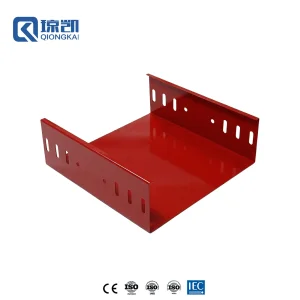
Yes, matching solid, flanged, and louvered/ventilated horizontal tee covers are available in all materials and finishes. For outdoor solar yards or chemical plants, peaked covers with a center ridge shedding rainwater, falling debris, and snow accumulation can be supplied with heavy-duty stainless steel turn-buckles or wrap-around cover clamps.
Our cable tray tees comply with IEC 61537 and UL 568 electrical continuity requirements. We supply pre-punched grounding conductor attachment points on each side rail. When using standard splice plates, conductive serrated-flange locking bolts penetrate non-conductive powder coatings, ensuring electrical resistance across joints remains below 0.00033 ohms.
Request Engineering Takeoff & Direct Factory Quotation
Submit your single-line diagram, cable schedules, or Bill of Quantities (BOQ). Our Shanghai engineering team provides full load-deflection calculations, BIM Revit families, and competitive CIF container pricing within 24 hours.
Complementary Raceway Trunking & Grid Cable Tray Systems
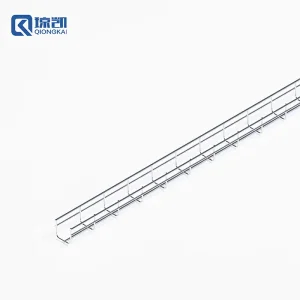
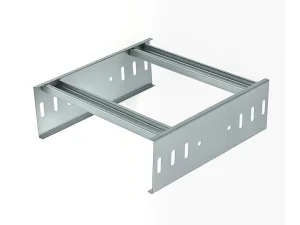
Engineered channel trunkings, wire mesh baskets, and heavy-duty industrial ladder racks to complete full turnkey MEP distribution runs.