
High-Efficiency Cable Tray Systems & Heavy-Duty Profiles
Explore our core engineered wholesale range, featuring reinforced molded channels, perforated pathways, telecom racks, and precision accessories built to international utility specifications.
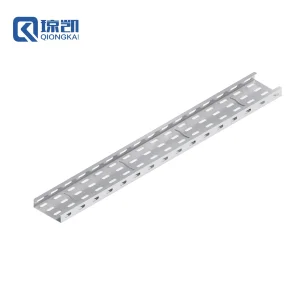
Wholesale Reinforced Medium duty Pre-galvanized Hot-dip-galvanized Perforated Cable Tray 100*25 Factory, Price
View Product Specs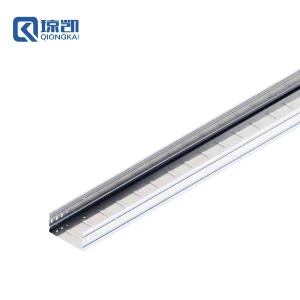
Wholesale Heavy Duty Cost Saving Reinforced Molded Pre Galvanized Cable Trunking Trough Type Channel 200*100 Manufacturer, Factory
View Product Specs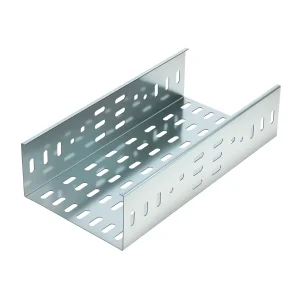
Buy Pre Galvanized Perforated Cable Tray 200 100mm Manufacturers, Supplier
View Product Specs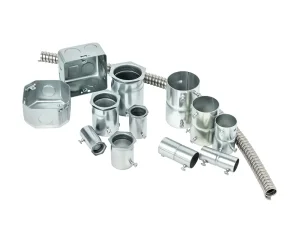
Buy Conduit Accessories & Junction Box & Box Connector Suppliers, Factory
View Product Specs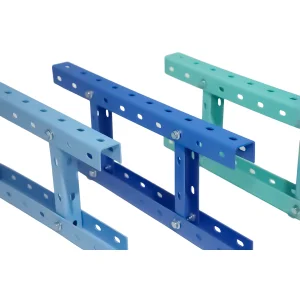
Wholesale Durable Powder Coated Telecom Cable Management Rack Supplier, Factory
View Product Specs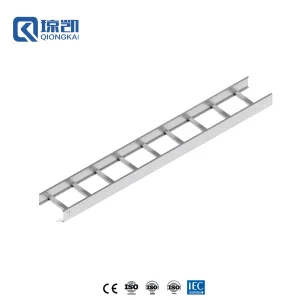
Buy Pre Galvanized Ladder Type Cable Tray 300*100 Factory, Factories
View Product Specs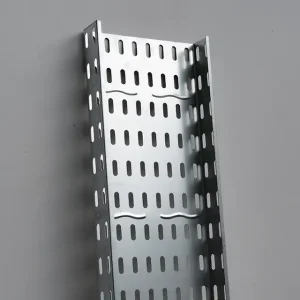
Buy Pre-Galvanized Reinforced Cable Tray 200*50 Suppliers, Factories
View Product Specs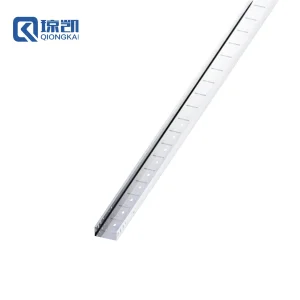
Wholesale Cost Saving Heavy Duty Reinforced Molded Pre Galvanized Cable Tray with less perforation 100*50 Suppliers, Factory
View Product SpecsEngineering Paradigm Shift: Why Industrial EPCs Specify FRP/GRP
In corrosive, coastal, high-sulfur, and electromagnetic containment environments, traditional metallic cable trays face rapid galvanic oxidation, leading to catastrophic structural degradation. Pultruded Fiberglass Reinforced Polymer (FRP) is now the definitive standard.
Polymer Resin Formulation Matrices
Our direct manufacturing facility synthesizes specialized resin formulations tailored to distinct project environments. Options include Vinyl Ester (VE) for extreme acidic, alkaline, and solvent resistance in chemical processing; Isophthalic Polyester (ISO) for industrial marine and coastal applications; and Halogen-Free Flame-Retardant Polyester formulated with antimony trioxide synergists to comply with UL 94 V-0.
Each pultrusion matrix incorporates continuous E-glass roving and multidirectional continuous filament mats, delivering an ultra-dense glass content greater than 65% by weight, ensuring maximum tensile rigidity under long support spans.
Corrosion Kinetics & Zero Maintenance
Unlike carbon steels that rely on zinc sacrificial barrier coatings susceptible to pitting, scratching, and crevice attack (micro-galvanic corrosion), FRP is completely non-reactive. It withstands persistent immersion in hydrogen sulfide (H2S), chlorine gas, sulfuric acid vapors, and saline spray without loss of flexural modulus.
The total lifecycle cost (LCC) of FRP systems represents up to 60% savings over 25 years compared to hot-dip galvanized and even SS304/316 metallic solutions, eliminating re-coating downtime and preventive shutdowns in operational plants.
Dielectric Strength & EMI Transparency
FRP is inherently an electrical insulator with a dielectric breakdown strength exceeding 15 kV/mm. It poses zero danger of induced circulating eddy currents caused by asymmetric high-voltage three-phase alternating currents (AC).
Non-magnetic and radio-frequency transparent, our fiberglass trays guarantee clean signal integrity for sensitive instrumentation, SCADA fiber loops, and industrial automation networks, preventing interference commonly witnessed in metallic cable containment channels.
Years of Direct Manufacturing Since 2005
Advanced Workshop Floor Footprint
Automated High-Speed Pultrusion & Forming
USD Annual Global Supply Turnover
Engineering Comparison: FRP vs. Metallic Cable Tray Solutions
Review standard physical, electrical, and commercial parameters before establishing bill of materials (BOM) specifications for corrosive and heavy industrial projects.
| Evaluation Parameter | Pultruded FRP (Vinyl Ester/ISO) | Hot-Dip Galvanized (HDG) Steel | Stainless Steel (SS316 / 316L) | Aluminum Alloy (6063-T6) |
|---|---|---|---|---|
| Specific Gravity (Weight g/cm³) | 1.8 - 2.0 (Ultra-lightweight) | 7.85 (Heavyweight) | 7.95 (Very Heavy) | 2.70 (Moderate) |
| Acid & Chemical Resistance | Immune to most acids/chlorides | Poor (Acid attacks zinc layer) | Moderate to High (Risk of pitting) | Poor in alkaline/acid zones |
| Marine / Coastal Spray Tolerance | > 30 Years without degradation | 5 - 10 Years until sacrificial rust | High (Except chloride stress cracking) | Moderate (White rust oxidation) |
| Electrical Conductivity | Non-conductive / Insulator | Conductive (Requires grounding) | Conductive (Requires bonding) | High Conductivity |
| Electromagnetic Transparency | 100% Transparent (Zero Eddy Loss) | Opaque (High inductive losses) | Opaque (Magnetic permeability) | Opaque |
| Fire Retardancy & Toxicity | ASTM E84 Class 1 / UL 94 V-0 | Non-combustible | Non-combustible | Low melting point (~650°C) |
| Site Cutting & Fabrication | Fast dry diamond saw cut, cold | Requires cold zinc re-spray | Work-hardens, labor intensive | Easy cutting, fast installation |
| 25-Year Lifecycle Cost (LCC) | Lowest (Zero maintenance cost) | High (Re-coating & replacement) | High initial material CAPEX | Moderate CAPEX & OPEX |
China Factory 4.0: Precision Engineering & Global Supply Resilience
Operating three modernized manufacturing hubs in Songjiang, Shanghai, Qiongkai utilizes continuous digital heating, automated tension pullers, and multi-axis CNC profiling to deliver wholesale orders on precise timelines.
Automated Pultrusion Cell Control
Our continuous automated pultrusion lines feature microprocessor-driven temperature zoning (die entrance, soaking zone, curing peak, and exit cooling). This strictly controls the resin exothermic curve, completely preventing micro-voids, internal delamination, and warpage across long sections.
Real-time optical sensors constantly verify pull tension up to 25 tons, ensuring uniform glass fiber alignment across full 3-meter and 6-meter span sections for high load-carrying stability.
Tier-1 Raw Material Integration
Supply chain reliability starts with chemical provenance. We partner with world-class resin synthesizers and direct glass fiber weavers, procuring continuous strand rovings with precise silane coupling agents that maximize interfacial bond strength between polymer and glass fibers.
Bulk in-house synthesis allows us to maintain stable, volume-advantaged wholesale pricing insulated from spot chemical market volatility, ensuring rapid execution for major EPC tenders.
Export Logistics & Port Strategic Proximity
Positioned in the Songjiang Port Science and Technology corridor, our logistics hubs are within direct drayage proximity to Shanghai Yangshan Deepwater Terminal and Waigaoqiao Port. We offer turn-key export crating, custom nesting bundling, and vapor-barrier moisture protection.
Our loading configurations optimize 40HQ container volumetric capacity by up to 35% using precision stack nest matrices, significantly reducing maritime freight costs per linear meter.
Engineered on Site: Global Industrial Case References
From cryogenic LNG processing facilities to corrosive livestock architectures, our cable support solutions are installed across demanding international engineering sectors.
Offshore LNG Terminal Profile Infrastructure · Qatar
Engineered high-spec custom profiled section FRP support systems and channel trays designed to survive desert solar irradiation (UV index > 11), high ambient heat, and hyper-saline Persian Gulf marine humidity without warping or resin blooming.
Petrochemical & Port Corridor · Thailand
Provided heavy-duty composite solutions including FRP-lined structural steel and full pultruded trough trays resistant to concentrated sulfur dioxide fumes, organic acid vapors, and intense tropical monsoon precipitation cycles.
Shanghai Hongqiao International Airport · China
Supplied extensive runs of corrosion-resistant CT series trunking, perforated pathways, and custom structural supports running throughout mission-critical underground utility tunnels and airside baggage routing facilities.
Commercial Mega-Scale Livestock Plant · Paraguay
Delivered an economically optimized, high-rigidity cable tray and trough system resisting constant exposure to elevated ammonia (NH3), methane gases, and aggressive daily hot-water antimicrobial washdowns.
Heavy-Duty Infrastructure Project · Italy, EU
Full batch production, comprehensive non-destructive load deflection verification, and on-schedule export container dispatch of certified heavy-duty cable management systems meeting strict European CE and IEC 61537 requirements.
Coastal Solar & Offshore Wind Substations
Custom non-magnetic, dielectric fiberglass cable ladder trays carrying medium-voltage feeder circuits from offshore transition platforms to mainland interconnects without inductive heating or seawater salt encrustation issues.
Global Engineering Standards & Specifier Checklist
Ensure that commercial proposals and engineering submittals adhere to international regulatory codes governing composite cable containment systems.
NEMA FG 1 & NEMA VE 1 Compliance
Our pultruded profiles are designed and tested according to NEMA FG 1 (Nonmetallic Cable Tray Systems) and load tested per NEMA VE 1 / CSA C22.2 No. 126.1. Trays are evaluated across 8C, 12C, 20B, and 20C working load classes, allowing support spans up to 6 meters (20 feet) with working load capacities up to 150 kg/m under acceptable L/200 deflection limits.
Certified destructive proof-testing curves and load capacity graphs are available upon request for EPC electrical engineers.
Fire Safety: ASTM E84 & UL 94 V-0
For installations within confined utility tunnels, power plants, and oil platforms, fire propagation performance is crucial. Our compound pultrusions achieve a Class 1 Flame Spread Index (< 25) under ASTM E84 testing, coupled with smoke developed indexes below regulatory hazard thresholds.
Self-extinguishing capabilities adhere strictly to UL 94 V-0 criteria, preventing vertical flame travel along cable channels in the event of severe electrical short-circuit arcing.
Surface Veil & UV Degradation Protection
Solar ultraviolet rays can induce resin photodegradation (fiber bloom) over prolonged outdoor field exposure. All outdoor-rated Qiongkai FRP trays integrate a co-pultruded synthetic polyester surfacing veil with hindered amine light stabilizers (HALS).
This creates a 90% pure resin-rich exterior protective layer, shielding load-bearing glass strands from atmospheric oxidation and maintaining mechanical load ratings throughout decade-long operational life spans.
Engineered FRP, Slotted Channels & Heavy-Duty Pathways
Complete your project sourcing with our customizable ladder systems, non-perforated protective covers, fiberglass trough channels, and fireproof strut supports.
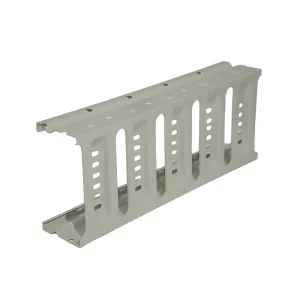
Buy Powder Coated Customizable Ladder Perforated Cable Tray Manufacturer, Factory
View Product Specs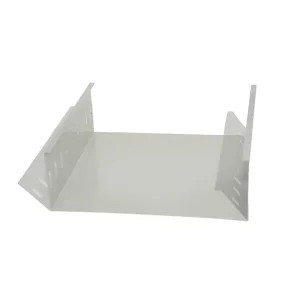
Wholesale Non-perforated Powder Coated Cable Tray_ Suppliers, Factories
View Product Specs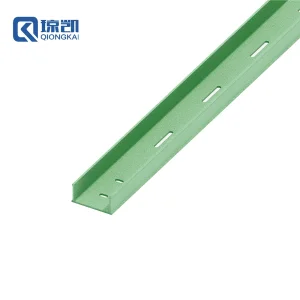
Buy FRP Perforated Cable Tray 100*50 Manufacturers, Factory
View Product Specs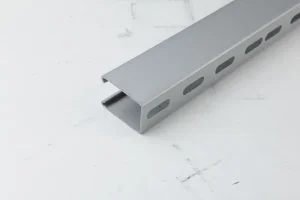
Wholesale Fireproof C slotted channel Factories, Price
View Product Specs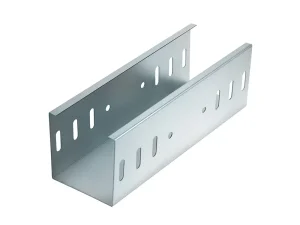
Wholesale Pre Galvanized Cable Trunking Manufacturer, Factories
View Product Specs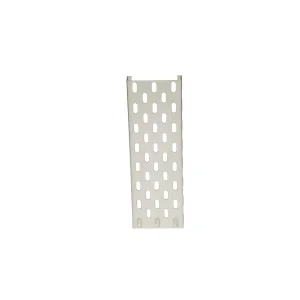
Wholesale 100*25 Stainless Steel Extreme Perforated Cable Tray Supplier, Price
View Product Specs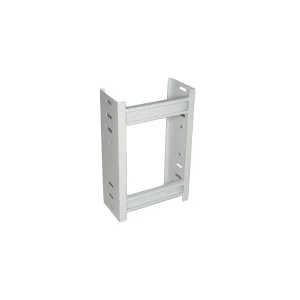
Wholesale Powder Coated Ladder Tray Factory, Price
View Product Specs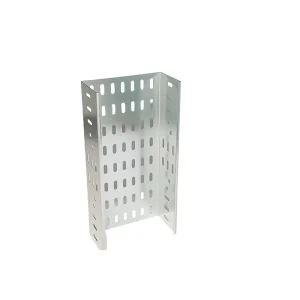
Wholesale Slotting Pattern Customizable Pre Galvanized Cable Trays Manufacturer, Factory
View Product SpecsFrequently Asked Questions on FRP Cable Tray Engineering
Expert answers addressing electrical grounding, field cutting, load testing, resin selection, and global containerized logistics.
Do non-metallic FRP cable trays require electrical grounding and bonding?
Because FRP is an electrical non-conductor with excellent dielectric insulation properties, the tray system itself cannot carry an electrical fault current and will not cause an electrocution hazard if an energized conductor insulation breaks down. Consequently, FRP trays do not require structural electrical bonding or earthing jumpers across splice joints under standard electrical codes such as the National Electrical Code (NEC Article 392).
However, if the cables carried within the tray require an equipment grounding conductor (EGC), a dedicated bare copper or green insulated grounding cable can be run continuously within the tray channel, secured using non-metallic or SS316 cable clamps at standard intervals.
How do engineers select between Vinyl Ester and Isophthalic Polyester resin for FRP?
The choice between resin matrices depends on the chemical exposure profile and temperature envelope:
- Isophthalic Polyester (ISO): The global benchmark for general industrial, offshore marine, water treatment plants, and coastal utility racks. It offers excellent resistance to splash, spray, mild acid fumes, and typical atmospheric weathering at a cost-effective price point.
- Vinyl Ester (VE): Specified for aggressive chemical environments including chlorine electrolyzer cells, sulfuric acid extraction units, fertilizer processing, and pulp bleaching towers. Vinyl Ester provides elevated thermal resistance (heat distortion temperature up to 125°C) and superior hydrolytic stability under constant chemical attack.
What tools and procedures should site contractors use when cutting and drilling FRP trays?
FRP is easily fabricated in the field without hot-work permits or fire watches:
- Cutting: Use a circular saw or angle grinder fitted with a continuous-rim diamond-grit masonry blade or tungsten carbide tipped blade. Dry cutting at medium speeds produces clean, splinter-free edges.
- Drilling: High-speed carbide drill bits are recommended. Support the profile from underneath to eliminate exit breakout or micro-fraying of glass layers.
- Edge Sealing: Crucially, all field-cut ends and drilled holes should be thoroughly coated with a brush-on catalyzed polyurethane or clear vinyl ester resin sealant. This prevents atmospheric capillary moisture ingress (wicking) along the exposed roving fiber ends over time.
How does the thermal expansion coefficient of FRP compare to steel and aluminum?
The longitudinal coefficient of thermal expansion for pultruded FRP is approximately 8 to 12 × 10-6 mm/mm/°C. This is very close to structural carbon steel (approx. 11 × 10-6 mm/mm/°C) and roughly half that of aluminum alloy (24 × 10-6 mm/mm/°C).
For outdoor installations exceeding 30-meter straight continuous runs experiencing wide ambient temperature swings (ΔT > 40°C, such as Middle East or Central Asian facilities), slotted expansion splice plates with deliberate gap settings should be installed every 20 to 30 meters to accommodate natural linear movement without stress buckling.
What are standard factory production lead times, minimum order quantities (MOQ), and packaging?
As a direct manufacturer with 12 assembly and pultrusion lines, standard profiles (trough, ladder, and perforated in standard heights of 50mm, 100mm, 150mm and widths from 100mm to 900mm) carry a standard manufacturing lead time of 10 to 20 working days for full container loads (20GP / 40HQ).
Standard order MOQ is typically 300 linear meters for standard profiles, while bespoke resin custom color formulations (RAL color matching) require a 500-meter batch run. Trays are packed on treated wooden skids with corner edge guards, plastic shrink-wrap weather barriers, and steel banding optimized for forklift side-unloading on international construction sites.