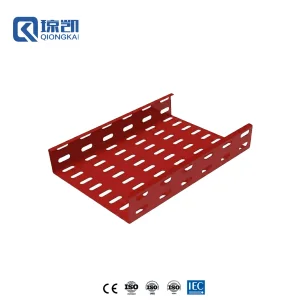
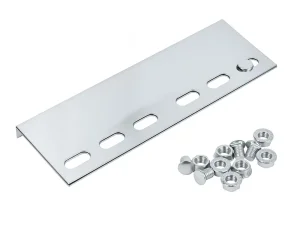
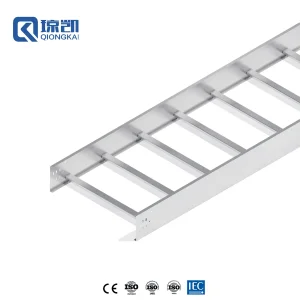
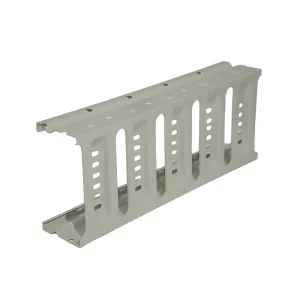
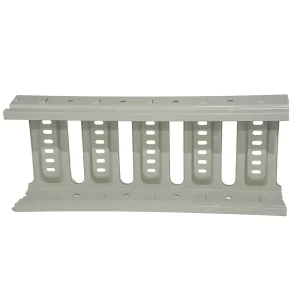
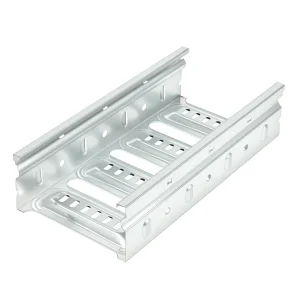
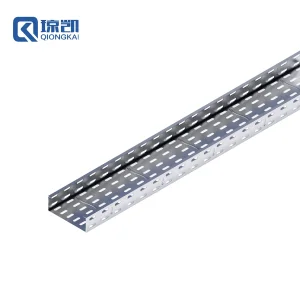
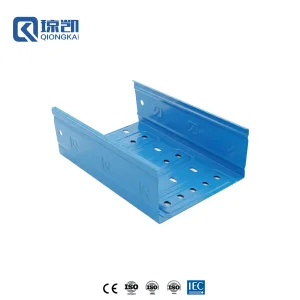
Featured Industrial Containment Systems
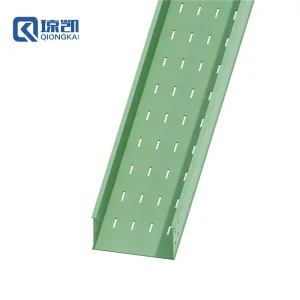
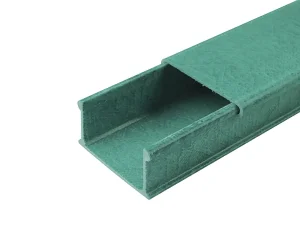
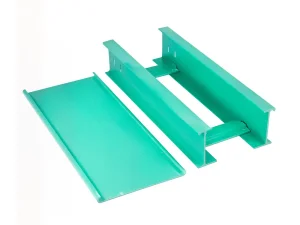
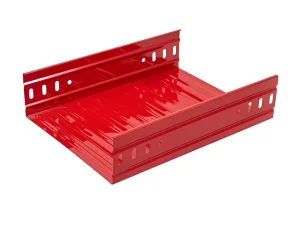
Direct OEM/ODM production batches covering heavy-duty, marine-grade and specialized industrial cable management profiles ready for export container freight.
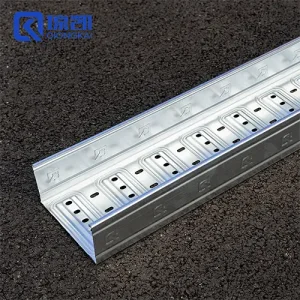
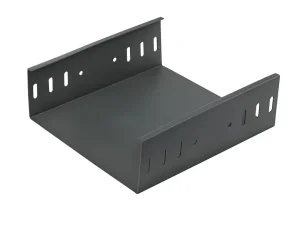
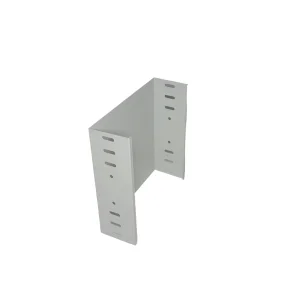
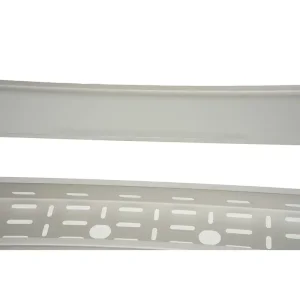
Global Commercial Status & Industrial Demand
The stainless steel (SS) cable tray manufacturing vertical has transitioned from a niche hardware procurement category into a critical capital infrastructure factor driven by life-safety requirements and chemical plant lifecycle metrics.
Offshore & Harsh Marine
Global offshore energy platforms, LNG transshipment terminals, and maritime transport require materials capable of withstanding constant sodium chloride aerosol saturation. Austenitic stainless steel grades (specifically AISI 316 and 316L) prevent pitting and stress-corrosion cracking (SCC), replacing frequent repainting cycles required by traditional structural carbon steel.
LCOE & CAPEX Equilibrium
While the initial procurement price per linear meter for high-spec stainless steel trays exceeds that of hot-dip galvanized (HDG) steel by 1.8x to 2.4x, the Total Cost of Ownership (TCO) across a 30-year operational timeframe is reduced by up to 60%. Elimination of scheduled de-energized line replacements prevents multi-million dollar plant shutdown events.
Aseptic & Cleanroom Compliance
In biopharmaceutical cleanrooms and automated food/dairy plants, electro-polished SS304/SS316 trays provide an inert non-porous substrate. Resisting aggressive clean-in-place (CIP) and steam washdown protocols, they prevent bacterial colonization in compliance with FDA, cGMP, and EHEDG guidelines.
Industry Trends & Next-Generation Engineering Roadmap
The structural design of cable management systems is advancing from traditional passive load trays to modular, aerodynamically optimized, and chemically treated systems.
High-Formability Metallurgy
Increasing reliance on high-nitrogen duplex alloys (such as 2205 Duplex Stainless Steel) in hyper-saline installations offers yield strengths double that of standard austenitic grades, enabling a reduction in sheet gauge without compromising certified NEMA VE-1 load ratings.
AI-Driven Continuous Cold Roll-Forming
Implementation of AI-monitored variable speed roll-forming mills dynamically compensates for coil springback variances. This ensures uniform continuous flange profiling across 3-meter to 6-meter continuous spans, eliminating micro-burrs that damage high-voltage insulated cable jackets.
Electrolytic Pickling & Passivation
Traditional chemical acid immersion tanks are yielding ground to targeted automated electro-cleaning lines. These systems strip weld-tint oxidation while depositing a nanoscale chromium oxide passive film, ensuring corrosion resistance in high-temperature sulfur environments.
Material Comparison & Wholesale Pricing Matrix
Direct OEM comparative baseline engineering indicators for commercial buyers, distributors, and EPC estimators calculating balance-of-plant electrical budgets.
| Alloy / Specification | Yield Strength (MPa) | PREN Rating | Optimal Application Environment | Indicative Price Factor |
|---|---|---|---|---|
| AISI 304 (1.4301) | ≥ 205 | 18.0 - 20.0 | Food & Beverage, Commercial Fit-Out, Clean Tech | 1.00x Baseline |
| AISI 316 (1.4401) | ≥ 220 | 23.0 - 25.0 | Coastal Infrastructure, Industrial Chemical Yards | 1.25x - 1.35x |
| AISI 316L (1.4404 Low Carbon) | ≥ 220 | 23.0 - 25.5 | Offshore Rigs, Subsea Terminals, Heavy Welded Runs | 1.30x - 1.42x |
| 2205 Duplex (UNS S32205) | ≥ 450 | 32.0 - 35.0 | Desalination Plants, Acid Leach Mining, Marine Splash Zones | 1.75x - 2.10x |
| FRP / GRP Composite | ≥ 140 (Flexural) | N/A (Non-Metallic) | Heavy Acid Vapor, Electro-plating, Galvanizing Plants | 0.95x - 1.20x |
Engineered Solutions & Verified Case Applications
How customized stainless steel and specialized cable routing configurations overcome critical operational challenges across varying global climates.
Shanghai Hongqiao International Airport
Supplied high-volume corrosion-resistant CT series cable trunking configurations. Engineered for thermal stability, electromagnetic isolation, and structural deflection compliance under dynamic vibration profiles caused by continuous airport tarmac operations.
Offshore LNG Complex — Qatar
Delivered customized heavy-profile containment solutions for extreme ambient heat, airborne brine, and cryogenic thermal gradients. Provided engineered expansion joints and marine-grade SS316 supports preventing localized stress concentrations.
High-Volume Farming Compound — Paraguay
Provided cost-optimized heavy-duty pre-galvanized and hybrid coated ladder systems tailored to withstand continuous methane gas, high humidity, and ammonia emissions, preventing early mechanical failure.
Technical & Procurement FAQ
Direct engineering clarifications addressing dynamic mechanical loads, metallurgy testing standards, and factory wholesale ordering processes.
Wholesale prices are determined using the base London Metal Exchange (LME) or regional mill surcharge index for chromium/nickel per metric ton, combined with sheet thickness (gauge), punching complexity (perforated, solid, or wire mesh), edge reinforcement roll-forming passes, and chemical passivation surface treatments.
SS316L contains 2-3% Molybdenum and an ultra-low carbon limit (≤ 0.03%). This combination provides superior resistance to localized chloride pitting (higher PREN) and eliminates carbide precipitation during welded bracket fabrication, preserving anti-corrosion properties.
Our products are engineered, built, and tested according to IEC 61537 (Cable management — Cable tray systems and cable ladder systems) and NEMA VE-1 / CSA C22.2 standards, with certified safe working load (SWL) deflection margins under 1/200th of span length.
Direct physical contact between dissimilar metals triggers bimetallic galvanic corrosion in the presence of an electrolyte. We provide insulating non-conductive separation pads, polymer washers, or full stainless steel strut channel framing accessories to eliminate contact potentials.
Commercial Heavy-Duty Trays & Channel Series
Standardized configurations, reinforcing rib systems, and specialized industrial channel fittings manufactured under strict ISO 9001 and CE factory standards.